Quick look at 20 potential projects with the opportunity to make a breakthrough in the next bull market.
Original Title: "Quick Look at 20 Potential Projects with the Opportunity to Impact the Frontline in the Next Bull Market"
Original Source: Baze Research Institute
Recently, with the US federal judge ruling that XRP is not a security in retail sales, Ripple has won a brief victory in its three-year battle with the US SEC. As a result of this news, many cryptocurrencies in the market have seen a significant increase in prices, and many KOLs have expressed their expectations for the arrival of a bull market.
Regarding this, Crypto researchers MooMs and Salazar.eth have summarized 20 "potential stocks" worth lurking in the bear market and possibly hitting the front line in the next bull market. The White Tusk Research Institute has sorted and slightly modified them. It should be noted that any projects and opinions below should not be construed as investment advice. DYOR.
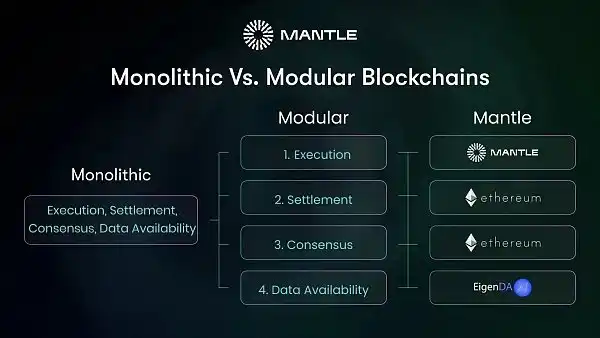
1. Mantle
Mantle is a novel L 2 solution supported by BitDAO (which manages about $3.2 billion in funds) and has received support from multiple crypto entities including ByBit. Its core modular design and all partnerships make it one of the most promising L 2 solutions.
2. Radiant
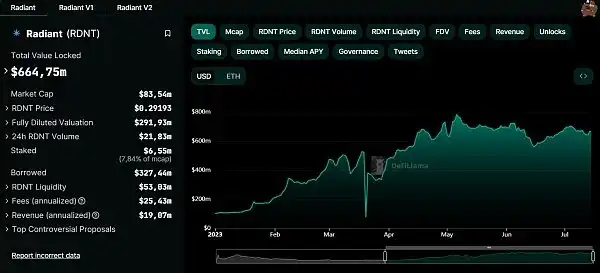
Radiant is a full-chain lending protocol based on LayerZero. It allows users to collateralize funds on one chain while borrowing from another chain.
Its indicators are impressive in the current bear market:
• TVL - $665 million
• Market Cap - $84 million
• Annual income - 19 million US dollars.
3. MUX Protocol
MUX Protocol is a perpetual DEX aggregator that provides users with deeper liquidity and lower slippage.
With the development of perpetual DEX track and the innovation and improvement of the project, MUX will benefit from it.
With excellent performance indicators, it has steadily ranked among the top 5.
4. Optimism
The third largest ETH rollup calculated according to TVL.
Their OP Stack and Superchain ecosystem vision is very promising, and they have already attracted several well-known participants:
• Coinbase
• Binance
• Worldcoin
• a 16 z
5. Velodrome
According to TVL calculation, it is the largest protocol on Optimism, one of the largest DEXs in all of DeFi, and also the most decentralized (risk-free investment/private financing + 100% of revenue goes to the community).
Its metrics are perfect (market cap/TVL = 0.06), and it will also become a top DEX on Coinbase's L2 network Base built on OP Stack.

6. Maverick
Maverick recently completed a $9 million financing round, aiming to utilize an innovative AMM model that allows users to provide liquidity based on market conditions, with high capital efficiency.
Maverick is positioned by the encryption community as a leading DEX (decentralized exchange) for LST (liquidity staking tokens), which is bullish.
7. Pendle
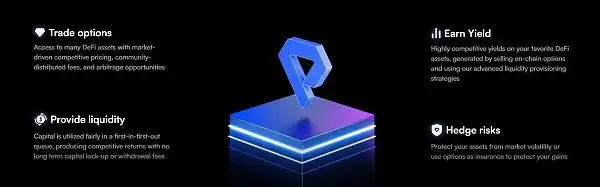
Pendle enables users to trade yield strategies through AMMs, by acquiring yield tokens (separate from principal).
For example, users can purchase LSD ETH without profits at a discounted price and speculate on the yield of GLP.

8. Premia Finance
Premia ranks third in the options field, allowing users to trade options based on real-time supply and demand with "first-class pricing". Its model provides traders and liquidity providers with a more efficient capital structure and a fairer experience.
9. Frax Finance
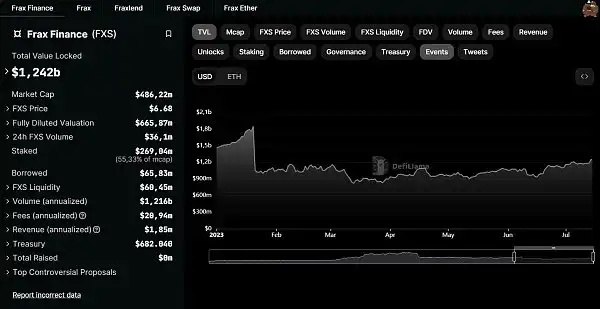
I like to refer to Frax as a "super app" because it allows users to mint FRAX (a partially collateralized decentralized stablecoin) and frxETH (one of the largest LSTs in DeFi).
It is the most promising DeFi stablecoin protocol and one of the most potential protocols in the LSDfi field.
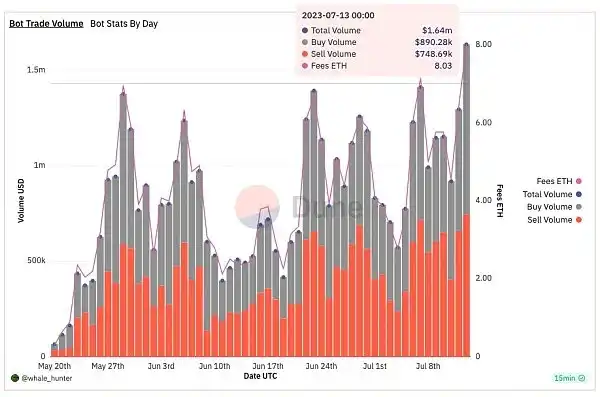
10. Unibot
Unibot is a Telegram bot that allows users to trade DeFi projects directly from TG chat.
It brings DeFi to Telegram and simplifies the user experience.
Unibot is only deployed on the ETH network, but generated approximately $690,000 in revenue last month.
11. Scroll
When we mention zkEVM, we think of Scroll. Why?
Scroll positions itself as the zk Rollup L2 network with the most complete Ethereum spirit. In addition to sufficient funding (Polychain, Sequoia China, OKX, etc. participated), the development team has excellent technology to support this positioning. In my opinion, Scroll will become the first zkR.

12. Polygon 2.0
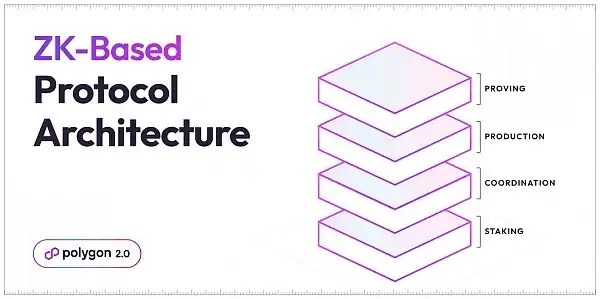
"Divergence stage": From sidechains to Validium proposals, and becoming the first zkEVM, Polygon has led many narratives by experimenting and trying various possible methods to scale the Ethereum network.
"Closing Stage": With the launch of OP Stack by Optimism, other leading L2 solutions such as Arbitrum and zkSync are also attempting similar modular expansions. This includes the recent proposal by the Polygon development team for the Polygon 2.0 upgrade, with the goal of becoming a "Supernet" that combines numerous L2 solutions. Any user can create, exchange, and program value within it, and any developer can create L2 networks without permission.
13. Starknet
Starknet is an Ethereum zk Rollup L2 network. Starknet is not classified as zkEVM because it uses the programming language Cairo. Its purpose is to generate STARK proofs to reduce the time spent verifying transactions while maintaining the security of the Ethereum mainnet, thus achieving low transaction fees and high throughput.
Upgrading from the recent Quantum Leap to the upcoming improved version Cairo 2.0, it is expected that transaction speed will significantly increase in the long run, which will help dApps such as DeFi, gaming, and social media to break through potential limitations.
14. EigenLayer
EigenLayer is a protocol that can change the game rules, and it was first proposed with the narrative of "re-staking". EigenLayer is a value layer that most dApps, RAAS (Rollups-as-a-Service), L1, and L2 can use as their economic structure.
AltLayer announced a partnership with EigenLayer a few days ago, and Mantle Network has also chosen to adopt EigenLayer. It is believed that many people will follow suit in the future.
15. Thena Finance
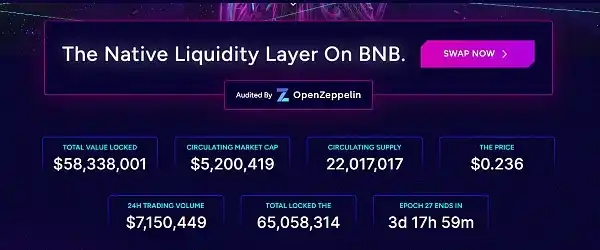
Thena is a DEX built on the BSC network and is one of the protocols with the highest token holder rewards in the entire BSC ecosystem.
6 months ago it was launched, but its current circulating market value is only $5.2 million.
If Binance supports (or lists) this BSC native project, or if Thena expands to multiple chains, Thena still has great potential.
16. Lybra Finance
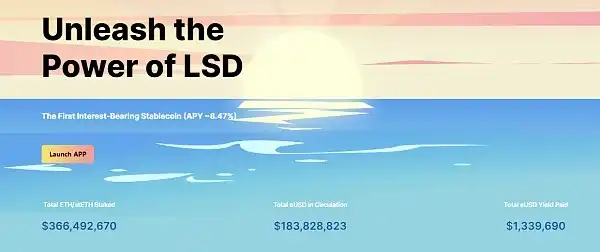
Lybra Finance is one of the best LSDFi projects, and it is a stablecoin protocol supported by LSD. Its selling point is that users can mint the automatic interest-bearing stablecoin eUSD by depositing ETH or stETH, and holders can receive real-time returns with an APY of about 7.2%.
"Give you a stablecoin, as long as you hold it, it will multiply in your wallet."
Lybra Finance has brought actual profits of over 1 million US dollars to eUSD holders.
17. LayerZero
18. Ethos Reserve
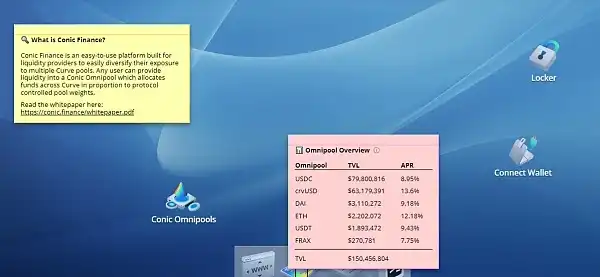
19. Conic Finance
20. Level Finance
Recently, the development team proposed a token burning proposal to regulate token emissions. Currently, 180,000 LVL tokens have been burned.
Original article link
Welcome to join the official BlockBeats community:
Telegram Subscription Group: https://t.me/theblockbeats
Telegram Discussion Group: https://t.me/BlockBeats_App
Official Twitter Account: https://twitter.com/BlockBeatsAsia

 Related Articles