Binance and Coinbase face SEC charges: An in-depth analysis of market reactions and impacts.

Original author: @jinzejiang0x0, LD Capital
Abstract:
The US Securities and Exchange Commission (SEC) has filed formal lawsuits against cryptocurrency trading platforms Binance and Coinbase, triggering a massive sell-off in the market and a series of chain events such as the delisting of tokens involving securities definitions.
SEC's accusations against Binance are more serious, including fraud, cross-entity mixed assets, and trading against customers;
The market has reacted strongly to this, with the average price of the 18 tokens defined as "securities" by the SEC falling by 28.8%, compared to a 7.4% drop in BTC during the same period. However, even with the SEC's first lawsuit, the market share of BNB has even slightly increased, showing that its price has relative resilience.
This time, the token industry defined as securities by SEC is mostly on public chains, accounting for 13/18, followed by entertainment and metaverse, accounting for 4/18, with the latter experiencing a greater decline;
The report predicts possible future scenarios of SEC litigation, including potential legal impacts and market reactions, and discusses the progress of legislation in the cryptocurrency industry.
The report summarizes precedents of encryption cases, including illegal token issuance and unregistered investment and financial management cases.
Content:
(No translation needed as it contains HTML tags and punctuation marks only)
The U.S. Securities and Exchange Commission (SEC) accused 19 tokens of being securities in the lawsuits against the cryptocurrency trading platforms Binance and Coinbase on June 5th and 6th respectively, which triggered a sharp sell-off in the entire market.
SEC's Accusations
SEC accuses Coinbase of operating an unregistered securities trading platform, broker-dealer, and clearing agency, as well as not registering its cryptocurrency lending service. However, the charges against Binance are much different. In addition to being accused of operating an unregistered securities trading platform, broker-dealer, and clearing agency like CB, SEC also accuses it of engaging in more FTX-like activities: deception, cross-entity mixed assets, and trading against customers, which SEC did not make similar charges against Coinbase.
SEC has issued a warning to the financial market: most of the encrypted digital assets are securities, and this position may impose strict regulatory requirements on digital asset trading platforms.
Since Gary Gensler was sworn in as SEC Chairman in 2021, the industry has been predicting stricter cryptocurrency regulation. When Gensler was a blockchain professor at MIT, he mentioned that many cryptocurrencies are likely securities, which means they should be regulated by the SEC and subject to US government oversight.
SEC has taken enforcement actions against some industry companies and projects, such as Ripple Labs, LBRY, Kraken, Bittrex, etc. It seems that before taking action against the two largest trading platforms, SEC may have practiced on smaller companies first.
Chain Reaction
The well-known brokerage firm Robinhood has decided to delist cryptocurrency tokens classified by the SEC as unregistered securities. After June 27th, the platform will no longer support tokens such as Cardano (ADA), Polygon (MATIC), and Solana (SOL). It is reported that Robinhood held tokens worth $583 million in MATIC, SOL, and ADA before the SEC took action.
Crypto.com announced the closure of its institutional trading platform due to insufficient demand caused by the US market landscape. This decision reflects the challenges faced by crypto companies as institutional investors, including pension funds, mutual funds, and university endowments, become cautious in the volatile market environment and regulatory scrutiny.
On June 16th, Binance is under investigation by French authorities for allegedly providing illegal digital asset services and engaging in serious money laundering activities. On the same day, Binance also announced its withdrawal from the Dutch market. Binance stated that it will stop providing services to users based in the Netherlands due to its inability to register in the country.
Market Changes
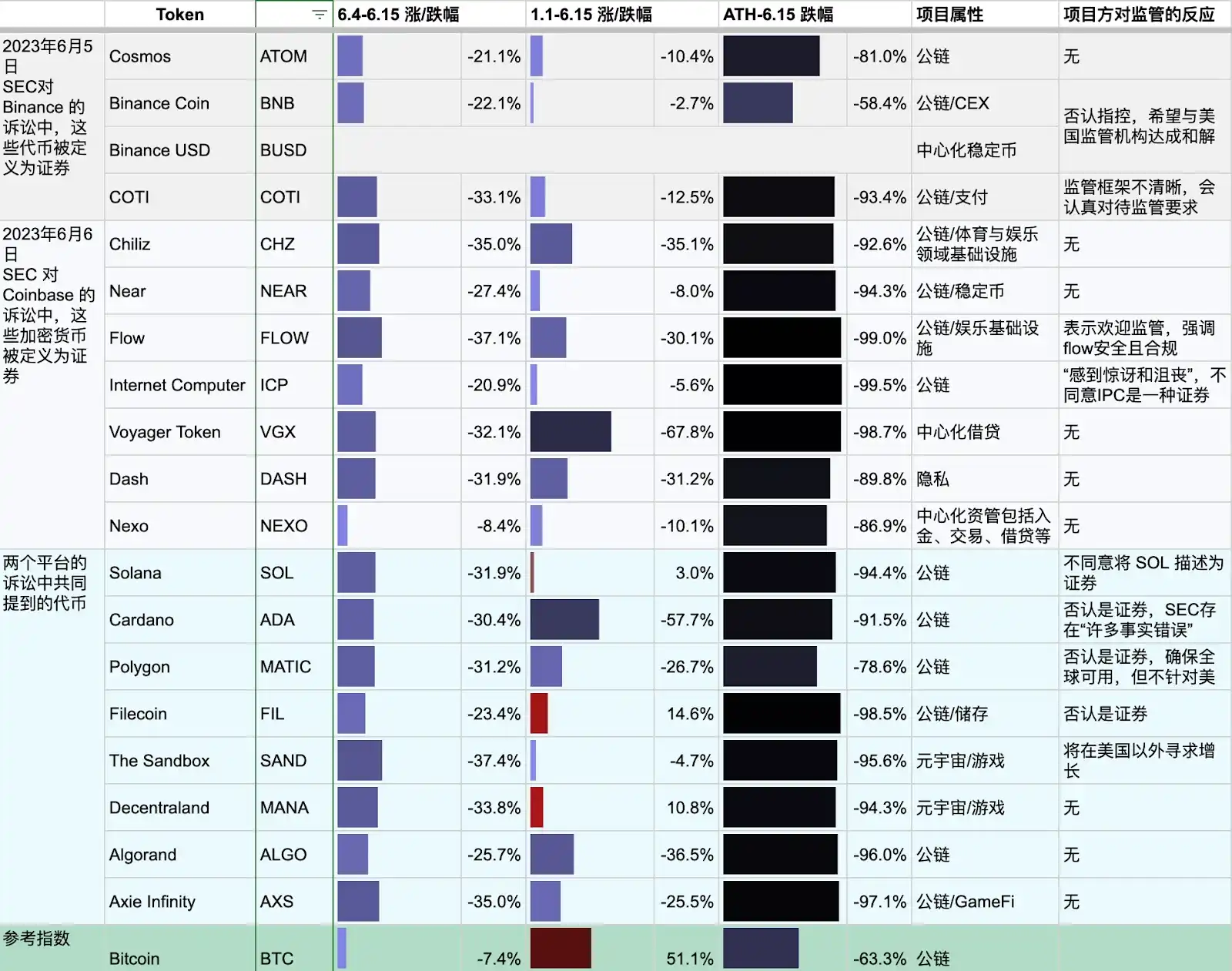
Table 1: Introduction and Price Comparison of Tokens Mentioned in June SEC Lawsuits that May be Securities
Source: Coinmarketcap, Coingecko, TrendResearch
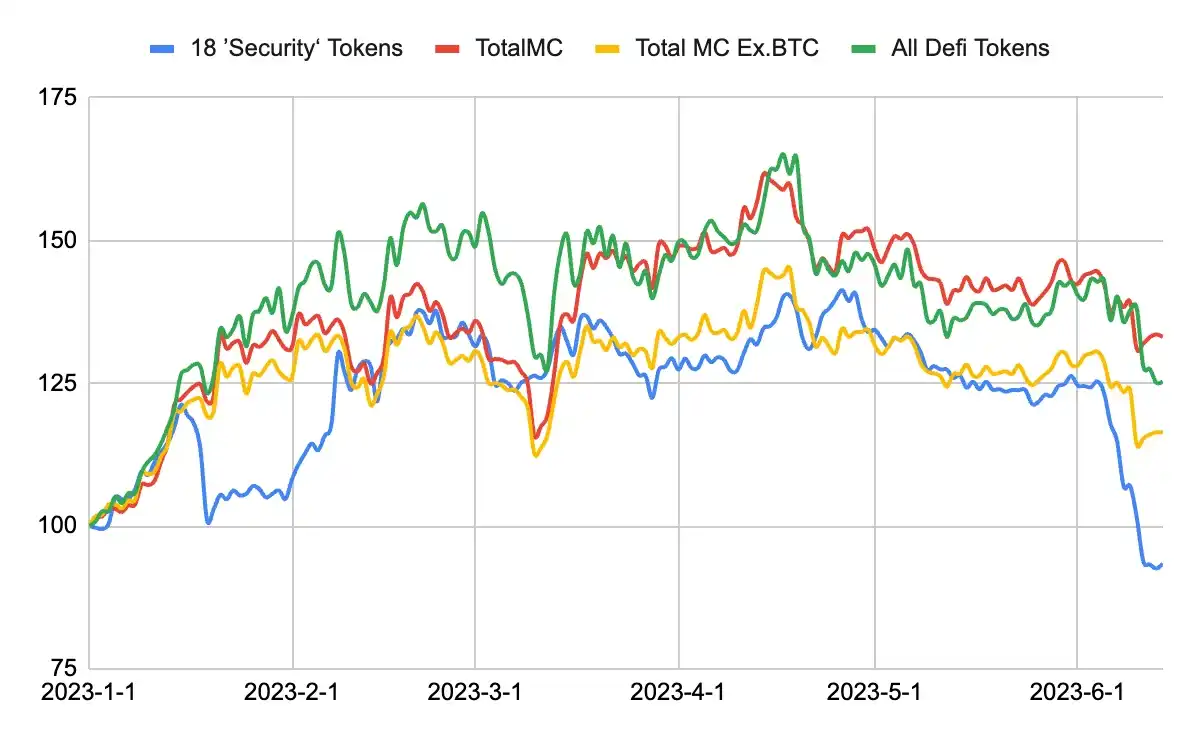
Figure 1: Comparison of the total market value of 18 tokens defined as "securities" by the SEC and the total market value of cryptocurrencies, Altcoins (excluding BTC), and the total market value of Defi tokens from 2023 onwards.
Source: Coinmarketcap, Coingecko, TrendResearch
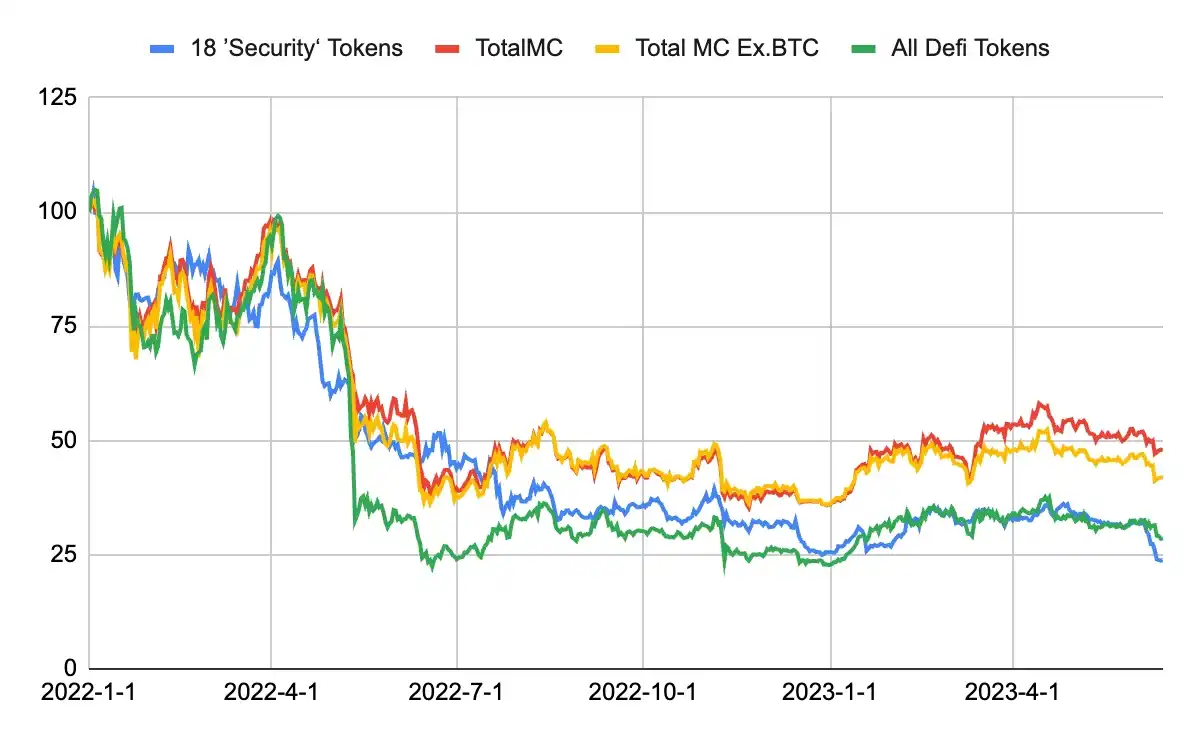
Figure 2: Comparison of the total market value of 18 tokens defined as "securities" by SEC and the total market value of cryptocurrencies, total market value excluding BTC, and total market value of Defi tokens from 2022 onwards.
Source: Coinmarketcap, Coingecko, TrendResearch
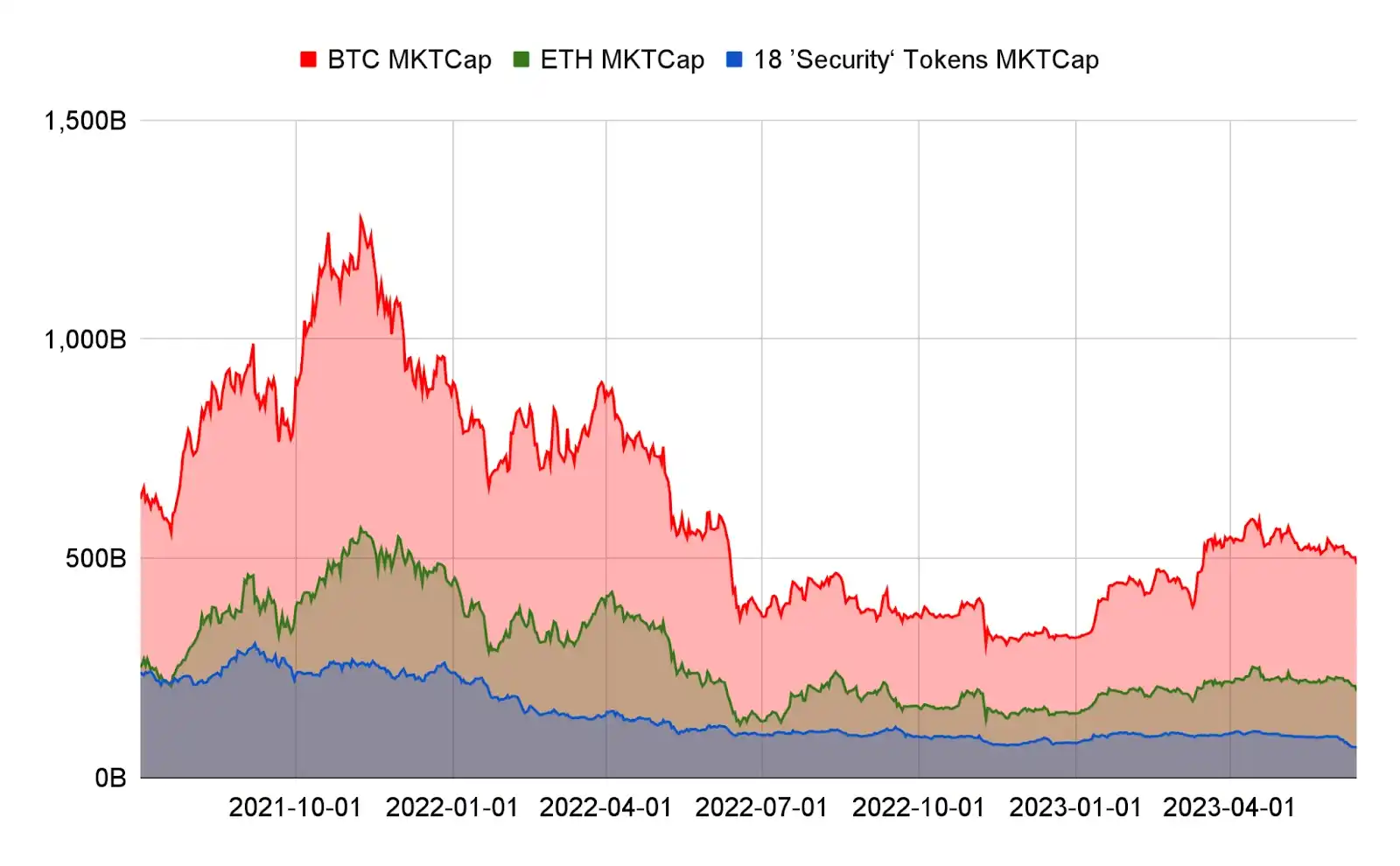
Figure 3: The total market value of 18 tokens defined as "securities" by the SEC compared to the market value of BTC and ETH.
Source: Coinmarketcap, Coingecko, TrendResearch
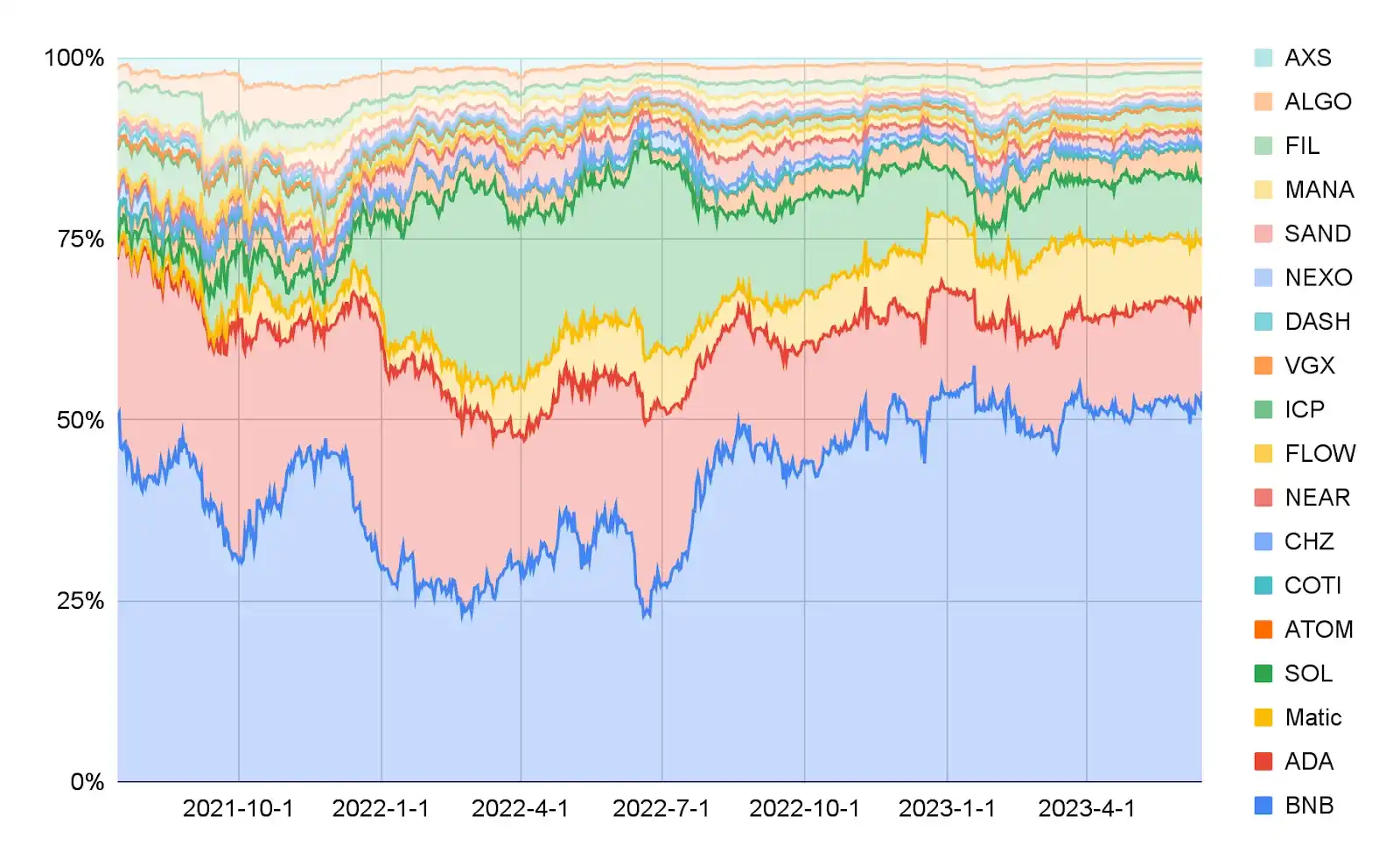
Figure 4: Comparison of market value changes for 18 tokens defined as "securities" by SEC.
Source: Coinmarketcap, Coingecko, TrendResearch
We have compiled the price changes of the cryptographic tokens mentioned by SEC as securities this month. Except for BUSD, among the 18 tokens named, it can be seen that:
Table 1 shows that public chains are the majority in the industry, accounting for 13 out of 18. Entertainment and metaverse follow with 4 out of 18, while asset management and lending account for 2 out of 18.
Figure 4 shows that BNB has accounted for over 50% of the proportion since the beginning of this year, even though it was first sued by SEC, but its market value proportion has even slightly increased, showing that its price has relative resilience. Since early June, the average price has fallen by 28.8%, compared with a 7.4% drop in BTC during the same period, indicating a significant decline.
Figure 3 shows that the peak market capitalization of 18 tokens occurred in September 2021, exceeding $300 billion at that time. The market capitalization hit a low point after the SEC regulation was implemented this month, with only $70 billion.
Since early June, the smallest decline has been seen in NEXO (-8.4%), ATOM (-21.1%), and BNB (-22.2%). NEXO has been least affected due to having already paid fines and settled with SEC earlier this year. BNB, with the largest market value among the charged tokens (nearly $50 billion before the drop), has experienced lower volatility, which is understandable. However, the limited decline in ATOM, with a market value of only over $3 billion, demonstrates its resilience.
Since their respective price highs, these tokens have fallen an average of 91%, with the smallest decline being BNB (-58.4%), MATIC (-78.6%), and ATOM (-81.0%). BNB and ATOM are also among the coins with lower declines since early June, indicating their price resilience has continuity.
Since their respective price peaks, the largest declines have been seen in ICP (-99.5%), FLOW (-99%), and FIL (-98.5%). Among them, ICP has only fallen by 5.6% this year, while FIL has seen a rise of 14.6%, indicating that the downward momentum of prices has slowed after a significant adjustment.
Figure 1 shows that before the regulatory event in June, the performance of 18 types of tokens lagged behind the market within 2023. After the regulatory event, the lagging range expanded and all gains turned into losses within the year.
Figure 2 shows that, extending the timeline to early 2022, the performance of 18 tokens still lags behind the market, but for most of 2022, they outperform Defi tokens.
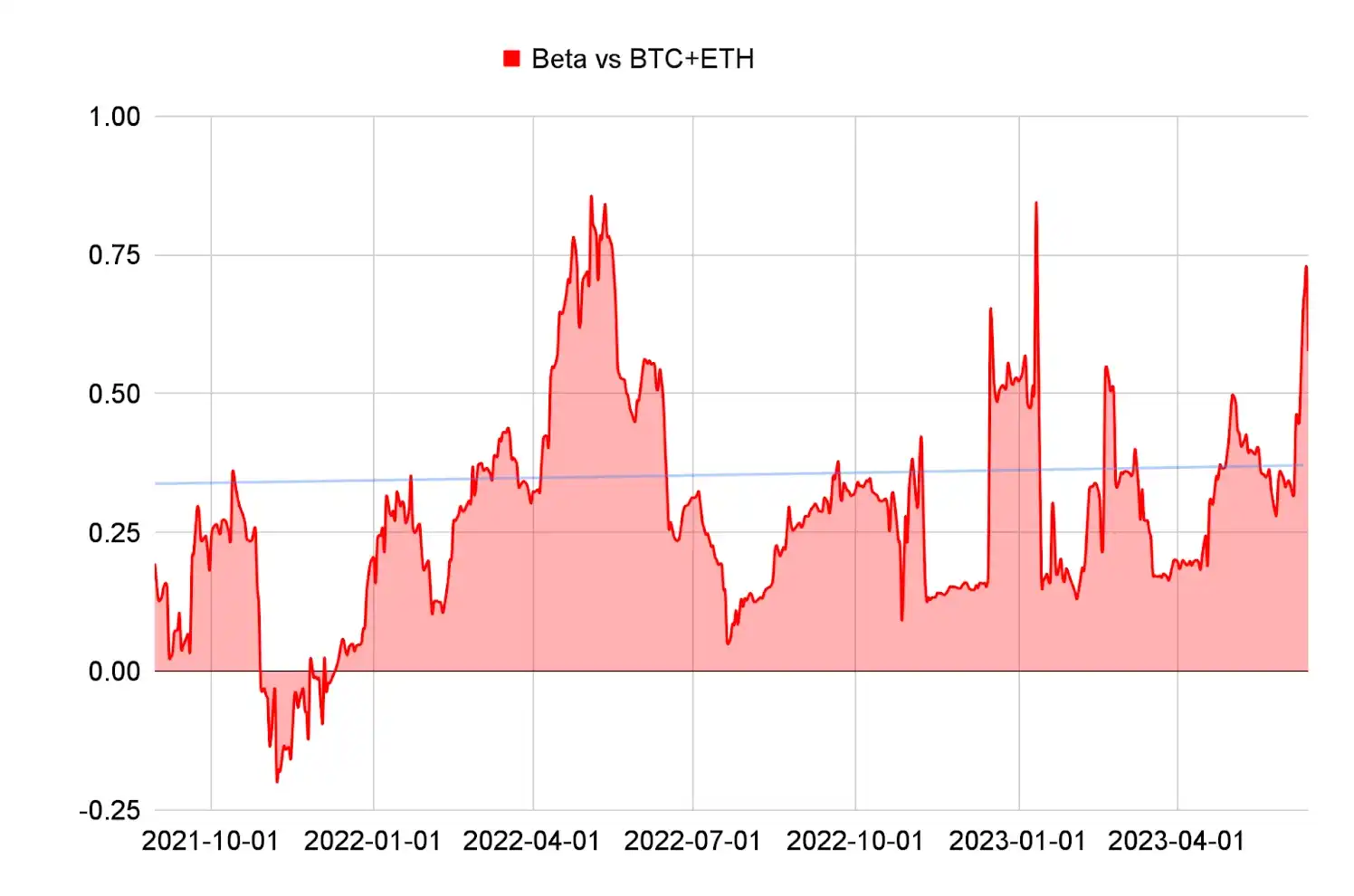
Figure 5: 18 tokens defined by SEC as "securities" and their 30-day rolling Beta values against BTC+ETH.
Source: Coinmarketcap, Coingecko, TrendResearch
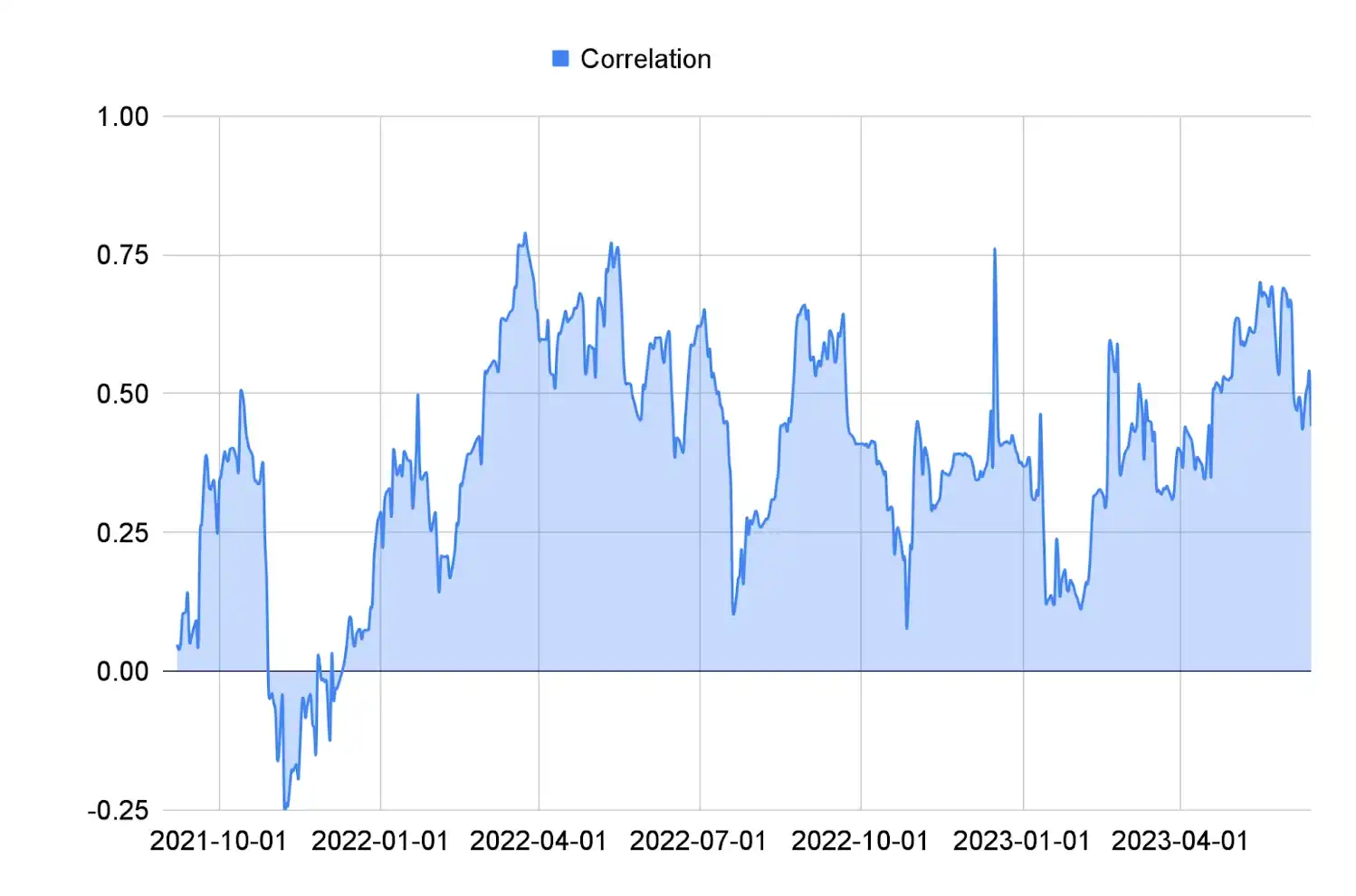
Figure 6: The 30-day rolling correlation between 18 tokens defined as "securities" by SEC and BTC+ETH.
Source: Coinmarketcap, Coingecko, TrendResearch
Beta represents the systematic risk or market risk of security tokens relative to the benchmark index. If Beta is greater than 1, the price fluctuations of security tokens may exceed the benchmark index; if Beta is less than 1, the price fluctuations of security tokens may be lower than the benchmark index.
From the perspective of the rolling Beta value, the market value fluctuations of these "securities" token combinations are actually smaller than the blue chip fluctuations based on BTC and ETH. This result is not surprising, mainly considering that under diversified allocation, the rise and fall cycles of each token due to project factors are not completely coincident, which also lowers the Beta of the entire portfolio relative to the benchmark index.
From the data, we can see that the Beta value and correlation have significant changes at different time points, which may be related to market conditions, token fundamentals, or macroeconomic factors. When the Beta value is high, it indicates that the price of security tokens is more affected by the market. When the industry sentiment is extremely optimistic or pessimistic, the correlation and Beta value tend to increase, which means that the utility of diversified allocation is weakened.
Overall, if invested according to market capitalization weighting, such a portfolio has underperformed BTC and ETH in the past two years, indicating that the price resilience of altcoins in bear markets is not as strong as BTC and ETH.
What is a security?
According to US regulations, whether something is a security primarily depends on whether it resembles shares issued by a company when raising funds. The SEC currently mainly applies the Howey Test, a 1946 Supreme Court ruling. Under this framework, when investors contribute funds with the intention of profiting from the efforts of the organization's leaders, the asset may fall within the jurisdiction of the SEC.
What is the impact of defining it as a security?
Calling tokens securities would make operating a cryptocurrency exchange more expensive and complex. According to US regulations, this label comes with strict investor protection requirements for both the platform and issuers. This means that the trading platform will face ongoing scrutiny from regulatory bodies, which could result in penalties, and in the worst case scenario, criminal charges if law enforcement gets involved.
If a large number of cryptocurrencies are classified as securities, it will fundamentally change the way the cryptocurrency industry operates. First, compliance with securities laws becomes crucial, requiring these altcoins and their issuers to comply with strict regulatory requirements. This includes registering with the SEC, providing necessary disclosures, and complying with reporting obligations.
In addition, classification may lead to potential trading restrictions. If most of the altcoins are considered securities, they can only be traded on registered securities trading platforms that are subject to specific rules and regulations. This may limit the liquidity and accessibility of these assets for retail investors and introduce additional barriers to market participation.
For POS public chains like Polygon or Binance Smart Chain, wearing the securities hat will create many problems, such as financial accounting for user transaction fees, KYC for validators, taxation, and whether any DeFi applications on the chain are legally authorized. These labels can be said to be more destructive to the long-term health of the industry than the closure or withdrawal of several trading platforms from the US market.
SEC Lawsuit Future Scenario
The lawsuits against Binance and Coinbase reflect the increasingly tense relationship between the government and the cryptocurrency industry. SEC Chairman Gary Gensler has made it clear that there is no need for more digital currencies and emphasized that the United States already has a digital currency called the US dollar. US Treasury Secretary Janet Yellen also supports the SEC's actions and advocates the use of regulatory tools to protect consumers and investors. This reflects regulatory agencies taking a more explicit stance against cryptocurrencies or becoming a fundamental principle of the traditional financial system.
The following four scenarios may be seen in the future:
1. Regulatory enforcement is expanding to target more blockchain projects, especially high market value public chains, with direct lawsuits being filed. Recently, the SEC has mainly targeted trading platforms with lawsuits, and the related documents mention 19 types of tokens, except for BUSD and NEXO, that have not yet received warnings or lawsuits directly from the SEC. This may indicate that there will be more enforcement actions in the future.
2. Accusations from civil to criminal. As the SEC and CFTC do not have the authority to initiate criminal charges, relevant accusations may not have yet arrived. Criminal charges against cryptocurrency trading platforms or projects typically involve fraud, money laundering, or other illegal activities. Such cases are usually handled by law enforcement agencies such as the Federal Bureau of Investigation (FBI) or the US Department of Justice. For example, last year, the DoJ announced criminal charges against six defendants in four cryptocurrency issuance cases, alleging involvement in fraud related to cryptocurrency. Another example is Sam Bankman-Fried (SBF), who faced 12 criminal charges in the case involving FTX and Alameda, including conspiracy to commit bank fraud and operate an unlicensed money transfer business, as well as wire fraud against FTX customers, securities fraud against FTX investors, and conspiracy to commit illegal political donations and defraud the Federal Election Commission.
3.SEC or Gensler's authority may be deprived. Many American politicians do not approve of the tough regulation of the SEC.
For example:
US Senator Bill Hagerty wrote on Twitter that "the SEC is using their role to destroy an industry. Allowing a company (Coinbase) to go public and then hindering them from registering as a compliant trading platform."
US Senator Cynthia Lummis also wrote on Twitter that "the SEC has failed to provide a registration path for digital asset trading platforms, and even worse, has failed to provide sufficient legal guidance to distinguish between securities and commodities."
On June 16th, two Republican congressmen, Warren Davidson and Tom Emmer, proposed a bill called the "SEC Stability Act" aimed at reshaping the SEC and removing current chairman Gary Gensler. The bill suggests increasing the number of SEC commissioners and adding directors to oversee the commission, in order to prevent regulatory policies from being influenced by the personal ideas or political struggles of the SEC chairman.
4. Legal tug-of-war or quick rectification fines. If the sued team or individual actively defends themselves, the legal battle may last for several years. For example, the lawsuit between Ripple and SEC has been ongoing since December 2020 and has yet to be resolved. Of course, if the sued team or individual quickly compromises, rectifies their business, and accepts fines, the case may be quickly settled. For example, earlier this year, Kraken and SEC settled in less than 1 month.
Progress in Legislation in the Cryptocurrency Industry
The Congress may pass a regulatory framework for cryptocurrency, which will provide clearer rules for the operation of cryptocurrency and related businesses in the United States. This clarity may stimulate further development and innovation in the industry. A legislative proposal initiated by Representatives Patrick McHenry and Glenn Thompson in the House Financial Services Committee is considered the most feasible legislation. This legislation seeks to clarify the jurisdiction of various agencies over certain digital assets and "strike an appropriate balance" between protecting consumers and encouraging responsible innovation.
This 162-page draft was released in early June, which suggests that digital assets initially considered as securities can ultimately be regulated as commodities. Whether they are securities or commodities largely depends on the degree of decentralization of the underlying blockchain network.
If a network meets certain requirements, it will be considered decentralized and tokens that meet commodity criteria will be regulated by the Commodity Futures Trading Commission (CFTC).
The specific criteria include that within the past 12 months, no one unilaterally has the right to "control or substantially change" the functionality or operation of the network, and no token issuer or affiliate owns more than 20% of the token holdings.
However, this draft bill is expected to face significant opposition from the Democratic Party in Congress. SEC Chairman Gary Gensler and some Democrats believe that most digital assets should be classified as securities, and that existing regulations are sufficient.
The timing of when this bill may come up for a vote in Congress is unclear, but it represents an important step in the ongoing discussion around regulation of digital assets.
Encryption Case Precedents
Ripple (XRP): In 2020, the SEC filed a lawsuit against Ripple Labs Inc. and its two executives, accusing them of conducting an unregistered securities offering worth $1.3 billion through a digital asset called XRP. The SEC's claim is that although Ripple positions XRP as a cryptocurrency, its issuance process is more akin to traditional securities offerings and should therefore be subject to securities laws. This is the largest cryptocurrency-related lawsuit filed by the SEC to date. As of my knowledge update (September 2021), the case is still ongoing and there is no final decision.
Block.one (EOS): In 2019, the SEC announced a settlement with Block.one, who agreed to pay a fine of $24 million to resolve the SEC's charges that Block.one's initial coin offering (ICO) of EOS between 2017 and 2018 violated securities laws. This is an important case as it demonstrates that the SEC may impose substantial fines on ICOs that violate securities laws.
Telegram (Grams): In 2020, the SEC successfully blocked the issuance of Telegram's Grams token. The SEC's claim in this case was that the Grams token was an unregistered security, and therefore its issuance violated securities laws. Ultimately, Telegram agreed to pay a fine and return investors' funds.
Kik (Kin): In 2020, the SEC successfully filed a lawsuit against Kik Interactive Inc. for conducting an unregistered securities offering through a digital asset called Kin. Kik ultimately agreed to pay a fine of $5 million to settle the SEC's charges.
BlockFi: The SEC believes that investors lending cryptocurrency assets to BlockFi in exchange for the company's promise of variable monthly interest payments constitutes securities under applicable law. Additionally, the SEC believes that BlockFi has issued securities and has more than 40% of its total assets (excluding cash) invested in securities, and has violated registration requirements under the Investment Company Act of 1940. Ultimately, BlockFi will pay a fine of $50 million directly to the SEC and an additional $50 million in the form of fines to 32 US states to settle similar charges. This settlement represents the largest recorded fine suffered by a cryptocurrency company at the time.
NEXO: SEC accuses Nexo Capital of issuing and selling unregistered retail encrypted asset lending products, Earn Interest Product (EIP). On January 20, 2023, the encrypted lending platform Nexo reached a settlement with the SEC and state regulatory agencies, agreeing to pay a total of $45 million in fines and stop providing lending products. The SEC agreed to settle with Nexo considering the company's prompt remedial measures and cooperation with committee staff.
Kraken: In February 2023, the SEC accused the cryptocurrency trading platform Kraken of securities violations due to concerns over the lack of transparency in its interest-bearing token business. That same month, Kraken reached a $30 million settlement with the SEC and will discontinue its "crypto staking" program that offered investment returns.
Encryption Yield Business
The regulation in the United States is not only related to the issuance and trading of security tokens, but also involves financial services, such as BlockFi and NEXO mentioned in the previous paragraph.
If a company provides a platform for users to store funds and pay a certain amount of interest, then this business model is closer to the deposit business of banks or financial institutions. In this case, the company needs to register and obtain licenses as a bank or financial institution according to local laws and regulatory requirements.
In the United States, such companies may need to obtain licenses from the Federal Reserve System, the Federal Deposit Insurance Corporation (FDIC), the Office of the Comptroller of the Currency (OCC), or state-level banking regulatory agencies. These agencies are responsible for regulating banks and financial institutions to ensure that their operations comply with laws and regulatory requirements.
In other countries and regions, companies may need to obtain licenses from the corresponding banks and financial services regulatory agencies. For example, in Europe, this may include the European Central Bank and national bank regulatory agencies of each country.
It should be noted that this type of license usually requires meeting a series of requirements, including capital requirements, risk management requirements, and corporate governance requirements. In addition, the company also needs to comply with regulations such as anti-money laundering (AML) and customer identity verification (KYC).
Is regulation outdated?
Supporters of greater regulation believe that the designation of securities will bring investors more information and transparency due to the applicable SEC disclosure requirements. However, cryptocurrency enthusiasts argue that their projects are to some extent decentralized, making old rules unsuitable. Cryptocurrency exchanges believe that their listed assets should be considered commodities rather than securities. In the United States, rules governing the trading of commodities and their derivatives focus more on ensuring that companies, producers, and farmers can effectively hedge against price fluctuations.
Despite increased scrutiny from regulatory agencies, the cryptocurrency industry is still hopeful that Congress will ultimately pass new laws to legalize the industry. Last year, both Democrats and Republicans introduced several bills that would bring cryptocurrencies under the jurisdiction of the Commodity Futures Trading Commission and make other products, including stablecoins, more legitimate by regulating the assets they can hold.
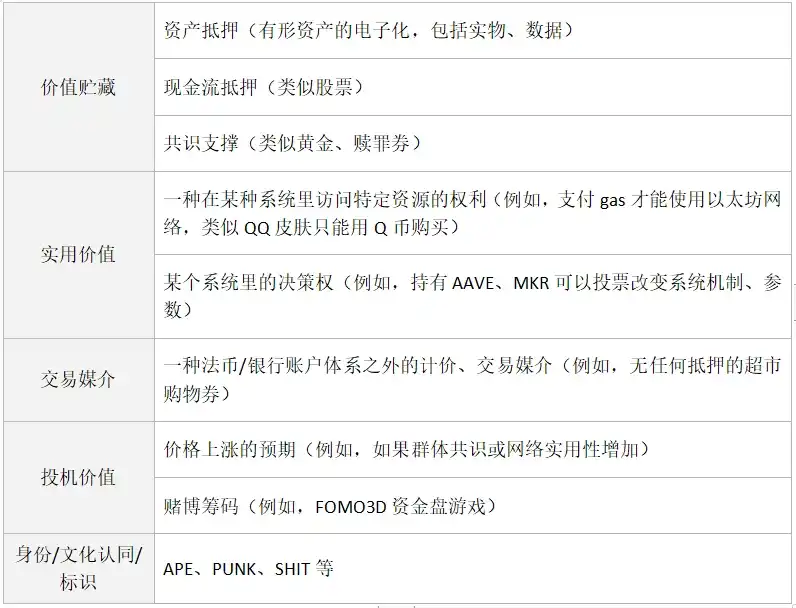
Due to the unique properties of encrypted assets, they can contain multiple sources of value beyond traditional securities. It may no longer be appropriate to regulate them solely under the securities laws and regulations framework from 90 years ago.
Table 2: Classification of the sources of value for encrypted digital assets.
Source: TrendResearch
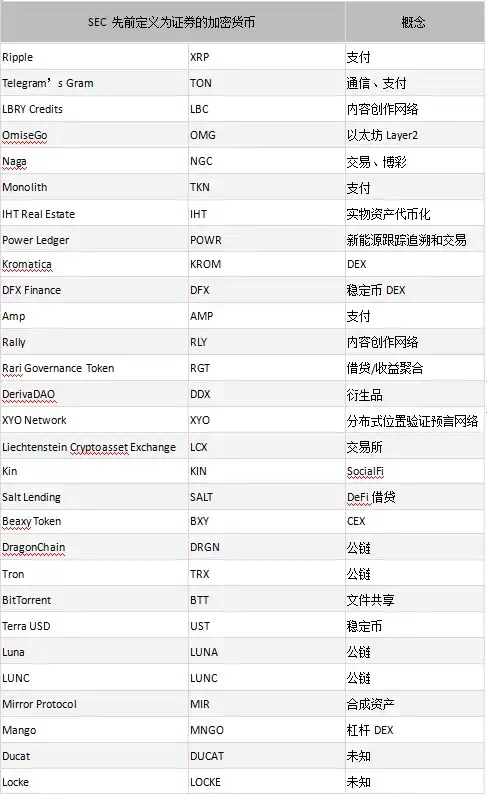
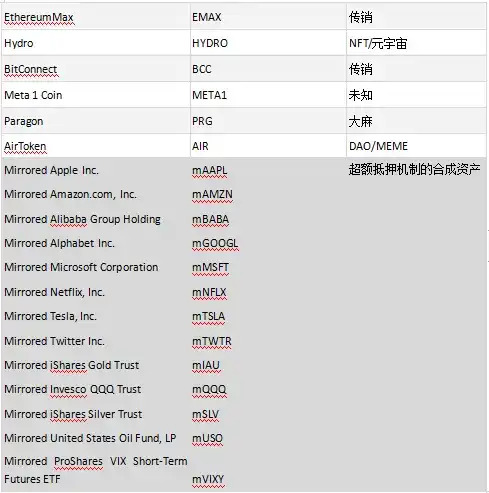
Table 3: Cryptographic assets defined by the SEC as securities in various lawsuits prior to June.
Source: SEC, TrendResearch
Original Link
Welcome to join the official BlockBeats community:
Telegram Subscription Group: https://t.me/theblockbeats
Telegram Discussion Group: https://t.me/BlockBeats_App
Official Twitter Account: https://twitter.com/BlockBeatsAsia

 Related Articles