Decrypting Sorter: The Key to Ensuring Transaction Authenticity.
The Sequencer is a critical technology in the cryptocurrency industry, used to sort transactions and create blocks. Prior confirmation information will be sent to users before the block is confirmed.
The importance of decentralized sorters lies in the fact that as more trading volume and liquidity move to Layer 2 solutions (L2), centralized sorters may charge arbitrary prices and exploit user transactions. Therefore, it becomes very important to look for decentralized sorting solutions.
What is a "sorter"?
The sorter collects user transactions on many L2s and submits them as a single transaction of a collection to the main chain L1, enabling L2 to operate efficiently. In this way, the cost of this commitment can be shared among all user transactions in the collection. The sorter can also compress the collection to further save the cost of main chain data availability. Overall, it is an essential component of L2.
However, the sorter has control over the ordering of transactions in the set. The sorter can choose to exclude user transactions, and can extract MEV (maximum extractable value) from the set through standard reordering and insertion extraction methods. They actually have priority write access to scaling. It is worth noting that since the sorter can interact with contracts, only error-free transactions can be reliably enforced through on-chain mechanisms. Errors may cause failures during forced sorting.
This makes the sorter a semi-trusted role for expanding users. The sorter can delay user access and extract value from their transactions. Further limiting the behavior of the sorter through decentralization is an actively researched topic.
In general, the sorter plays an important role in the OP system L2. It improves user experience and reduces transaction costs by aggregating and submitting transaction sets. However, since the sorter has control over transaction sorting and value extraction, we need to continue researching how to limit the behavior of the sorter in a decentralized way to ensure user interests and scalability security.

Centralization Risk of Sorters
Currently, there are still some issues with the sorter in distributed systems in the optimistic expansion. As the sorter usually plays a centralized role, there are centralized risks:
Weak censorship resistance: Unlike the nearly infinite number of distributed nodes on the main chain, a centralized sorter may not be able to ensure that user transactions are included on the chain. A centralized sorter controlled by a legal entity may selectively exclude specific transactions due to regulatory requirements. Although there are other mechanisms to address the weak censorship resistance issue of optimistic scalability (such as forced exit, escape channels, inclusion lists, or threshold encryption), we still need to accept the assumption that centralized sorters are likely to have weak censorship resistance capabilities.
Weak Liveness: The design of a centralized sorter may not be able to handle the computational processing and proof generation required to keep the system running consistently. RPC or sorter downtime caused by hardware failures or a large amount of spam from validators or bots (such as Arbitrum Token Launch, Optimism Delay) may result in weaker scalability.
MEV Revenue: Current centralized sorters typically follow a first-come, first-served transaction sorting rule. In order to ensure that they do not extract MEV from user transactions through node privileges, additional trust is required, or it must be ensured that the third-party sorting service they adopt (such as Chainlink FSS) does not have malicious behavior.
Some sharing, outsourcing, or sorter-based solutions may be able to address these issues, but it is still too early for such solutions. In addition, many distributed sorter solutions (such as authoritative proof, leader selection of equity proof, MEV auction, and energy proof) are still in the conceptual design stage.
Sorter's Territory
Vitalik Buterin proposed several methods for building decentralized sorters, including sorter/block auctions, PoS-based random selection, and DPoS voting. However, most solutions focus on determining which participants have the right to propose the next block or block sequence, often overlooking the sorting mechanism itself.
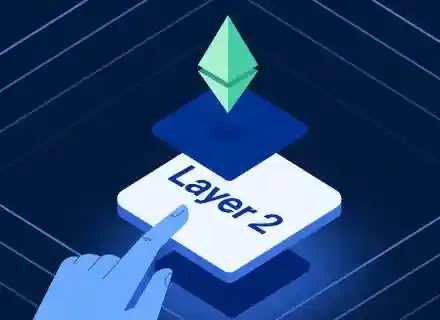
The goal of PBS in the encryption industry is to protect proposers from the impact of centralized maximum transaction value (MEV), promote competition among block builders, enhance the privacy of bidders, and eliminate negative external factors. However, unlike the first-layer solution (L1), L2's PBS faces challenges such as privacy, delay, and cross-chain MEV. One way to solve the privacy problem is to use Flashbots' SUAVE protocol, and combining SUAVE with a shared sorter is a potential PBS solution for L2.
For Aztec's PBS - "Prover-Builder-Separation" instead of "Proposal-Builder-Separation". Aztec's proposers use pending transactions from the mempool to build blocks, which include sorting commitments, rewards for verifiers, and the amount of Aztec burned. It should be noted that Aztec's proposers actually serve as both builders and proposers.
Aztec's PBS separates the power of transaction ordering (builder) and block inclusion (validator), which prevents monopolies in block generation. Subsequently, the proposer collects votes and creates a block record indicating the distribution of validation tasks among multiple validators in a specific block. This is important for ensuring the decentralization of validation tasks, as the participation of validators becomes a metric for the winning block.
In addition, they also use TARGET_PROVERS counts to increase the cost of maintaining the manipulative mechanism for attackers. However, one problem with this pattern is that if the attacker allows the inclusion of validators and only generates proofs for a small part of the block, leaving most of it to a single validator, the attacker can avoid punishment.
During the entire process, multiple proposed blocks will go through a voting stage for ranking, and the block with the highest number of votes will become the head of the chain. However, this pattern may lead to "griefing" attacks, where validators vote for blocks but do not generate proofs. Aztec suppresses this situation by introducing Slash and Redundancy mechanisms. In addition, SUAVE can provide privacy protection and potential decentralized block sorting as the builder of Aztec.
There are other projects under construction for shared sorters, including:
Espresso plans to use EigenLayer's ETH staking as a security model.
Astria, unlike Espresso, does not execute transactions, has an embedded PBS, and builds a Rollup on the basis of Celestia and Rollkit.
Radius, whose sorter focuses on reducing harmful MEV through encrypted transactions, maintains a set of sorters and randomly selects one in each period.
The goal of these projects is to achieve decentralized sorters to improve the determinacy and security of transaction order and enhance user experience.
Summary
With the continuous development and innovation of blockchain technology, the working mechanism of decentralized sorters will continue to evolve and improve. This will provide users with a more secure, reliable, and efficient trading experience, while protecting them from the manipulation and unfair behavior of centralized institutions.
In the future, we can expect to see more innovative solutions and projects emerge to address the challenges in the field of sorters. With the advancement of technology, issues such as privacy protection, transaction speed, and cross-chain compatibility will be better addressed.
The development of shared sorters will enable different Rollups to work together, providing composability and flexibility to meet the needs of different industries, applications, and use cases. With the continuous maturity and promotion of shared sorters, we can foresee the emergence of thousands of decentralized sovereign Rollups, providing users with more choices and better services.
In short, through continuous research and innovation, we have reason to believe that decentralized sorters will become a key component in building secure, efficient, and fair blockchain ecosystems. They will drive the further popularization and application of blockchain technology, bringing more open and inclusive financial and digital experiences to users worldwide.
Original link
Welcome to join the official BlockBeats community:
Telegram Subscription Group: https://t.me/theblockbeats
Telegram Discussion Group: https://t.me/BlockBeats_App
Official Twitter Account: https://twitter.com/BlockBeatsAsia

 Related Articles