Rollup Money Tree: Cake distribution of sorter and overview of decentralized solutions.

Source: YBB Capital Researcher Ac-Core
Foreword
A sequencer is an important component in the Ethereum scaling solution Rollup, which is used to sort transactions and perform related operations such as block creation, transaction acceptance, transaction sorting, transaction execution, and transaction data submission. With the increasing number of Layer2 networks on the Ethereum network and the prosperity of its ecosystem, the profit model and centralization issues of Layer2 itself have gradually attracted attention. For example, whether the important sequencer component in Rollup can achieve decentralization and how the sequencer profits are distributed. This article is only for analysis and reference, and does not promote any specific project.
Overview of Rollup Economics
Rollup's role
According to the explanation provided by @barnabemonnot, a research scientist at the Ethereum Foundation, there are three main roles in the Rollup system: users, Rollup operators, and the base layer. The main process they run is roughly as follows: when users conduct transactions on L2, Rollup operators act as an interface between users and the base layer, and ultimately publish the data to the base layer, as shown below.
1. User: Send their transactions on the Layer2 network, deploy their assets on Rollup for contract interaction on Layer2, and direct payment fees to the Rollup operator;
2. Rollup Operator: Represents all the infrastructure needed to process transactions on the L2 network, which includes many other roles such as Sequencers, Executors, Challengers who report fraud proofs, and Validators who compute validity proofs. The most important of these is the Sequencer.
3. Basic layer: It can also be understood as a complete node, whose purpose is to protect the data protocol of Rollup, to process and verify all transactions, to ensure the correctness of Rollup state, and to ensure the validity of each transaction, such as discovering erroneous transactions and deleting them.

Source of the image: @barnabemonnot
Rollup Cost
Layer2 operator cost: The cost incurred in maintaining a transaction pool, sequence batch processing, calculating state roots/state differences/validity proofs, and other issues related to batch transaction processing, transaction verification, and block generation. As Rollup operators are currently centralized, the costs are borne by the protocol itself or its partners, and "transaction compression" during the process needs to be settled on the underlying layer.
Layer1 data availability cost: DA is the guarantee of security equivalent to Ethereum for Rollup. In order to publish data on Ethereum, when operators aggregate a large number of transaction sets, they need to release the transaction sets in the form of "CallData" to the underlying layer. The cost of DA contributed to Ethereum L1 accounts for the vast majority of the total cost of Rollup, and the data market price at that time is managed by EIP-1559.
Cost of congestion verification in Layer2: This is a controversial cost that affects the allocation of scarce resources when the supply of total block space in Rollup cannot meet the existing market demand. It also intuitively reflects the dynamic balance between gas prices and network traffic.
Rollup Revenue
When it comes to Rollup's revenue, it mainly comes from two sources: Transaction Value and Issuance.
Transaction value
The essence of Rollup is to expand, speed up, and reduce Layer1 pressure on Ethereum. The answer to whether Rollup will receive MEV-related benefits is actually negative. This is because Rollup relies on a sorter and transaction sorting based on gas expenditure, and it does not have the concept of blocks, so it does not have a Mempool. However, private Mempools like OP Mainnet have brought about MEV issues. Therefore, Rollup itself will not profit from MEV without the premise of "privatizing Mempool". Essentially, the biggest source of profit for Rollup comes from the price difference between transaction gas.
发行
Issuance
The second source of income is issuance. At the base layer, income is obtained in the form of newly minted tokens by the block producers of native encrypted assets on the network. This partially offsets the infrastructure costs of block producers and once profits are generated, it will attract more block producers. Assuming that Rollup is able to mint its own tokens, Rollup may pay for operating expenses by issuing new tokens (but in reality, the model here will be more ambiguous and there are multiple ways to use income sources for Rollup costs).
Regarding the issue of cost and revenue balance, we will not elaborate on it. The above is only a brief description. The Cancun upgrade will also affect the revenue situation of Rollup to a certain extent. Its core EIP-4844 (also known as Proto-DankSharding) can be summarized in a sentence as alleviating the high DA cost problem of Ethereum Layer1. A temporary external storage called "blob" has emerged, which can move the data content of Layer2 transactions to a new temporary "blob" for storage. However, it does not really store Layer2 transaction data in Layer1. The advantage is that Layer2 will have lower storage costs and faster speed, but the uncertain impact of the current data black box of Layer2 is still worth exploring.
Overview of Rollup Working Principle
1. Summary: The convolution node collects multiple transactions and creates a compressed summary, namely the convolution block, which contains the basic information required for transaction verification and state updates.
2. Verification: Rollup blocks will be submitted to the main blockchain for validation by validator nodes to ensure the validity of transactions within the block and that they comply with predefined rules.
Generally speaking, once a block is verified, the state of Rollup will be updated on the chain to reflect the results of the transaction. In this way, Rollup reduces the computational load and data storage requirements on Layer1, significantly improving scalability. An effective approach is to move both computation and state storage off-chain, while keeping some data on-chain.
What is a sorter
The sorter is a core component in Rollup design selection. As the name suggests, it is responsible for sorting the received transaction pairs and their gas prices, bundling transactions into blocks, and extracting fees to improve transaction orderliness and overall system processing efficiency. However, the reality is that all Rollups on Ethereum currently operate in an isolated and centralized manner, managed by their respective Rollup teams. The immediate impact of this is that Rollup providers maintain their centralized sorters to achieve cheaper and faster network performance, but this also means they are monopolizing Rollup profits.
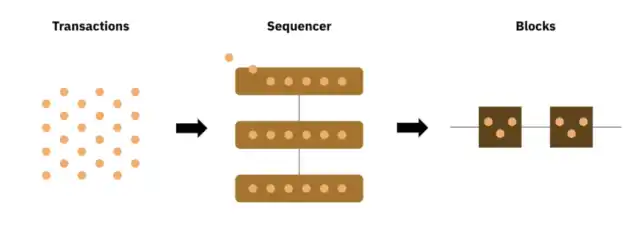
Source: Binance Research
As with the cost and revenue of Rollup mentioned earlier, its main profit comes from sorting the income from the Gas price difference of users, while expenses mainly come from the data availability cost of Layer2 to Layer1 and the operating expenses of centralized operators. Therefore, the sorter mainly charges transaction fees from the user side and pays DA fees to Ethereum. In simple terms:
Sorter revenue = User transaction gas differential income - L2 to L1 data expenditure - Sorter operation expenditure
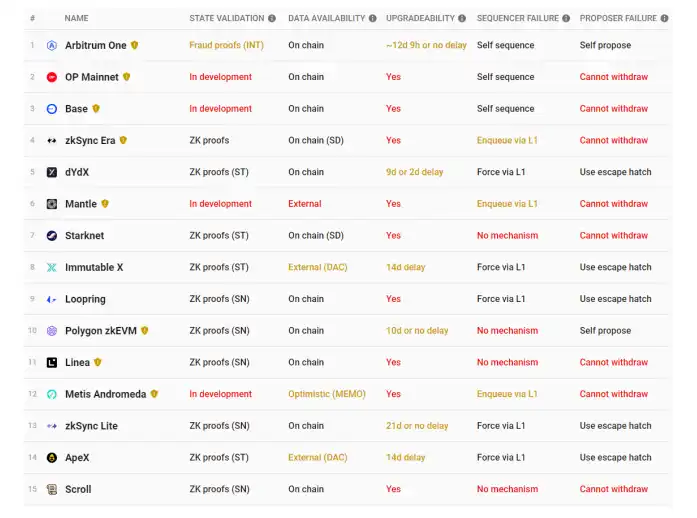
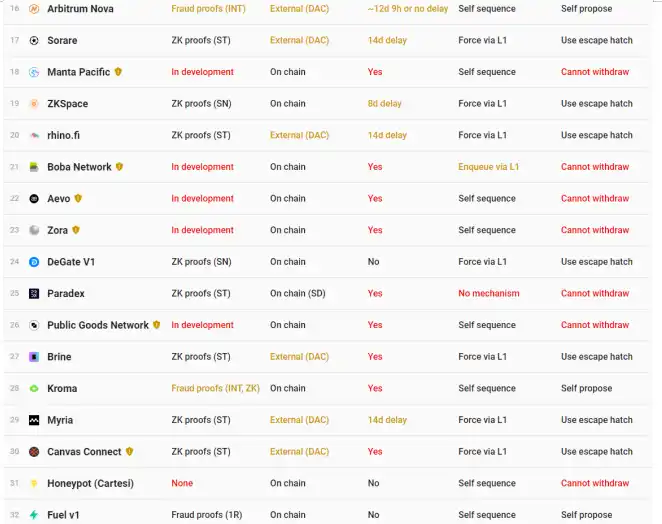
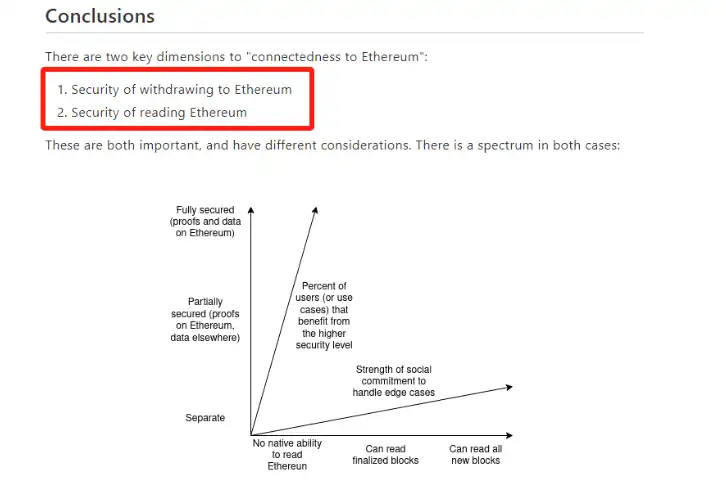
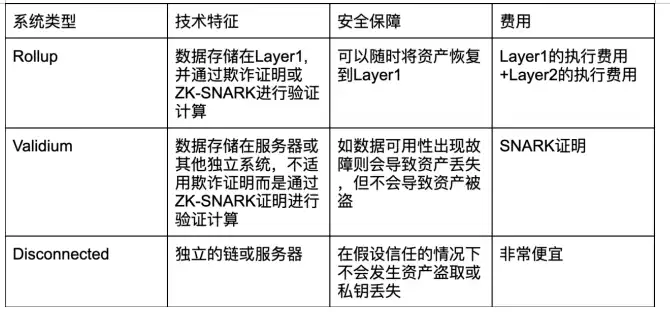
● Between Rollup and Validium: In Validium, anyone can make on-chain payments to pay for transaction fees, and in doing so, the operator is required to provide some data to the chain or risk losing their deposit.● Between Plasma and Validium: The Plasma system [2] provides convolution-like security guarantees and off-chain data availability, but it only supports a limited number of applications. A system can provide a complete EVM and offer Plasma-level guarantees for users who do not use these more complex applications, and Validium-level guarantees for users who do use them.
These intermediate options can be seen as a spectrum between convolution and effective values. However, what prompts an application to choose a certain point on the spectrum instead of a point further to the left or right? There are two main factors:
1. The cost of Ethereum's native data availability will gradually decrease with technological improvements. In the next hard fork of Ethereum, Dencun [3], EIP-4844 will be introduced, providing approximately 32 KB of on-chain data availability per second. Over the next few years, with the introduction of complete "on-chain data sharding" [4], this data availability is expected to gradually increase in stages, ultimately reaching approximately 1.3 MB of data availability per second. At the same time, improvements in data compression technology [5] will allow us to do more with the same amount of data.
2. Application's own requirements: How much loss are users willing to bear compared to the high cost and application errors? Financial applications will suffer greater losses due to application failures; games and social media involve a large amount of activity for each user, and the value of the activity is relatively low. Therefore, different security trade-offs make sense for them.
Decentralized Sorter, one is done by the Rollup project itself, and the other is implemented with the help of a third party. Implementing a decentralized sorter with the help of a third party can also be called Sequencing-as-a-Service. Projects such as Espresso, SUAVE, Astria, and Radius focus on decentralized sorter solutions, each with their own implementation path.
Decentralized Sorter Solution
1) Espresso: composed of five main components:
1. Based on the HotStuff consensus mechanism [6], the process requires a two-thirds majority to pass and cannot be reversed.
2. Its DA layer provides two different data retrieval paths. The first path is optimistic and fast, while the second path is more reliable but slower in backup speed, designed specifically to combat adverse conditions.
3.Rollup REST API: The Rollup program seamlessly integrates with the Espresso Sequencer using this API;
4. Sorter Contract: The sorter contract is an intelligent contract that verifies the HotShot consensus. It can act as a light client, manage transaction order checkpoints, and be responsible for supervising the equity table of the HotShot protocol.
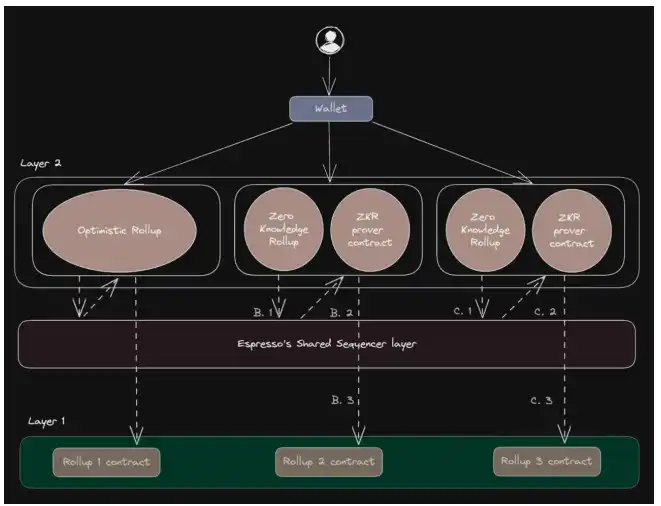
Source: The tech: Sequencers (Espresso Sorting Process Overview)
3) Astria aims to establish a shared sorter network layer to avoid the disadvantages of centralized sorters. It relies on a Tendermint-based leader rotation mechanism to address the scalability of transaction sorting and the downtime risk of centralized single points of failure. At the same time, Astria's sorter architecture is designed to aggregate transactions from multiple Rollups, rather than generating different state roots for a single block. The resulting transactions are arranged in order to form "cohesive" blocks, which are then uniformly released to Layer1's DA layer. By effectively separating transaction sorting from execution through this decoupling method, Astria is able to accommodate Rollups with different state transition functions.
4) Radius differs from other solutions in its implementation mechanism. It ensures that Rollup transactions are sorted without trust by enabling encrypted Mempool and running multiple sorters simultaneously, thus eliminating the risks associated with MEV. It uses Proofs of Verifiable Delayed Encryption (PVDE) [7] to encrypt the Mempool and uses zero-knowledge proof encryption to ensure trustless sorting of transactions and prevent risks associated with centralized sorters. However, the cost of using zero-knowledge proof to enhance security is that there may be transaction delays for users, despite the protection against MEV. The transaction process of Radius is as follows:
1. The user sends transactions to the sorting layer.
2. The sorting layer sorts transactions and generates a block.
3. The block composed of is then submitted to the Rollup-related program.
4. Rollup executes transactions in the order provided by the sorting layer.
5. Rollup submits executed transactions to the settlement layer DA for final confirmation.
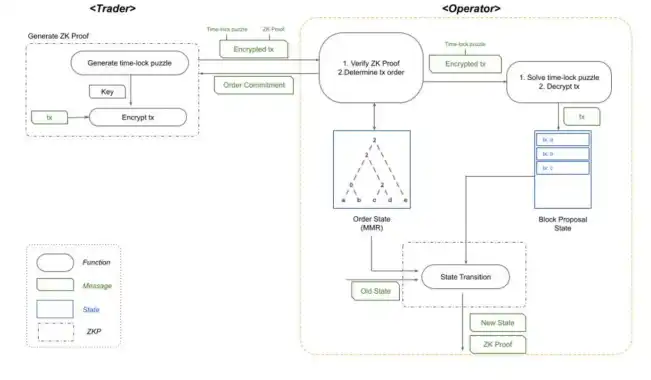
Source: The tech: Sequencers (Overview of Radius trading process)
Decentralization is the philosophical foundation of cryptocurrency. The shared sorting network solves the problems of value accumulation and income distribution through economic mechanisms. Finally, the modular construction modules and development framework ecosystem of the sorting machine, which is becoming increasingly mature, will undoubtedly become a powerful catalyst for the industry in the future.
Explanation of the document:
【1】https://mp.weixin.qq.com/s/OEL4_-uocBy8WSU4jAeVgQ
【2】https://consensys.io/blog/ethereum-dencun-upgrade-explained-part-1
【3】https://hackmd.io/@vbuterin/sharding_proposal
【4】https://twitter.com/VitalikButerin/status/1554983955182809088
【5】https://arxiv.org/abs/1911.12095
【6】https://docs.google.com/document/d/1AeXoQXnEuc_HEHb8UfLQM_Inu6_u3nDS3S3Y3j7aNqg/edit#heading=h.tn00saza05ia
【7】https://ethresear.ch/t/mev-resistant-zk-rollups-with-practical-vde-pvde/12677
Reference articles:
https://pansophicchad.substack.com/p/the-tech-sequencers
This article is from a submission and does not represent the views of BlockBeats.
Welcome to join the official BlockBeats community:
Telegram Subscription Group: https://t.me/theblockbeats
Telegram Discussion Group: https://t.me/BlockBeats_App
Official Twitter Account: https://twitter.com/BlockBeatsAsia

 Related Articles