The Ambition of Blockchain: Anti-Keynesianism, Public Life, and Transhumanism.
Original author: Hu Yilin, member of the "Crooked Neck Three Views Advisory Group", associate professor of the Department of History of Science at Tsinghua University
Original source: "Crooked Neck Three Views"

Image source: Shaman_Ledentsov, pinterest
The EDCON2023 in Montenegro has come to a close. In addition to the usual topics within the crypto community, this year's event also featured a significant focus on transhumanism/longevity-related topics. The "Discussion on Transhumanism in SeeDAO" prior to the event served as a warm-up for the SeeDAO Montenegro activities. During the event, I also participated in a small meeting hosted by SeeDAO and gave an online speech on the topic of "The Condition of Digital Age Humans - The Void of Reality vs. the Reality of Virtual Worlds," which was also included in the "Transhumanism" agenda.
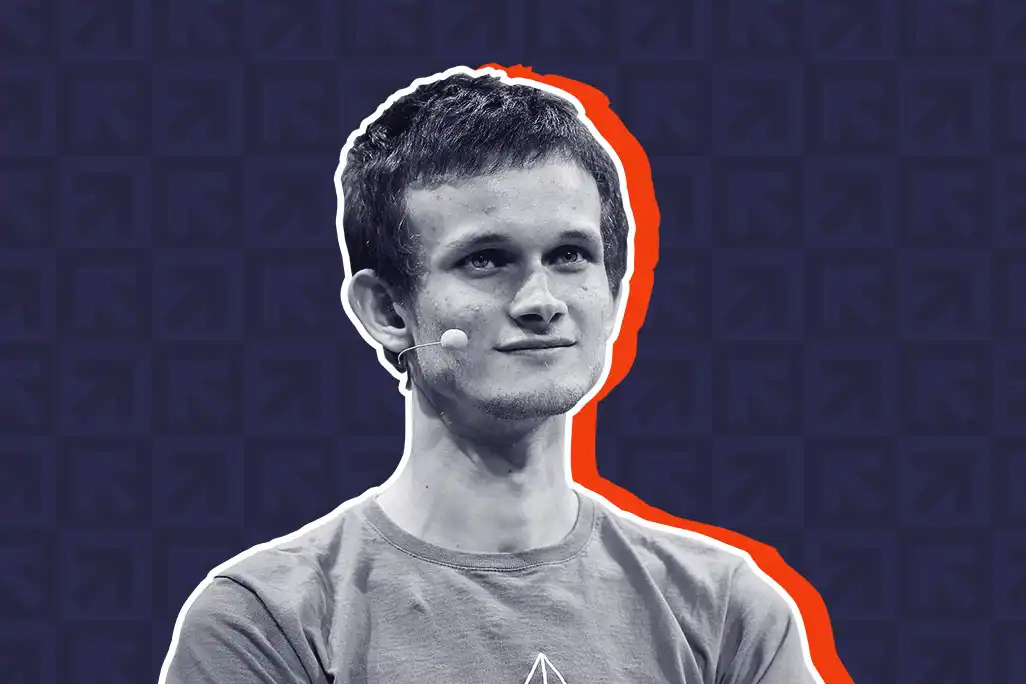
Why does the encryption community focus on "transhumanism"? The simplest explanation is "because the leader likes it." Vitalik Buterin, also known as V God, is the founder of Ethereum and the undisputed leader of the Ethereum community. He has long been concerned with longevity and has provided investment to related research institutions. He advocates the "fable of the dragon tyrant" and believes that it is immoral to let people age and not work to eliminate aging and death.
Of course, Vitalik is not an exception. We can indeed feel that compared to other industries, blockchain pioneers and the crypto community are more enthusiastic about transhumanism or longevity. This preference can be traced back to "Bitcoin's second person" Hal Finney - as a transhumanist, he chose to undergo cryopreservation when he was dying of ALS, hoping that future technology would revive him.
As Kelsie Nabben's article points out, the overlap between transhumanism and cryptocurrency lies first and foremost in the concept of "long-termism" - "the immutability of blockchain makes it a perfect foundation for long-term infrastructure".
「In the long run, we are all dead.」
This is a famous quote by Keynes. Keynes advocated for active economic policies (especially monetary stimulus) to regulate the market and rescue society from crises such as depression or unemployment.
Keynes' opponents advocate believing in the self-regulating ability of the market. They believe that so-called market imbalances, inflation or deflation, are only temporary and that "in the long run" the market can self-correct.
Regarding these objections, Keynes famously said, "In the long run, we are all dead."
Setting aside the implications of ridicule or sarcasm, Keynes' proposition is that the key issue is not whether the market can adjust automatically, but rather a matter of time scale. The spontaneous repair of the market may take decades to become clear, while the key lies in the drastic fluctuations of the market within a three to five year time frame, which may cause severe social problems. Therefore, the government should intervene to maintain market stability and keep fluctuations as smooth as possible.
After Keynes, it became a common practice around the world for governments to use various monetary tools such as raising interest rates and lowering reserve requirements, as well as policy measures such as taxation and welfare, to regulate the market in order to achieve stability goals such as a "2% inflation rate".
Keynes' theory is reasonable, as he broke the "God's eye view" of some market universalists (but on the other hand, he also tempted the government to play the role of God).
When discussing the unemployment crisis brought about by artificial intelligence, I have also expressed a similar position. For example, when facing a group of unemployed people in the technological wave, you can easily say, "Don't worry, new technology will bring new jobs in the long run, or improve human living conditions. The unemployment crisis is only temporary..." However, this temporary pain may take decades, and the unemployed who are currently in distress may not live to enjoy the beautiful life brought about by new technology. Those heavily indebted workers cannot say to the bank, "I will repay the money in the long run, so please don't ask me to repay the mortgage in the short term."
The dilemma of Keynesianism
Keynesianism became famous during the Great Depression and was born in response to the urgent market crisis. Perhaps it did play a role at that time - although there is controversy - but let's set that aside for now and assume that Keynesianism contributed to the social crisis during the Great Depression. However, the problem is that as a "relief" central control mechanism, the monetary stimulus measures that were used to avoid crises have since become the norm.

The content you provided is:
Image source: iFunny
Especially after the collapse of the Bretton Woods system in the 1970s, credit currency became a runaway horse with unlimited issuance. Although credit currency claims to hedge against excessive issuance with bonds, the fact proves that the "debt ceiling" can be constantly broken.
The significance of inflation seems to have gone beyond the scope of market incentives. More often than not, the significance of inflation seems to lie only in promoting the nominal wage growth of low-level workers, thus masking the stagnation of actual income. It just so happens that after the 1970s, the real wages of American workers stagnated and the wealth gap gradually widened.

Image source: Economic Policy Institute, Bivens et al. (2014), JD Digital Technology
Thanks to various fancy monetary policies, the United States safely passed the financial crisis of 2008, which has led many people to continue to praise this central bank-regulated monetary system.
But some people are increasingly dissatisfied, believing that the crisis itself is a result of these monetary policies. It's like how "withdrawal symptoms" can be relieved by taking more drugs, but the reason why withdrawal symptoms occur in the first place is entirely due to drug use. Treating monetary stimulus as an effective market regulation tool is as absurd as treating drug use as an effective treatment method.
On the other hand, the central controller is not a moral perfectionist. In fact, various market rescue measures, including welfare policies that appear to be beneficial to the poor, ultimately result in widening the gap between the rich and the poor. People have found that most financial tycoons not only have not been punished by the financial crisis, but have also made a lot of money. Now, the wealth of the top 1% of the richest people in the United States has exceeded the sum of the middle class (60% of the total population).

The legitimacy of living off future generations
In a sense, the dilemma of Keynesianism is inevitable. Fundamentally, the paradox of Keynesianism lies in its assumption that "overdrafting the future to save the present" is a natural and basic concept.
There are some harsh scholars who criticize Keynes for being homosexual and having no offspring, and therefore not accepting the concept of long-termism. Such personal attacks are certainly unacceptable, but it is indeed crucial to consider the issue of "offspring". When we take future generations into account, Keynes' famous quote will be changed to: "In the long run, we are all dead, but our offspring live on."
Therefore, the debate between long-term and short-term is essentially a struggle between future generations and the present generation. Many of the relief and stimulus measures of Keynesianism boil down to "robbing Peter to pay Paul", injecting stimulus into the market through borrowing to maintain current order and stability.
The literal meaning of the strategy of "eating next year's food in the year of the tiger" is completely legitimate - if I have no food to eat this year and will starve to death, I will definitely eat next year's food if given the opportunity. As for what to do next year, I will worry about it then. If I have no food to eat now, there won't be a next year for me.
However, the above legitimacy only exists when both parties weighing between the Yin and Mao years are "me". I have overdrawn my own food for next year and left the problem to be solved by my future self, which is my freedom. But the problem is, what if Yin and Mao are two different people?
Zhang San was about to starve, so he ate Li Si's food. As for what Li Si would do, let Li Si solve it himself. Is this behavior still legitimate? Sometimes Zhang San could have eaten less and not starved, but he just felt that his physical condition was not stable enough, so he grabbed Li Si's food. At the same time, Zhang San did not know whether Li Si's food was enough to eat. Zhang San may argue that Li Si must have enough to eat, and what I took was just Li Si's surplus food. Does this make Zhang San's behavior reasonable? Not necessarily. Zhang San took Li Si's food without permission, which is obviously a kind of theft or even murder. Even if Zhang San returns the food later, it cannot justify the act of taking it without permission.
The current issue is that Yin and Mao are not the same person's present and future, nor are they two people at the same time, but rather "this generation" and "the next generation" at the level of human society. What is the situation?
We are very familiar with such conflicts: the previous generation obtained constantly appreciating real estate by consuming in advance, and the cost is that the next generation cannot afford to buy a house; the previous generation obtained a comfortable retirement life through pension, and the cost is that the next generation needs to constantly compete to ensure tax payment; the previous generation did not hesitate to pollute the environment in exchange for wealth expansion, and the cost is that the next generation is busy with pollution control...
The gameplay of "eating the grain of the next year in advance" was widely used in the 20th century, thanks to several major factors: firstly, the continuous growth of the population ensured that there were enough descendants to support the ancestors; secondly, the accelerated progress of technology provided more ways for descendants to take care of their ancestors; thirdly, the overall stability of the economy and social structure allowed for the future conditions of descendants to be generally predictable.
For example, Zhang San can take food from several people such as Li Si and Wang Wu, provided that Li Si's grain production capacity is far higher than Zhang San's, and Li Si's life is relatively stable without unexpected disasters and turmoil. Under the above conditions, it seems harmless for Zhang San to take food from Li Si without permission and in advance. Even Li Si fully welcomes this behavior, because since this behavior is legal, Li Si also has the right to obtain more benefits from the later Wang Wu and Ma Liu.
However, this environment has rapidly changed in the 21st century: first, population decline means there are no longer increasing numbers of descendants; second, the limitations of technology are increasingly exposed, as people discover that despite continuous technological progress, the speed of pollution control can never keep up with the speed of pollution production; third, setbacks in the process of globalization and the revolutionary development of information technology are shaking up old social structures. In this environment, the debate between long-term and short-term interests has become sharp once again.
In general "lending" activities, the subject is either an individual or a corporate legal entity. On the one hand, for the same subject, borrowing and repaying from oneself, the debt that future self will bear is fully known, and there is no "taking without telling" behavior. Shareholders and legal representatives of companies can be transferred, but the successor has an obligation to understand the company's debt relationship in advance, so in the case of voluntary succession, there is also an obligation to deal with the company's liabilities.
On the other hand, both individuals and companies are "limited liability". Individuals will die and companies will go bankrupt. Bad debts that cannot be repaid after liquidation will be properly written off, without causing endless trouble.
The arrogance of Keynesianism lies in its transplantation of behavioral and mechanistic principles that were originally only applicable to individuals with finite boundaries onto larger structures such as nations and societies.
The contradiction lies in the fact that individual human beings are limited and mortal, while "society" is endless and immortal. Keynes confuses the individual with the collective: when considering urgent interests, he takes the standpoint of the individual, emphasizing the mortality of human beings, "in the long run we are all dead", and the need for tighter regulation; but when considering coordinated regulation and pre-emptive behavior, he takes the standpoint of the collective interests of society, allowing the government to act on behalf of "society" and to plunder across the "mortal" individuals and generations. However, "society" can never be satisfied, and a society can never extricate itself from "urgent needs".
The Original Intention of the Cryptocurrency Movement
Regardless of the context, many people hope to resist Keynesianism. Their intellectual resources may be Arendt, Marx, or more people choose to return to the ideological tradition of the Austrian School, re-emphasizing the spontaneous power of the market, opposing government regulation and excessive currency issuance... This is exactly the general position of early supporters of Bitcoin, and it can even be said that Bitcoin was born for this purpose.
In 2008, Satoshi Nakamoto published the Bitcoin whitepaper during the financial crisis and launched the Bitcoin network in early 2009. In the "genesis block" of Bitcoin, Nakamoto left the headline of that day's article in The Times: "Chancellor on brink of second bailout for banks," which is generally considered a satire and rebellion against the traditional central banking system.
The so-called "weapons of criticism cannot replace the criticism of weapons". Satoshi Nakamoto, a person of few words but ruthless actions, invented an unprecedentedly powerful "weapon", which is blockchain technology. The aim of blockchain technology is to establish a globally accessible digital currency system independent of central banks.
The basic features of blockchain technology are decentralization and immutability. Decentralization means opposing the central bank's top-down manipulation of the market and emphasizing that each individual should control their own property and identity definition. Immutability has a dual meaning: the immutability of the public ledger as a historical record, and the immutability of the total amount and issuance speed of currency (opposing control and inflation).
We found that the core feature of blockchain - "self-immortality" - happens to be the core appeal of transhumanism. This is not accidental, because if we want to oppose Keynesianism not only from the level of tools and efficiency, but also from the level of ideas, we naturally have to touch on Keynes' "anti-long-termism" concept: "In the long run, we are all dead."
Nihilism Crisis
To refute Keynes' core argument of "in the long run, we are all dead", let me return to Arendt and the philosophical dimension of "human condition".
"After I die, let the flood rage on" is a typical nihilistic attitude, as people find it increasingly difficult to find meaning in life in the "long-term" (whether it be in others or in the future), leading to the prevalence of egoism and hedonism. Even in places that seem to promote collectivism and altruism, it is becoming harder to find meaning beyond "simple survival".
Existentialism or the crisis of meaning is the basic condition of human beings in the industrial age. The crisis of meaning is caused not only by the "death of God", that is, the disappearance of religious life, but also by the loss of the space traditionally available for people to rely on for immortality. In China, I believe it is the disappearance of "historical culture". In the West, it is the alienation of the public sphere (Arendt believes that the public sphere has been replaced by the "social" of the masses).
Everyone's words and actions will create ripples in the public domain, triggering endless echoes, thereby extending their existence beyond individual life. At the same time, the feedback obtained from the public domain continuously reinforces the reality of everyone's life.
Arendt said:
The presence of others assures us of the reality of the world and ourselves, because they see what I see and hear what I hear. ... Our sense of reality depends entirely on presentation, and thus on the existence of a public domain where things emerge from the darkness of hidden existence and reveal themselves ...
Not only that, Arendt further emphasizes:
As a public domain of the common world, it not only brings us together, but also prevents us from pouring ourselves onto each other. What makes the mass society so unbearable is not its large population, but the loss of the force that brings them together and separates them in the world between people.
According to Arendt's distinction, the meaning of "public domain" is to highlight individuals in the group - each person shows themselves and pursues excellence through public speech and action; while "society" is exactly the opposite, it is a holistic concept, where individuals with unique characteristics are classified as statistical data, ultimately forming a unified, continuous, objective, and mathematical model. The factory workshop is a microcosm of modern mass society, where modern people live in neat and uniform cement forests and work in well-organized factory workshops. These spaces only gather people as simple animals, where people lack connection and are difficult to separate from each other. Everyone is a "replaceable part" and a "social animal" - a beast in society.

Image source: Supun Muthutantrige, Medium
Resistance to Alienation
This modern condition was deeply criticized by young Marx long ago - the alienated labor in modern factories not only exploits the physical body of workers, but also causes spiritual emptiness and distortion.
Marx believed that the meaning of labor should be to help individuals affirm themselves in the world. My labor/actions leave a mark in the external world, which bears my unique imprint and allows me to intuitively feel my own existence in the world. For example, an artist can project their skills, experience, interests, and intentions into their "works," and through the real works and the ripples they create in others, see their own existence.
Originally, this kind of projection was not exclusive to artists. An ordinary craftsman could also achieve this, but in a modern assembly line factory, workers cannot do this. They do not have their own "works" - an electronic worker on a Foxconn assembly line does not see an iPhone as his own work. The sweat and effort he puts into it is converted into neutral labor and paid for by wages. Apart from that, he cannot inject anything of his own into the product.
Marx pointed out that labor has been alienated:
First of all, labor is an external thing for workers, that is to say, it does not belong to their essence: therefore, they do not affirm themselves in their labor, but negate themselves... Workers only feel at ease outside of labor, but feel uneasy in labor... As a result, humans (workers) only feel like they are free to act when they use their animal functions - eating, drinking, sexual behavior, at most also including living, decoration, etc., but when they use human functions, they feel like they are nothing more than animals. Animal things become human things, and human things become animal things.
This kind of alienation has become a common concept among modern people: "The meaning of going to work is not to go to work" - people naturally think so. But when they really don't have to work, what are they pursuing? Nothing more than eating well, drinking well, and enjoying various primitive sexual stimuli. The biggest creative act of a modern person's life may be decorating their own residence, but even this activity is a luxury for migrant workers who have no fixed abode.
On the basis of Marx's theory, Arendt further distinguished between "labour" and "work". "Labour" is to meet the inevitable needs of human beings as animals - such as eating, drinking, warmth, safety, housing, and reproduction. Every animal pursues these affairs, and they are eternal and never-ending: today's fullness does not guarantee tomorrow's food, today's shelter may need to be cleaned tomorrow. These endless animal needs cannot make people "affirm themselves".
And "work" is exclusive to humans, its purpose is not to deal with natural necessities, but to do things that go beyond nature and defy nature, that is, to create a world of artificial objects. In addition to labor and work, "action", which is the expression of oneself in the public domain, is the true activity that showcases human nature. The world of artificial objects created by work is meaningful only because it maintains a public domain.
The Real Digital World
The "work" created artificial world and the "public space" maintained by "action" may not necessarily be a physical space entity in the sense of physics, and the digital world may also provide such space. Especially in the industrial age, when traditional public spaces are on the verge of shrinking, many people have found a spiritual home in the digital world.
Even if it's just a single-player game, sometimes it can provide a sense of meaning. In Arendt's sense, working as a corporate drone is not called "work", but "labor", while playing games at home may be the real "work". Of course, some people play games just for "entertainment", to relax and better cope with their corporate life. But many people really "create" in games, and their works in games have more of their own personal touch than the products produced in company factories. They are a more direct projection of my personal will and interests, and therefore easier to bring a sense of fulfillment. In addition to single-player creation, social games and more online social platforms are also popular, and the "actions" and ripples in the online space are completely real.

Image source: orrrangesama, bilibili
Before the advent of blockchain, digital assets, wealth, and personal identities in the digital world had to rely on a company or platform, and this data could be tampered with or even completely erased at any time, giving people a sense of uncertainty. The significance of blockchain lies in further empowering the entire digital world with solidity, returning the power of control over personal identity and property, and returning the power of "connecting and separating" people to each individual.
Three Types of Longevity
In short, the digital world has presented some opportunities for us to revive the endangered world of meaning or public space from the trend of industrialization. Blockchain provides a solid persistence, and cryptocurrency provides a stable scale, making people more inclined to focus on the long-term.
It seems that the pursuit of "longevity" in transhumanism is just a way of echoing the overall trend inherent in blockchain, and in my opinion, it is a relatively superficial response. They simply focus on the animalistic flesh when it comes to "long-termism".
However, extending lifespan, like "work", is an endless and always "urgent" issue. When extended to 120 years old, how to extend to 150 years old becomes an urgent issue. When reaching 150 years old, how to live to 200 years old becomes an urgent issue. But if extending life is always the most urgent issue hanging over our heads, then this kind of life is nothing more than a version of the ancient concept of "better to live a bad life than to die a good death".
Of course, I do not deny the pursuit of transhumanism, but I only say that it is a superficial pursuit. The more crucial issue is always: how can humans transcend the "inescapable mortality" and find a meaningful refuge.
Throughout history, there have been three parallel dimensions of immortality: animal, divine, and human. Whether immortality is entrusted to offspring or simply the continuation of one's own physical life, it ultimately comes down to living as an animal. Hoping for the other side or the afterlife is the path of theology. Only workers and actors in the public domain leave an immortal impact on the world, which is exclusively human "immortality". These three dimensions of immortality are not necessarily mutually exclusive, as a person can be a breeder, a health enthusiast, a believer, a creator, and an actor at the same time. However, no matter what, when we discuss creation and action, the dimensions of creation and action are always the highest.
The following businesses are all in line with the trend embodied by blockchain:
Oppose Keynesianism in the dimension of monetary system or economics;
Pursuing longevity on the individual survival dimension;
On the dimension of collective living, the pursuit of the reconstruction of the public sphere.
Help creators achieve immortality in the dimension of artistic creation;
Reviving the cultural heritage in the dimension of cultural beliefs to provide an eternal and everlasting sanctuary...
These seemingly unrelated fields are connected together, sharing the same "spirit of the times", which is the characteristic of great historical changes such as the Renaissance, the Scientific Revolution, and the Enlightenment movement.
Welcome to join the official BlockBeats community:
Telegram Subscription Group: https://t.me/theblockbeats
Telegram Discussion Group: https://t.me/BlockBeats_App
Official Twitter Account: https://twitter.com/BlockBeatsAsia

 Related Articles