WorldCoin, the brainchild of ChatGPT, is aiming to airdrop to one billion people. Is it an ambitious project or just a way to exploit investors?
Original Title: "Airdrop to One Billion People! Will ChatGPT Founder Use Cryptocurrency to Solve AI Threats, Ambitious or Just Cutting Leeks?"
Original Source: R3PO
Original Author: Zelda
ChatGPT has triggered a wave of artificial intelligence, while also raising concerns about the blurred boundaries between humans and machines. The rise of large language models (LLMs) allows artificial intelligence to mimic human expression in an astonishing way, making it increasingly difficult for us to distinguish whether a piece of text or conversation is generated by humans or machines. In this situation, proving oneself to be human rather than a robot has become an important task.
Recently, the United States held its first major hearing on artificial intelligence. Sam Altman, CEO of OpenAI, called for regulation of AI at the hearing, welcoming legislation in this field and expressing concerns about the disruption that artificial intelligence could cause to the labor market.
Interestingly, Sam Altman attempts to solve the problems brought by artificial intelligence through cryptocurrency and blockchain. His co-founded company, WorldCoin, launched the World App ecological wallet in May this year, which has attracted widespread attention. The company is committed to solving a series of challenges brought by artificial intelligence and creating a better, fairer, and more just world by integrating biometric iris scanning and distributed ledger technology. It has become the infrastructure for implementing universal basic income and contributing to solving the problem of job loss caused by artificial intelligence.
Obviously, Altman has set a grand vision for WorldCoin, with ambitious plans to reach the milestone of 1 billion users by 2023. However, the official website currently shows only 1.7 million users. So, will WorldCoin bring a beautiful utopian world to users, or is it just a short-lived project for making quick money? This article will explore the importance of proof of personhood in the era of artificial intelligence, and discuss the solutions provided by WorldCoin, as well as explain how interested users can participate in WorldCoin's airdrop.
Why is it important to prove you are human in the age of AI?
The internet world has a famous saying, "You never know if the other side of the network is a person or a dog." And now this problem will become even more serious. Imagine that we spend more than 10 hours a day online, but we don't know if we have been talking to different forms of neural networks for five or six hours, which is very scary.
Since the invention of the internet, digital identity has been an unresolved issue. According to the report "Digital Identification: Key to Inclusive Growth" by the McKinsey Global Institute, over 4.4 billion people worldwide lack a legal identity or a way to verify their identity digitally, which is a major obstacle for accessing financial services.
And now, the performance of deep learning models is constantly improving, surpassing human levels at an increasingly faster pace in various benchmark tests. Large language models (LLMs) have also made significant progress recently, with their performance reaching the top 20% of human ability in most traditional evaluations. The progress of GPT-4 is particularly evident compared to the evolution of GPT-3.5.
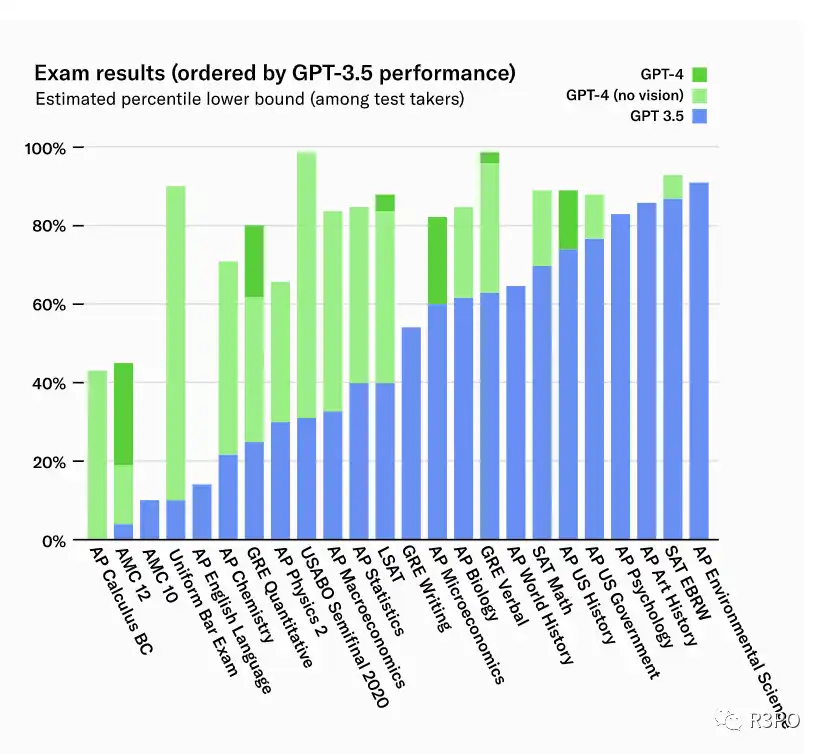
We are moving towards a new era of artificial intelligence, and solving the problem of identity verification is more important than ever. On the one hand, we need to ensure that the benefits generated by future systems are fairly distributed, and that everyone's economic interests and rights in the Web3.0 and AI era are protected. Sybil Attack can create multiple false accounts to gain undue advantage or influence, so limiting the number of accounts each person can create is crucial for digital and decentralized governance. This also helps to fairly distribute scarce resources, such as universal basic income, social welfare, and subsidies. On the other hand, we need to clarify who and what information can be trusted on the network to prevent the spread of content generated by artificial intelligence, which may cause large-scale deception or dissemination of false information.
Currently, there are Turing tests or facial video verification methods to authenticate humans, but Altman believes that this is far from enough to distinguish between AI and humans. With the rapid development of technology, artificial intelligence has already passed the Turing test, and phenomena such as face replacement brought by deepfake technology have also proven that identity verification based on video is becoming increasingly unreliable.
Worldcoin is not only a cryptocurrency, but also aims to become the "ID card" of the AI era.
So, how can we ensure that registered users are real humans and only have one account?
WorldCoin has launched an open identity protocol called World ID and developed the Orb device, which can scan a person's iris to verify their uniqueness and humanity, and assign them a "World ID" that can be used as a global digital passport. The WorldCoin team's research suggests that in the context of biometrics, the higher the entropy, the more unique and unpredictable the biometric features are. Iris recognition has higher entropy than fingerprint and facial recognition, as it is less susceptible to external factors and less affected by demographic biases, making it more suitable for identity verification.
Through the Proof of Personhood (PoP) credential, the World ID protocol enables everyone to prove their humanity online without relying on third-party institutions. This innovative identity verification method utilizes zero-knowledge proofs to maximize user privacy and achieves identity security through World ID managed by the users themselves.
WorldApp not only serves as the "ID card" of the AI era, but also makes it easier for the general public to enter the field of encryption.
The rise of cryptocurrency has brought about a huge change to the global economy. However, currently only 3% of the world's population are cryptocurrency users. One of the main obstacles is the lack of accessibility, making it difficult for the general public to integrate into this field.
WorldCoin is committed to building the world's largest and fairest digital identity and cryptocurrency system, and as a public utility, giving everyone ownership. Its design is decentralized, which means that ultimately its regulation and decision-making will be borne by its user community. It consists of three parts:
` World ID - a digital identity that emphasizes privacy protection, proving an individual's unique identity.
` Worldcoin Token - the first global token distributed freely to unique individuals, for practical use and future governance.
` World App - Use WorldcoinToken, digital assets, stablecoins, and traditional currencies to achieve global payment, purchase, and transfer functions.
Since its initial release, 1.5 million people have joined the pre-release version of World App, with over 500,000 people using it each month. On average, the app processes around 60,000 transactions and 25,000 World ID checks per day. The WorldCoin team believes that if successful, World ID will become the largest real human network on the internet, serving as a public product available to everyone.
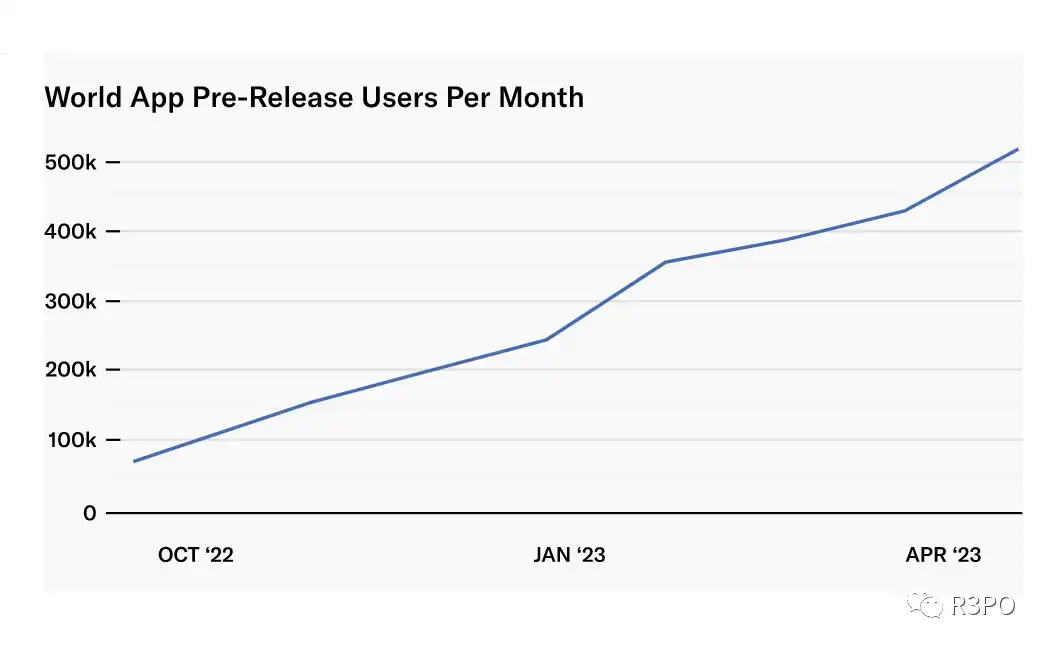
From Token distribution perspective, Worldcoin Token is named $WLD, with a maximum supply of 10 billion coins.
· 80 billion provided to the community.
· 10 billion yuan will be used for long-term funding of the Worldcoin protocol (including donations to developers).
· 10 billion tokens are provided to contributors and investors of the Worldcoin protocol and tools. (1 billion US dollars worth of tokens were given to the first round of financing institutions.)
Moreover, the WorldCoin team has stated that 80% of the tokens will be distributed through grants and will not be sold to the public. The WorldCoin token is expected to launch in the first half of this year.
So, how to obtain Token?
1. Download World App.
2. Find the nearest Worldcoin operator in the World App.
3. Complete the Orb QR code scanning and verification process with the assistance of Worldcoin operator.
4. Obtain a unique and fully functional world ID.
WorldCoin's official statement emphasizes that World ID is designed to verify the uniqueness of users, not their personal identity. Due to the involvement of biometric technology, privacy is maintained at the highest standard. Images are processed in Orb's local memory and then deleted. The output is only an iris code, which is a method of representing iris texture with numbers. Users can choose to join to back up their images.
Once verified, users can hold their World ID in the World App or wallets developed by WorldCoin protocol partners in the future, and seamlessly log in to websites, mobile applications, and encrypted dapps. Users can also earn a small amount of free digital currency through the "earn while learning" feature in the World App.
Altman created a utopia in Web3
The capital strength behind WorldCoin should not be underestimated. Last year, WorldCoin's total token supply was valued at $3 billion through a $100 million token sale, with participation from a16z and Khosla Ventures. According to the Financial Times, Altman is planning to raise another $100 million for WorldCoin.
Investment institutions are interested in it for a reason, of course, because of the founder, but what is the value of this project specifically? In fact, one of the reasons why the cryptocurrency industry has not become a global virtual economy is that the crypto world lacks a credit system and arbitration institutions. Bad actors can use multiple identities to commit fraud, and this chaotic state hinders the development of cryptocurrencies. Therefore, to ensure that the cryptocurrency industry can develop into a Web3 economy on a global scale, it is necessary to ensure that everyone can obtain unique identity confirmation on the blockchain, which can reduce fraud and malicious behavior, increase trust, and this is also why the DID project is often referred to as a high-quality track with broad market prospects. WorldCoin solves the problem of unique and real identity authentication through iris recognition, and by establishing a reliable digital identity authentication system, it can reduce malicious behavior, increase trust, and make DeFi more inclusive and innovative.
Altman's utopia is built on the foundation of a single, authentic identity authentication.
Due to the generative artificial intelligence models, many industries have shown significant job losses. However, Altman predicted that artificial intelligence will create enough wealth to pay a certain amount of money to every adult. In order to achieve this vision, Worldcoin firmly believes in decentralization from the beginning to cope with future currency devaluation, and universal basic income is a core component of its vision to offset the job losses caused by artificial intelligence. WorldCoin aims to create a utopia and hopes to become the infrastructure for implementing universal basic income, contributing to solving the problem of job losses caused by artificial intelligence.
Additionally, WorldCoin aims to achieve global governance and digital collective decision-making. Many Web3 projects adopt a token-based governance model, where each token has one voting right. Although this model achieves decentralization and democratization to some extent, it may also exclude some individuals and favor those with greater economic power. To address this issue, a reliable mechanism that can resist Sybil Attack is needed to simplify the implementation of a unique human identity-based self-governance model.
In this regard, WorldCoin's Proof of Personhood (PoP) credential system plays a key role. By leveraging PoP, WorldCoin achieves the goal of protocol governance by people and ensures that everyone can benefit from it. This mechanism emphasizes the principle of "one person, one vote", allowing everyone to participate equally in the decision-making process without interference from duplicate identities.
Conclusion
To achieve the grand goal of WorldCoin, there are still a series of challenges to be faced. The feasibility and sustainability of universal basic income is the first challenge. Although the vision of providing universal basic income to everyone is attractive, the actual problem of how to raise and allocate funds is complex. WorldCoin needs to develop a sustainable economic model to ensure that the source and use of funds are managed reasonably. At the same time, user privacy and data security are also important considerations. As the foundation of digital identity verification, World ID needs to ensure the privacy and data security of users, protect their personal information, and comply with relevant data protection regulations. In addition, WorldCoin also needs to face challenges from traditional financial institutions and governments.
Despite facing various challenges, the utopian world built by WorldCoin is still very much worth looking forward to. R3PO believes that the development of Web3 needs to go beyond the superficial prosperity of simple fundraising and ICOs. The true Web3 revolution requires more visionary, innovative, and long-term adherence to the beliefs of Web3. WorldCoin has the potential to provide more equal and inclusive economic opportunities for people around the world. We look forward to the day when WorldCoin will emerge like Open AI and become a driving force for industry change, providing tremendous support for a fairer and better world.
References:
1、OpenAI co-founder Sam Altman's $200M bet that crypto will solve AI threat
https://cryptoslate.com/openai-co-founder-sam-altmans-200m-bet-that-crypto-will-solve-ai-threat/
2、HOW TO USE WORLD APP AND VERIFY YOUR WORLD ID
https://worldcoin.org/blog/worldcoin/how-to-use-world-app-verify-world-id
3、PROOF OF PERSONHOOD:What it is and why it's needed
https://worldcoin.org/blog/worldcoin/proof-of-personhood-what-it-is-why-its-needed
4、HUMANNESS IN THE AGE OF AI
https://worldcoin.org/blog/engineering/humanness-in-the-age-of-ai
Welcome to join the official BlockBeats community:
Telegram Subscription Group: https://t.me/theblockbeats
Telegram Discussion Group: https://t.me/BlockBeats_App
Official Twitter Account: https://twitter.com/BlockBeatsAsia

 Related Articles