ChatGPT's crypto project, Worldcoin, is back after a two-year hiatus.
ChatGPT founder's crypto project, Worldcoin, Reemerges from a two-year hiatus
原文作者: flowie,ChainCatcher
Along with ChatGPT's popularity, ChatGPT founder Sam Altman's crypto project Worldcoin is back in the public eye after two years in the wilderness.
Although Worldcoin has announced a series of new developments, such as the launch of identity protocol World ID, the launch of the main network, but compared to ChatGPT's amazing and popular, Worldcoin still cannot avoid the doubt. On the one hand, it seems that Worldcoin's grand vision of becoming a global financial network and identity network will still be regarded as a bit of a fantasy. On the other hand, under the fast pace of "one day at a time" in the crypto world, Worldcoin has not only made slow progress since its establishment in 2021, but also been accused of privacy issues.

However, in retrospect, OpenAI had been dormant for nearly 10 years amid doubts, until ChatGPT. Although Worldcoin is currently flat, it is still worth looking forward to whether it can bring a little surprise to the crypto field in the future. After all, a very key factor determining its development is that, Behind Worldcoin is Sam Altman, the same leader as OpenAI. At least a16z, Coinbase Ventures and others put more than $100 million of real money into Sam Altman's encryption attempt in the first place.
From participating in the founding of OpenAI and Worldcoin, to investing heavily in nuclear fusion startup Helion and biotechnology company ReviBio, Sam Altman, Elon Mask and other Silicon Valley tycoons can be said to be in the same circle. Their ideas and bets on the future, It is always bold and even absurd from the point of view of the present, but put in a longer time horizon, just like. Sam Altman writes in his blog, "If you're right, being misunderstood by most people is a strength, not a weakness."
For an early and futuristic project, it is difficult to understand its logic simply through the official website and few project interviews. Perhaps we can start from Sam Altman's own view on future technology to understand "where Worldcoin's grand narrative comes from" and "where it will go". After ChatGPT swept the world, did Sam Altman have a new understanding of Worldcoin? What is the connection between AI and encryption?
Sam Altman Future tetralogy: OpenAI, Helion, ReviBio, Worldcoin
As ChatGPT rose to fame, Sam Altman was seen as the next star Silicon Valley CEO after Elon Mask.
Based on his resume, Sam Altman's career experience and imagination do have a lot in common with Elon Mask's. After dropping out of computer science at Stanford at 19, Sam Altman founded location-based services provider Loopt and sold it for his first big profit. Since then, Sam Altman has been picked by Y Combinator as CEO and has been involved ina host of Internet unicorns, including Airbnb, Stripe, Reddit, Asana, Pinterest, and more.
But labels like "dropout start-up" and "young CEO" don't seem to ring true in the world of Silicon Valley's moguls. It wasn't until Sam Altman became involved in AI that he became known for helping to define the direction of technological innovation.
Sam Altman co-founded OpenAI with Musk and others in 2015. When Sam Altman left YC in 2019, he officially became the CEO of OpenAI. When OpenAI first started, it was seen as a big shot project, but it wasn't until ChatGPT that people really saw the possibilities of AGI. As a result, AI became Sam Altman's most important and familiar association word.
But when it comes to understanding the future of technological innovation, Sam Altman isn't just betting on AI. If you go back to Sam Altman's blog, you'll find that one of his earliest and most common technological innovations is energy. In 2014, Sam Altman also listed Y Combinator's promising technology fields in his blog, among which energy ranked first, followed by AI, biotechnology and other fields.
So after joining Open AI, Altman is also betting on energy and biotech companies through investment. In 2021, Sam Altman led a $375 million Series E funding round for fusion company Helion, his largest investment to date. In March, Altman invested $180 million in ReviBio, a company that focuses on fighting aging and extending human life.
On the surface, Worldcoin, the crypto project Sam Altman founded in 2021, doesn't seem to stand out from his tech past. Sam Altman is not Worldcoin's CEO and rarely mentions the project directly on his Twitter feed and blog.
But in reality, Sam Altman cares deeply about world order, wealth distribution, and governance. In his blog, Sam Altman talks a lot about the wealth gap and governance issues, but also has his thoughts on digital money: "From a national perspective, there are real problems with the current system, especially in terms of pseudo-anonymity, the ability to function as actual money, and taxation."
Sam Altman recently sat down with Forbes to talk about OpenAI and Worldcoin, which he co-founded or funded. And other companies. Sam Altman mentions that his goal is to achieve a world of abundance, and AGI (General Artificial Intelligence) is the driving force behind all its actions.
If Open AI, Helion and ReviBio are intended to solve the problem of human limits, Worldcoin is intended to solve the problem of human identity and resource allocation in the future world.
ChatGPT At the same time, Altman nbsp; Worldcoin A new understanding of
After starting AI company Open AI, why do you need an encryption project Worldcoin? Sam Altman's understanding has also changed.
Shortly after Altman founded Worldcoin in 2020, Altman told Bloomberg that he began conceptualizing the use of cryptocurrencies to achieve equitable distribution in 2019, inspired by the idea of a universal basic income (UBI) proposed by economists.
ChainCatcher also introduced and analyzed Worldcoin in 2021. At that stage, Altman envisioned Worldcoin. to realize the vision of "Free coin to everyone", Worldcoin focuses on becoming a universal cryptocurrency with zero threshold and practicing the so-called "universal basic income" social experiment.
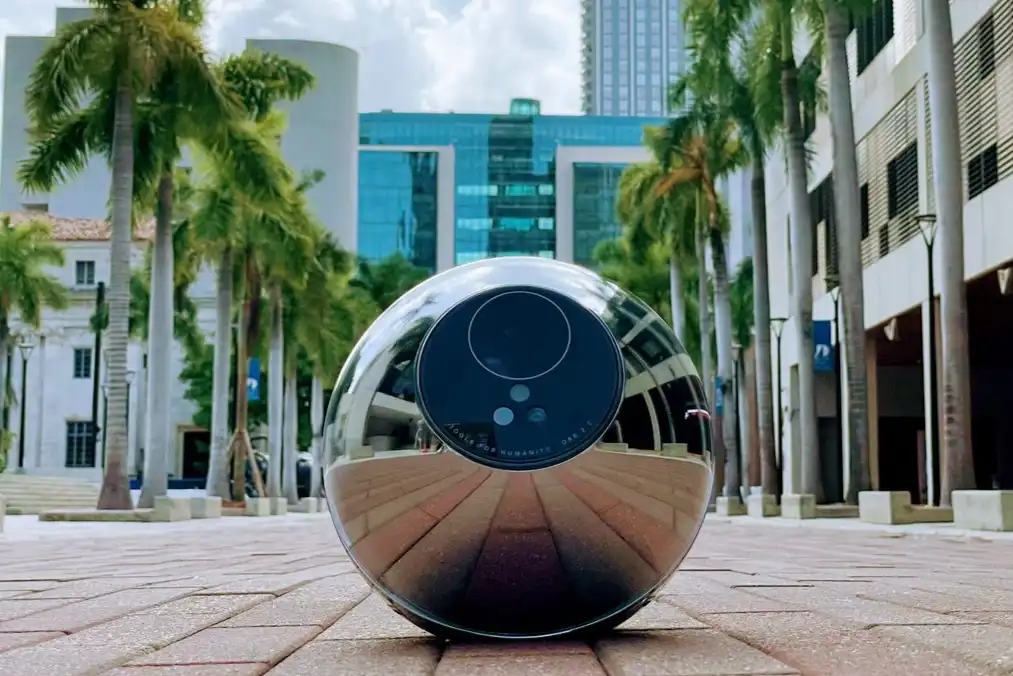
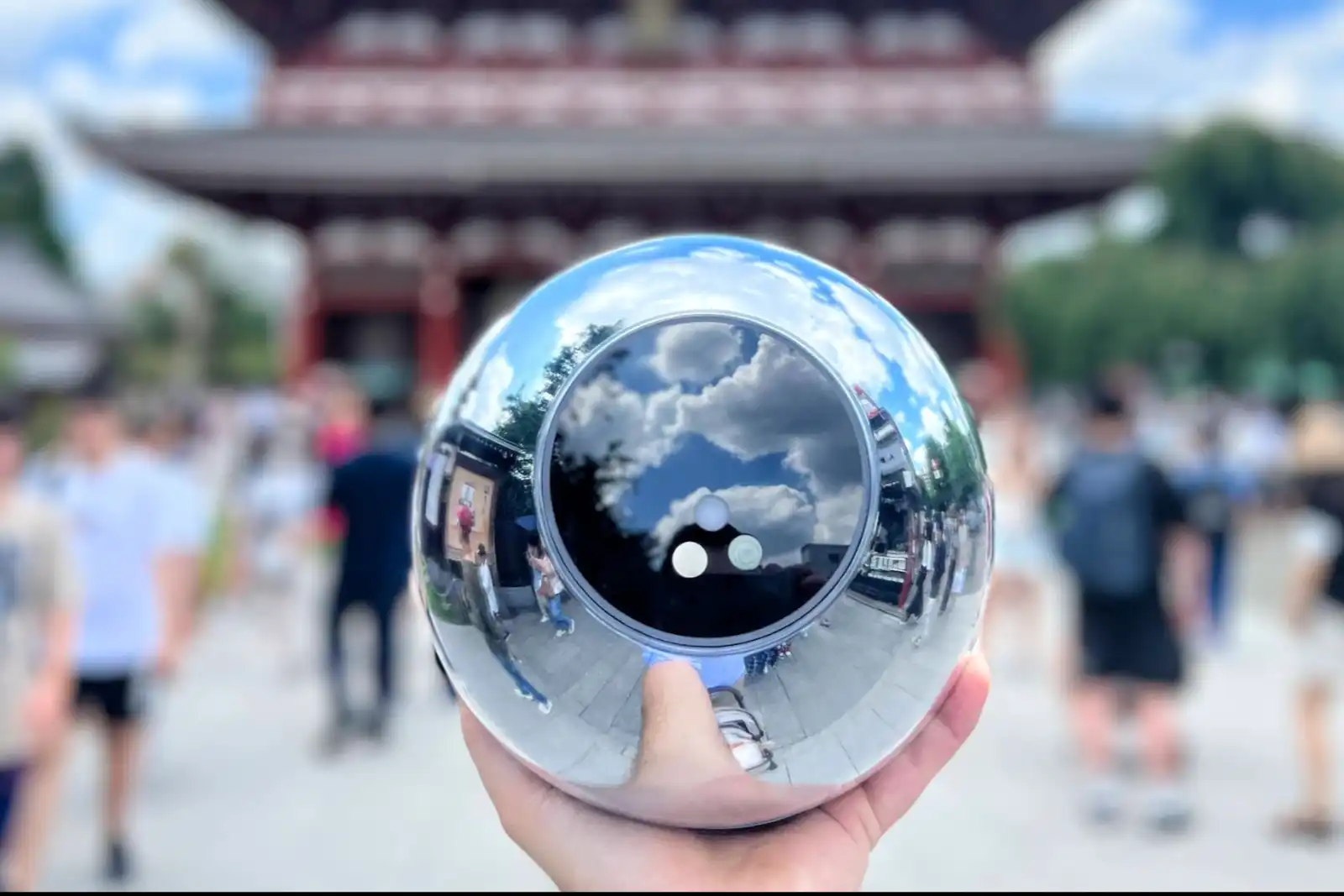
The preliminary means of realization is that no more than 80% of the token shares will be transferred to Orb , the iris scanning hardware, through the way of "iris mining"; Issued by authenticated users and operators, users can receive free tokens by scanning their irises.
After ChatGPT exploded earlier this year, Worldcoin On reappearance, Altman There is a new understanding of the problem. He believes that due to the development of AI, "the demand for systems that provide proof of personality and for new experiments in wealth redistribution and global governance systems" is growing. Worldcoin also mentioned on its official Twitter account that the popularity of ChatGPT brings the challenge of distinguishing human and artificial intelligence in the digital world. According to Worldcoin's official website and publicity manuscript, Worldcoin The core description is also more focused on the original concept of iris recognition, universal basic income and global digital currency. Web3 The field is often referred to as proof of identity, personal ownership and financial networks.
Worldcoin's website says, "Worldcoin is building the world's largest identity and finance network, as a public utility, for all to own." And how to do that, there are three key parts.

World ID:Under the protection of privacy, the identity system to prove whether the user is a real and unique person.
Worldcoin:Tokens airdropped to users worldwide for free.
World App:Use Worldcoin Tokens, digital assets and traditional currencies are wallets that enable global payments, purchases and transfers.
In addition to the free token Worldcoin mentioned at the beginning of the launch, World ID and World App are the latest developments of Worldcoin after two years of silence. Now, what Worldcoin is doing is also in line with the current narrative in the crypto space. One is the ongoing discussion of DID, and the other is the ongoing uncertainty of the wallet circuit.
At present World ID, described as Worldcoin's "underlying identity protocol," is powered by proof of zero knowledge, which people can use to prove they are real without sacrificing anonymity. This can still be achieved by using iris scanning hardware, the Orb, or by using tools such as accurate phone number verification, given concerns about biometric privacy.
Tools For Humanity, the actual developer of Worldcoin, added that World ID "is a decentralized, privacy-first protocol... which means that with World ID people can have self-custody ids just as they can have self-custody wallets." Users can get a World ID on any compatible mobile wallet, including Worldcoin's self-developed wallet App World App.
The simplest use case for World ID right now is login verification, and the first technical demonstration will focus on Discord's verification. Worldcoin's World ID authentication protocol will support many basic Web2 and Web3 use cases, such as Fair access token airdrops, community governance, DeFi applications, and more, all in a way that defies witch attacks and protects privacy.
In addition, World ID's The SDK (Software Development Kit) has invited developers to sign up for a waiting list, and the product will be available to all users, including web widgets, developer portals, development emulators, samples, and guides. The World App is still in beta.
An explanation of the privacy controversy
In 2021, Worldcoin announced that it would launch the main network in 2022, and planned to cover 1 billion users by 2023. In the case of small scale of encryption users, the ambition of Worldcoin was once questioned as "moonshot".
The development of Worldcoin is indeed far from the original goal. The launch plan of Worldcoin's main network has been postponed to the first half of 2023, and the coverage of users is only about 1.4 million. But a million users is still a lot for an encryption project, especially compared to 130,000 users in 2021, a tenfold increase in two years.

However, the collection of biological information to achieve identity proof is still Sam Altman and Worldcoin can not get around the controversy.
Sam Altman has been saying that around Worldcoin "Personally, I'd rather have the amount of privacy I give up to use Facebook or something than the amount of privacy I give up to scan my retinas... I'd like to do more experiments to see what problems we can solve with technology in this new world."
CEO Alex Blania, who was appointed by Sam Altman himself, explained that biometrics would solve a "very fundamental problem" in decentralized technology: The risk of so-called witch attacks, which occur when a single entity in a network creates and controls multiple fake accounts, is particularly dangerous in decentralized networks where anonymity is popular, and finding a personality that can actually resist witches has so far proved difficult, one of the central obstacles to mass adoption of Web3.
Meanwhile, accounts and transactions on Worldcoin will never be associated with any biometric data in Orb, iris scanning is only used for personality verification, and only locally generated one-way irreversible IrisHash is passed into the database, and with zero knowledge proof and other technologies, Worldcoin can use user data without having to know the data.
If the privacy concerns of Worldcoin biological information identification were initially caused by technical concerns, then the information collection methods of Worldcoin were also repeatedly accused later.
In a story called "Scamming, Exploited Workers, and Cash Handouts: How Worldcoin recruited its First 500,000 test Users," MIT Technology Review interviewed about 35 people who had worked on the company. Worldcoin registered to work for people and eventually thought worldCoin; Deceptive marketing was used.
First, Worldcoin Targeting mainly developing and poorer African countries. Web3 users. However, Worldcoin attracted users to sign up by the same means as the hundreds of groups in the Internet era. It offered financial incentives such as cash, Airpods, airdrops of Bitcoin and Ethereum, promises of future benefits from airdrops of Worldcoin, and even by getting through to the local government. To achieve the purpose of rapid user registration.
Most registered users know little or nothing about encryption and Worldcoin. "Worldcoin promises a fairly distributed universal basic income based on cryptocurrencies," the MIT Technology Review criticized. "But so far, all Worldcoin has done is build a biometric database from the bodies of poor people."
Second, Worldcoin The range of biometric information goes far beyond iris scanning. Worldcoin, equipped with advanced cameras and sensors, can also take high-resolution images of "the user's body, face, and eyes, including the user's iris." In the user data consent form, Worldcoin also mentions that it will perform "contactless Doppler radar to detect your heartbeat, breathing and other vital signs." Worldcoin later said it had never implemented the vital signs technology and would remove the reference from its data consent form.
As a matter of fact, the earth push of Worldcoin is indeed difficult. Worldcoin has suspended work in at least seven countries in the last year after local contractors left or regulations prevented it from doing business, Bloomberg reported. In the process of persuading users to sign up, Worldcoin has been plagued by uneven smartphone access, high user education costs and fraud allegations.
More decentralized, more encrypted
At the beginning of the project, except for the concept of coin, the operation mode of WorldCoin was not like an encryption project, especially the highly inefficient "earth push mode" mentioned above.
Worldcoin recently disclosed its decentralization progress and plans after changing its positioning to "proof of identity, personal ownership, and financial network."

In terms of governance, Worldcoin ensures that the governance structure of the project allows for decentralized decision-making. It has launched the Worldcoin Foundation, a non-profit organization, which will transfer IP to the foundation and establish the grant program and DAO community.
In terms of development, ensure that Worldcoin is open source, allowing a large number of developers to conduct peer review and collaboration to accelerate development. Worldcoin's source code and Orb design are currently open source one by one, while community communication mechanisms (such as all core Ethereum developer meetings) are in place to ensure transparency and create a "World Improvement Proposal" (WIP) process. Next, the team will open up more protocols, improve community communication mechanisms, publish standards for third-party applications and Orbs, and accept community code contributions.
Operationally, ensure that the Worldcoin infrastructure is operated by multiple parties or entities to withstand failures and attacks. Next, improve operator incentives to support more third-party market teams.
In this way, after two years of silence, Sam Altman's cryptography project Worldcoin seems to be starting to look like a real cryptography project. Instead of simply collecting biometric information, it has introduced a protocol layer for identity authentication and made efforts around decentralization.
In addition, Worldcoin is also actively seeking for the expansion scheme of Ethereum and has made a series of technical contributions to EIP4844, such as the implementation of Kzg-Ceremony-Sequencer, the clients of KZG ceremony participants, the support encryption library (ECC, KZG), etc. It said it would adopt Ethereum Rollups sooner rather than later to provide better security.
However, the Worldcoin main network has not been launched, and some actual functional demonstrations cannot be verified for the time being. The controversy surrounding biometric airdrop is still difficult to eliminate.
And "What kind of spark can there be with AI and encryption?" At present, Sam Altman only put forward this key question in a superficial way. The popularity of AI will bring about the growth of the demand for identity proof. As for what new innovations will be brought about by the interaction between AI and encryption, Sam Altman or Worldcoin may also explore an important possibility.
Original link
Welcome to join the official BlockBeats community:
Telegram Subscription Group: https://t.me/theblockbeats
Telegram Discussion Group: https://t.me/BlockBeats_App
Official Twitter Account: https://twitter.com/BlockBeatsAsia

 Related Articles