Sam Altman, the new king of Silicon Valley, testifies before Congress. ChatGPT will rewrite the rules of the tech world
原文标题:《 硅谷新王征服美国国会,OpenAI 创始人在听证会上都说了啥? 》
原文来源: Founder Park
There is an exception to the usual congressional hearings in which everyone from Facebook's Mark Zuckerberg to FTX's SBF is questionedOpenAI CreationIt started with Sam Altman.
On May 16, at one of the most high-profile hearings on AI in the history of the US Congress, OpenAI CEO Sam Altman was treated with great respect. Instead of being hecked, he was the point person in the room, calling for regulation of AI. And keep asking questions.
The hearing came the night after Altman dined with 60 lawmakers on Capitol Hill to talk about OpenAI's AI technology and regulatory challenges. Altman's speech at the dinner, which lasted about two hours, thoroughly touched the hearts of members of Congress, with CNBC reporting on Tuesday that Altman received high marks from the six lawmakers he interviewed.
The new king of Silicon Valley is enthroning.
This article from Fouder Park is a summary of Altman's address to Congress. Here is the full text:
In less than six months, ChatGPT has sent Sam Altman where almost every tech leader has to sit for half a day.
But this time, unlike in the past, the MPS were not acrimonious. They were friendly, even respectful. According to The Washington Post, lawmakers have been far kinder to Sam Altman than any previous giant CEO.
Also unlike in the past, this time lawmakers really did a lot of homework and learned a lot about technology.
Unfortunately, no amount of preparation could keep up with the racing AI. They, like you and I, don't fully understand what OpenAI has created.
In this cramped room, Sam Altman is the one doing the talking, not answering the questions, but defining everything. He defines the capabilities of technology, the boundaries of regulation, and the future of the entire tech world.
Some say the regulatory inquiry is the beginning of a new chapter in artificial intelligence.
He seemed to have the first chapter in mind.
Technology needs to be regulated, but let me tell you how

As mentioned above, the whole event was not a criticism of the chaos that OpenAI and Sam Altman's AI technology have brought to society.
Instead, the lawmakers refused to criticize OpenAI's technical development, instead seeking advice from Sam Altman and two other witnesses on potential rules for generative AI systems such as ChatGPT.
The senator came prepared
The chairman of the hearing, Senator Blumenthal, opened with a recording.
"We've seen too many times how technology can leapfrog regulation, the rampant mining of personal data, the proliferation of disinformation and growing social inequality, and we've seen how algorithms fuel discrimination and prejudice, and how a lack of transparency can undermine public trust. This is not the future we want."
At the end of the recording, Blumenthal said, "If you were listening at home, you might think that was my voice, that I wrote the words, but in fact, it's not my voice."
Using voice cloning software, he copied his own voice and had ChatGPT write an opening statement in his own voice.
The move won the approval of a large number of netizens, who believe Congress is actively preparing to try to understand the technology itself.
A few metaphors
When faced with something difficult to understand, people tend to compare it to something familiar.
Throughout the hearing, lawmakers and witnesses likened the big language model to something like this:
The invention of the first cell phone, the Internet, the industrial revolution, the printing press and the atomic bomb.
"Please supervise us"
Altman told MPS that his biggest fear was that AI would end up doing "significant harm to the world" and acknowledged that if AI was not properly regulated, it was bound to have adverse effects."If something goes wrong with this technology, it could be very serious."(If this technology goes wrong, it could be quite wrong.)
Musk accurate this sentence.
To that end, he believes government regulation is crucial to help ensure that technology is spread responsibly.
A senator, hearing Altman's answer, commentedVery few companies go before Congress and say, 'Please regulate us.'
"But he did not propose slowing down or suspending the introduction of AI products," the Post reporter wrote.
Less competition would be good for you
Mp Cory Booker said one of his biggest concerns was the "high concentration of business". "It's really scary how few companies control and influence the lives of so many of us, and they're getting more powerful."
Altman wants him to rest assured that, first, "there are only a few suppliers that can make models like mass-generative AI," and, second, that "the fewer people you really have to focus on, the better." He believes that competition exists and is sufficient.

I'm not saying we don't advertise
Senator Booker also asked Altman OpenAI if he would get into the advertising business.
"I wouldn't say never," Altman said, noting that there are potential customers who only have advertising as an option, but he personally likes the subscription model.
Lawmakers worry that AI systems using advertising models could eventually go the way of social networks and algorithmic recommendations.
Social networking, a keyword that has little to do with OpenAI, came up frequently throughout the hearing. Lawmakers are post-Facebook and post-TikTok, like PTSD, frantically trying to avoid the trouble social media once gave them.
So Altman reiterated that AI is not social media, and this is not going to work.

A new tool for digital colonization?
Another problem social networks pose for Congress is the lack of support for minority languages, leading US tech companies to be criticised for "digital colonialism".
Lawmakers raised the issue, raising concerns about whether AI supports enough languages.
Sam Altman says the latest version of ChatGPT "is already very good at using a large number of languages, and for some of the smaller languages, we're happy to work with some partners to customize it and incorporate it into our model."
Develop new international standards
Altman argued for the creation of oneInternational organization,Setting standards for AI,He referred to the way governments around the world regulate nuclear weapons.
He thinks the US should initiate the creation of a body similar to the International Atomic Energy Agency (IAEA) to set global rules for the AI industry.
"There are practical ways for the United States to set international standards that other countries need to cooperate and participate in, even if it seems on the surface to be an unrealistic idea." "But I think it's a good thing for the world."
New AI law
Section 230, passed by the US Congress in 1996, protects online businesses from liability for user postings, which in part contributed to the rise of social media.
Altman said the clause would not apply to artificial intelligence.
He has previously advocated a new set of laws on AI.
Three-point plan
Altman proposed a systematic and prepared plan:
1. Set up a new government agency that will be responsible for the authorization of LLMS and also have the power to revoke the licenses of companies that do not meet the standards;
2. Establish a set of safety standards for AI models and evaluate their risks;
3. Independent experts are required to independently evaluate each indicator of the model.
Mean deskmate
Although physically on the same side as Altman, Gary Marcus, a professor emeritus at New York University, is more like a member of Congress.

He was more aggressive than the lawmakers, raising several issues that were a big headache for Altman:
OpenAI claims to be for humanity, but is actually in business with Microsoft;
GPT-4's training data is opaque, he disagrees.
Continue the compulsory political course
After the hearing, Altman is scheduled to brief the Congressional AI Caucus, which will also be chaired by the House speaker.
The congressional hearings are part of a series of trips by Sam Altman, who is on a month-long international trip to talk to policymakers about technology and regulation.
Altman reportedly considered running for governor of California years ago. Dealing with politicians is not a headache for him.
Why is Altman so eager for government regulation?
One Twitter user commented: Simple. If you set rules, you control competition. The aim is for regulation to capture, lock in latecomers and become the only player in emerging markets.
Who is the definer? What was he thinking?
Techno-optimists
Altman started learning to code at the age of eight.
While hiking with a friend in his 20s, Altman abandoned his belief that humans are unique.
When it comes to advances in AI, he admits, "There's absolutely no reason to believe that in about 13 years we won't have hardware that replicates my brain. There are things that make people feel like they can distinguish themselves from other beings, like creativity, ubiquitous flashes of inspiration, the ability to feel happy and sad at the same time. But computers will also have their own systems of desires and goals, and when I realized that intelligence could be simulated, I gave up the idea that we were unique."
And he believes that "all truly sustainable economic growth comes from technological progress".
doomsayer
Before joining AGI, he was a complete doomsayer.
"I prepare for survival," he said at the YC gathering, pointing to two things that will destroy humanity, biological viruses and artificial intelligence.
The entrepreneurs around him were uncomfortable with his remarks, but he continued:
"" I try not to think about it too much," "but I have guns, gold, potassium iodide, antibiotics, batteries, a gas mask provided by the Israel Defense Forces and a large tract of land located in Big Sur to fly over.
Adoptive father of a child prodigy
So Altman, along with Musk and others, founded OpenAI during the last industrial AI boom, hoping to make AI better than humans.
He believes that true AGI should do more than cheat; it should create, discover theories, and create art. AGI should spend years learning everything like a child, and OpenAI's mission is to take care of this prodigy until it is accepted by the world.
Now the prodigy is growing up.
Before that, Altman had no qualms about accepting Microsoft's investment when he couldn't afford to keep the child prodigy. "When they found they needed more money to maintain what they thought was the most promising path, they didn't hesitate to choose to change the principle."
So he and Musk are confidants
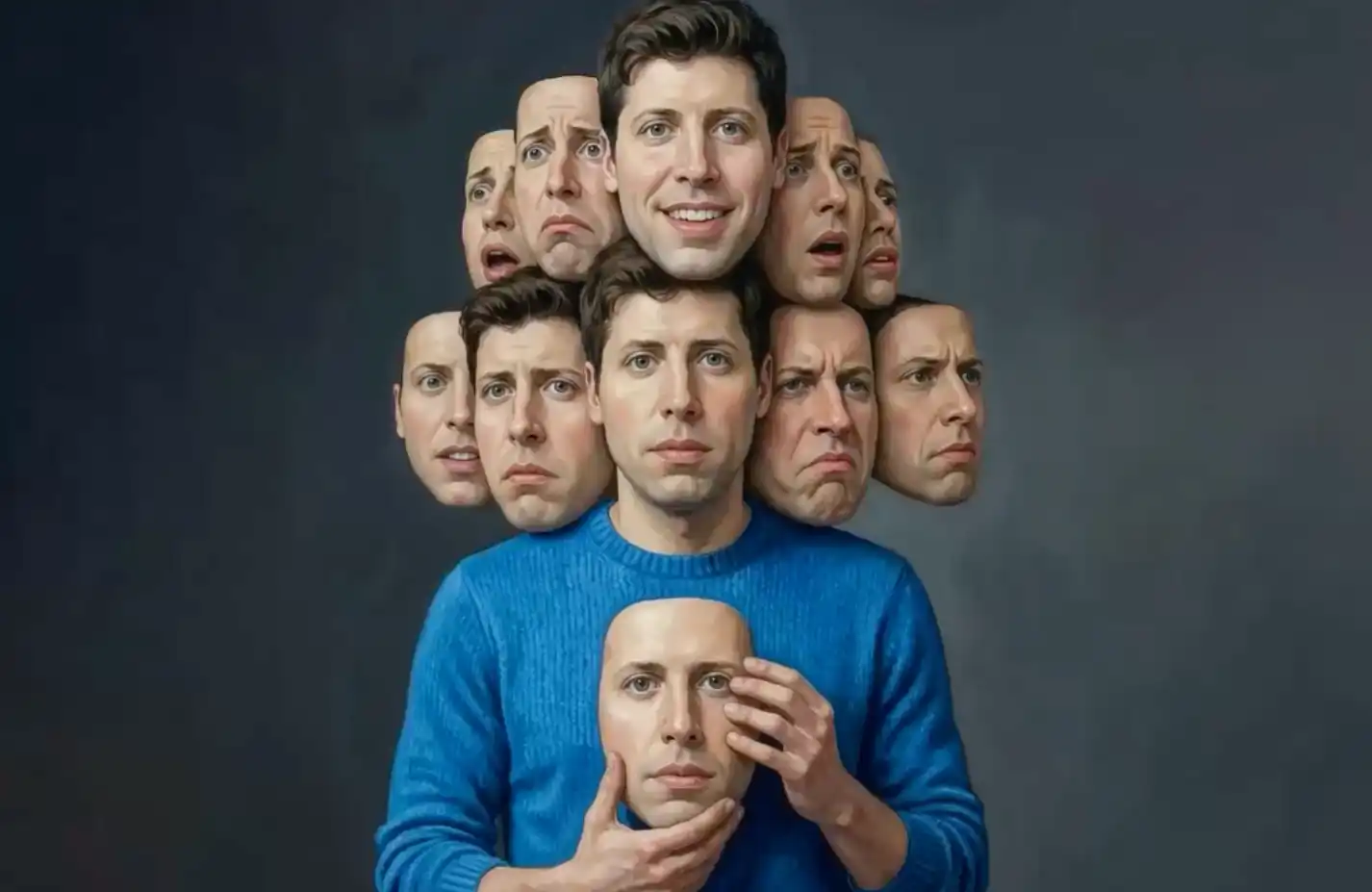
Sam Altman is a man of many identities.
He used to work for the startup LooptfounderThe company was sold to Green Dot in 2012 for $43.4 million.
When YC founder Paul Graham was looking for a successor, he looked to Altman. Serve as YC CEO Altman was 28 years old. Marc Andreessen, founder of a16z, said of his work at YC: "Under Sam's stewardship, the level of ambition at YC has increased tenfold."
In 2019, he launched a cryptocurrency company. World Coin. The company plans to use eye-scanning technology to create a global identification system that could be used to create a secure global cryptocurrency, Worldcoin.
In 2021, he was involvedNuclear fusionFunding for startup Helion Energy, $350 million from one person. Energy is something he's always focused on. "If we can pushIntelligent costAnd lower energy costs all the way down, and the quality of life for all of us will improve unimaginably."
Last week, Microsoft announced a power purchase agreement with Helion Energy to purchase electricity from the company in 2028.
Altman also plans to be in the company. YC Research Create a division of synthetic biology to delay human aging and death. "If it works," Altman says, "you'll still be dead, but you'll be alive and kicking when you're 120."
He's thinking of forming a group to prepare for a human successor, be it AI or an enhanced human. The idea is to bring together thinkers and philosophers from robotics, cybernetics, quantum computing, artificial intelligence, synthetic biology, genomics, and space travel,Discuss the technology and ethics of replacing humans.
Currently, leaders in these fields meet irregularly at Altman's house.
Spotlight on the new king of Silicon Valley
Before OpenAI hit the big time, Sam Altman was known as the "Silicon Valley elite," but now the spotlight follows him wherever he goes.
When Silicon Valley Bank (SVB) collapsed in March, Altman put up his own money to lend to start-ups that couldn't pay salaries.
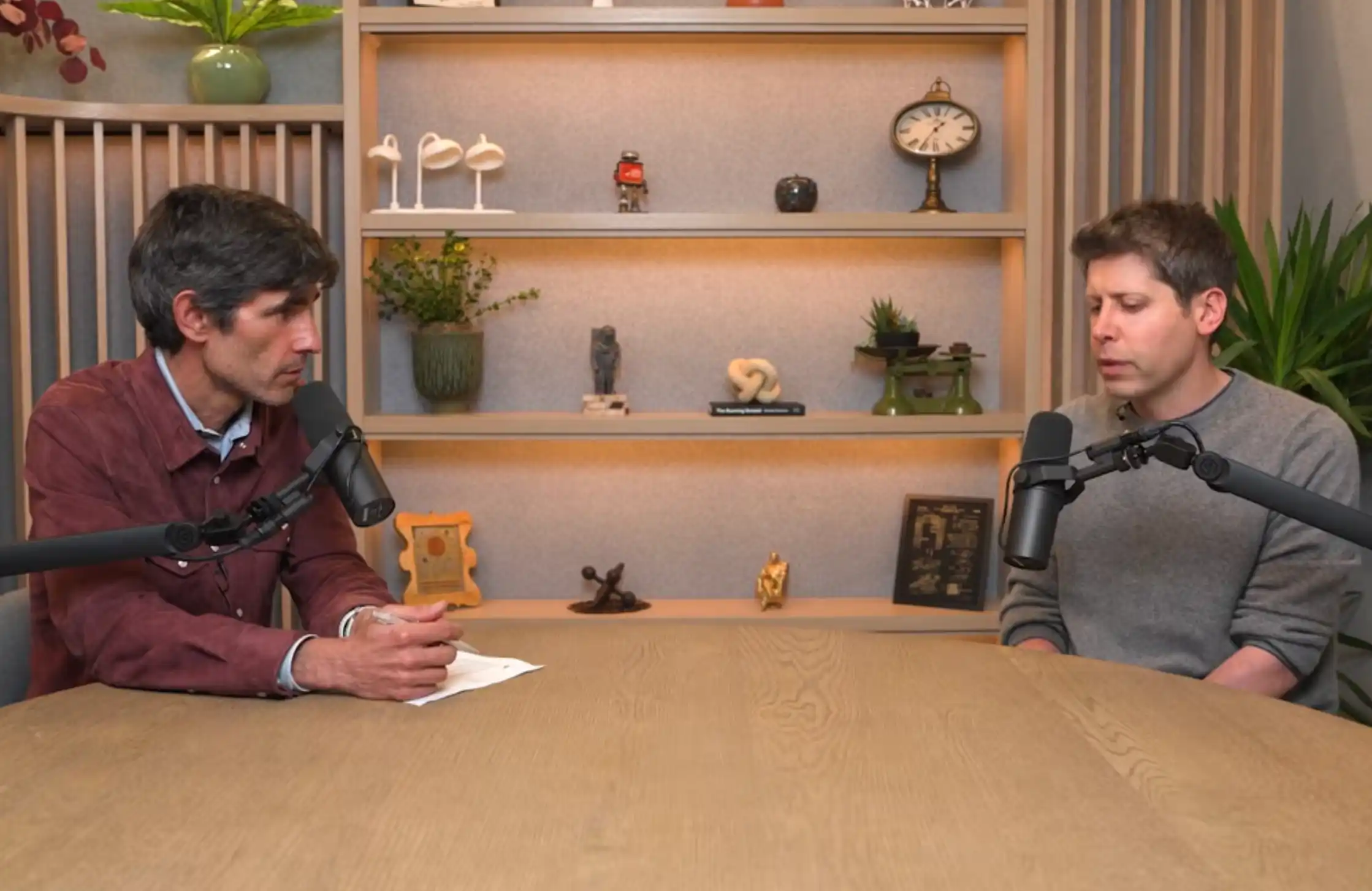
In a recent podcast interview, Altman said, "In a way, what we [OpenAI] are doing is no different than any other way to help 7 billion people."
"Telecommuting is a mistake," Altman said yesterday. "One of the biggest mistakes in the tech industry is thinking that startups don't need people to work together."
The idea was picked up by much of the tech and business media, causing a stir in Silicon Valley, where telecommuting has become commonplace in the three years since the pandemic.
Throughout the hearing, Sam Altman gave lawmakers a little geeky jolt, like all the rebellious Silicon Valley hippies of the past few decades.
"Did you make a lot of money?" "Asked the senator.
"I, no, I don't have an equity stake in OpenAI. My salary is just enough for insurance."
"Really? Interesting, then you need a lawyer."
"I just do it because I love it."
The senator who was so aggressive 20 seconds ago, he's speechless.
Original link
Welcome to join the official BlockBeats community:
Telegram Subscription Group: https://t.me/theblockbeats
Telegram Discussion Group: https://t.me/BlockBeats_App
Official Twitter Account: https://twitter.com/BlockBeatsAsia

 Related Articles