Web3 quality ceiling? How Fusionist uses the new technology of the Unity engine to create a 3A-level blockchain game
Original title: "Still watching Unity's new technology? The team has already used them to develop AAA games."
Original source: Unity official platform
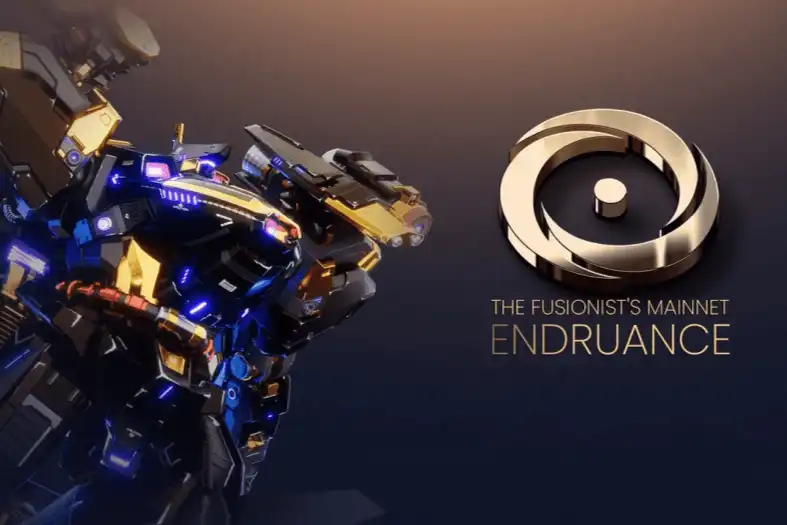
In November last year, a fusion The game with elements such as simulated management, turn-based combat, and SLG gameplay was officially announced. With the 3A-level game experience, the game quickly gained attention. The number of users in the official Discord community has accumulated to 940,000, and the number of Twitter fans has accumulated to ;
This game is 《Fusionist》.

"Fusionist" creates a macro universe based on mecha theme and planet exploration. Players will play the role of mecha commanders, manage their own planets, collect rare resources, and upgrade technology , scan blueprints to manufacture mechs, and build a production pipeline. The game is scheduled to be officially launched on the Steam platform at the end of 2023. The "Fusionist" project team has a total of 47 full-time members, all of whom are senior practitioners in the game industry. They boldly use the latest cutting-edge technologies of Unity, such as DOTS, six-sided lightmaps, etc., to create realistic water bodies, clouds, explosions, etc. Do the best picture. In this article, we invited a team of developers to explain the unlimited potential of the Unity engine in terms of screen performance from a technical perspective.
HDRP - Creating Physically Real Game World
Unity High Definition Render Pipeline (HDRP for short) adopts Physically Based Rendering (Physically Based Rendering, PBR) framework, by accurately calculating the surface material, texture and reflection parameters of the object, it can generate a more realistic picture effect.
HDRP supports richer visual effects and post-processing effects, which makes the picture effect more gorgeous. For example, effects such as Screen Space Reflection (SSR) and Volumetric Fog can give the picture a richer sense of three-dimensionality and layering.
In addition, HDRP also has built-in post-processing effects such as Color Grading and Bloom, which make the final visual effect more colorful.
In "Fusionist", many technologies of the HDRP pipeline are used, including Layered Lit Material, PBR physical rendering, SSR, SSAO, volumetric fog, post-processing, HDR etc.

About ScreenSpaceReflection, ScreenSpaceAmbientOcclusion, HDRISky:< /h4>
By using a small amount of light to simulate reflections, even if the objects in the scene receive less ambient light, the occluded areas will show obvious local areas Self-shadow, thereby enhancing the sense of volume of objects and the realism of light and shadow in the scene as a whole. After enabling it, the graphics quality can be greatly improved, and the difference between opening and closing can be compared for reference:

Path Tracing
Path Tracing's algorithm will shoot rays from the camera. When the rays hit the surface of the object, they will be reflected or refracted. It will repeat this process until the rays reach the light source. Developers only need to add Path Tracing overload in Volume.
Maximum Samples The maximum sample value can be used to control the number of frames that make up the final image. The larger the value here, the more frames needed to be rendered to form the final image, and of course the longer the time required, the better the picture effect will be.

Path Tracing will make the rendering effect of the screen more realistic. The mecha display in the game and the promotional display are used

Layered Lit Material
HDRP Layered Lit, is one of Unity's High Definition Render Pipeline (HDRP), it Can be used to create high quality PBR materials.
Because the mecha model of the "Fusionist" project requires a set of Avatar systems with different materials and color changes, the development team decided to use HDRP after testing and discussion Some layered Lit materials, although the shader is a built-in shader of the system, it can still meet the needs of the game.
Stack up to four materials on the same object in Layered Lit Material, making it easy to create realistic and diverse materials in HDRP. The Main Layer is the bottom layer and can affect upper layers with albedo, normal and height. HDRP renders Layer 1, Layer 2, and Layer 3 sequentially on top of the Main Layer.
In the Fusionist project, each layer controls a material effect and color variation respectively. Then by increasing the number of shaders, the richness of the appearance of the mecha can be infinitely expanded.

Each model of "Fusionist" will belong to an RGBA channel Mask map as the division of the material area, and the material of each division area can be PBR attribute assigned to normal Lit material:

"Fusionist" uses the general PBRmask map to determine the surface physical properties of the material and wear and tear and other details.

Material enhancement helps character image diversification
There are more materials in HDRP/Lit Type The type can be selected, but it is not in layered Lit, so the development team made improvements and integrations.

So a very special material effect is achieved:

based on The above material parameters have modulated a series of quite brilliant material samples to diversify the mecha.


< br>
KWS water System
KWS water System system is a module-based component that simulates water surfaces such as seas/oceans/rivers/lakes/pools. Water system for PC/console platforms and HDRP rendering for realistic water surfaces in Fusionist games.
The Caustic effect is a way to achieve a partially submerged underwater effect. It can be used to simulate the refraction and reflection of light in water, thus creating a very realistic underwater light and shadow effect.

Spray production:
Make particle effects with the shape of waves;
Add foam particle rendering effect to the particle effect;
< /p>
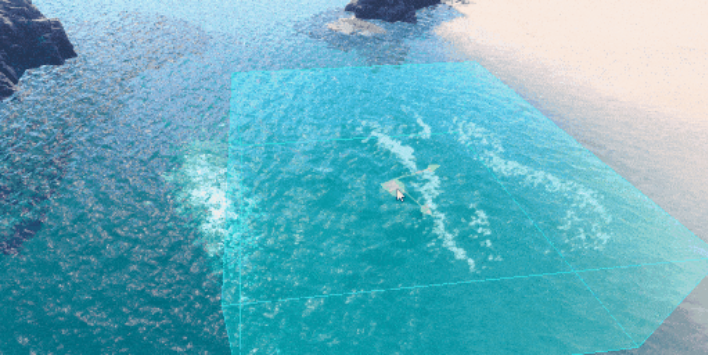
The Flowing function of KWS Water System can simulate natural flowing rivers, waterfalls and other water bodies, making the water bodies in the game look more realistic. In addition, the Flowing function can automatically generate clutter, ripples and other effects, making the performance of the water body more realistic and dynamic. By customizing parameters such as flow speed, flow direction, and water lines, the performance of the water body can be further enhanced variety and realism.

MicroSplat
MicroSplat is a Unity shader plugin , which can be used to create detailed terrain materials while having very good performance, helping Fusionist create more realistic terrain effects in Unity.
MicroSplat's Terrain Blending Module smoothly blends objects with terrain.

MicroSplat supports a variety of map controls, including height blending, texture blending, and detail maps. These controls can make the terrain look more detailed and realistic.

Expanse
Expanse is Unity HDRP An experimental feature plugin for creating realistic sky, cloud and atmospheric effects. It is convenient for the producer to quickly select an adjustable climate and weather for any time period.

Expanse provides some high-quality materials and shaders that can be used to create realistic sky, cloud and atmospheric effects. Developers can adjust the parameters of these materials and shaders according to their own needs, thereby creating various effects.

Unity's powerful special effects tools
Using six-sided lightmaps to create explosion and smoke effects
Real-time rendering of smoke and explosion effects in the game has always been a problem, because the calculated Complex light reflections and scattering in smoke require high computational cost. In order to implement it in the game, the development team often uses texture sprites to simulate smoke. However, it is difficult to achieve the interaction between smoke and ambient lighting with texture sprites, which does not look realistic.
Six-sided lighting is a much better approach than textured sprites. It uses 6-directional lightmaps to record the reflection and scattering effects of light in the smoke when it enters the smoke from 6 directions. When the game is running, the development team chooses to use one or a combination of 6 lightmaps to render the smoke sprite according to the lighting environment of the current scene. This allows the smoke to change its appearance depending on the real lighting environment and look more realistic.
Unity 2022.2 release introduces a complete end-to-end workflow (from DCC to Unity) to realistically render the Smoke. This solution also includes a library of ready-to-use textures designed to make it easy for anyone to take smoke effects to new levels of visual fidelity.
VFX Graph
VFX Graph assets are usually provided as subgraphs, developers can directly It is dragged into the VFX Graph scene for use. Only need to adjust simple properties, such as color, size, animation speed, etc., can have significant effect changes.
Because VFX Graph assets can be highly customized, the same asset can produce completely different effects through parameter adjustment. One asset can meet changing effect requirements, greatly improving work efficiency.
In addition, developers can easily combine with other VFX such as flames, fragments, etc. to create more complex and complete visual effects. Synergistic changes can be realized through parameter links between different VFXs, and the interactive effects are more abundant.
ShaderGraph
Shader Graph is officially launched by Unity, specially for HDRP volume Customized Shader editing tool, It can more deeply integrate various functions of HDRP, seamlessly link with HDRP Materials and VFX Graph, and also provide a very efficient workflow. This makes it easier and more efficient to create Shaders using Shader Graph in HDRP.
Cinemachine & Timeline
Cinemachine provides a variety of Camera Shake modes, as well as various virtual cameras, such as target cameras, track cameras, rotating cameras, etc., which allow developers to easily achieve cool skill close-ups. Driven by Timeline, the implementation process of the entire skill close-up is greatly simplified. Developers only need to set key frames on the timeline and select a suitable virtual camera.
With Post-Processing Volume's Depth of Field, Motion Blur, Chromatic Aberration and other effects to achieve very cinematic and dramatic close-up of skills< /b>, which broadens the creative space and expressiveness of skill close-ups.
Unity DOTS Dynamic maintenance performance improvement
DOTS has high performance and scalability in game performance.
Fusionist will finally be a In the space MMO-SLG with the same global server, the server needs to dynamically maintain hundreds of thousands of Entities in real time during peak hours. Using Netcode for Entities to achieve real-time front-end and back-end synchronization, the client compiles to "Windows Target", and the server compiles to "Dedicated Server Target", which unifies the front-end and back-end technology stacks at the level of Entity state maintenance, and realizes the same Programmers use the same code repository.
In the internal performance evaluation, an AWS c6a.xlarge server, can support nearly a hundred Systems, hundreds of thousands of Entity scale Cosmic Simulation. The Logic Ticket of the server is always maintained above 10 FPS.
The Unity engine is in the same workflow, and the same technology stack can support multiple platforms. In the production of the official website, card display is needed. Cards only need to be edited in the Unity Editor, and after the rendering effect is realized, the card can be exported to the web page format and then integrated into the web.
Unity Three-party tools
Unity's World Creator 2022 can help developers quickly create high-quality terrain, including mountains, rivers, lakes and forest etc. It supports multiple terrain generation algorithms and multiple terrain materials, which can create very rich terrain effects.

World Creator 2022 supports multiple terrain editing tools and multiple terrain deformation functions, allowing developers to more flexibly control the shape and texture of terrain.

Fusionist is a great example of a technical application of the latest features of the Unity engine in practice. With its impressive visuals and gameplay, Fusionist unveils what Unity can do for AAA games. The team hopes that this technical article provides valuable insights and can inspire more developers to explore the latest features of the Unity engine.

Original link< p>
< /p>
Welcome to join the official BlockBeats community:
Telegram Subscription Group: https://t.me/theblockbeats
Telegram Discussion Group: https://t.me/BlockBeats_App
Official Twitter Account: https://twitter.com/BlockBeatsAsia

 Related Articles