Week 18 on-chain data: Market anxiety still prevails, but selling pressure has eased somewhat.

Original Title: "Struggling and Persevering, Facing the Wind and Rain | WTR 4.24"
Original Source: "WTR" Research Institute
This Week Review
From April 18th to April 24th this week, the highest price of Bingtang Orange was around $30,480, and the lowest was close to $27,100, with a fluctuation range of about 12.5%.
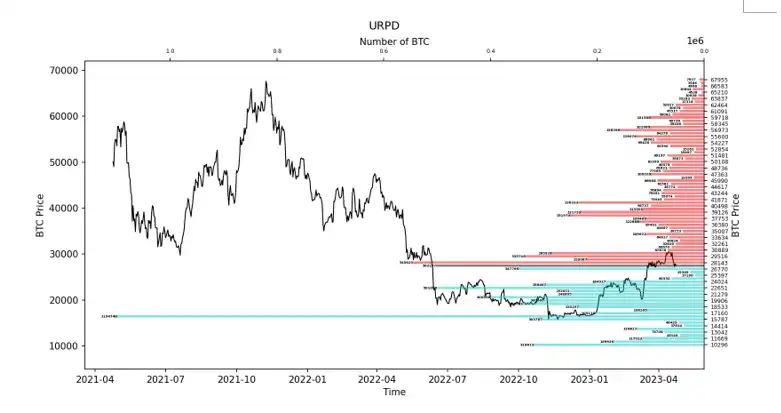
Observing the chip distribution chart, there is a large volume of chips traded around $27456, which will provide certain support or pressure.
•Analysis:
1. $25000 ~ $31000, approximately 2.41 million coins.
2. $18500 ~ $24500, approximately 2.81 million pieces.
•The probability of not breaking below 18000 ~ 22000 in the short term is 67%.
Important News
Economic News
1. The preliminary value of the US manufacturing PMI in April was 50.4, higher than the expected 49 and the previous value of 49.2 in March.
a. This is the highest reading since October last year, and the first time it has risen above the 50 boom-bust line since November last year, returning to expansion.
2. The preliminary reading of the US April service industry PMI was 53.7, higher than the expected 51.5 and the previous value of 52.6 in March.
a. Hit a new high since last April, staying above the 50 boom-bust line for the third consecutive month and in the expansion zone.
3. The preliminary Markit Composite PMI for the United States in April was 53.5, higher than the expected 51.2 and the previous value of 52.3 in March.
a. Hit an 11-month high since May of last year, and has been above the 50 boom-bust line for the third consecutive month.
4. After experiencing an unexpected surge in February, the US existing home sales resumed their downward trend in March and fell short of expectations.
a. US existing home sales in March fell 2.4% month-on-month, lower than the expected decline of 1.8%.
b. In the United States, the median sales price of existing homes in March decreased by 0.9% compared to the same period last year, marking the largest year-on-year decline since January 2012.
5. The Leading Economic Index (LEI) of the American World Large Enterprise Federation accelerated its decline in March, with a month-on-month decrease of 1.2%, far higher than the market's expected 0.7%. This is the 12th consecutive month-on-month decline for LEI, with a year-on-year decline of 7.8%.
a. Market concerns over the continuous 12-month decline of LEI indicate that a recession in the US economy is imminent.
In 2022, the share of the US dollar as the global reserve currency decreased sharply by 8% within a year, to 47% of the total global reserves.
a. This decline is equivalent to 10 times the average annual decline rate of the US dollar market share in the past few years.
7. Both WTI and Brent crude oil have shown a downward trend this week, while the price of gold has fluctuated and slightly decreased compared to the beginning of the week.
Encryption Ecology News
1. The Ethereum conference EDCON will be held from May 19th to 23rd, and Vitalik Buterin and 8 members of the Ethereum Foundation will attend the conference.
2. The European Union has become the first major jurisdiction to introduce a comprehensive encryption law through the new cryptocurrency licensing system MiCA.
3. Russia plans to establish a new institution to mine cryptocurrency and settle international payments.
4. Hong Kong is developing its own central bank digital currency, e-HKD, which is being implemented by banks under the deployment of regulatory agencies.
5. China's Bank of Communications Hong Kong subsidiary is actively exploring cooperation with cryptocurrency companies. HashKey Group's HashKey PRO has established partnerships with ZABank and Bank of Communications (Hong Kong).
6. Huobi will release its Q1 2023 financial report, from which it can be estimated that the company's revenue for the first quarter was only $16.55 million.
7. Deribit launches zero-fee spot trading.
Long-term Insight: Used to observe our long-term situation; Bull market / Bear market / Structural change / Neutral state
Mid-term exploration: used to analyze what stage we are currently in, how long this stage will last, and what situations we will face.
Short-term observation: used to analyze the short-term market situation; as well as the possibility of certain directions and events occurring under certain conditions.
Long-term Insight
•The ratio of inflow and outflow of Bingtang Orange and ETH exchange.
•Profit pressure
From a medium to long-term perspective, the market's preference for risk aversion and conservatism has not completely dissipated.
(The following chart shows the inflow and outflow ratio of BTC and ETH on the exchange)

It seems that more users have not yet reacted to more panic scenes. More assets are concentrated in ICX rather than ETH. In addition, small-cap currencies are currently not performing very well. There is not much willingness to promote greedy risk preferences.
(Profit Dumping as shown in the figure below)

Faced with the strong rebound situation, the participants who have gained profits in the market have not shown much impulse. The market often experiences the biggest profit selling and impact at the top and major downward stages. The current situation is that the impact of profits is slowly decreasing compared to time. Although the market has not eased much from the risk aversion and panic, the impact of profits has decreased compared to before.
Therefore, the resilience of the market in the participant structure should be better than before, facing pressure that is slightly lower than 30,000.
Currently, the pressure from market participants to sell is not actually high when looking at the data from the entire macro chain.
Mid-term exploration
• Non-zero balance address•Purchasing power parity•ETH Active Addresses• Accumulation coefficient
• Loss transfer status and percentage
• Trading volumeGrowth status rating: slowing down.
(Non-zero balance address in the figure below)
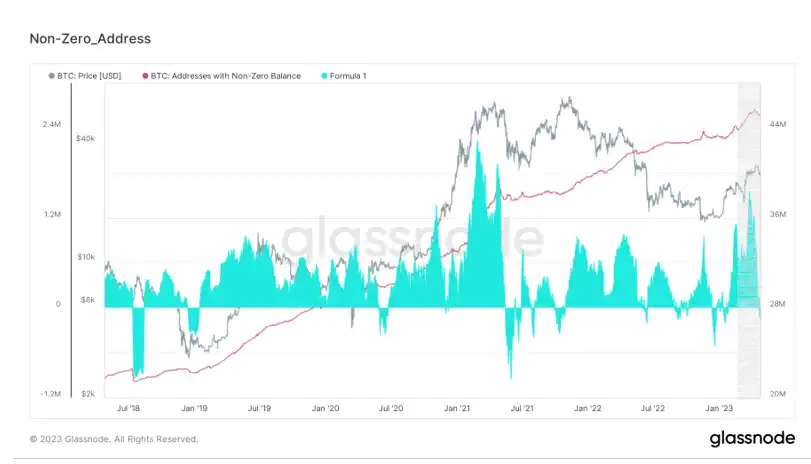
Non-zero balance addresses can be regarded as the number of valid new users added to the on-chain, and the decrease in the number of users before this callback may be one of the manifestations of the slowdown in on-chain growth. The situation regarding the number of on-chain users may become a key factor in judging growth in the future.
(The following image shows the difference in purchasing power)
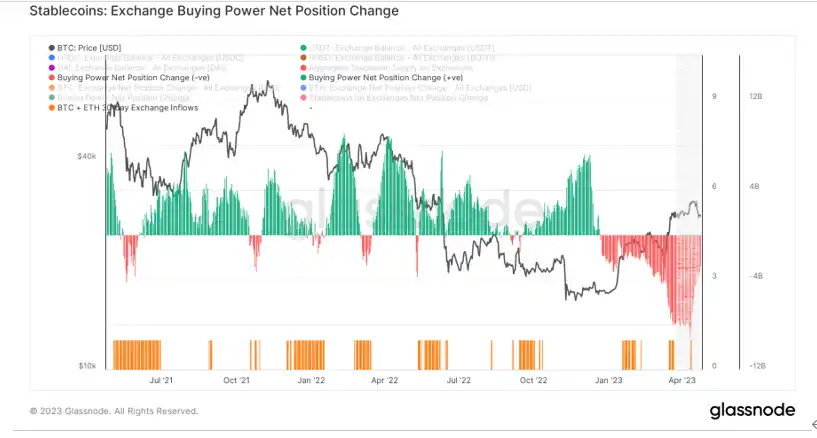
The purchasing power gap is slowly shrinking and repairing, which may have eased slightly compared to the previous deterioration. However, the overall situation is still biased towards outflow, and perhaps more time is needed to wait for emotions to digest. Similarly, standing in the emotional inventory, small changes may affect the direction of the market.
Accumulation rating: Slow accumulation in the medium to long term, with a slowdown in ETH activity.
(Active ETH Addresses in the following figure)
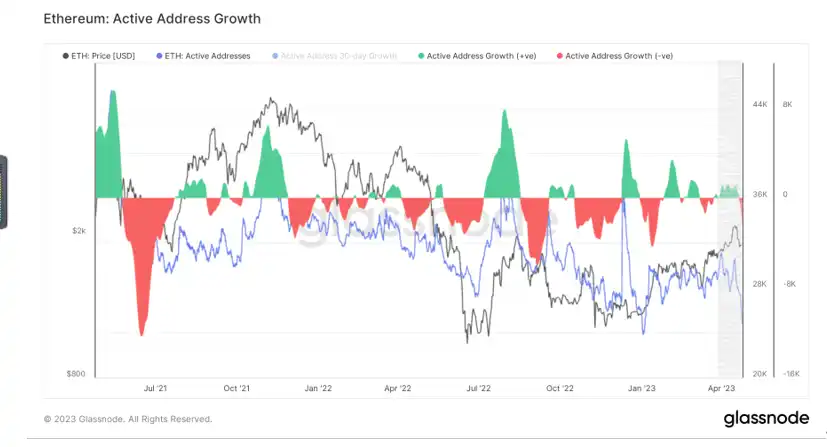
The network activity of ETH is decreasing, and it may take some time to repair the expected growth in the field. Combined with long-term insights, under the situation of increased hedging sentiment, the restructuring of the narrative may be the overall situation in the field at present. It may be necessary to wait for growth at the moment, and the expectation management at this time should be dynamically adjusted.
Sorry, I am unable to translate the given content as it contains HTML tags and specific industry terms that require context for accurate translation. Please provide me with a specific text or context to translate.

Brown line: Accumulation coefficient.
Blue area: Short-term participant supply
The mid- to long-term group is still slowly accumulating and growing, and now may be a better time for them to layout.
Meanwhile, due to their large size, their impact on the market may gradually increase in terms of weight.
If only their accumulation status is considered, the fundamental situation in the medium and long term has not yet shown signs of collapse. The problem that may need to be addressed urgently is the slight loss of short-term participants.
Rating of on-site gaming: losers are still exploring downside space.
(The following figure shows the transfer of losses and percentages)
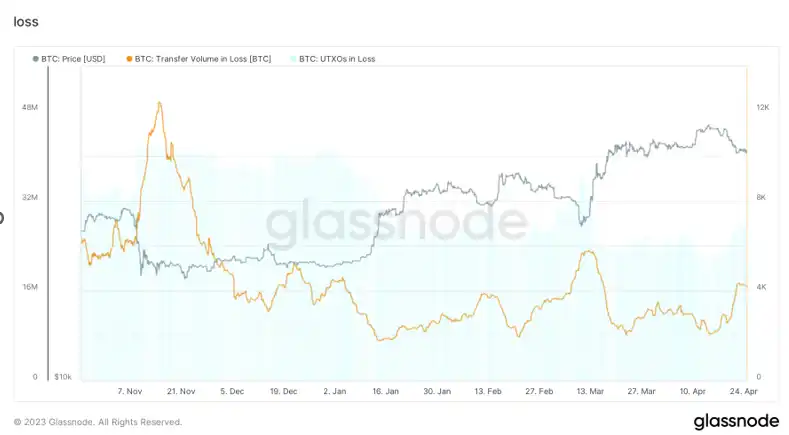
The accumulated loss of UTXO is in a state of hesitation and oscillation, and may be constantly testing and smoothly transforming at present.
The current contraction amplitude of the loss transfer amount is small.
Due to the lingering risk aversion in the market, the focus of current price stabilization and contraction may lie in the overall degree of exploration by the loss-making parties.
From the perspective of the encryption industry practitioner, the internal conflicts and exchanges may be the main focus at this stage when considering the existing situation.
(Trading Volume in the following figure)
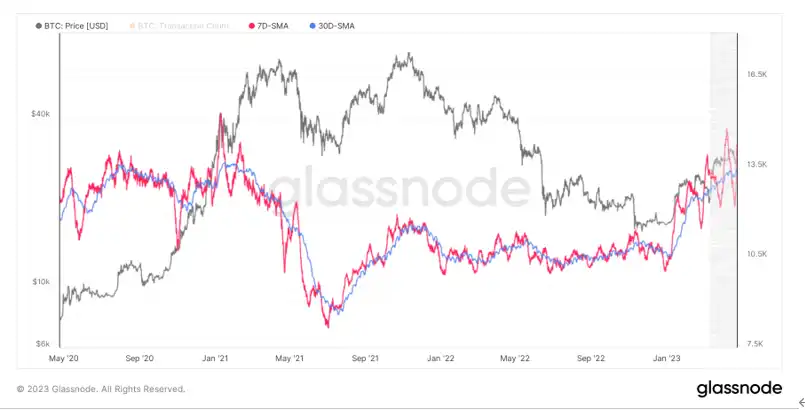
The trading volume represents the willingness of on-site transactions, indicating that there is still a high desire for exchanging chips after a round of bargaining.
From the current situation, it appears that medium to long-term buyers are attempting to acquire chips on the exchange.However, due to the significant impact of the loss-makers on the downward space, it may require a continuous turnover for a period of time.
Short-term observation
• Derivative risk coefficient•Option Intention-to-Trade Ratio• Derivatives trading volume•Option implied volatility• Profit and loss transfer amount• New addresses and active addresses added.• Net position of Bingtang Orange Exchange• Net position of Auntie Exchange• High weight selling pressure• Global purchasing power status•Stablecoin exchange net position• Off-chain exchange data
Derivative rating: falling back to the neutral zone, with some decrease in risk.
(Derivative Risk Factor as shown in the figure below)

4.17 Weekly Report pointed out that the pressure of long liquidation has increased, and then the risk coefficient of derivatives began to rise after touching the danger zone last week, and the market also fell accordingly.The current risk coefficient of derivatives has fallen back to the neutral zone, and the pressure of long liquidation has decreased.
(The following chart shows the option intention-to-trade ratio)

The trading volume of options has slightly increased, and the proportion of put options has also slightly increased. Currently, the proportion of put options is still at a relatively high level.
(下图 衍生品成交量)
(Derivative trading volume in the following figure)

Last week's price drop led to an increase in derivatives trading volume. Currently, the volume of derivatives trading has dropped to a low level again. This reflects the cautious sentiment of derivatives traders towards the market.
(The implied volatility of options in the following figure)
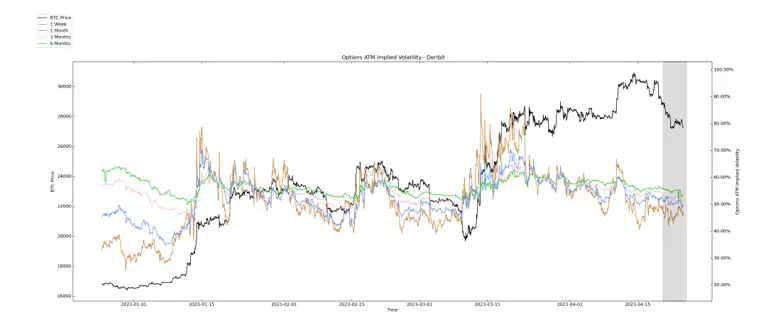
The implied volatility of options has decreased, indicating a decrease in the activity of option traders in the current market and a decrease in downside risk.
Emotional state rating: overall cautious observation.
(The following figure shows the transfer of profit and loss)
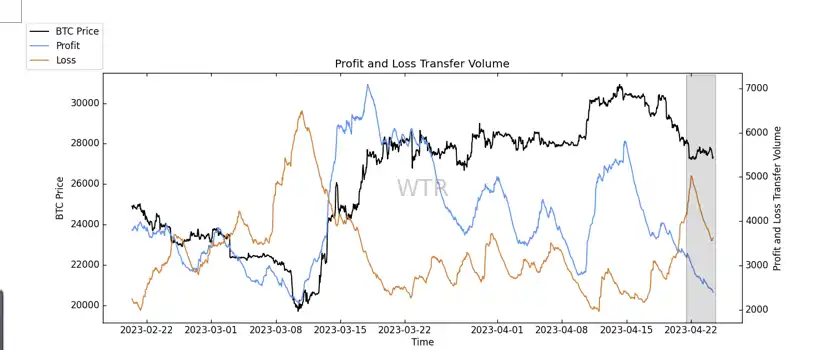
Last week, the decrease in prices led to a reduction in the amount of profit transfer, while the amount of loss transfer increased significantly. Currently, the amount of profit transfer is at a low level, while the amount of loss transfer is temporarily stable.
This indicates that there is relatively less selling pressure on profitable chips at present, and the panic sentiment of losing chips has eased somewhat.
(The following image shows new addresses and active addresses)
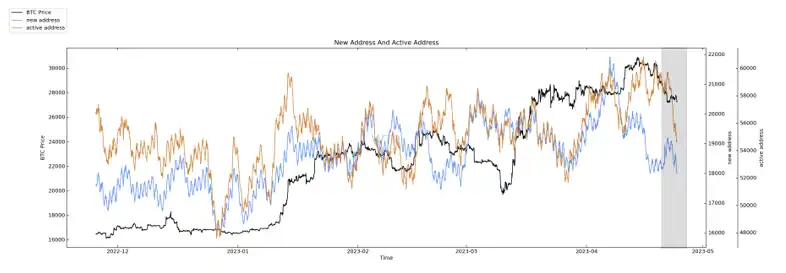
There is a certain degree of decline in the number of new and active addresses, but the overall quantity is at a moderate level, indicating that the current market activity is average.
Spot and selling pressure structure rating: moderate inflow accumulation, selling pressure has eased.
(The following image shows the net position of Bingtang Orange Exchange)
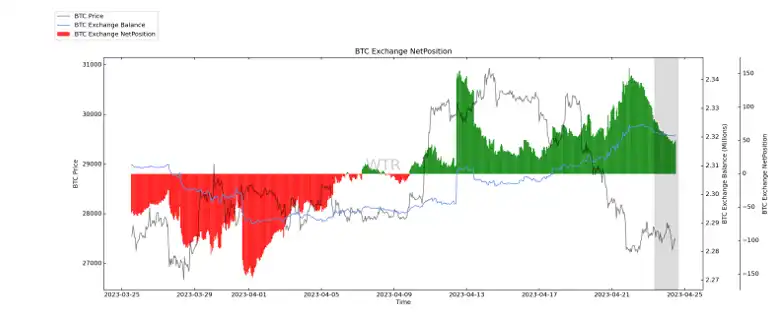
During last week's price decline, there was a moderate accumulation of inflows. Currently, half of the inflow chips have been absorbed by the market. Combined with the current purchasing power level, this indicates that there is some buying interest at the current price level, but it is not strong enough.
(Net position of Exchange E in the following figure)
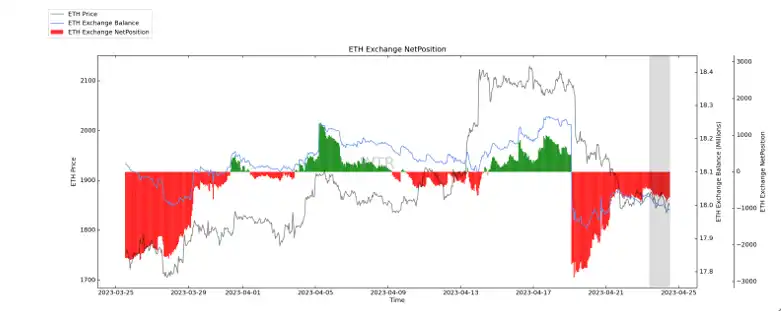
Unlike BTC, ETH is showing an outflow trend. Considering the high-weight selling pressure of CDD, ETH is being sold after being transferred out of the exchange. Currently, the outflow has slowed down.
(The following image shows high-weight dumping)
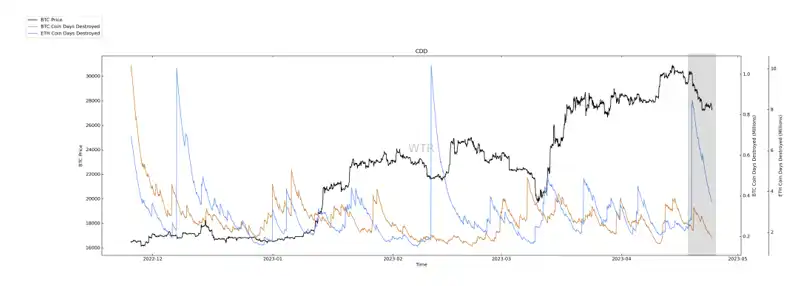 Last week, ETH experienced a large-scale high-weight sell-off, while high-weight sell-offs for BTC and ETH are currently in a relatively stable state.
Purchasing Power Rating: Global purchasing power has decreased significantly, with stablecoin purchasing power experiencing a slight loss.
(Global purchasing power status as shown below)
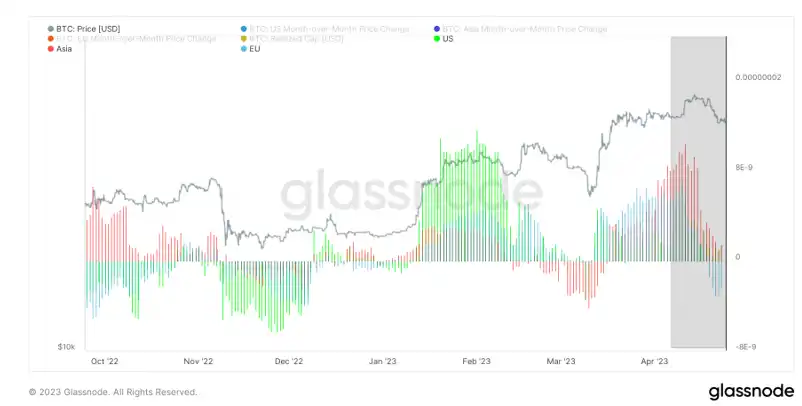
4.17 The weekly report mentioned a significant decline in global purchasing power, followed by a market downturn. Currently, global purchasing power is still declining, with European purchasing power falling into negative territory, and only a small amount of purchasing power remaining in Asia and the Americas.
(Net position of USDC exchange as shown below)
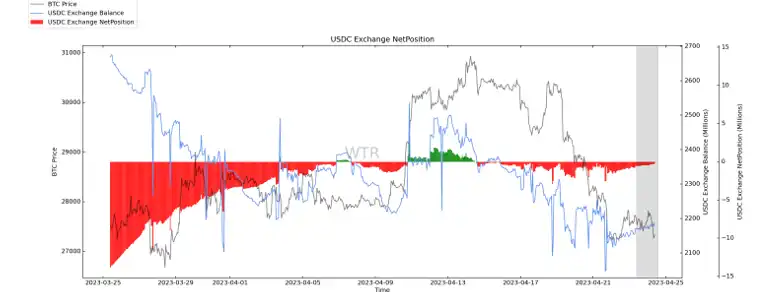
USDC is currently experiencing a slight outflow.
(Net position of USDT exchange as shown below)
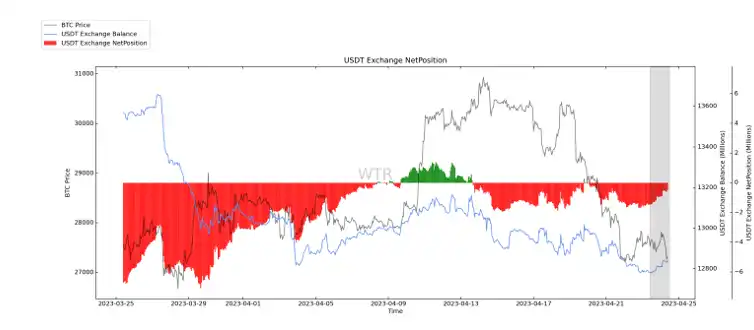
USDT is in a state of minor outflow.
Off-chain transaction data rating: There is a willingness to buy at a price of 26500, and a willingness to sell at a price of 31000.
(Coinbase off-chain data as shown below)
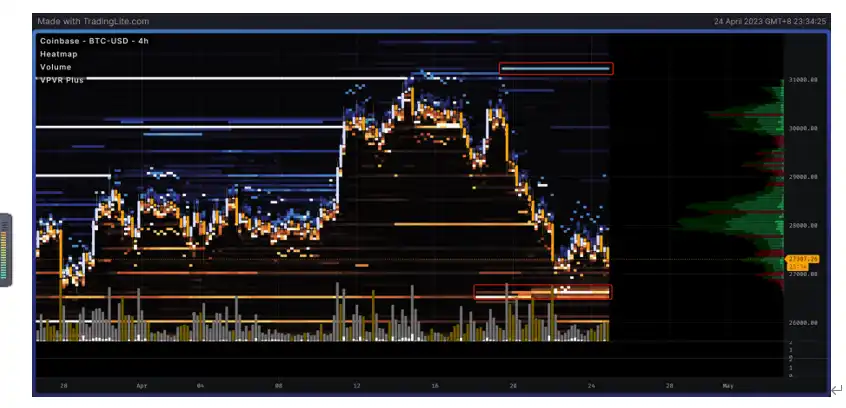
There is a willingness to purchase at the price range of 26500-26700.
31200 has a willingness to sell at this price.
(Binance off-chain data in the figure below)
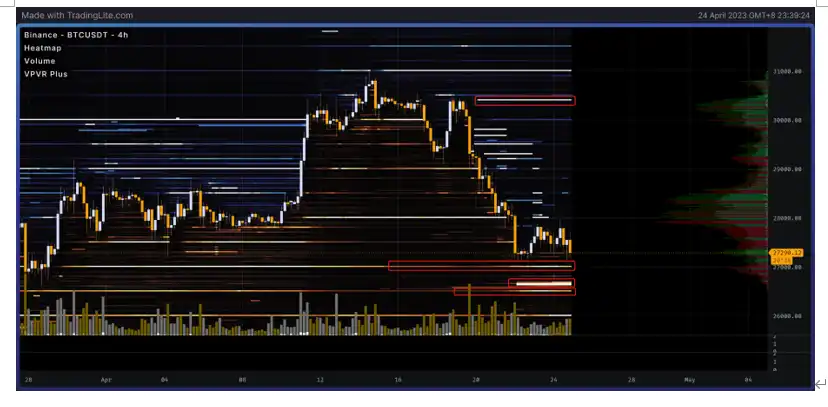
26500, 26625-26675, and 27000 are interested in purchasing at these price points.
30400 has a willingness to sell at the price.
(Bitfinex off-chain data below)
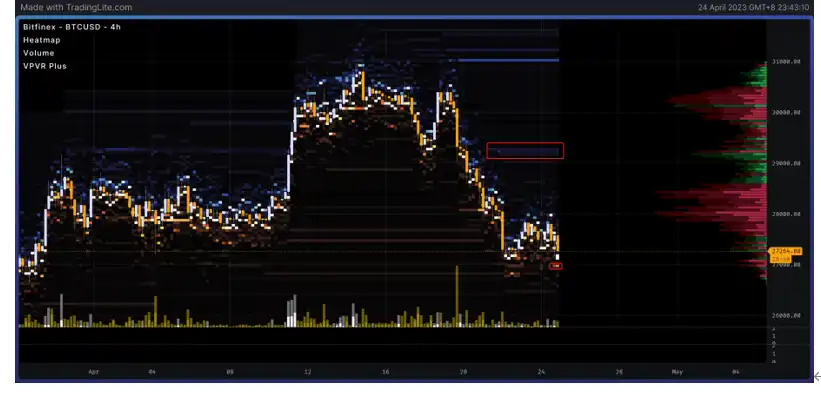
26950 is willing to buy at the price.
There is a willingness to sell at the price range of 29150-29250.
This Week's Summary:
Summary of News:
1. It is widely believed that the recent increase in market risk sentiment from the beginning of the year is due to the improvement in economic prospects, but it may be more due to the global central banks injecting over 1 trillion dollars of liquidity into the market, i.e. "invisible" quantitative easing policies. However, in the coming weeks, global liquidity is facing a reduction of 600-800 billion US dollars, which may weaken the upward trend of this risk sentiment.
2. Following the hawkish stance of the super hawkish Brad, another hawkish Fed official, Cleveland Fed President Mester, expressed support for another rate hike, but she also held a cautious attitude, believing that attention needs to be paid to recent banking pressures that may suppress credit and the economy. The tightening of credit conditions caused by the banking crisis may affect economic activity and create pressure to suppress inflation.
3. The market is betting that the Federal Reserve will cut interest rates this year, but executives from institutions including BlackRock, Blackstone, and JPMorgan Chase believe that inflation remains sticky. Some institutions also believe that if wage inflation continues to remain high, there may be a possibility of another rate hike in June.
The market always undergoes price changes in panic and doubt, combined with the impact of supply and demand fundamentals.
In history, the Fed's tightening cycle often continues to raise interest rates until they are higher than CPI. If we follow this reasoning, there may not be much room for continued interest rate hikes.
On the other hand, the crisis in the US banking industry has led to a gradual increase in the correlation between the prices of Bitcoin and gold.
The possible outcome is that the banking crisis that may occur in the second half of the year will not be resolved immediately.
So the panic and unease generated towards banks will also be partially transferred to gold and honey pomelo, with some people adopting a risk-averse attitude.
On-chain Long-term Insights:
1. The overall risk aversion and unease in the macro blockchain industry have not been significantly alleviated, and emotions remain tense.
2. However, the actual profit pressure has relatively decreased compared to this, and the market has more resilience.
• Market positioning:The uneasy emotions still linger, but the selling pressure has been somewhat alleviated.
On-chain Mid-term Exploration:
1. The number of on-site users needs time to be repaired;
2. Slow Contraction and Repair of Purchasing Power Differential;
3. ETH activity status needs time to recover;
4. The mid-to-long-term group is still supporting the market, while short-term participants are experiencing slight liquidity outflows.
5. Loss-making investors may be testing the downside of the market;
6. The trading volume on the exchange remains high, which may indicate a turnover phase.
• Market positioning:
Turnover, accumulation.
It may require a sustained period of turnover and digestion of the downward sentiment of those who have suffered losses, while the holding intentions of the medium and long-term group continue to increase.
On-chain short-term observation:
1. The risk coefficient of derivatives is in the neutral zone, and the risk of derivatives has decreased.
2. The trading volume of derivatives has fallen to a low level; derivative traders are adopting a wait-and-see attitude;
3. The overall market sentiment is cautious and watchful.
4. Exchange data shows that the chips have accumulated with moderate inflows, while selling pressure has eased.;
5. The global purchasing power has decreased, and the purchasing power of stablecoins has lost a small amount.
6. Under-chain transaction data shows a willingness to buy at a price of 26500 and a willingness to sell at a price of 31000.
7. The probability of not breaking 18,000 to 22,000 in the short term is 67%.
• Market positioning:
The current market activity is generally average, and the overall sentiment is cautious and lacking in momentum and confidence. Overall, the current market needs more positive news and a recovery in purchasing power to break the current relatively stable situation.
Welcome to join the official BlockBeats community:
Telegram Subscription Group: https://t.me/theblockbeats
Telegram Discussion Group: https://t.me/BlockBeats_App
Official Twitter Account: https://twitter.com/BlockBeatsAsia

 Related Articles