What are the five most profitable DeFi deals over the past six months?

原文标题:《 协议收入数据解析:过去六个月中哪五个 DeFi 协议最赚钱? 》
Original article by Poopman
Deep Tide TechFlow
Here is a list of the five most profitable DeFi agreements in the last six months, which have dominated the decentralized finance industry. These agreements generate revenue from a variety of charging models, such as lending, trading, market making, etc., as well as encouraging user participation and holding through Token incentives. Let's take a look at the features and benefits of these agreements.
The definition of "profit"
DeFi's expense patterns differ, but in general, DeFi projects earn their profits by:
Transaction fee
Borrowing charge
Stability fee (e.g. LiquityProtocol)
In addition, DeFi distributes its profits through three main channels:
Protocol library
Token 持有人
LP (Liquidity Provider)
Although the first two can be classified as agreement revenue, LP profits are different. LP profits are "supply-side income", meaning that profits are redistributed to those who provide liquidity in the pool. Uniswap, for example, generates more than $700 million in annual expenses, but it is only profitable because most of this revenue is returned to LP.
为了评估项目的盈利能力,「收入」将是更好的指标,因为它们代表了在向 LP 分配费用后的「纯收入」。简而言之,收入 = 费用收入 - Token 激励。现在我们已经定义了「盈利能力」是什么,让我们深入了解。
The top five most profitable DeFi agreements
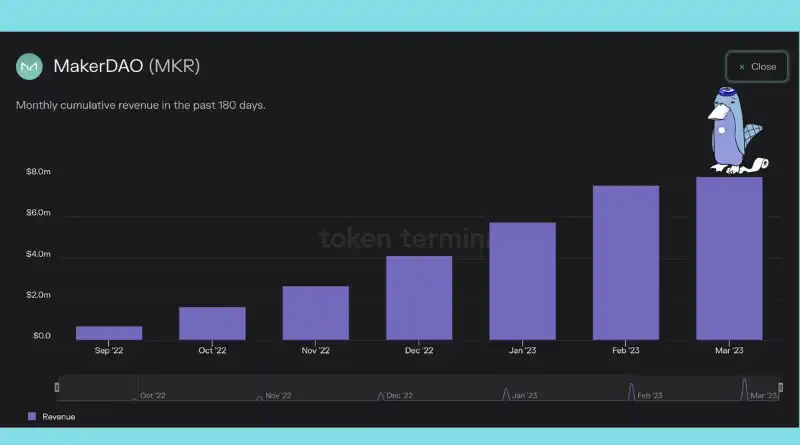
# 1 MakerDAO ~ $7.16 million
MakerDAO allows users to pledge ETH/BTC/USDC/LINK as collateral and lend out its stablecoin $DAI, which is pegged to the US dollar.
Cost model
When someone borrows through MakerDAO, they have to pay stabilization fees, which are used to buy $MKR and then destroy it.
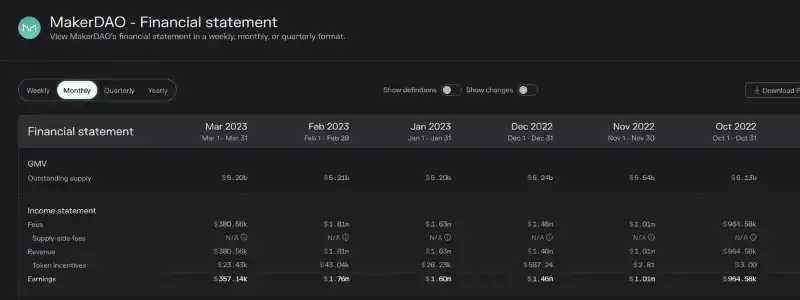
在过去的六个月中,MakerDAO 从费用中产生了 725 万美元的收入。扣除 9.32 万 美元的 Token 激励后,MakerDAO 的收益总额为 716 万美元,稳居收益榜的第一。
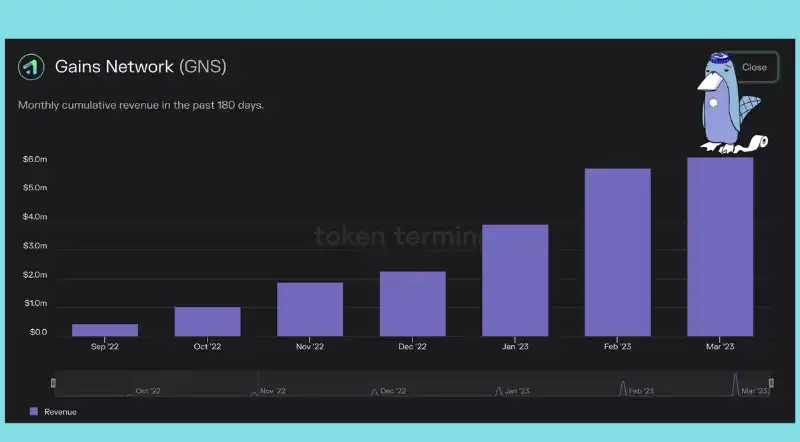
2. Gains Network ~ $5.73 million
Gains Network, a derivatives trading platform built on Arbitrum and Polygon, gave users cryptocurrency and forex trading options and offered leveraged trades.
Cost model
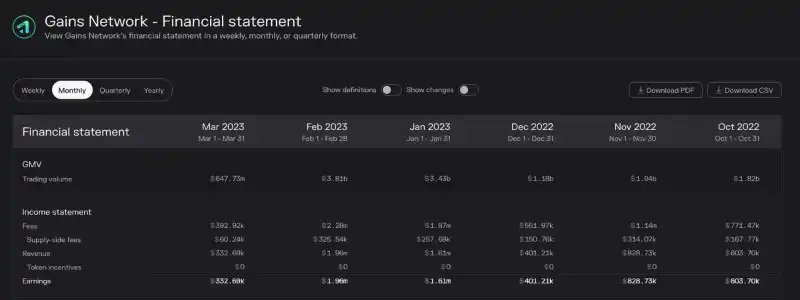
When users open, close or update trades, Gains charges users a transaction fee. In addition, there are renewal fees, capital fees and liquidation fees. Over the past six months, Gains have been made from expenses. Seven million dollars. However, $GNS did not offer any incentives and therefore only had to pay $1.27 million in supplier fees.
That means GainsNetwork took home an estimated $5.73 million, putting it in second place on the list of top earners.
3. GMX ~ $3.64 million
GMX is a popular perpetual contract trading platform, which has realized low exchange fee and zero price impact trading on Arbitrum. Users can trade spot and perpetual futures on GMX, with leverage of up to 50 times.
Cost model
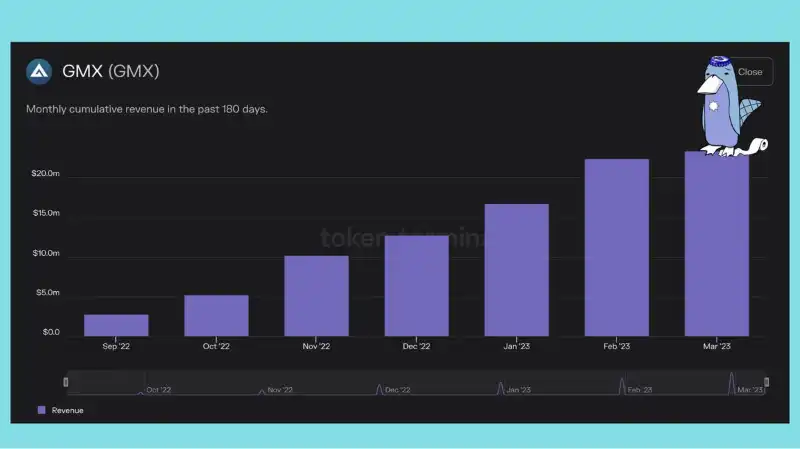
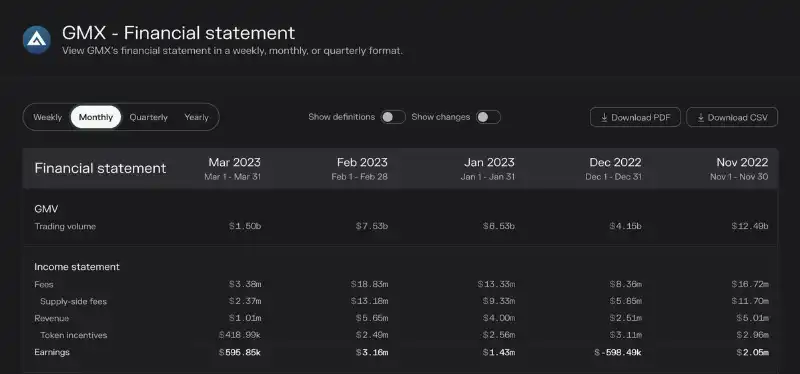
GMX 将从交换和杠杆交易中产生的费用分配给那些持有 $GMX 并为 $GLP 提供流动性的人。在过去的 6 个月中,GMX 赚取了 6754 万美元的费用,其中 4727 万美元(70%)用于 GLP 持有者的供应方费用。剩余的 2026 万美元用作收入,但 1660 万美元 (82%) 用于 Token 激励。
尽管在熊市期间表现良好,但由于 Token 激励的高成本,GMX 的利润相对较小,仅在最赚钱的项目列表上获得了第三。
4. Convex ~ $1.57 million
Convex is a revenue enhancer built on CurveFinance. By controlling more than 50% of the veCRV, the Convex has used its governance authority to augment the CRV award in the Curve, thereby enhancing returns.
Cost model
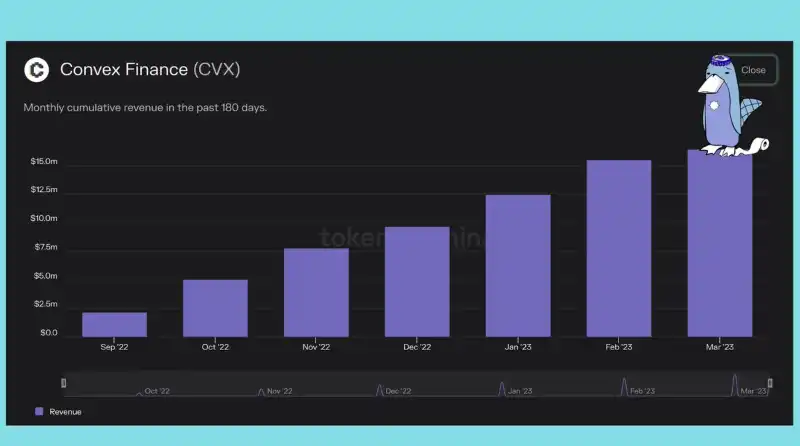
Convex earns revenue from 3CRV earnings, $CRV and other liquidity mining incentives. Convex earned $70.51 million in fees over the past six months, with 80 percent of that revenue, or $56.31 million, going to Curve LP market makers.
剩下的 1417 万美元的收入主要用于 Token 激励 ($CVX),仅剩 157 万美元的收益。
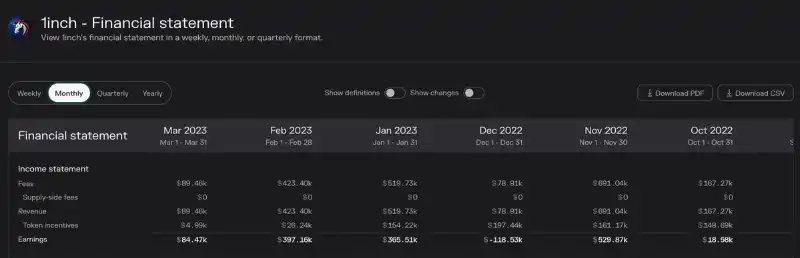
5. 1inch to $1.27 million
1inch is an unmanaged DEX aggregator based on ETH and BSC.
Cost model
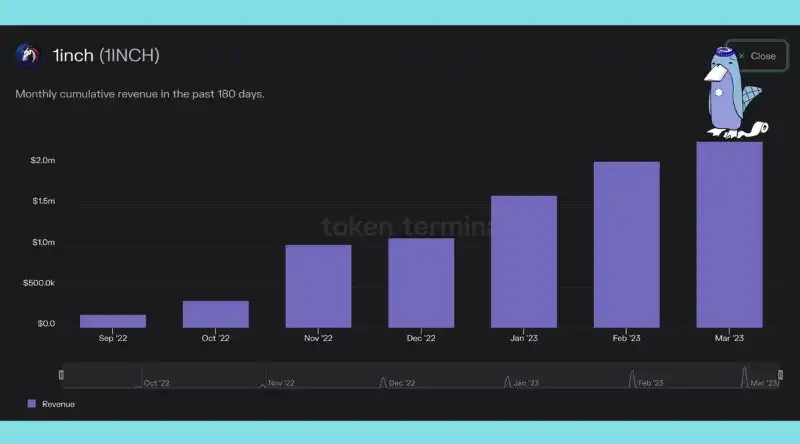
In the past six months, 1inch generated $1.97 million in revenue. After deducting Token incentives worth $693,000, 1inch earned $1.27 million, placing it firmly in fifth place on the list.
Original link
Welcome to join the official BlockBeats community:
Telegram Subscription Group: https://t.me/theblockbeats
Telegram Discussion Group: https://t.me/BlockBeats_App
Official Twitter Account: https://twitter.com/BlockBeatsAsia

 Related Articles