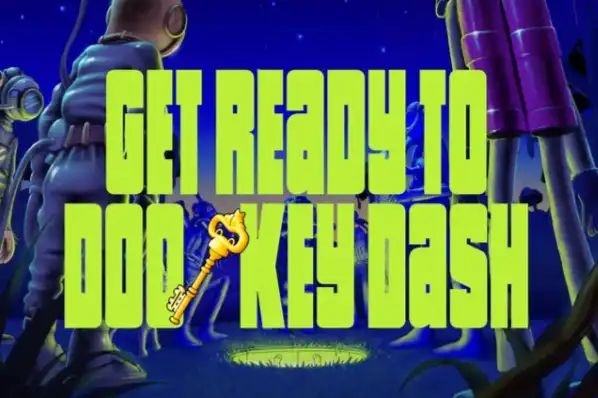
Dookey Dash: Arcade game from Yuga Labs, with a small fight for growth marketing
Dookey Dash: Yuga Labs' Arcade Game: Growth Marketing by Fighting Small and Big
Original article by NFTGo
1. Do you really understand Dookey Dash?
1.1 Simple games
It's a small game, and there's only one thing you need to do to get the highest score possible. Here's the rule:
(1) Maneuvering the aircraft to avoid obstacles in the sewer, the longer the survival time, the more points.
(2) Collect debris types and destroy obstacles during the flight to improve the game score.


1.2 Amazing data
In contrast to the extremely simple game mechanics, Dookey Dash's game stats in just three weeks are not very simple:
The 25,525 Sewer Pass holders played 7,487,850 times, spending an average of 27.7 hours in the "sewer pass," for 706,436 sewer hours, or 80.64 years. Most of this data is generated by "NFT users" in "non-professional gaming".

In addition to the game figures, the Sewer Pass, which serves as a Dookey Dash sewer pass, is doing well in the NFT market, increasing the sewer pass price from 0 ETH to a maximum of 2.89 ETH. That briefly sent the Sewer Pass NFT down to more than $100 million. Many flippers have made money from this, and the chart below shows the top 10.


1.3 Storytelling routines
Of course, we also have to mention the blue chip project behind Dookey Dash, Yuga Labs, in the promotion of Dookey Dash, Yuga Labs once again showed us "how to tell the story of the NFT project is mysterious and vivid."
The steps are as follows:
1. Start by Posting vague text, concept maps and other materials on Twitter, setting up suspense to leave space for the community to discuss and arouse people's curiosity.
2. Release a short film to tell the story of Jimmy the monkey, tell the background of the story, explain the answer to the previous suspense, and use rewards and prizes to tantalize people again.
3. Launch the game, connect the previous suspense and details together in the game, and piece together the details into a complete framework, so that people can form a complete story chain.
This approach of making "storytelling" itself a story and then telling it again is called "front-loading", which allows users to reinforce the memory points of the plot by constantly nesting stories.
When gradually revealing to the user, it adopts the technique of front to back, leaving suspense again. At the same time, a large number of absurd plots are injected into the game. For example, Jimmy the monkey mistakenly swallows the key of the mysterious metal box, and the target of the game player pulls out the key stuck in the monkey's butt. Such interesting plots enhance the immersion of the player in the game experience. This storytelling approach is similar to that of Otherside, where the monkey mistakenly drank a drink, and Dookey Dash has succeeded in making NFT players expect the same things from Otherside.
1.4 Is There Another Layout?
Aside from the data and speculation, Dookey Dash seems like a logical example of NFT and gaming at this point. It's a very different and hard to argue with. Compared to Otherside's massive open-world game modeling, complex game mechanics, and the much-discussed Token economy system design behind it, Dookey Dash, also owned by Yuga Labs, is particularly "mini."
This leads us to wonder: It seems like Yuga Labs is trying to get Dookey Dash into the NFT mini-game market. As all Web3 game makers continue to add to their Metaverse, what will be the best way for NFT games to "fight small and fight big"?
2. Addictive Arcade Games
2.1 Introduction to Arcade games
Many people experience two feelings after playing Dookey Dash: simplicity and addiction. This feeling is not just the impact of NFT. It is the excitement of arcade games, and now the addition of NFT has been a catalyst for the whole thing.

From the 1970s to the 1990s, arcade games dominated much of the leisure time of teenagers in developed countries, led by the United States. They were dominated by side-scrolling puzzles and fighting games. In order to start the game, the player needs to invest a certain amount of game coins, and when the game character runs out of health, the player usually has 10 seconds to decide whether to renew his life with game coins.
2.2 Features of arcade games
The above background and many elements make arcade games:
1. Short time:
In order to cater to a variety of players, arcade games were often turn-based or fixed levels that players could start and stop at any time, without the need for a linear play experience.
2. Tension:
In order for the distributors to make money, arcade game designers placed restrictions on the game, such as time, points, etc., which made the player experience full of tension.
3. Growth potential:
Players acquire skills over the course of playing arcade games, and as the difficulty of the game levels increases, so does the player's proficiency.
4. Competitive:
Arcade games are full of matchmaking elements, such as face-off PK, leaderboards, and turn-based levels, which create an exciting competitive environment for players.
3. Similarities and differences between NFT and street travel
From the initial introduction to the arcade games above, we can already see some characteristics that match the NFT, such as capturing the audience in a short period of time and engaging the initial audience through a simple game design and style. Arcade games have a strong design style: from Pac-Man, which was popular in Europe and the United States in the early era, to the Boxing Emperor and Metal Slug produced by SNK in Japan in the late 1990s, these distinctive character designs have almost become popular impressions and symbols of The Times.


3.1 Personality makes attraction
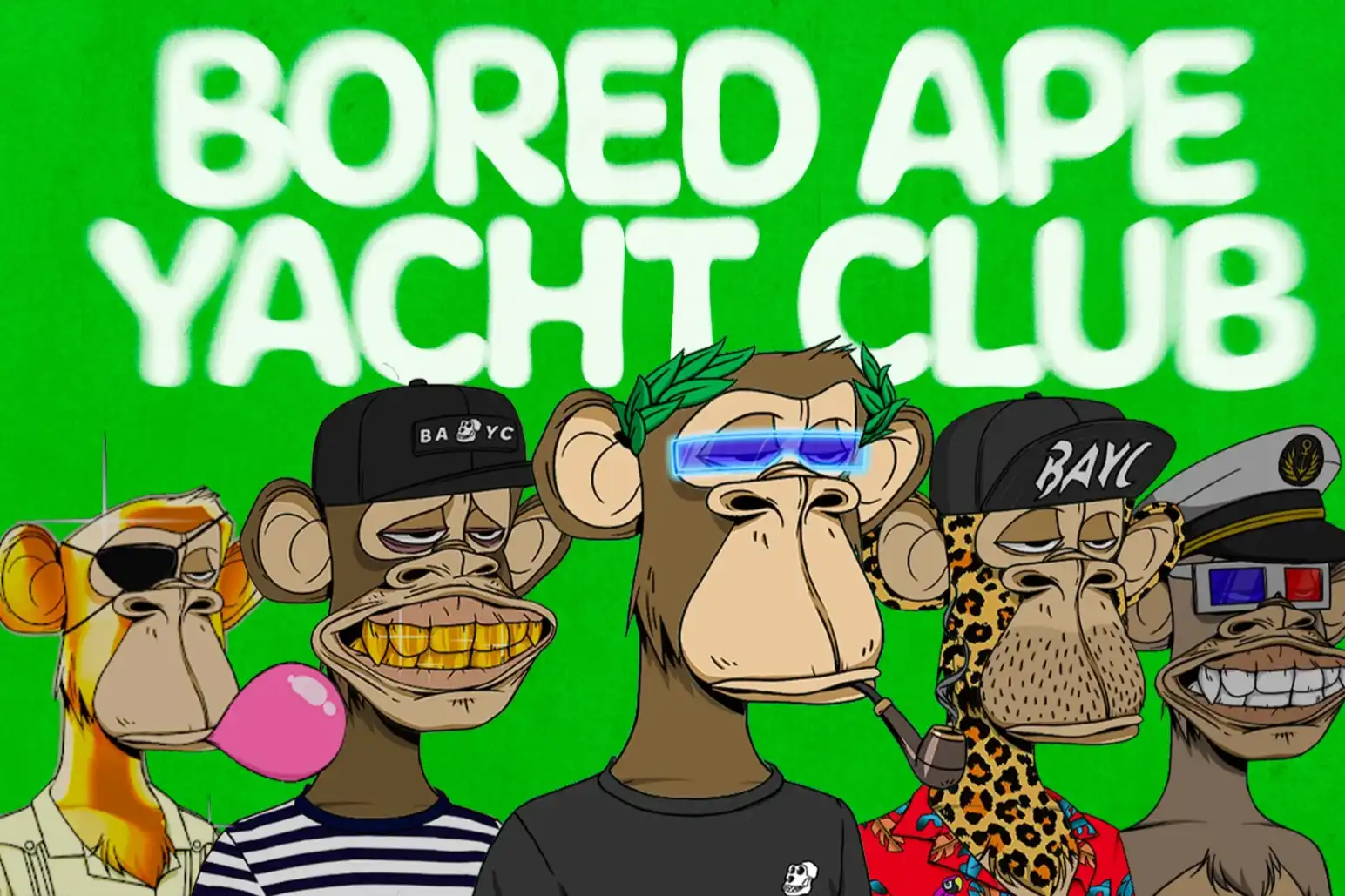
This also applies a lot to the NFT world: Every successful blue chip NFT project pays special attention to the construction of IP, from the very beginning, to deliberately create a unique and distinct style, Except for Bored Ape Yacht Club and Mutant Ape Yacht Club, which have similar painting styles, Azuki, Doodles, CLONE X, Moonbirds and many other NFT projects have come out of their own style concepts. The cross-validation of NFT and arcade games makes it hard not to admit that gamers from the last century and today's Generation Z have innate aesthetic preferences, and that no one in the entertainment consumer space likes a product that fits the norm.
3.2 Loyalty and sense of meaning
The reason why the users of street games continue to play for a long time is not only because of the personality of "painting style", "growth" is the main reason. Think back to when you play Tetris, a simple fixed game rule "let the block disappear", will let you extremely invested and addicted, this "in the fixed game mode, "Improving your game ability through multiple attempts" can bring rapid growth and a sense of accomplishment, satisfying the highest psychological needs of users and often making them the most loyal defenders of the game.
The loyalty of NFT users is somewhat different from that of street travel. The loyalty of most NFT users lies in a common belief, which is based on the premise that "future value will increase". The relationship between the user and the NFT is more like a trading relationship based on the "ownership of goods bought and sold" rather than a "growth mechanism" to establish deep links. In other words, users are loyal to the community because they are actually loyal to the goods they are paying for.
The fan economy can be very different depending on the user loyalty. For example, many players are willing to buy in-game merchandise, which they buy purely for their own entertainment, while NFT merchandise is rarely purchased, and most owners buy merchandise to show others. This is the difference in user consumption demand caused by the different loyalty constructed. (Not expanded here)


If we go further, arcade players seek "sense of meaning" in constant challenges, at least in the short ten minutes of life, seeking "sense of meaning" of the game characters they are manipulating. The emotional links established in the process have imperceptible impact on players' emotions, attitudes and even values, and are also the fundamental reason why users' viscosity is so high.
Of course, Dookey Dash hasn't yet achieved the same emotional connection and growth that the legendary arcade games did, but the current state of the Web3 industry offers some interesting insights.
4. How to make Web3 marketing addictive
From the Dookey Dash data panel above, we can see how long a single user has been playing, which is the envy of any Web3 project. These in-game statistics have a lot to do with the design of arcade games' mechanics. Dookey Dash's mini-game "Finding Keys in the Sewers" was designed to be "addictive" in the same way that arcade games become skilled and addictive through repetitive play behaviors.
4.1 Simplicity and repetition
People don't like to read long articles, and they don't like complex interactions. If you can't avoid text marketing, make sure the content is as simple as possible. Of course, words are still not simple enough, so try to use pictures and videos to tell relatively complex stories, which is also a technique used repeatedly by Yuga Labs. Designing simple, repetitive interaction mechanics can be addictive. Like Dookey Dash's sewer game, where death reopens indefinitely, you can also find an arcade mechanic that suits your brand.
4.2 Distinct style
This is also why text marketing is not advocated. In terms of brand style, sound and pictures are particularly important to form a distinct style, so NFT teams that are good at using pictures marketing usually have good traffic. In the field of entertainment consumption, no one likes regular products. NFT itself is visual, most NFT users still prefer visual works, so if you want to attract NFT users, it is necessary to seize the user's pleasure from the picture, which is why we have seen many times, such as pixel style, retro style, quadratic style, the more distinct and unique style, the more attractive people feel.
4.3 Use game mechanics for reference
We can also emulate arcade games and design a "little effort to progress" participation mechanism, which can be in the form of competition, confrontation, cooperation, and other types of games, and can be categorized according to user preferences:
Social: Play, manage, collaborate, operate Exploratory: Color, randomize, build, create Antagonism: rodeo, parkour, combat, survive and nurture: grow, collect, exchange, narrate
In addition to genre, take a page from the arcade game's "increasing difficulty mechanic", which people get addicted to because of the "sense of accomplishment" they get from the constant challenge. Here are a few guidelines:
1. Take a few specific steps to get the user into the character and give it meaning, such as giving your user a medal.
2. Task difficulty is predictable to the user, so that the user can feel the bottom line, such as linear growth difficulty curve.
3. The difficulty is increasing, and the reward should also increase, to ensure that each link has a sense of freshness and suspense, so as to stimulate users constantly.
4.4 Create Faith
1. Open your mind
The digital marketing prevalent in mobile Internet has "inducement". Users are attracted by various marketing methods and participate in click interaction, which will certainly improve the data, but it will not have a profound impact on the mental level of users. This problem can be solved through gamified marketing. Why should users be given a "role" in the above mentioned process? In fact, the mission of the role should be substituted into themselves, so as to generate the desire for active exploration rather than resistance. Only in this way can the door of the mind of Web3 users be opened, and it is more convenient for the project side to tell the following stories to be accepted by users.
2. Create shared experiences
You can use the mechanisms above to design a few simple tasks that initially give users a common experience, a common topic, and a sense of community; Then create a "group task" for this group of users. The key to completing the task is the group effort. In these two steps, the user to project, user to user relationship is closely linked, which we see often in Web3 projects, but also in Dookey Dash.

5. Expectations and fears for NFT arcade games
5.1 Big Games and small games
When millions of Metaverse games are being built, are small, polished Web3 arcade games necessary? Of course, it is necessary that the first successful NFT game model must be verified on the mechanism in small games, because Web3 arcade game development difficulty is small, it is easier to do a bold combination of mechanism design and gameplay design with NFT, and from the perspective of investment, trial and error cost is small, high odds. This is a good choice for both the user and the studio. Second, even large MMORPGs need to be filled with countless smaller games similar to arcade games, especially in the decentralized social Web3, where the open world needs to give players something to do, After all, who would refuse to play a Quint card in "The Witcher 3"?


From this, we have to wonder if Dookey Dash could take another form in the open world of Otherside, as a collection of smaller arcade games. In this way, Yuga Labs not only meets the needs of users for NFT entertainment games in the long cycle of developing large Metaverse, but also preempts the minds of users in the form of "small and fast", just like the water droplets launched by the Trisaran fleet before reaching the Earth.
5.2 Intermediate state of Web3 games
The fast food culture characterized by "short, flat and fast" is spreading more and more widely. NFT arcade games will also have the same problem: from the game production level, arcade game content presentation is far less complete and rich than large games, the performance of the spiritual value will lack of depth. As an intermediate form of Web3 gaming, we may gradually see the emergence of NFT arcades that are more mechanized than the 21 year GameFi project and smaller than future RPGS.
From the current situation of Web3, although NFT arcade games are far more progressive than "DeFi with Game shell", it is not easy for the project team to maintain the same weight of "game" and "Fi" when it comes to the smallest model of "NFT+ arcade games". When it comes to "designing game mechanics" and "telling a story," two of the most "Arcade-like" things, the result is that games, along with the NFT, become items and commodities, and the story and fun of the NFT are homogenized. With the exception of projects like Dookey Dash that have the backing of the Yuga Labs brand behind them, other projects may face more challenges.
Dookey Dash gave us a glimpse of some of the trends that might be happening on Web3, and we also saw the possibility of NFT arcade games being showcased on Web3. This also has implications for many projects: Perhaps trying more arcade-style action in the NFT space will result in a smaller fight.
Original link
Welcome to join the official BlockBeats community:
Telegram Subscription Group: https://t.me/theblockbeats
Telegram Discussion Group: https://t.me/BlockBeats_App
Official Twitter Account: https://twitter.com/BlockBeatsAsia
 Related Articles