DeFund Protocol: A decentralized "on-chain fund" that serves as an alternative to CeFi.

After the collapse of CeFi platforms such as Celsius and Voyager, centralized fund management has become a negative term in the cryptocurrency industry. People are now looking for new alternatives in the DeFi space. With the market sentiment improving this year, there has been more attention on innovation in the DeFi space, with the two hottest directions being derivatives and decentralized fund management.
In traditional finance, funds are one of the most traded tools. Experienced fund managers can help users reduce investment thresholds, minimize investment risks, and help users achieve better asset returns. In decentralized blockchain finance, users also need professional blockchain fund managers, and DeFund protocol was born based on such needs. What is the DeFund protocol for? How does it work? And how to participate? BlockBeats has made a simple summary of this.
Web3 exclusive fund management protocol
DeFund protocol is a blockchain-based decentralized fund investment protocol that allows anyone to manage fund assets through smart contracts, earn more returns, and fund managers do not need high assets or fund company endorsements, everything speaks with data. DeFund protocol consists of smart contracts on Ethereum, used to achieve decentralized fund management, and users can interact with the contract at any time without any third-party authorization or permission to implement fund operations.
DeFund protocol hopes to achieve the exchange and liquidity provision with DeFi protocols such as Uniswap while ensuring the decentralization of the protocol, using permissionless liquidity to achieve the permanent operation of the protocol. DeFund protocol is currently built on top of the Uniswap protocol, and the supported pools and tokens are selected from Uniswap. In the future, DeFund will also establish composability with more DeFi protocols to provide more choices for decentralized fund investment strategies.
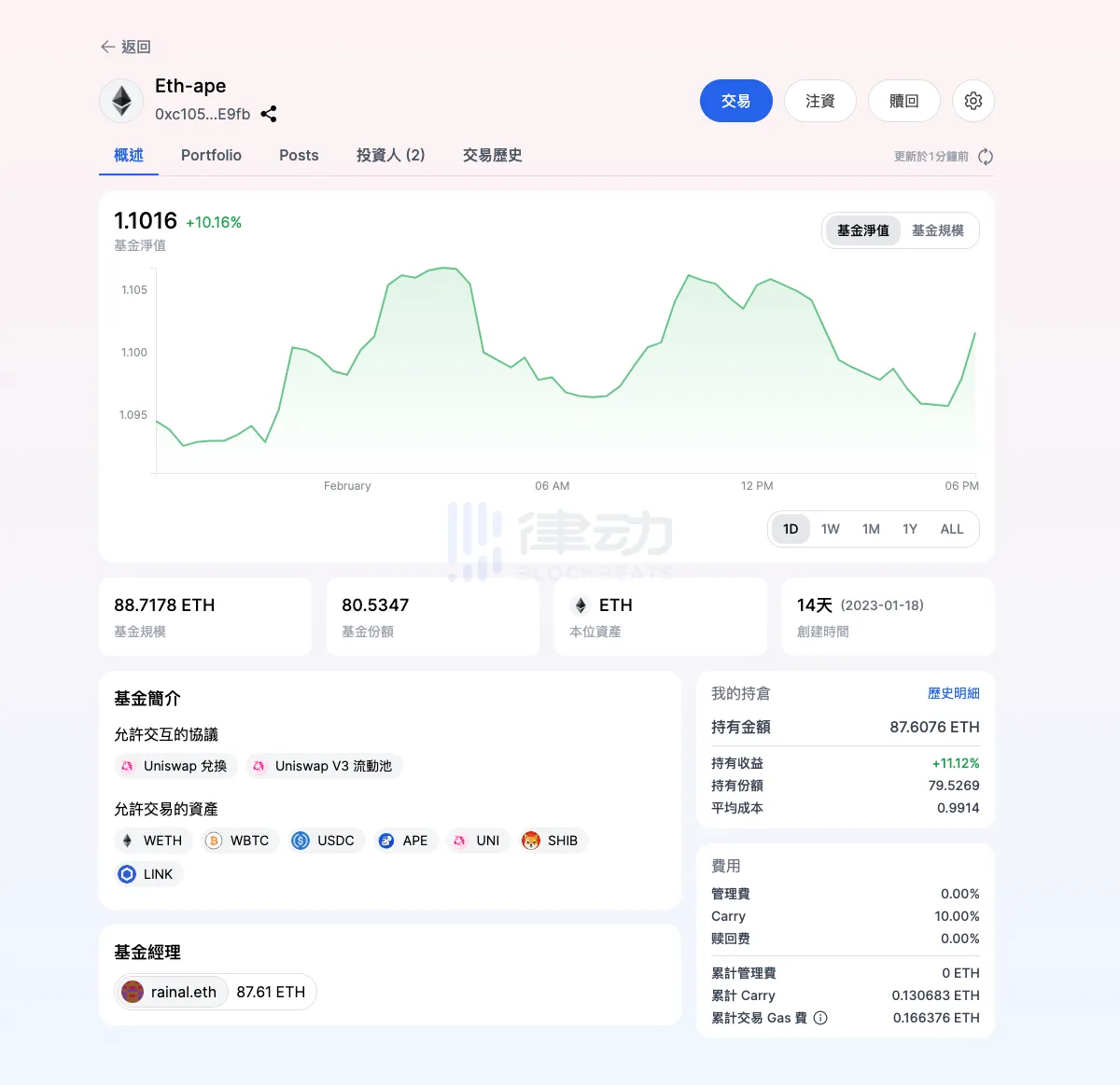
In order to protect the interests of LP (investors) and GP (fund managers), Decontracts Fund has set requirements for Pools and Tokens. The initial selection criteria for Pools and Tokens are: Uniswap Pools TVL above $5m; number of Positions greater than 100; independent Owners account for more than 70% of the Positions in the Pool, and this requirement can be adjusted through DAO governance in the later stage.
LP (Limited Partner) can check the operation status of the fund in real-time, make subscriptions and redemptions, and set stop-loss points for their investments. When the stop-loss is triggered, the redemption will be automatically executed.
GP (Fund Manager) has the management authority of the account, can create funds, set investment quotas and management fees, carry, select agreements and Token parameters, and specify LP accounts and minimum investment amounts. GP (Fund Manager) can invest on Uniswap (exchange, liquidity pool) according to the operation scope set by the fund. At the same time, the fund manager can also set up traders to assist in operating the fund, and up to 5 traders can be set for each fund.
Like traditional funds, the DeFund protocol also has public and private funds. Public funds accept investments from anyone unless the fund reaches its maximum number of investors. Private funds require investors to hold a whitelist for the fund, and only addresses on the whitelist can invest in the fund.
Introduction to Mechanism
DeFund protocol currently allows for open-ended fund management operations through contracts, supporting Uniswap exchange and liquidity pools as DeFi protocols. More DeFi protocols will be supported in the future.
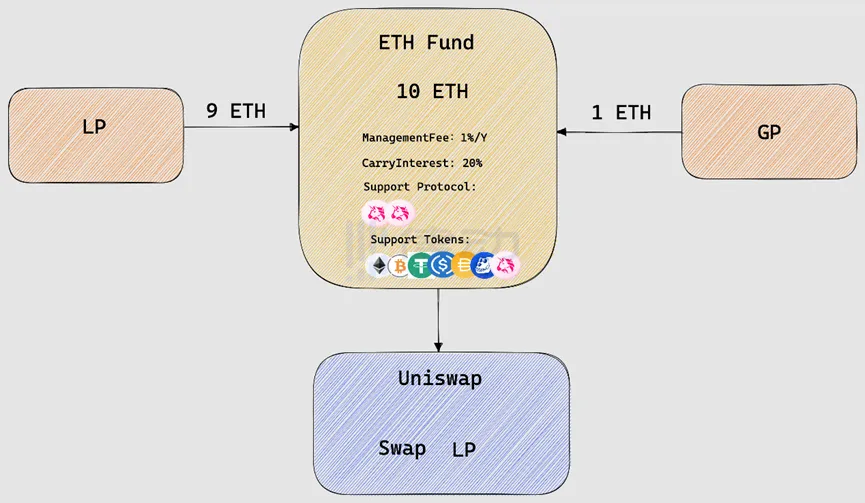
The fund agreement contract is initiated and created by the GP. Funds are divided into public funds and private funds. Anyone can purchase public funds, while private funds can only be purchased by whitelisted addresses designated by the GP. The initial purchase amount for LP needs to be higher than or equal to the initial subscription amount determined by the contract. For example, in the above picture, GP and LP contributed 1ETH and 9ETH respectively, and the initial assets of the fund were 10ETH. Then, GP began to operate the fund, operating the fund according to the set 20% carry and 1% management fee per year, and carrying out daily fund operations according to the selected agreement and token to obtain profits.
DeFund protocol's economic model is mainly composed of three parties: LP (GP is also LP when making subscription behavior), GP, and the platform. The fund is managed by GP, who conducts fund operations and earns profits for distribution. LP can provide large amounts of funds for GP to operate and will receive GP Carry fees based on performance during redemption. GP can receive two types of profits each year: management fees and Carry. In addition, GP can also set redemption fees on their own.
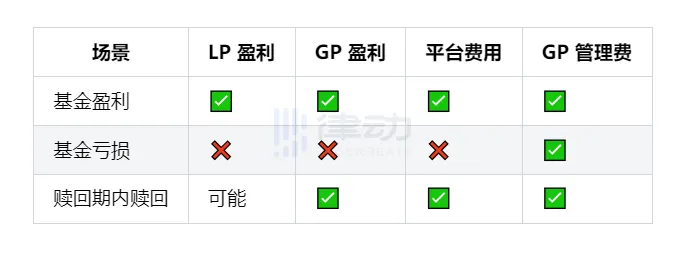
Management fee is the fee that LP pays to GP for the daily operation of the fund. This fee is calculated annually (365 days) based on the proportion set at the establishment of the fund (GP & LP payment completed) and the minimum unit of calculation is in seconds. GP can withdraw the management fee at any time during the operation of the fund. If either party triggers a liquidation, the remaining uncollected management fee will still be calculated and paid to GP.
Carry fees are the only way for GP to earn higher returns. Every time an LP triggers a redemption operation, a profit calculation is performed. If there is a profit, a profit-sharing calculation is performed. The current ratio for Carry fees is 5% of the total profit, and this parameter can be adjusted through DAO governance in the future. The amount received is deposited into various addresses. The specific calculation formula for Carry fees is as follows:
For better operation of the fund, GPs can set redemption fees and collection periods. LPs' contributions during the redemption period will be deducted at the corresponding rate for redemption fees. When LPs redeem during the redemption period, the agreement will distribute the fees to the DAO account, with the current redemption fee split ratio being 20% for the protocol and 80% for the GP.
Development Progress
Currently, the DeFund protocol is in the V1 stage, supporting fund management for ERC20 tokens based on Ethereum, providing functions such as limit orders, insurance pools, and protocol fees. In the second quarter of 2023, DeFund protocol plans to launch the V2 stage, supporting cross-chain fund management, including BSC, Polygon, Solana, and other blockchain platforms, and providing more investment strategies and tools. In addition, according to DeFund founder Jason, the team will also develop an investment strategy API in the future, which GPs can use to quickly and easily customize their on-chain automated trading strategies, further reducing the cost and difficulty of operating funds.
How to create your own fund on DeFund?
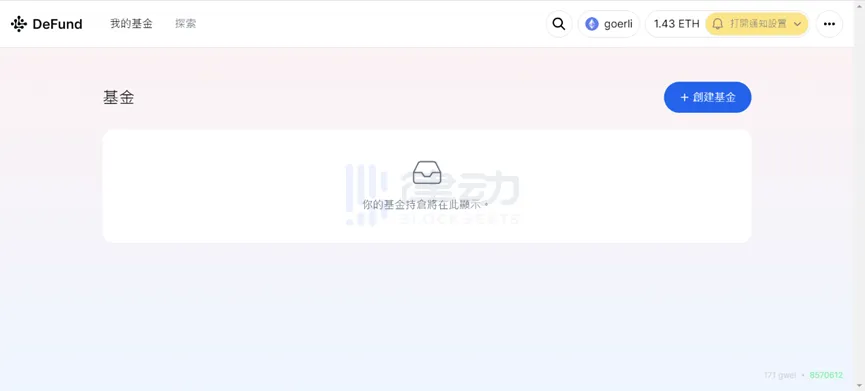
1. Enter the DeFund protocol official website homepage, link your wallet and switch to the test network. Click the "Enter APP" button in the upper right corner to enter the product page. Click the "Create Fund" button to enter the fund creation page, and then click the "Start" button.
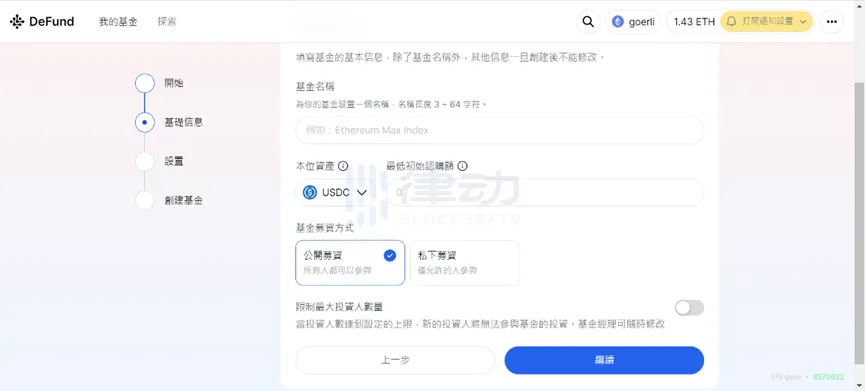
2. Fill in the basic information of the fund according to personal needs, including the fund name, base assets, minimum subscription amount, fundraising method, and maximum number of investors (optional). After filling in and confirming that there are no errors, scroll down and click "Continue".
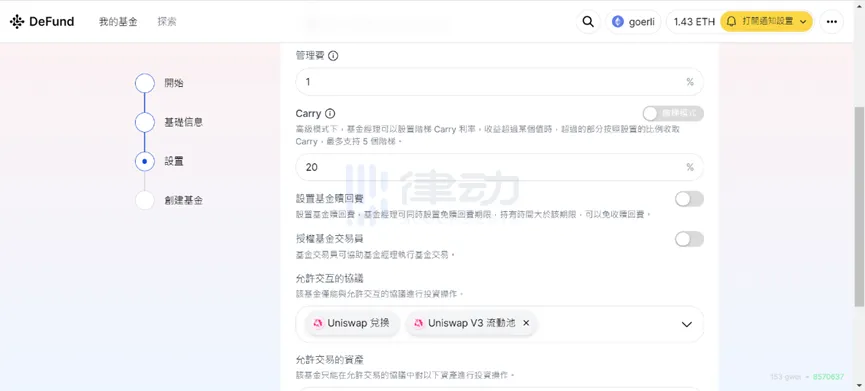
3. Enter the fund settings page. On this page, you can set the fund manager's address, management fee rate, Carry fee rate, redemption fee, fund trading assistant (optional), allowed protocols for interaction, and allowed assets for trading. After filling in the information and confirming its accuracy, scroll down and click "Continue".
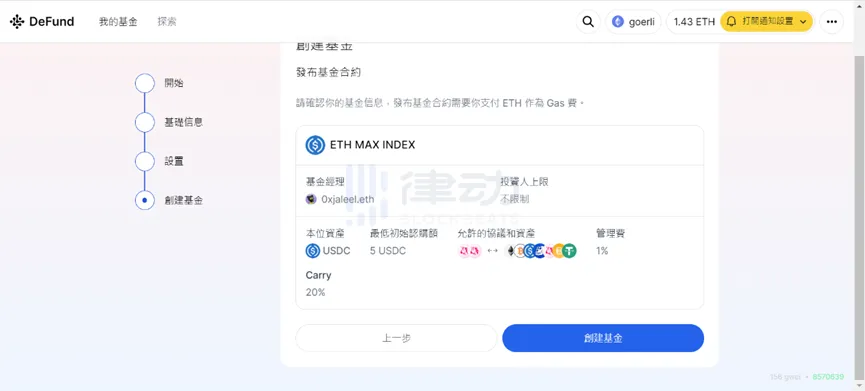
4. Enter the fund contract publishing interface, confirm the information for the last time, and click "Publish Contract" to issue the fund after confirming that there are no errors. After the block is confirmed, the issuance of decentralized funds is completed. The issued funds can be viewed in "My Managed Funds".
How to Buy and Redeem Funds on DeFund
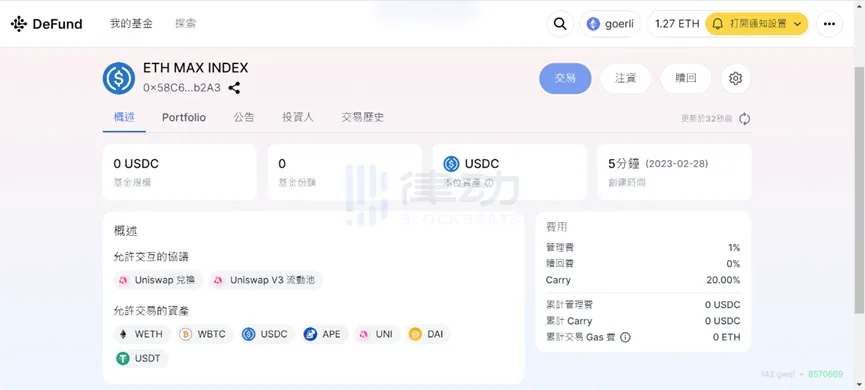
1. Enter the fund link to access the fund page and view the basic information of the fund, including introduction, fees, fund manager, etc. If confirmed to be correct, click the "Invest" button in the upper right corner to apply for the fund purchase.
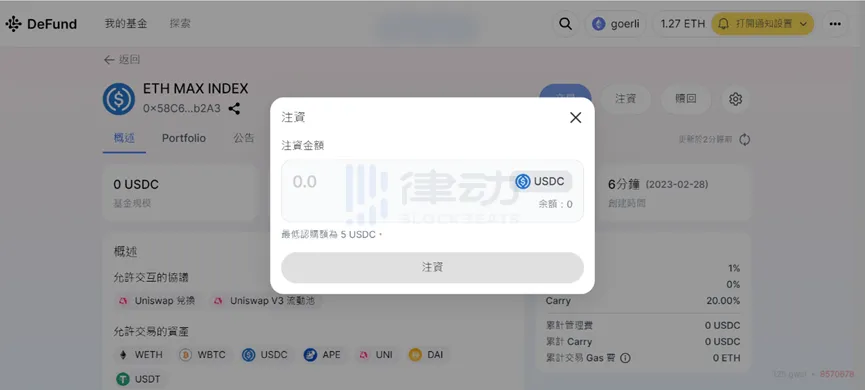
2. Select the amount of investment and click "Invest" to confirm. Once the block is confirmed, the decentralized fund investment is completed. The invested funds can be viewed in detail by clicking "Investor" or "My Fund".
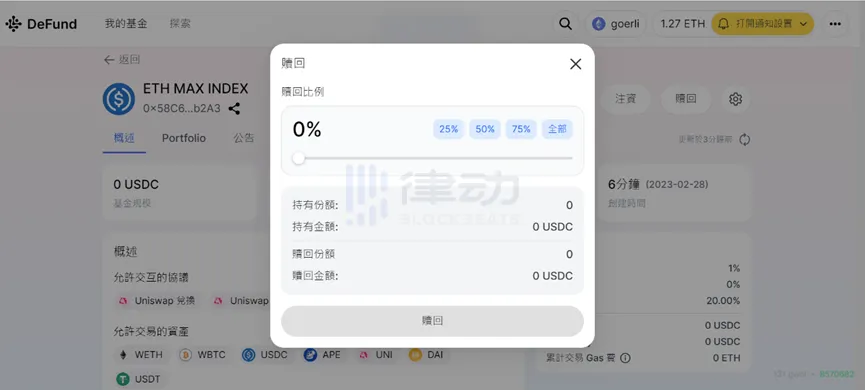
3. If you want to redeem the fund you have invested in, enter the fund you want to redeem and go to the fund details page. Click the "Redeem" button, select the redemption ratio, and click "Redeem" after confirming that there are no errors. After the block is confirmed, the redeemed assets will be automatically returned to the original wallet account.
BlockBeats reminds us that while DeFund protocol is trying to solve the fund management problems in the cryptocurrency field, it also faces challenges and risks such as market competition, technological innovation, and legal supervision. Users should be cautious and conduct thorough research and analysis before making formal investments on the main network, and carefully choose a trusted fund manager.
Welcome to join the official BlockBeats community:
Telegram Subscription Group: https://t.me/theblockbeats
Telegram Discussion Group: https://t.me/BlockBeats_App
Official Twitter Account: https://twitter.com/BlockBeatsAsia