What is the difference between the Proof of Claim consensus mechanism proposed by VRRB?

VRRB is a new consensus mechanism Proof of Claim The L1 public chain is designed to allow developers to create code in any language they wish, attracting more developers to design applications for Web3, and thereby achieve mass adoption of Web3. VRRB has received pre-seed funding from institutions such as Jump Crypto in February 2023.
From BTC to Ethereum, to Solana and Aptos, in the past few years we have seen blockchain in multiple Dimensionally evolved and also saw many new narratives come with it. Behind the different narrative priorities, there is one thing that will never get around: how to strike a balance between scalability, security, and decentralization.
Proof of Claim
The Proof of Claim consensus algorithm proposed by VRRB aims to achieve:
-Low computing cost
-Anti-collision
< p>-scalable-completely decentralized
-truly permissionless
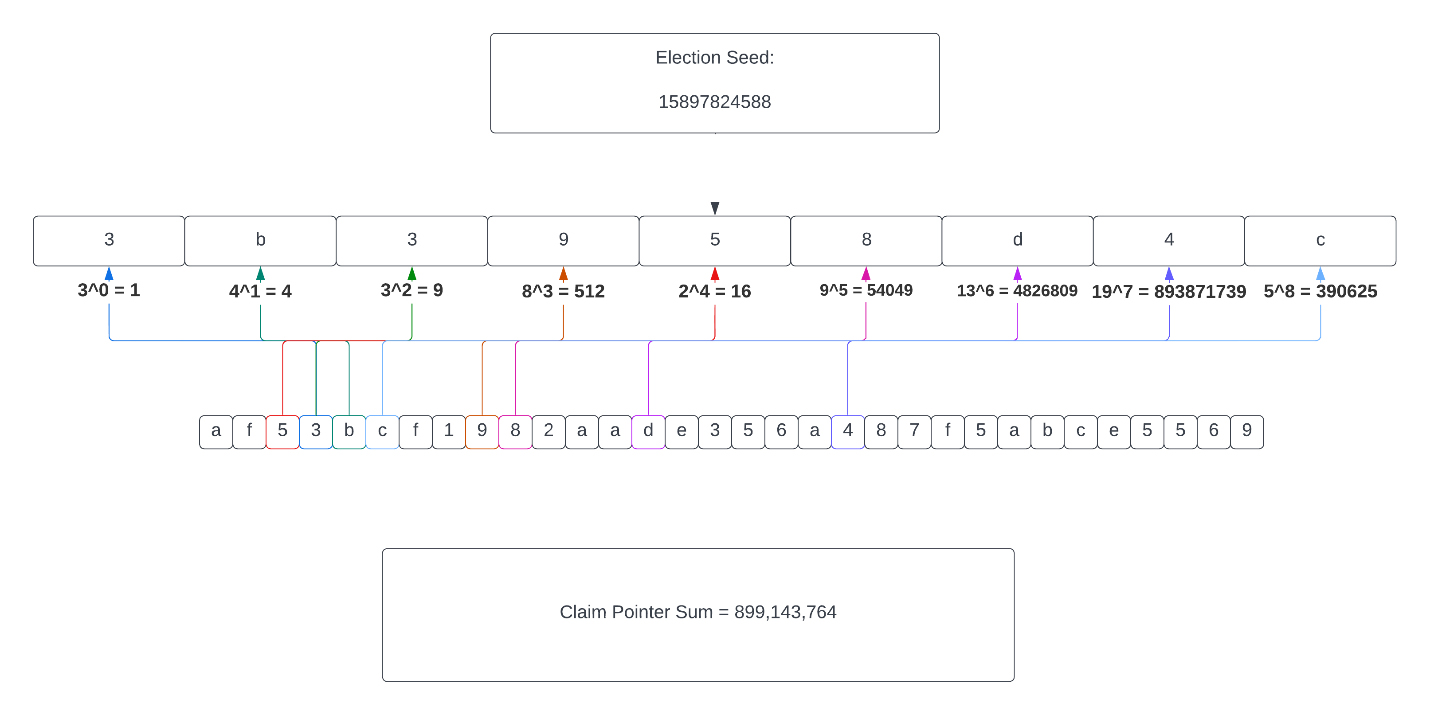
Proof of Claim is also a completely decentralized algorithm, its computing All information required is known, consensus can be reached without a leader, winning validators are elected, and computation can be done locally on each node. If there is a different state of the protocol on the network, all nodes will synchronize based on the node with the latest state.
Specially designed credit system
< /p>
The PoC mechanism brings about a problem, that is, security. Since VRRB is a permissionless, low-cost, decentralized P2P network, all nodes are equal , may be subject to some attacks, such as DDoS and spam attacks. In order to build resilience against attacks and prevent such attacks, VRRB specially designed its credit system, which is based on a credit model (Credit Model) and a message rate control model (Message Rate Controlling Model).

Each Node credits are stored in a distributed hash table (DHT). The credit line of the node when it first goes online is very low, which can only meet the minimum communication needs. The node must gradually build up reputation and prove its credibility to improve its credit. The more creditworthy a node is, the greater its responsibility in the network. The level of the node's credit value determines the amount of valid information that a node can send within a period of time. In order to solve potential node collusion, VRRB introduced the HonestPeer algorithm.
Fair pledge mechanism
Joining the VRRB protocol as a relay or mining node does not require a pledge. Mining nodes do not participate in the process of transaction verification, they only act as aggregators of transactions proposed by validators. Of course, in order to protect the security of the entire network, validators still need to stake.
Many PoS consensus mechanisms that are currently in operation seem to have found standard means to prevent verifiers from doing evil, but PoS also causes asked a question. The largest staking nodes are also the most likely to obtain rewards. After receiving the rewards, they can continue to pledge these rewards and establish a greater advantage over other staking nodes. This phenomenon will gradually weaken the decentralization of the entire network , anti-censorship, risk of doing evil, and geographical risk will gradually increase.
Through this credit model, according to the credit reputation changes in the network, the pledge requirements of VRRB's validator nodes are also dynamic. The longer a node has been non-evil, the less stake it takes to become a validator node. The pledge of VRRB has a lower limit and an upper limit, and nodes attempting to pledge its rewards will not receive any benefits. Instead, in order to benefit from staking rewards, node operators must start new nodes, stake more (new nodes have low credits) or earn more credits over time to reduce staking requirements.
This staking mechanism ensures that newcomers can participate, as the amount of staking required to start a new node is equal to all operators Yes, but this also increases the capital and time cost of becoming a validator.
Vertical and horizontal speed and scalability
< p>On the vertical expansion of a single node in the blockchain, VRRB uses a lock-free concurrency model called Left-Right to expand the RAM memory of the verifier node , significantly improving local throughput. According to VRRB, its local TPS can reach 595,000.

VRRB transaction processing power vs. content RAM There is a linear relationship in size, doubling RAM doubles its transaction processing capacity.
Farmer-Harvester Parallel Confirmation Model
VRRB expands horizontally through the Farmer-Harvester parallel confirmation model. The Farmer Quorum votes on the validity of transactions, and the Harvester Quorum collects the voting results and proposes new blocks. Each Farmer Quorum can be composed of 10 to 50 nodes. Every time the number of nodes exceeds 50, a new Farmer Quorum will be formed. There is no upper limit on the number of Farmer Quorum. There is only one active Harvester Quorum.

In the best case , each The TPS of Quorum can reach 993000.
Convergence DAG structure
VRRB chain is a round structure based on Convergence DAG. In each round, each Harvester Quorum member can propose a block of verified transactions, and the miners selected in this round will merge the proposal blocks into one block, resolve conflicts between blocks, and Carried causal ordering orders transactions.

This design, VRRB combined with directed The scalability advantage brought by the partial synchronization structure of the acyclic graph is comparable to the transaction ordering advantage of the traditional linked list structure blockchain. More secure due to separation of proposers from block builders. Once the convergent block generated by the fusion of proposal blocks is verified, the directed acyclic graph of this round can be locked on the chain, which further improves security.
Composable smart contract runtime environment
VRRB's smart contract platform aims to bring the developer experience that Web2 developers have become familiar with over the past decade to Web3, built on top of unikernel container instances.
On other platforms, each node runs a smart contract execution engine, and the scale of this engine must be suitable for all virtual machines . Smart contracts are deployed and stored in the form of state, and when smart contract interactions occur, they are executed in the same operating environment as all other contracts.

VRRB Nodes act as coordinators for Each smart contract deployed on the network orders and executes their own runtime environment. After developers write the code, they only need to refer to VRRB's standardized Build guide to deploy smart contracts in the form of unikernel images, and introduce the DevOps workflow of build, ship, and run (Build, Ship, Run) into Web3.
Since the virtualization platform of VRRB is based on the unikernel of the library operating system, the libraries required to run any program are included in the build , enabling developers to build in higher-level languages like Python or Java, web languages like Javascript and Typescript, and other Web3 languages like Solidity and Move. Of course, there are also low-level languages such as C/C++, Rust, and Go.
Developers no longer need to learn how to use a set of development tools, just build, send and let the nodes of the VRRB network arrange and Just run their smart contracts.
Project progress and financing
VRRB's closed beta testnet will be launched between late March and early June 2023.
On February 8, 2023, VRRB Labs, the VRRB development team, completed a $1.4 million Pre-Seed round with a valuation of $20 million Financing, with participation from Jump Crypto, Big Brain Holdings and Taureon.
Conclusion
< /p>
VRRB proposed the Proof of Claim consensus algorithm in order to achieve high speed and scalability in the vertical and horizontal directions at the same time, and to find blockchain scalability and security Balance between sex and decentralization.
What excites me even more is the new smart contract DevOps proposed by VRRB. VRRB's smart contract platform isolates smart contracts in its own containerized operating environment, and each app deployed to VRRB has its own micro virtual machine, which can be designed according to the focus of the app. While providing developers with great flexibility, it also allows developers to use different languages to build composable smart contracts on the same platform.
< p>
Does Web3 developers and applications come first or Web3 users come first? It's a chicken-and-egg question. In order to achieve mass adoption of Web3, many projects start by attracting new Web3 users, while VRRB focuses on expanding the full-time Web3 developer base of less than 10,000 people.
Welcome to join the official BlockBeats community:
Telegram Subscription Group: https://t.me/theblockbeats
Telegram Discussion Group: https://t.me/BlockBeats_App
Official Twitter Account: https://twitter.com/BlockBeatsAsia

 Related Articles