Google rushes into AI battle, and Bard Shares Tumble
Bard Shares Plunge as Google Scrambles for AI Battle
Original article by Mary Liu
Tech giants Google and Microsoft have gone head-to-head in their battle for the future of artificial intelligence (AI), but Google is getting off on the wrong foot.
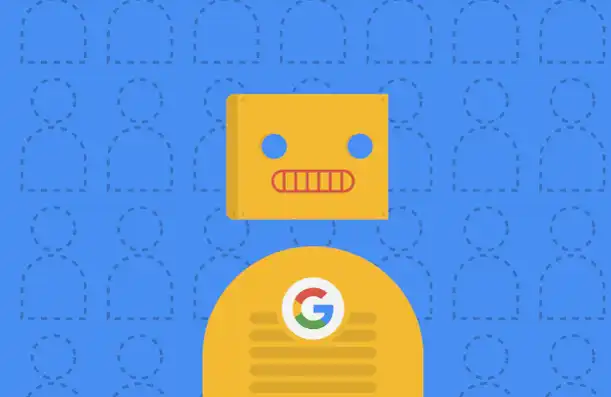
Bard, the company's much-hyped new AI chatbot tool, has yet to be released to the public, but an embarrassing mistake was made during Wednesday's launch presentation, in which a user asked Bard: "What can I tell my 9-year-old about the new James Webb Space Telescope discoveries?"
Bard offers a few bullet points as an answer, one of which is: "JWST takes first picture of extrasolar planet". Yet according to NASA, the first image showing an exoplanet (or any planet beyond our solar system) was actually taken by the European Southern Observatory's VLT telescope in 2004.

After the news spread online, Alphabet, Google's parent company, fell 8.9% intraday, its biggest drop since Oct. 26, before paring losses to 7.6% at $99.37 by the end of the day. Meanwhile, Microsoft shares, which have surged nearly 20% in the past month, fell 0.31% Wednesday to close at $266.73.
Bard's misstep highlights the challenges facing Google, coming a day after rival Microsoft said it was integrating the technology behind the ChatGPT bot into its Bing search engine.
Like ChatGPT, Bard is built on a large language model trained on reams of online data to generate precise responses to user questions, and industry experts have long warned that such tools have the potential to spread inaccurate information. To address this concern, Google previously said Bard would first be available to "trusted testers" this week, with plans to make it available to the public in the coming weeks.
"It underscores the importance of a rigorous testing process, which we're starting this week with our trusted testing program, which combines external feedback with our own internal testing to ensure Bard's responses meet high standards for the quality, security, and accuracy of real-world information," a Google spokesperson said in a statement about Bard's error.
What are Google's new AI features?
Google said at the event that it was offering a range of new AI features for its search, maps and lens apps, including a way to ask questions through images.
The company's first feature is Search Your Screen, which scour the Internet for more information about photos and videos on a user's screen, and builds technology to counter ChatGPT into search results to provide more comprehensive answers to complex questions that don't have a single right answer - such as what's the best time to see the constellations, The pros and cons of buying an electric car.
"We're moving beyond traditional search concepts to help you understand information in new ways, and the new generative AI features will help us organize complex information and multiple viewpoints in search," Prabhakar Raghavan, Google's senior vice president, said at the event.
Another feature will allow users to identify local landmarks by expanding the ability to query search engines based on images and videos viewed on their phones if they are using Google's Android operating system.
Google Maps will also allow users to explore "immersive views" of destinations - such as the inside of a restaurant - that AI will infer from ordinary two-dimensional photos, the company added. Another feature in the expansion will allow users to search a map of local businesses by pointing their phone to a nearby area.

One scenario is, not sure what your favorite bar looks like on a busy Friday night? The AI will let you know. If a user goes to a new city and wants to find a quiet place, he or she can immerse himself in the map to see which bars are less crowded, rather than having to look for them personally.
For example, if you're visiting the Empire State Building, the immersive view can tell you how crowded the place is at 10 a.m. Friday and show you what it looks like when it rains Wednesday night.
"We have a lot of hard and exciting work ahead of us to integrate these technologies into our products and continue to leverage the best of Google AI to improve people's lives," Alphabet Chief Executive Sundar Pichai said in an internal company email.
Who will win the AI battle?
Google's move to enable AI in its search engine and other product lines is its latest counterattack in the fierce AI wars. Microsoft announced last month that it was making a multi-year, multibillion-dollar investment in OpenAI, the maker of ChatGPT and other AI tools like Dall-E 2, which integrates ChatGPT technology into its Bing search engine, And plans to make them available to outside developers, directly threatening Google search's market position. ChatGPT's rapid popularity prompted Google management to declare its search business in a "Red Code" state, according to the New York Times.
The AI craze has also caught on with other companies, with Baidu announcing that it is developing a ChatGPt-like AI chatbot called Ernie bot, which it plans to launch next month. Alibaba (BABA) says it's working on a similar product.
While Microsoft's latest AI investment adds to the pressure on Google Search, some analysts say it will take time for Microsoft to see the benefits.
Jefferies analyst Brent Thill wrote in a note: "Search improvements will be a long-term tailwind for AD revenue, but it will take time to bring users back to Bing, where they will need to pry advertisers away from Google. We see these updates as the tip of the iceberg for MSFT's AI capabilities, with the greatest opportunity in enterprise use cases."
Evercore analysts said Google's activity produced a "small amount of incremental news," which may have contributed to the decline. Analysts said they believed it was an early and "possibly hasty" response to AI, which Google has been working on for years. Even so, analysts said they believed Google's AI technology was "at least as good as its competitors".
"Leveraging its years of AI investment (which nearly doubled capex in 2018) and unmatched scale, this should help the company defend its market position in the long run," Evercore wrote in a note Wednesday.
While Microsoft is riding high, Google's long-term investment in artificial intelligence will eventually pay off, said Gene Munster, co-founder and managing partner of Deepwater Asset Management. "The snapshot right now is that Microsoft is dominant, however, we continue to believe that the long-term advantage should go to Alphabet given the resources it has invested over the past six years," he told Bloomberg.
Original link
Welcome to join the official BlockBeats community:
Telegram Subscription Group: https://t.me/theblockbeats
Telegram Discussion Group: https://t.me/BlockBeats_App
Official Twitter Account: https://twitter.com/BlockBeatsAsia

 Related Articles