Blockchain-based "autonomous" world
Original title: "Autonomous Worlds (Part 1)"
Original author: ludens
Original compilation: Kxp, BlockBeats< p>
The "world" in this article refers to a collection system containing various entities A clear code of conduct (here we don't mean world-building; the point of world-building is to create fantasy worlds to optimize and coherent fictional stories). When a system consisting of entities and rules emerges, it becomes a "world" by itself.
We, as participants, live in "worlds" that are either real or conceptual and learn how it works and behaves. It could be tribalism, spatial reasoning, or localism, or even some system that exists entirely in the concept. Not only that, we have a certain understanding of the boundaries and rules of these "worlds".
They also exist in books, games, social groups and religions, such as Nani Asian Legends, Christianity and Commonwealth Law.
The "world" runs on everything from letters to wikis to bedtime stories , constitutions, databases, and most importantly, our collective human intelligence. When we say that a "world" "runs" on something, we mean that that thing is why the "world" continues to exist, and why we continue to experience it in this collective system.
Although some "worlds" need to rely on some kind of objective entity to exist, such as books or computers , but they are not the reason why these "worlds" can exist. In other words, simply printing a book cannot create a "world". Only when people read it, pay attention to it, and experience it, can this "world" exist.
Diegesis——A narrative
When discussing the concept of "world", for the sake of accuracy, we need to first define what diegesis is. Something is contextual (that is, belongs to the system) if it is in the "world". And for something to enter a "world", it must respect the import rules of that "world".
When we define the boundaries of the "world", the concept of narrative is very important . Remember, a "world" is a collection system.
Let's understand this concept with some examples, we will use the word entity to describe Various components of the "world", these entities include events, people, rules, facts, and so on.
The World of Harry Potter
< /p>
In the "world" of Harry Potter, the introduction rule is very simple: if an entity is included in a story written by JK Rowling , and published in the Harry Potter series, it automatically falls into the system.
USD "World"
This "world" may be unfamiliar to ordinary people, and so are its introduction rules. Its entities include authorities, fiscal balances, debts, and values, among others.
The introduction rules for this "world" are as follows: If an authority can prove the balance or debt exists, then it belongs to the system. Additionally, if an entity's "dollar value" is accepted by an entity with economic power, its corresponding value is attributed to the system.
Warcraft "World"
In World of Warcraft, the import rules are determined by computer code. If the game server can relay the existence of an entity to the player, then it belongs to the system. Statements about entities like "my character has level 60" or "our guild is the best guild on the server" have their truth values determined by C++ code written by Blizzard engineers.
National Boundary
Some "worlds" do not have clear boundaries, and certain entities may only show their affiliation to certain groups of people.
Most worlds are not affected much by their blurred borders, And for a system as important to our lives as the dollar, we spend a lot of time precisely defining and enforcing its introduced rules and boundaries. Bureaucracy and law have a strong gravitational pull, drawing together coherent entities and setting clear boundaries for their affiliation.
It turns out that the use of "laws" and "codes" to standardize the introduction of rules to our lives It is very important for the key "world" of the world. These tools can further clarify the boundaries of the "world".
The boundaries of authoritative organizations or social consensus are often not clear, and those clear narratives Boundaries are often established by clear and transparent rules, such as laws, codes, or mathematics. Our highest-level physical world, our universe, has a very clear narrative boundary, and is strictly enforced by the rules introduced by it-physics.
Whether the boundary is clear or not, it can be a desirable feature of different "worlds". The boundaries of “fan fiction” are often blurred, but commercial systems need clear boundaries: doubts and disputes will hinder the orderly conduct of trade.
Blockchain: A Technology for Creating Rules
< /p>
We have had a long history of development in which discoveries in language, writing, law, and psychology have produced many of the most important social systems.
In 2008, an email opened the door to Bitcoin for us, it is also the history of world technology One of the breakthroughs.
Blockchain is a system for generating consensus (or "normative") network technology. In Bitcoin, network participants agree on the normality of a set of balances. According to this article, a normative thing is equivalent to a narrative entity.
Similar to the dollar "world", Bitcoin is a weird system. Entities in the Bitcoin "world" are balances and addresses, and the rules for their entry are defined by computer code. In this system, its introduction rules can be defined as follows: a part of the existing balance can be transferred to another address through a Crypto-signed "transaction". And most importantly, the balance of an address can be increased through "mining", although this process will use a lot of expensive computing power.
Blockchain is an underlying framework that holds all the systems in its state A collection of entities. Furthermore, they formally define their import rules in computer code. The "world" using the blockchain as the underlying framework enables its residents to effectively participate in the consensus, and can use the computer network to reach a consensus for each new entity entering the system.
For the "world", blockchain has two important concepts:< /p>
1. Blockchain State Root
Status Root is a refinement of all entities in the "world". With state roots, one can determine whether any entity is contextual. Moreover, trust in a "world" state root is equivalent to trust in the "world" itself.
0x411842e02a67ab1ab6d3722949263f06bca20c62e03a99812bcd15dce6daf26e is Ethereum at 07:30:10PM UTC on July 21, 2022 status root. In the calculation of this state root, all entities within the Ethereum system are taken into account. It represents the entire contextual and non-narrative content of the system at that particular time.
2. Blockchain state transition function
< /p>
Each blockchain defines a state transition function, which is a clear introduction rule that can Define how we change and introduce new contextual entities when given a set of inputs from humans, machines, and previous states of the "world" - the collection of existing contextual entities. In Bitcoin, state transition functions define how balances are spent.
1. They (or someone they trust) participate in or verify the digital "consensus" of that corresponding blockchain. By participating, they can independently retrieve the state root of the blockchain.
2. They trust the specific consensus algorithm of the blockchain to work properly. Blockchain is not magic: it cannot create clear narrative boundaries out of thin air. Each blockchain will encounter various attacks and failures during the specific implementation process.
However, having standardized import rules does not necessarily make the "world" completely credible. The CME flash crash, for example, led nearly all traders to reject the system's entry rules—the results produced by the order book matching engine—even though the entry rules had been formalized in computer code. If we believe that the blockchain consensus algorithm is capable of working correctly, we can pre-empt all kinds of unexpected situations that are very common in other systems with standardized introduction rules, such as:
・What if someone changes the import rules without telling us about these participants?
・What if the introduction rules are misinterpreted?
・What if some entities can bypass import rules?
With the help of digital consensus, the blockchain has created the most definite narrative boundary.
Autonomy
Of course, the blockchain is not the only underlying architecture in the "world". Like I said before, "worlds" can run on everything from tribal songs to databases.
However, as the underlying structure of the "world", the blockchain Autonomy brings qualitative improvements.
When it comes to autonomy, each "world" is on a different level : Some "worlds" rely on a single individual with authority to introduce new narrative entities (eg: Harry Potter); some "worlds" rely on a consensus of a group of people to interpret and legal system and dollar "worlds"); other "worlds" require immutable computers to run their canonical import rules (e.g. CME and Warcraft "worlds").
In extreme cases, a "world" can introduce new entities, and in the absence of special Maintain its contextual boundaries under individual or hardware conditions.
The "world" with the underlying framework of the blockchain can achieve maximum autonomy : Introduced rules can be enforced by anyone without compromising their objectivity. The departure or betrayal of any particular individual does not harm that "world" nor affect its borders. These "worlds" are almost as rigorous as systems like English linguistics or physics.
Of course, we can only measure the autonomy of the system after the fact. Autonomy is often able to act before the "world" is actually threatened. Sometimes, the credibility of autonomy determines whether the "world" can truly govern itself.
Self-governing the "world"
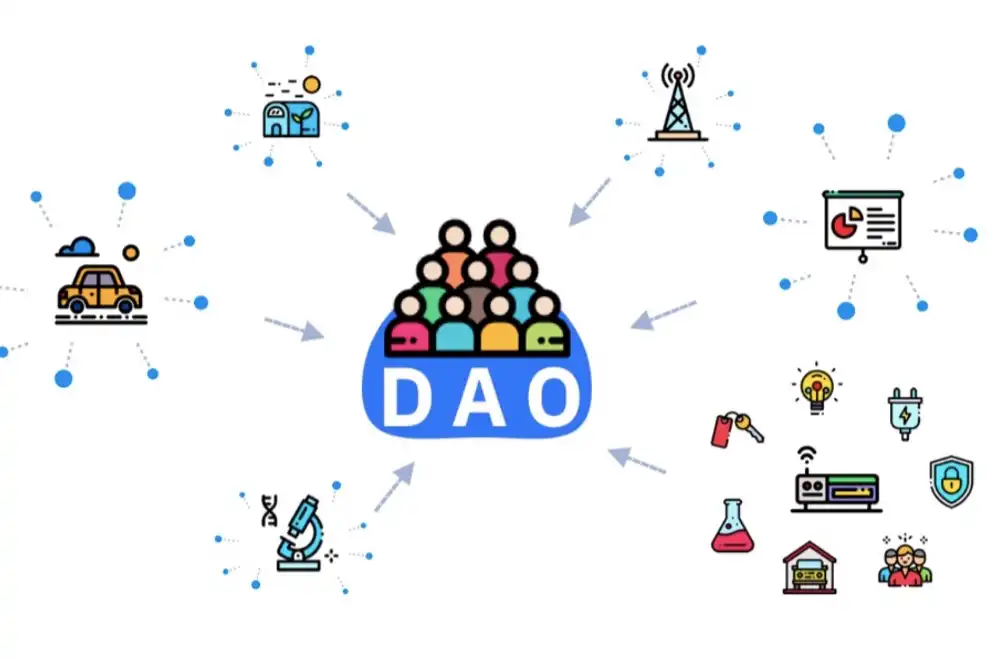
Since "the "world" with blockchain as the underlying architecture" is a bit of a mouthful, we generally refer to these systems as autonomous "worlds".
I like to think of autonomous "worlds" as digital versions of planetary systems, with their own rules and systems.
Mars is a good example, it has rolling mountains and ancient river beds, terrain Complexity and diversity, a thin atmosphere—all these characteristics make up its unique world. Most of the time, it's hard to see Mars with the naked eye. But even so, it has always existed in our solar system and never left. If you have access to special instruments, then you can gather information about Mars, and another person can use similar instruments to obtain the same information.
Telescopes for observing Mars can be built by anyone, and this makes it easier for us Agree with the fact that "there really is a giant red sphere in the sky like Mars, it's not something you made up".
And, even if one no longer believes in its "world", the rocks and deserts of Mars will continue to exist, and no one can "erase" the existence of Mars.
Similarly, autonomous "worlds" have their own "telescopes" that anyone can build and Use it to reach consensus (also called "full nodes" in blockchain).
As long as at least one person participates in the digital consensus, the self-governing "world" entity will remain its narrative. Not only that, but its introduction rules are also objective and transparent. For anyone with the right tools, they can observe the state of this "world" with an open perspective. Likewise, no one can shut down the autonomous "world".
The self-governing "world" has its own clear borders and standardized introduction rules, no need Privileged people keep it going.
From autonomous "world" to inter-object reality
Thanks to Hilmar Petursson and Sina Habiban for the inspiration for this section:
< /p>
In "A Brief History of Mankind", Yuval Noah Harari describes that apart from our common objective reality (the universe and its laws of physics) and our individual subjective reality (our own feelings and thoughts), we also experience intersubjective realities: intangible concepts shared by multiple people. Prime examples of intersubjective realities include religion and money, and different people view these subjective realities in different ways: an intersubjective reality like love, for example, can be perceived in multiple ways. Even though this feeling can be shared with others, it is still intangible and subjective.
Self-governing the "world" allows objective reality to materialize. By introducing rules of autonomy and normative objectivity, we can reduce, or even eliminate, the subjectivity of these realities.
For the past tens of thousands of years, we have been in an intersubjective reality. Today, with the autonomy and transparency underlying the blockchain “world,” we can infuse some of the rigidity and objective properties of our shared physical reality into our shared abstract reality.
Conclusion
In this post, we introduce the concept of an autonomous "world": a system of entities with objectively imported rules powered by a blockchain. In short, the self-governing "world" is an objective reality.
Original link
Welcome to join the official BlockBeats community:
Telegram Subscription Group: https://t.me/theblockbeats
Telegram Discussion Group: https://t.me/BlockBeats_App
Official Twitter Account: https://twitter.com/BlockBeatsAsia

 Related Articles