Is the real world asset RWA a unique opportunity for DeFi?

Author: Vaish Puri, Research Analyst at The Tie
Leo, BlockBeats
Finance is on the brink of transformation. DeFi is slowly spreading beyond the currency sphere, with real-world consequences. As more and more assets are tokenized, the traditional capital market is also developing toward blockchain.
At the same time, due to rising interest rates, falling demand for DeFi, and the poor global macroeconomic environment, the opportunity, cost of transferring funds on the chain is at the highest level in the history of cryptocurrency. Real World Assets (RWA) provides yield-hungry DeFi investors with a unique opportunity to access a variety of off-chain debt markets, while also allowing TradFi institutions to tokenize and issue debt/assets independent of geographic markets.
What is RWA?
An RWA is a token (homogeneous or non-homogeneous) that can be traded on the chain and represents an actual asset. Examples of RWA include real estate (home and lease streams), loans, contracts and guarantees, and any high-value items that will be used in the transaction.
RWA removes many of the traditional constraints. Imagine a mid-sized fintech company in Indonesia called Bali looking to raise funds to fuel their development and marketing campaigns. Within a few hours, the company was able to raise more than $100,000, not from traditional banks or VCS, but by issuing tokenized bonds. This bond token can then be packaged with a number of similar Indonesian fintech bonds and sold with different capital shares.
Like another on-chain asset, Bali's finances are transparent and visible. As the income and cost of Bail change, the token price will also change, and the change in credit risk will automatically feed back into the loan.
Thanks to the RWA, Bali is able to borrow at a lower interest rate of 7% than the more than 14% typically charged by Indonesian FinTechs. When DeFi yields are low, investors are able to obtain favorable real world lending rates. RWA enables enterprises to raise capital through digital or traditional means, and economic growth is not limited by geographical location, with a long-term stable state.
Why RWA?
The success of securitisation in the 1990s illustrates how improved norms have changed the composition of capital. Securitization is simply a system for creating, aggregating, storing and diversifying risk. By coming up with benchmarks (in terms of maturity, risk, etc.) that assets must meet, we have significantly increased liquidity and issuance. Mortgages, business loans and consumer loans were institutionalized and deployed through securitization to provide more affordable financing for consumers, companies and home buyers.
Securitization is still the same 30 years later; Financial markets have not developed to the extent that they can effectively adapt to the Internet. Borrowing costs are higher than they should be because the network of intermediaries that lend includes investment banks, fiduciaries, rating services, servicers and so on. Most assets cannot be securitised because they cannot meet the standards of securitisation when they are initiated. International financing markets remain out of reach for most business owners. In Asia and Africa, basic resources such as insurance are still hard to come by. Which begs the question:How can digital capital markets cross the moat of TradFi?
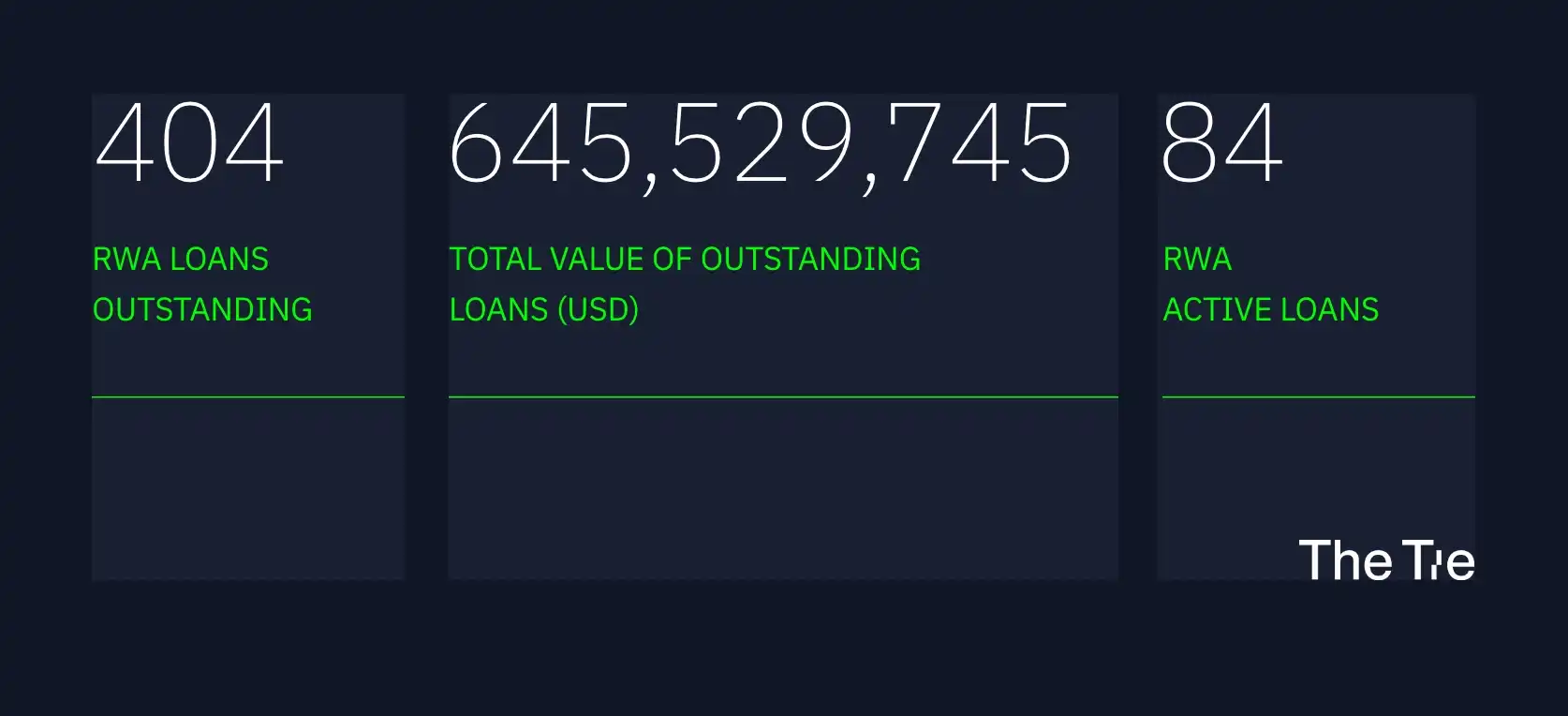
For DeFi to be successful, there must first be a connection between encryption and the real world. While the market for digital assets is still small ($1T), the market for real-world assets is huge. $600T).If Crypto is to have an impact on traditional business practices, it must explore this vast sea of value.
Assets managed
Given the proliferation of digital assets and the influx of new institutions, the importance of reliable institutional custody of digital assets is Paramount. In the past few years, licensed DeFi hosting services such as Anchorage Digital and Copper have proliferated. Some Maple-like credit agreements guarantee their tokens on licensed platforms that cater to these institutions.
As it stands, escrow is primarily guaranteed through a legal structure that is created when the pool is created, and through standard KYC/AML procedures. Taking Centrifuge as an example, after the interaction with the capital pool, the investor signs an agreement with the issuer of the capital pool and sets the capital pool as a special purpose vehicleSpecial Purpose Vehicle. This Agreement holds the Issuer responsible for any future repayments.
All financing transactions and payments are made directly between the borrower, the SPV and the investor, and on the chain. In the future, credit agreements are expected.Kilt The decentralized Identity Project (DID) is more integrated to allow verification of assets. A team of underwriters would then be integrated to act as third-party risk assessors, rather than the existing oracle system.
liquidity
Specific tokenized assets, such as real estate contracts, can be very illiquid. The liquidity of the pool depends on the maturity of the assets and the inflow and outflow of investors. Income-based incentives are another source of lucrative liquidity.
Alternatively, the protocol can work with DEX, AMM, and other DeFi applications such as Balancer and Curve to create liquidity. A typical example is Goldfinch, where members create a liquidity pool on Curve using FIDU, a token that deposits money into the senior pool on behalf of liquidity providers. This allows FIDU-USDC Curve LP positions to receive GFI liquidity mining rewards.
The credit agreement
One of the biggest reasons agencies are uneasy about DeFi is the lack of standardised reputation systems, such as credit scores. If loan repayments cannot be enforced in the event of a future default, DeFi agreements have to use liquid tokens as collateral. This takes credit risk out of the picture, but also limits the number of financial products available. Credit agreements are using complementary strategies to provide a reputational component to loans.Some people are trying to bring off-chain reputation into the on-chain world, but others are trying to really create an on-chain reputation system.
Although the specific case varies, this is exactly the goal of leading credit agreements like Maple, TrueFi, Goldfinch, Centrifuge, and Clearpool.
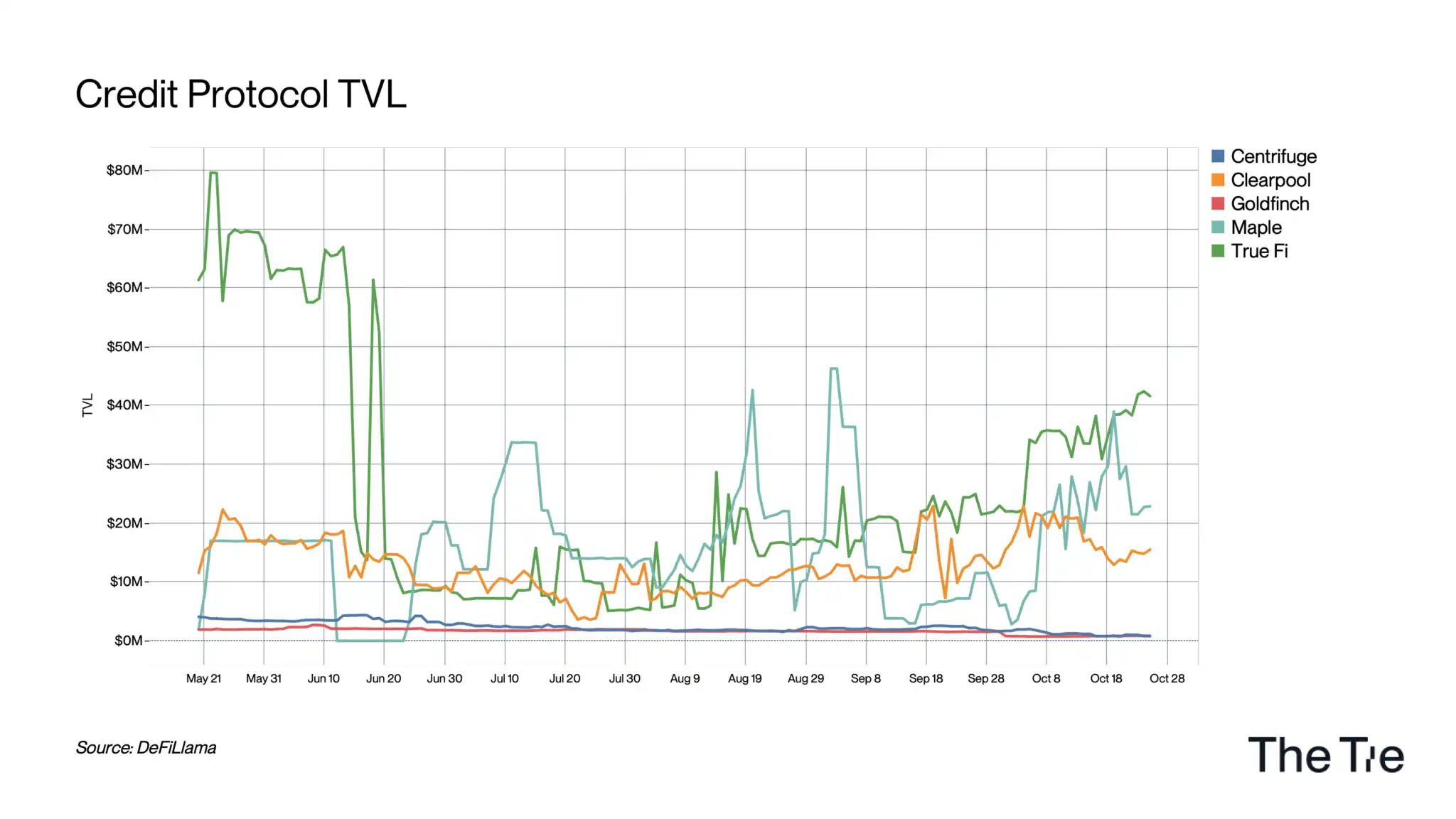
Goldfinch
Goldfinch is developing a decentralized loan underwriting protocol that enables anyone worldwide to issue loans on the chain as an underwriter, using data such as unique identity (UID) NFTS representing KYC/KYB. Their argument rests on two basic principles:
-Over the next decade, investors will demand new investment opportunities due to the overall transparency and efficiency of DeFi and the general environment of holding down interest rates, which is now changing, and investors will demand opportunities with higher yields than what traditional banks and institutions can offer.
- Global economic activity will move to an on-chain model that makes every transaction transparent, creating a new public good: an immutable, open and transparent credit history, and a reduction in the massive transaction costs associated with banking.
The goal is to gather information created in real life and online and use it to build user reputations that can be applied on the chain. Like any credit institution, the system is not without risks. Protecting lenders involves preventing default or, in the event of default, repaying lenders as much as possible.
Goldfinch relies on its backers -- investors who provide USdcs to the borrowing pool -- to monitor the pool's health and provide liquidity. They are motivated to do this because the first thing they lose in the event of a default is their liquidity. Similar to TrueFi, Goldfinch offers smart contract insurance through Nexus Mutual.
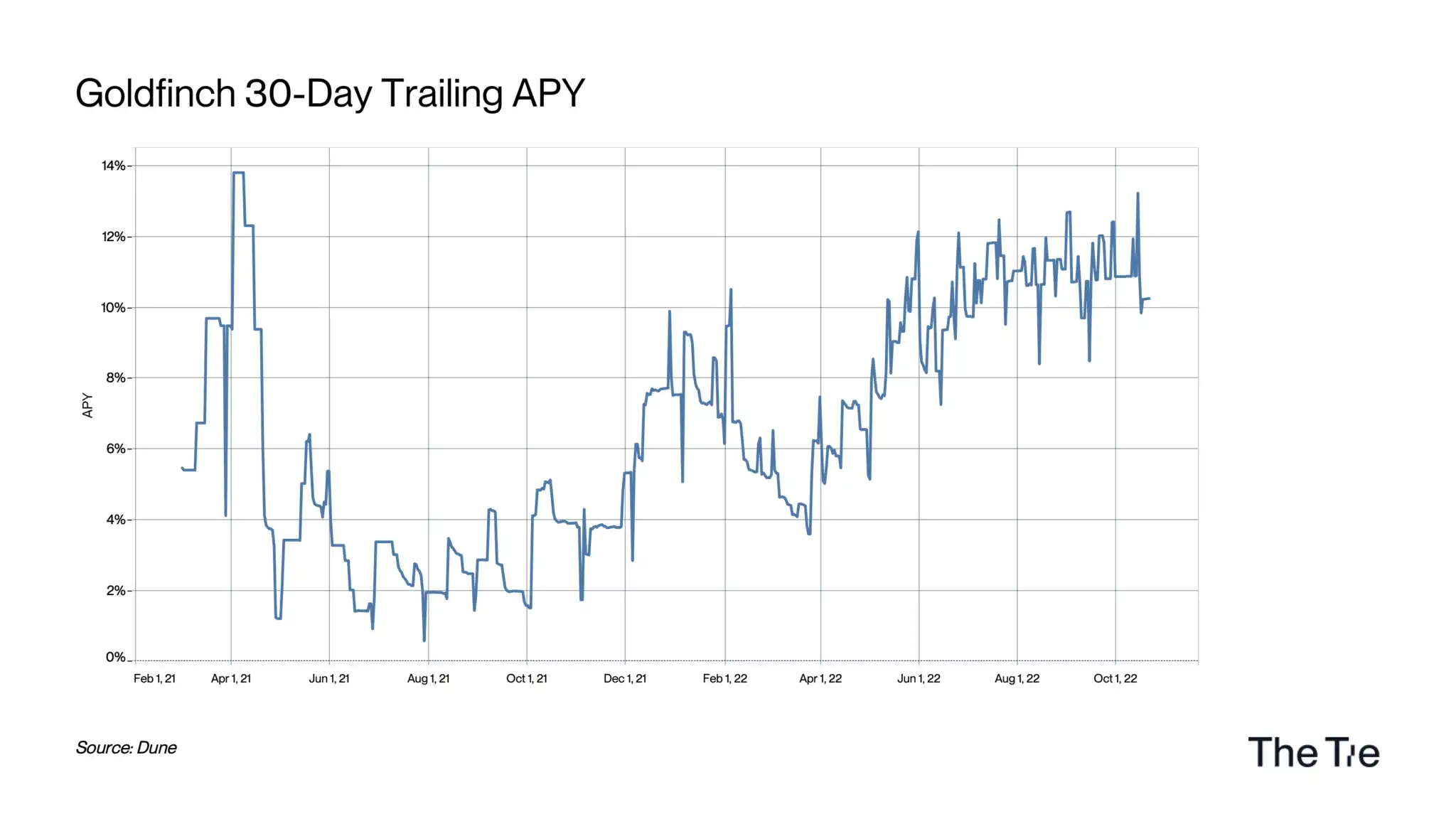
Centrifuge
Centrifuge is a network that can provide quick and cheap capital for small enterprises, and provide stable income for investors. Centrifuge Bridges real-world assets to DeFi in order to reduce the cost of capital of small and medium-sized enterprises and provide DeFi investors with a stable source of income that is not related to crypto volatility. Centrifuge relies on asset originators and issuers to provide reliable loans with a low default rate. If there is a breach of contract, investors in the primary part of Centrifuge should bear any loss first.
Tinlake, their first user-facing product, provides an easy way for any company to capture DeFi liquidity. For investors, these assets will generate safe, durable returns on their investments, regardless of the instability of crypto markets. Their native coin Centrifuge token (CFG) uses a PoS consensus approach to pledge verifiers and provide adoption incentives. Through on-chain governance, CFG owner can positively influence the development of Centrifuge.
Tinlake's valuation approach is based on the fair value discounted cash flow model, and its approach can be summarized as follows:
- Calculate Expected Cash flow: For each outstanding financing of an asset, the expected cash flow is calculated based on the expected repayment date and expected repayment amount.
-Risk-adjusted Expected Cash flow: Cash flow is risk-adjusted for credit risk based on expected losses. Expected loss = expected repayment amount minus expected cash flow * PD * LGD to adjust for credit risk.
-Discount risk-adjusted expected cash flows: Present value of financing is obtained by discounting risk-adjusted expected cash flows at an appropriate discount rate, which depends on asset class and asset pool.
-Calculate Net asset value: Add the present value of the risk-adjusted expected cash flows of all financing in the pool to obtain the net asset value.
TrueFi
TrueFi is the leading credit protocol that provides a wide range of real-world and crypto access and funding opportunities for on-chain capital markets. As of November 2022, TrueFi had originated more than $1.7 billion in unsecured loans and made more than $35 million in payments to lenders, each of which was distributed and reported on the chain. Through a path of gradual decentralization, TrueFi is now owned and managed by holders of TRU Tokens, with underwriting owned by TrueFi DAOs or separate portfolios.
TrueFi coordinates and acts together for four major players:
-Lenders use TrueFi to access opportunities across a range of portfolios.
- After vetting, borrowers rely on TrueFi for quick access to competitively priced capital without collateral lock-in, allowing them to maximize capital efficiency.
- Portfolio managers use TrueFi to build on-chain portfolios, bringing the benefits of blockchain to their investment activities - such as round-the-clock service for global lenders, greater transparency and lower operating costs.
-TRU holders effectively own and manage TrueFi protocols, making key decisions and contributions necessary for TrueFi development through open discussion and on-chain voting.
TrueFi's core contributors.Archblock(formerly TrustToken) originally started out as a real-world asset in 2018 with the launch of the popular TUSD stablecoin. Starting in early 2022, TrueFi pushed further into RWA with the launch of capital markets, allowing traditional funds to move their loan portfolios onto the chain. Today, TrueFi has directionLatin America FinTechs, emerging markets and even crypto mortgages offer convenient portfolios.
Becoming a TrueFi borrower or portfolio manager follows a similar process as most other credit agreements: Each applicant must submit a public proposal describing their business and the intended use of the funds, subject to community approval, as well as meeting underwriting requirements (such as controllable capital, maximum leverage, and asset exposure as set by TrueFi's credit committee). Successful applicants are whitelisted and can borrow from TrueFi's pool of unlicensed DAOs or design and launch their portfolio.

TrueFi takes some unique steps to protect lenders. In addition to management led by the DAO Credit CommitteeStrict underwriting process, and promises to conduct regular code audits during major agreement upgrades, and TrueFi has three tiers of recourse against breaches. First, cut TRU pledges by up to 10% to cover lender losses; Second, TrueFi's User Safe Asset Fund (or "SAFU") may dip into its reserves to cover any further losses; Finally, any successful ripening action against defaulting borrowers will be properly paid through the DAO. In addition, TrueFi offers smart contract insurance plans, which can be purchased through Nexus Mutual, to provide coverage when the smart contract is utilized.
After a gradual decentralization process, TrueFi is now owned and governed by the holders of TRU tokens. The TrueFi DAO now owns and manages TrueFi's permission-free pool, vault, and roadmap. The DAO set its sights on something deeperOrganizations useIntegration with DeFi, introduced features such as grading and improved investment composability.
Maple
In 2021, Maple launched a secured loan program for licensed KYC loans. Instead of using the standard DeFi mortgage model, which relies on the ability to reduce collateral assets in the event of underpayment, Maple allows users to offer low-collateral loans to well-known companies based on reputation. Currently, Alameda Research, Framework Labs, and Wintermute Trading are some of the borrowers in other pools.
The protocol is governed by two tokens (MPL and xMPL), which enable token holders to participate in governance, share revenue and provide Pool Cover protection for the lending pool. Maple Token (MPL) holders can participate by:
- Passive MPL holders earn a portion of the setup fee.
-Savvy MPL holders can earn additional income by choosing liquidity pool pledges
-Pledge MPL-USDC 50 to 50 BPT to provide a reserve to cover loan defaults in exchange for a share of ongoing fees.
As Maple moves towards full decentralization, MPL holders will be able to submit proposals and vote on changes such as adding pool representatives and adjusting fees and pledge parameters. For Ji, Maple is a tool to attract funds and earn fees.
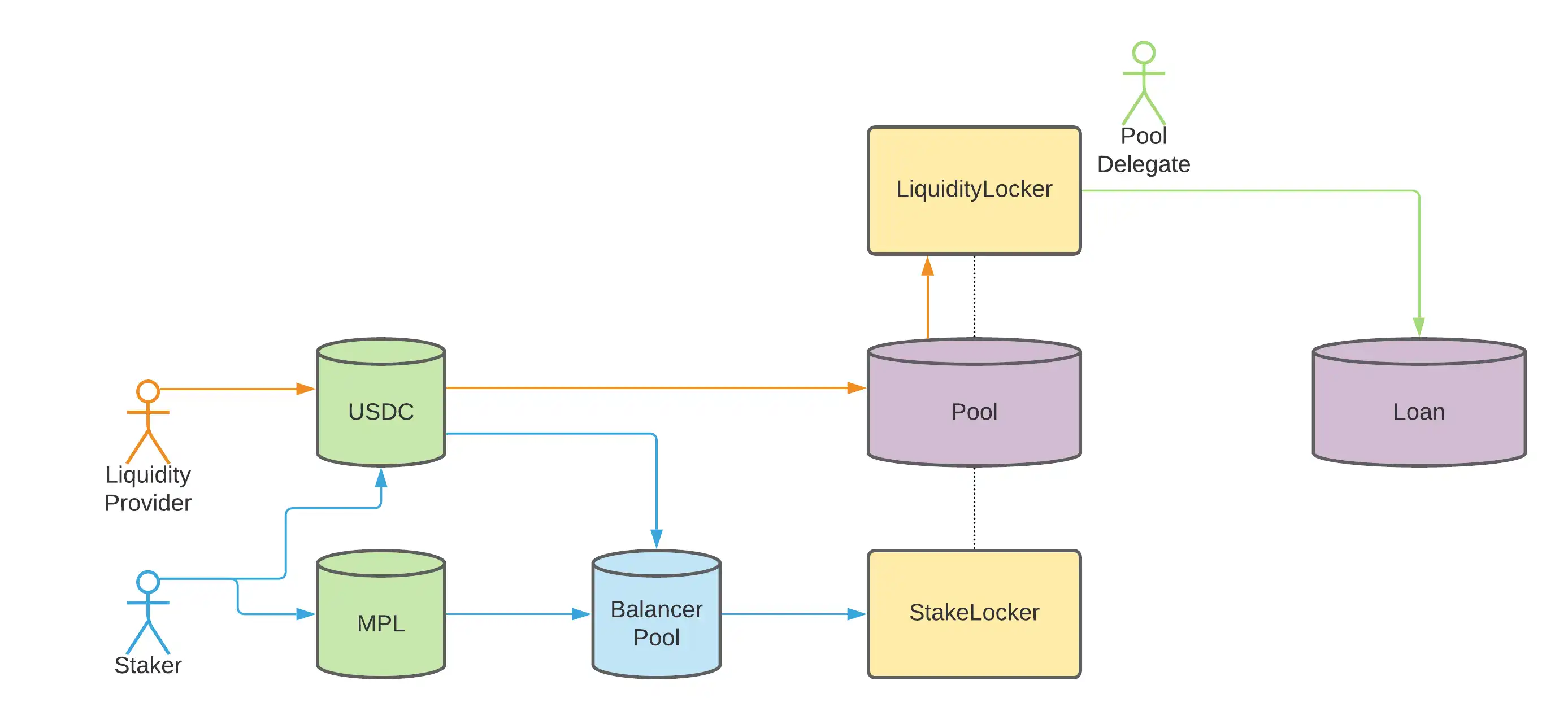
The pool representation in Maple is crucial. Pool representatives go through a rigorous approval process as they are responsible for maintaining the stability of the Maple lending pool - by authorising loan requests, screening borrowers and setting up the pool in the first place. Finally, Maple requires each pool representative to hold, pledge and use the MPL token as first loss capital. As a result, pool representatives also suffer losses if the borrower defaults. But in the event of a default, Maple uses a Pool Cover, essentially a pool of first losses. This is funded by pool representatives and MPL holders.
conclusion
As the industry grows, capital flows will become an order of magnitude more efficient. In a perfectly efficient market, a pre-approved borrower might get a $5 million loan and pay it back in 30 minutes, then watch another borrower quickly get the same amount. This liquidity would be driven by a credit model that constantly assesses the default risk of each borrower and evaluates any new risk information that emerges. In the future, every dollar will be allocated immediately to the business with the highest risk-adjusted return. Credit agreements such as TrueFi, Centrifuge and Goldfinch play an important role in leading the financial industry to develop in this direction.
Welcome to join the official BlockBeats community:
Telegram Subscription Group: https://t.me/theblockbeats
Telegram Discussion Group: https://t.me/BlockBeats_App
Official Twitter Account: https://twitter.com/BlockBeatsAsia
 Related Articles