A&T View: A low-barrier wallet, a necessary tool for mass adoption of Web3 applications
A&T View: The Low-Barrier Wallet -- The Essential Tool for Mass Adoption of Web3 Apps
Original article by Billy, AnT Capital
In this paper, & have spent
TL; DR:
The user experience and security of the existing mnemonic wallet are far from the level of Web2, and the high threshold of using mnemonic wallet prevents a large number of Web2 users from entering the Web3 world. The mission of the low-barrier wallet is to solve this problem.
The core paradigm of the low-barrier wallet is the 2/2 operation model, which enables the wallet to introduce Web2's mature 2FA, risk control and backup systems, enabling the wallet to achieve Web2-level user experience and security, although some schemes partially sacrifice censorship resistance.
Both EOA and smart wallets have advantages and disadvantages, and both have opportunities in the long term.
Both the supply side and the demand side of the low-threshold wallet circuit are still in the early stage, the competitive landscape is not yet determined, and it is still relatively blue sea.
At present, the core competitiveness of low-threshold wallet is product capability and BD capability.
The low barrier wallet is likely to become the user entry point to Web3 and has the potential to grow into a super Dapp.
The preface
The term "wallet" doesn't exactly convey what it means: managing assets like a real-world wallet is just one of its functions. Wallets are essentially tools for human users to interact with the blockchain, from sending transactions to DAO Voting, user chain operations are almost always carried out through the wallet.
Unfortunately, the current mainstream wallet for Web3, the mnemonic EOA wallet (for Metamask), is extremely unusable, and this barrier prevents a large number of Web2 users from entering. For a Web2 kid, the first time he goes to Web3 and uses Metamask Wallet, a long list of mnemonics and a "never reveal mnemonics to anyone else" message is greeted. The user then remembered all the tragedies he had heard about the theft of private keys in his wallet, so he hurriedly found a piece of paper to copy down the mnemonic words and hid them in his drawer. Next thing he knows, he doesn't have any eth, which means he can't do anything.
So he had to click on Metamask's fiat currency into gold function, fill in various bank card information and get the corresponding eth. Then he can finally play his cat on chain game, all while keeping an eye out for safe environments and leaks of mnemonic words. Of course, this is a very idealistic scenario, but the real scenario is more likely to be that 80% of users will abandon their account registration when they see the mnemonic, and 80% of the remaining 20% will leave Web3 before they even sign up.
For a product to gain mass adoption, it must lower its user barrier. Computers 50 years ago had similar (but more extreme) problems with Web3. In the case of Web3, the barrier to use was too high for the human user to interact with the blockchain tool (wallet), while the early computers were too high for the human user to interact with the computer interface: the early computers only supported the command-line interface.
This made mass adoption of computers impossible and reduced them to geeks' toys. It was not until the 1970s, when the Xerox company developed the first graphical user interface, which was popularized by Apple, that the general public was willing to use computers, and they gradually became indispensable to modern human beings.
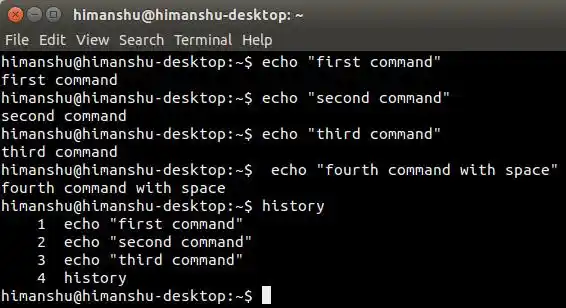
Graphical interfaces appear when the user can only use the command line to interact with the computer
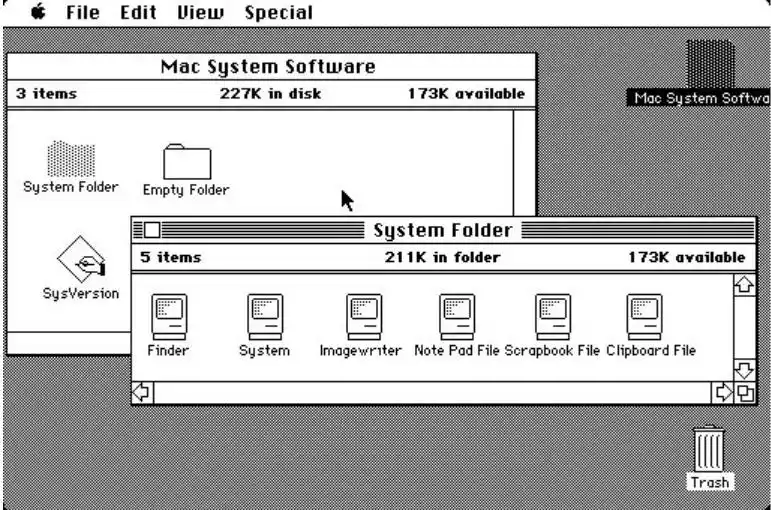
Apple was the first to popularize graphical interfaces, bringing computers to the masses
Similar to Web3, only when the operating threshold between users and blockchain is lowered to a level, Web3 products can be adopted by people on a large scale if they have similar product experience to Web2, otherwise, the current number of investors will appear. Number of project parties > The number of users. Therefore, for Web3 to be accepted by the masses, the wallet threshold must be lowered, and this is the mission of the low-barrier wallet.
The low-threshold wallet has many features, such as 1) eliminating mnemonic words, 2) allowing users to log in with familiar web2 methods such as email and google account, 3) supporting users to use it for free (gas fee for payment), 4) embedded in Dapp, etc. These features will help users unconsciously interact with the blockchain, providing the basis for the explosion of Dapps.
A paradigm shift for low-barrier wallets: Web2-level security and user experience
Low threshold wallet and ordinary mnemonic wallet are two completely different paradigms.
The operating model of the mnemonic wallet is that whoever owns the private key (mnemonic) has full ownership and management of the account assets. Compared with Web2, which has two-factor authentication and password retrieval, this operation model greatly damages the security of user assets. Whether the private key is stolen or lost, the user will lose all assets. This is followed by a significant detriment to the user's product experience: a lot of effort is required to prevent mnemonic theft/loss, such as having to hide mnemonic words on paper. The obvious benefit is that users have sovereignty over their assets and don't have to worry about centralised agents doing evil or censoring.
The low-barrier wallet uses a new 2/2 operation model that elevates security and user experience to Web2-like levels, although some schemes sacrifice some censorship resistance. However, the level of security and user experience of Web2 paves the way for mass adoption of Web3 applications.
The core of the low threshold wallet: the 2/2 operation model
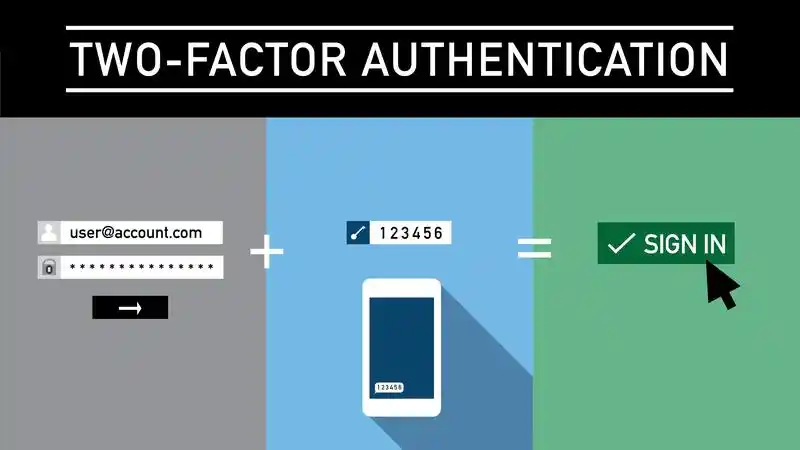
In simple terms, the 2/2 operation model means that all user operations must be performed with the consent of the specified two parties. The simplest way to implement this is to use a multi-sign wallet and stipulate that each operation of the wallet must be signed by two private keys. If we assign two parties as the client and the wallet project side (in the multi-sign wallet scheme, one private key is stored in the user's mobile device and the other private key is stored in the wallet project's server), this means that if the wallet project side does not agree, an operation cannot be completed. Based on this, wallet project can use Web2's well-established 2FA (two-factor verification) and risk control techniques to enhance wallet security to the Web2 level.
2FA (two-factor verification) : In Web2, when a user logs in to an account on a new device, the Web2 application usually performs additional verification on the user, such as email verification, SMS verification, device verification, face recognition verification, etc. The security assumption here is that a hacker cannot crack two different authentication factors for a user at the same time. In fact, this is why Web2 user accounts are far more secure than mnemonic wallet accounts.
Now, the Web3 Wallet server can do the same two-factor authentication as the Web2 app -- only if the user passes the authentication will the wallet allow the user to operate on the new device. In this way, even if the private key of the user side is stolen, the security of the user's property can be guaranteed because the hacker does not have the second authentication factor such as the user's email, mobile phone and face.
Risk Control: In Web2, a strong risk control system can prevent a great deal of asset theft and fraud. For example, AlphaRisk, the risk control system behind China's top payment company Alipay, checks multiple dimensions of risk for each transaction. Behind the system are nearly 500 quantitative policies and 100 risk models to pinpoint abnormal behavior in user accounts.
Now, the server of the Web3 wallet project can help users run the Web3 exclusive risk control system, which will prompt and authenticate users who are about to participate in suspicious transactions, so as to greatly reduce the risk of users being cheated, phishing or stealing property in the Web3 "dark forest".
After user security is upgraded to Web2 level, users can simply back up their private key to their own cloud drive, such as Google drive or iCloud, thus reducing the risk of losing their private key and eliminating the need for memorizing/transcribing mnemonic words, greatly lowering the threshold. In this step, the user can directly back up the private key and mnemonic words, but the basic reason why the ordinary wallet cannot is: because the security of the low-threshold wallet has been upgraded to the Web2 level, even if the user's private key is lost, the user's assets will not be lost.
If this seems a bit counter-intuitive to the reader, here's a completely similar example of how we were able to set up such a simple and regular 8-digit password in the Web2 application (compared to a completely random 64-bit hexadecimal Ethereum private key, It's too easy to breach) is essentially because we have Web2's 2FA and risk controls to keep our accounts safe.
In addition to the need for mnemonic words, the 2/2 operation model also enables wallet to be embedded into dapp, so that users do not need to make wallet application jump when performing dapp operations, thus greatly improving user experience. Why is it impossible to embed a mnemonic wallet? Since embedding means that the wallet provides its own sdk to the app project (otherwise, how can the app sign the user's name to purchase the item directly when the user clicks "Buy" in the app), the app has full control over the user's private key.
In the 2/2 operation model, if the risk control system of the wallet project party detects suspicious transactions, such as the suspicion that the application is stealing the user's assets, the wallet project party can ask the user to perform secondary verification, such as sending the email verification code to confirm that the operation is made by the user. But in the mnemonic wallet model, there's nothing to stop an app from stealing a user's assets.
So far, the low barrier wallet based on the 2/2 operation model has brought wallet security and user experience to the Web2 level. The end user process is, as with the familiar Web2, to start with a google/ phone/email login and then go straight to work. When the user needs to back up the private key, click "Back Up", and the private key of the client will be automatically backed up to the cloud disk. But we had been assuming that the centralized wallet project had been dutifully delivering its services. Now is the time to consider the potential for mischief on the part of the centralized wallet project.
The first question is, can wallet project parties steal user funds as well as escrow wallets?
The answer is no. The 2/2 operation model of the low-threshold wallet stipulates that each operation must be carried out with the consent of both the user and the wallet. As long as the user does not cooperate, the wallet project cannot privately transfer the user's assets.
The second question is, can wallet project parties freeze user assets?
The answer is, yes, if that's all it can do. The 2/2 operation model of the low-threshold wallet stipulates that each operation must be carried out with the consent of both the user and the wallet. As long as the wallet project does not cooperate, the user will never be able to do any operation. This sounds like a serious problem, but I think it's acceptable for Web2 kids, because there's actually not much financial incentive for wallet projects to freeze users' accounts, and if they do, it's more likely because of censorship.
For the Web2 public, censoring is not an unacceptable point; user experience and security are more important. However, it is still very dangerous for wallet to have the power to freeze users' assets. Some projects have chosen to patch the 2/2 operational model to address this issue. Among them, the low-barrier Smart Wallet project has a patch for on-chain social recovery, and the low-barrier EOA Wallet has some solutions, which I will discuss in more detail below.
2/2 Operational model implementation method
The 2/2 operation model is independent of the type of wallet. Both smart wallet and EOA wallet can be transformed into a low-threshold wallet using the above 2/2 operation model, but with different features.
There are two main ways for EOA wallets to implement the 2/2 operation model: Shamir's Secret Sharing and MPC.
Shamir's Secret Sharing scheme simply means that the original EOA private key is divided into two pieces and shared between the two parties. When needed, the two parties will fragment their private keys to the same device and aggregate them into the original complete private key, and then use the complete private key for signature. However, Shamir's Secret Sharing scheme has the step of private key aggregation. If the device that performs the aggregation is hacked, the complete private key will be directly stolen, which increases the security risk.
MPC (Multi-party Secure Computing) solves this problem: the two parties of the 2/2 operation model directly generate private key fragments in their respective devices, and the two parties cooperate to directly generate signatures during the operation, instead of first aggregating a complete private key and then signing it. This means that operating with Shamir's Secret Sharing scheme will result in asset theft in the event that the phone on which we conduct our wallet operation is hacked, while operating with MPC scheme will not result in a security incident.
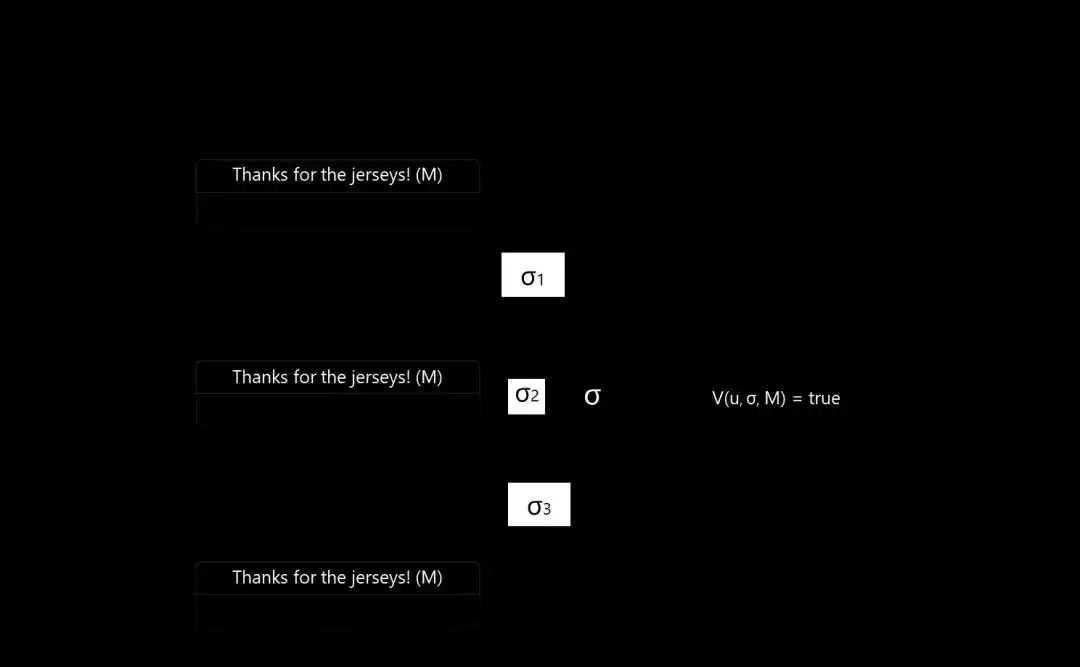
Compared with EOA wallet, smart contract wallet has one more scheme, that is, multi-signing. The security of the multi-signature scheme is similar to that of the MPC scheme, but it consumes more gas fee than the MPC scheme because of the more complex on-chain logic.
Low-barrier Smart Wallet VS low-barrier EOA Wallet
The difference between a smart wallet and an EOA wallet is that its ontology is a smart contract, so arbitrary logic can be implemented. People who support smart wallets or account abstractions will point to a number of new features, such as Multicall, Session keys, etc., but I think the most important is that smart wallets have on-chain social recovery, and many other features that can be met by the 2/2 operation model.
In other words, as long as the user has several friends/family members bound on the chain, when the wallet project party wants to freeze the user's assets, as long as the user's friend/family's account is still available, the user can recover the account on the whole chain, and finally the user can regain the control of the account. This is the solution to the low threshold smart wallet wallet project has the right to freeze the user account. If EOA wallet wants to prevent a user's account from being frozen, there are some solutions, but the overall challenge is much greater.
The disadvantages of smart wallet over EOA wallet are also quite a few:
1) It is difficult to support multiple chains: the contract of the contract wallet is bound to the public chain system, that is to say, when the smart wallet is deployed in a chain with a different structure, the account logic needs to be redeveloped, which costs a lot. And the accounts generated are not universal at all because of their structure. In fact, almost all smart wallets now only support EVM chains.
2) Gas is more expensive: Smart wallet logic is more complex than EOA wallet, so gas per operation is more expensive. In addition, creating a smart wallet also requires a significant gas fee.
3) Not yet widespread: All applications now accept the EOA account system, but not necessarily the contract account system.
Of these, I think problems 2) and 3) will be solved in the long run, and 1) are a real pain in the ass for smart wallets.
In the long term, I think there are opportunities for both technology routes. In particular, we need to stop myths about smart wallets and account abstractions. As we can see from the above, the core of the low threshold wallet is the 2/2 operation model. Both the smart wallet and the EOA wallet are just one implementation, and the smart wallet/account abstraction itself does not represent low threshold.
The competitive landscape
The circuit is in the early stage, and the core competitiveness is product capability and BD capability
It's still early days for the low-barrier circuit. The early period here can be divided into two dimensions: 1) the supply side is in the early period; 2) the demand side is in the early period.
The early stage of the supply side refers to that the product design of the low-threshold wallet has not been finalized at all. We are still doing tradeoff on user experience, security and anti-censorship, and constantly exploring new functions. For example, Web3auth, which has been established for two years and received investment led by big capital such as Sequoia, recently abandoned the previously relatively inefficient 5/9 consensus model and replaced it with a more advanced mpc model, which can fully prove that the supply side of this field is still in a state of instability and high-speed iteration.
In the early stage of the demand side, the customer group of the low-threshold wallet is the large number of Web2 small white users who will bring into the Web3 world when the Web3 application exploites in the future. Now wallet users are investors and builders to make money and learn, and for user experience and "Web2 small white user" user portrait is completely different, so the market is still in the early stage, low threshold wallet is expected to capture Web2 small white user has not yet appeared.
When the supply side is still in the early stage and the product has not been finalized, the product capability of a project is crucial, which is also the point of easy differentiation of the project. Therefore, the product capability of the project is one of the core competitiveness. The second core competency is the BD capability of the project: First of all, we assume that these Web2 white users are brought by the Web3 application, so in reality, the wallet that the user chooses to enter the Web3 world is almost entirely determined by the wallet embedded in the first Dapp that the user touches.
This means that there is a principal-agent problem in the choice of low-threshold wallet. Web3 application chooses wallet for Web2 white users, and the choice is in the hands of the application rather than the user, which makes low-threshold wallet change from a business of to C to a business of to B. Therefore, the project with stronger BD ability, combined with its excellent products, will be able to get more applications, so as to have a greater possibility to integrate into the future popular Web3 applications, and finally capture the most Web2 small white users.
Part of the existing projects
Since this circuit is at an early stage and the competitive landscape is not yet determined, the following is a brief list of the characteristics of the well-developed low-entry wallet projects on the market, without making a detailed comparison.
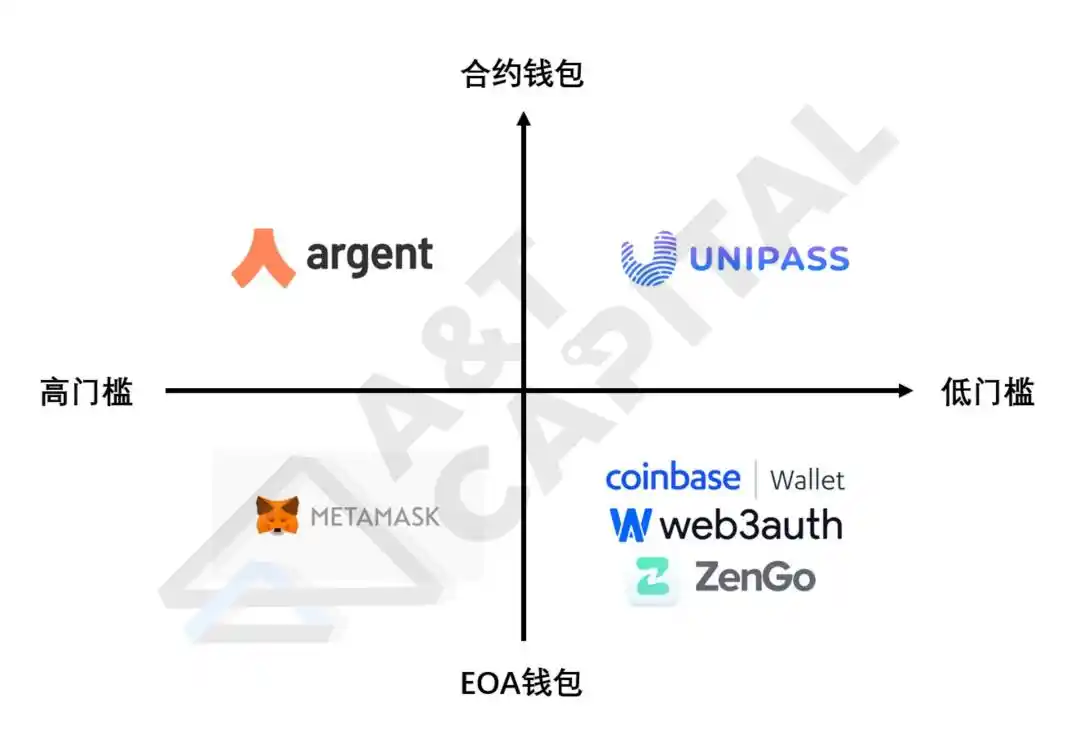
Web3auth:
Web3auth is an established low-entry wallet company with recent rounds of Sequoia India, USV, Multicoin, FTX $13 million investment from large organizations, which brings a good BD advantage for Web3auth. Its current main product Torus uses 5/9 consensus to save the private key for users so as to do helpless word memorization. However, the complex consensus makes users need to wait 30-45 seconds to log in, which greatly destroys the user experience. Therefore, Web3auth is currently developing a low threshold EOA wallet based on MPC's 2/2 operation model, which is expected to be available by the end of the year.
It is worth mentioning that Web3auth has a long history and has been integrated into many of the biggest current Dapp projects such as Opensea, AAVE, and ENS And so on. However, as mentioned above, the low entry wallet market is still in its early days, and its user group, "Web2 white people", does not care that the wallet integrates with the existing large Dapp (or even Walletconnect). Therefore, the "network effect" barrier of Web3auth's massive integration with existing projects is actually not the core competence.
ZenGo:
Zengo is an established, low-entry wallet company that recently raised $20 million from investors such as Insight Partners and Samsung. Having been led by Samsung gave Zengo access to Samsung's huge channel advantage. Zengo's product is basically a standard MPC-based, 2/2 operation model, low-barrier EOA wallet. The solution to the wallet project's ability to freeze a user's assets is to introduce a third party to encrypt and back up an additional private key fragment to that third party.
Coinbase Wallet:
Coinbase Wallet is Coinbase's low threshold wallet, which is also based on MPC's 2/2 operation model low threshold EOA wallet. It's worth noting that Coinbase Wallet is primarily doing to C wallets, rather than Dapp integration like other low-entry wallets. However, focusing on doing to C may not be a good direction based on the author's assumption that a large number of small Web2 users will be captured by the application.
I think Coinbase Wallet may be more defensive: it could increase Coinbase's user engagement; Not offensive: Capture the mass of users when a Web3 application explodes. Nevertheless, Coinbase's strong BD resources and trust endorsements give Coinbase Wallet a huge advantage in the to C low barrier wallet circuit.
UniPass:
UniPass, the new entrant wallet company, raised millions of dollars in its latest round. UniPass's product is a smart wallet based MPC 2/2 operating model low threshold wallet. Because UniPass is a smart wallet, it can solve the problem that the wallet project has the ability to freeze the user's assets: UniPass innovatively allows users to link the email addresses of friends and family to the chain. If extreme circumstances occur and the wallet freezes the user's assets, users can easily reset their accounts using the email addresses of friends and family to regain control of their assets.
In addition, to protect the privacy and security of users, UniPass uses zkp technology to hide the binding relationship between accounts and email addresses, so that hackers and the government cannot link a user to a specific email address to steal or censor it.
Argent:
Argent is a mature smart wallet company with its latest round of funding from Fabric Ventures, Metaplanet, Paradigm And $40 million from Jump and others. In my opinion, Argent is not really a low-threshold wallet. Argent just makes full use of the advantages of smart wallet, which allows users to bind the linked accounts of family and friends, so as to realize helpless word memory account recovery. However, I believe that tying friends and family to linked accounts (unlike UniPass's email) is inherently difficult, and Argent's goal is to be the perfect smart wallet, and there is no strong desire to lean toward lower barriers.
The final form of the low-barrier wallet: the user portal of Web3, with the potential to grow into a super Dapp
First, any Web3 application that wants mass adoption will definitely have a low-barrier wallet. The reason for this is simply that the mnemonic EOA wallet will significantly degrade the Web2 user experience, and it will greatly reduce the conversion rate of the Dapp, which will make most users immediately go back to the Web2 user comfort zone unless there is a strong need for the Dapp (e.g., to make money). The low-barrier wallet solves this problem to a large extent. Users only need to use familiar login methods such as email, phone number, and Google to safely and smoothly interact with dapp. This makes it possible for most Web3 Dapps to compete with Web2 apps with excellent user experience on a large scale.
So, in the next bull market, if Web3 really sees an explosion of applications, and a large number of users enter the Web3 world through applications, the low-barrier wallet will become the traffic entry point for large-scale users to enter the web3 world, which means that the low-barrier wallet will have a large number of users: If the explosion of the Web3 application layer has brought 100 million users to the Web3 world, chances are that 80 million of those users are coming with a low-barrier wallet.
At the same time, after Web3 Dapp occupies our life, the interaction between users and blockchain is high frequency, which means that wallet can do a lot of extension functions, and it may even become a super APP of Web3. For example, wechat has a large number of users, and the frequency of users is very high, wechat can be embedded in many functions, such as wechat pay, wechat public account, wechat login, and so on, finally to build a super business empire. In the same way, wallets have the potential to build a super ecosystem with their user entry niche.
The original link
Welcome to join the official BlockBeats community:
Telegram Subscription Group: https://t.me/theblockbeats
Telegram Discussion Group: https://t.me/BlockBeats_App
Official Twitter Account: https://twitter.com/BlockBeatsAsia
 Related Articles