



Quantitative Analysis: How Decentralized and censor-resistant will Ethereum Merge?
Original title: What About the Decentralized and Censor-resistant Ethereum Merger? Let's Do a Quantitative Analysis
Author: Takens Theorem
aididiaojp.eth, Foresight News
Consensus is the foundation of cryptocurrencies, but it can also raise doubts. The merged Ethereum is no exception: there are concerns about the concentration of proof-of-stake (PoS) verifiers and the loss of censorship resistance.
This is not a new debate. Prior to the merger, there were already concerns about changes in the concentration and censorship of verifiers after the Ethereum merger. Of course, this problem is not unique to Ethereum. For example, 60% of Bitcoin computing power used to be concentrated in China, but the distribution of bitcoin mining has changed radically in less than 2 years, and the US now dominates (over 35% at the time of writing).
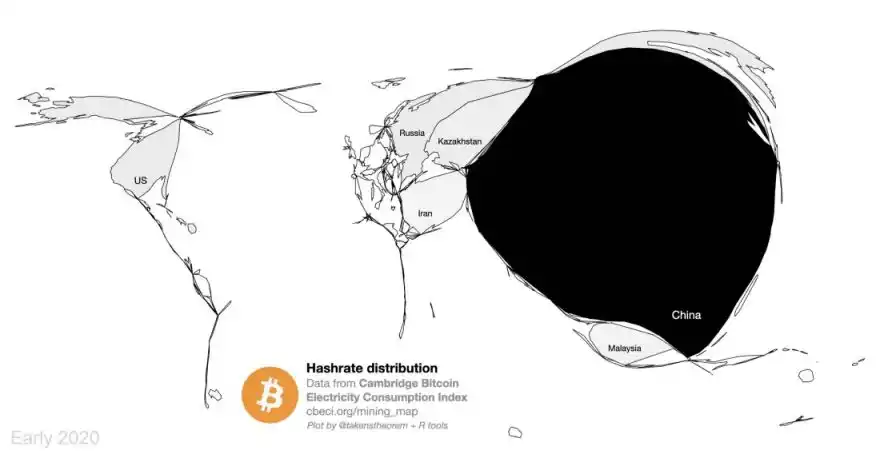
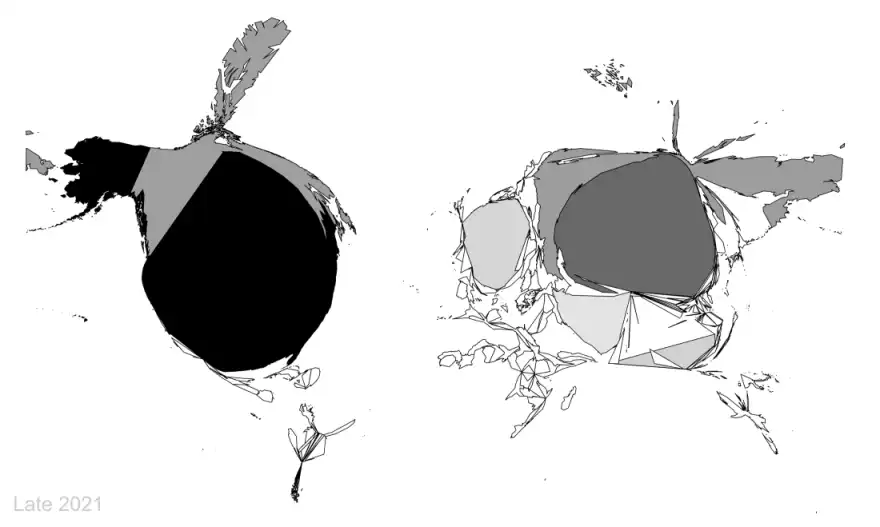
Approximate hash rate change for the Bitcoin network 2020-2021
There are legitimate concerns in each of these debates. The goal of cryptocurrencies is to create a neutral, censoring resistant and decentralized system with enough players to defend against attacks. But even in the seemingly optimistic scenario, the network still has the theoretical risk of an unknown attack vector, and any centralization makes such attacks more likely.
Next, a simple quantitative analysis of the concentration of miners and verifiers before and after the merger is done.
Before and after the merger
Taking thousands of blocks before and after the merger, we can look at the block concentration of proposer addresses (miners and verifiers) for each associated block. Before the merger, only a dozen mining addresses were associated with rewards, including Ethermine and others. After the merger, thousands of addresses are associated with the verifier. After crossing a sharply varying threshold, the difference in the number of unique reward verifier addresses becomes large.
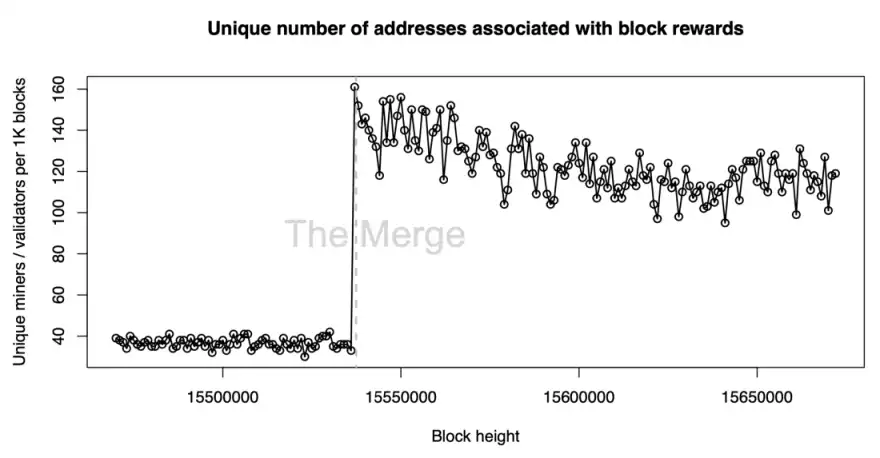
Data source: Etherscan
This is a promising feature of PoS. Although the pledge requirement of 32 ETH is required to verify node participation, there are also at least thousands of participating entities that meet the requirement.
After the merger, the concentration of reward recipients remained high. We tried to capture the concentration of rewards per 1000 blocks using Gini index analysis, a measure of the distribution of income among individuals. The Gini index ranges from 0 (fully shared block) to 1 (belonging to only one verifier). We can also calculate what percentage of the top 3 blocks are occupied with respect to the address. The two lines in the figure below show how the analysis has changed over time:
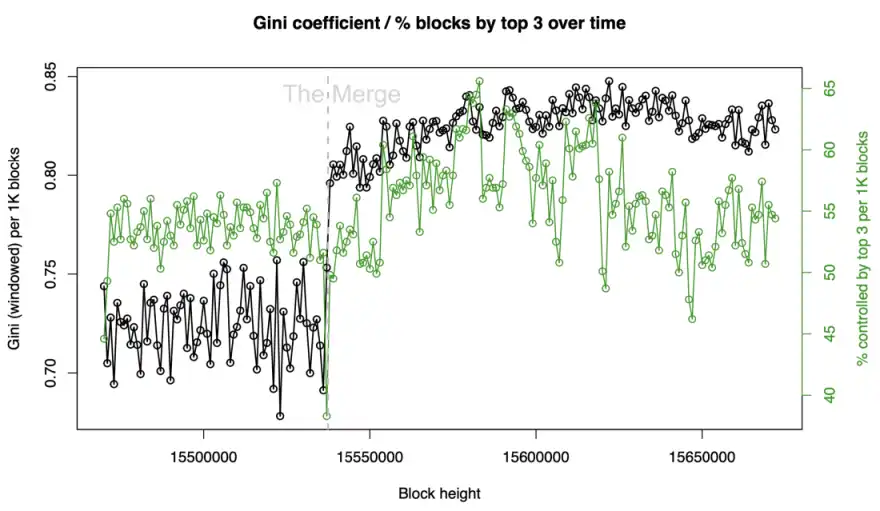
Data source: Etherscan
The Gini index is not a perfect measure, but it has some reference value. While there are more and more verifiers, there is also a proportionately greater concentration. The top 3 appear to have similar percentages of control, but there is a statistically significant difference between the left and right sides of the figure, with a concentration increase of about 2% after incorporation (p < 0.005). Despite the trend towards decentralization, there is considerable concentration under both measures.
This centralization is probably inevitable, with the top five verification pools holding nearly 80% of Ethereum pledge volume. And PoS is highly mobile. The verifier can build his block anywhere, or he can immediately switch to a service built from another block. This is a sign of the shift in PoS: further decoupling between block proposers and builders.
How do we ensure that the centralization of block build services does not unduly affect the network's operation? Jon Charbonneau provides a detailed analysis of this decoupling and how it can be optimized in the protocol in a Delphi analysis report. As summarized by Vitalik Buterin in a recent article, one approach is to strike a balance between optimizing the constraints on the block builder and reducing the burden on the block proposer.
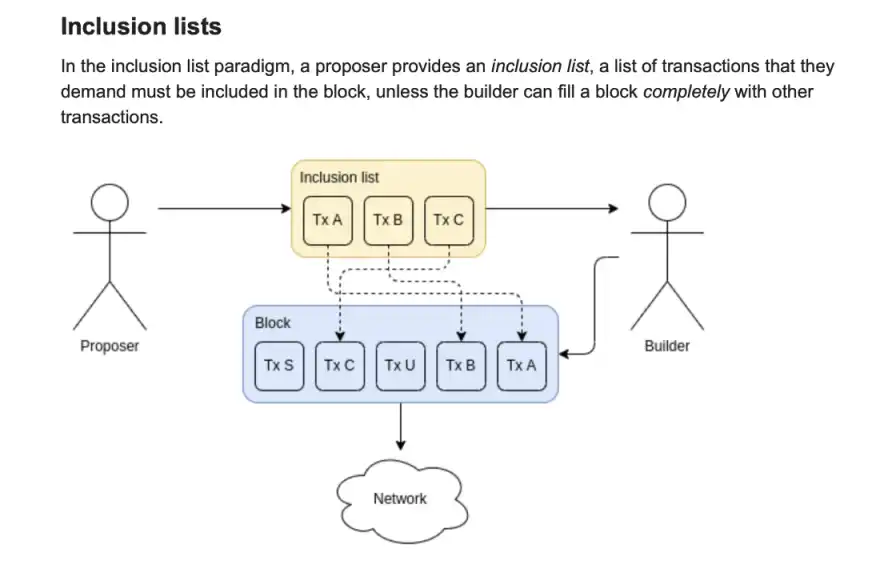
Vitalik considered several designs to achieve this balance, such as "include lists"
Anti-censorship system
Several things have happened since the merger to raise concerns about concentration. For example, due to U.S. sanctions, some block builders have avoided trading in Tornado, which has meant a 30% to 40% reduction in these privacy-preserving transactions. At issue here is whether users need to avoid using OFAC sanctioned addresses or protocols. The vagueness of the situation has caused some controversy, although the U.S. government has not specifically recommended that compliance with local jurisdictions be justified.
Etherscan data shows a recent breakdown of proband by percentage of blocks generated and percentage of proposed Tornado Router (0xd90e2f9) transactions. You can see on the far left the Flashbots, the largest block generator that verifies 0% Tornado transactions. Others may also use Flashbot's repeater.
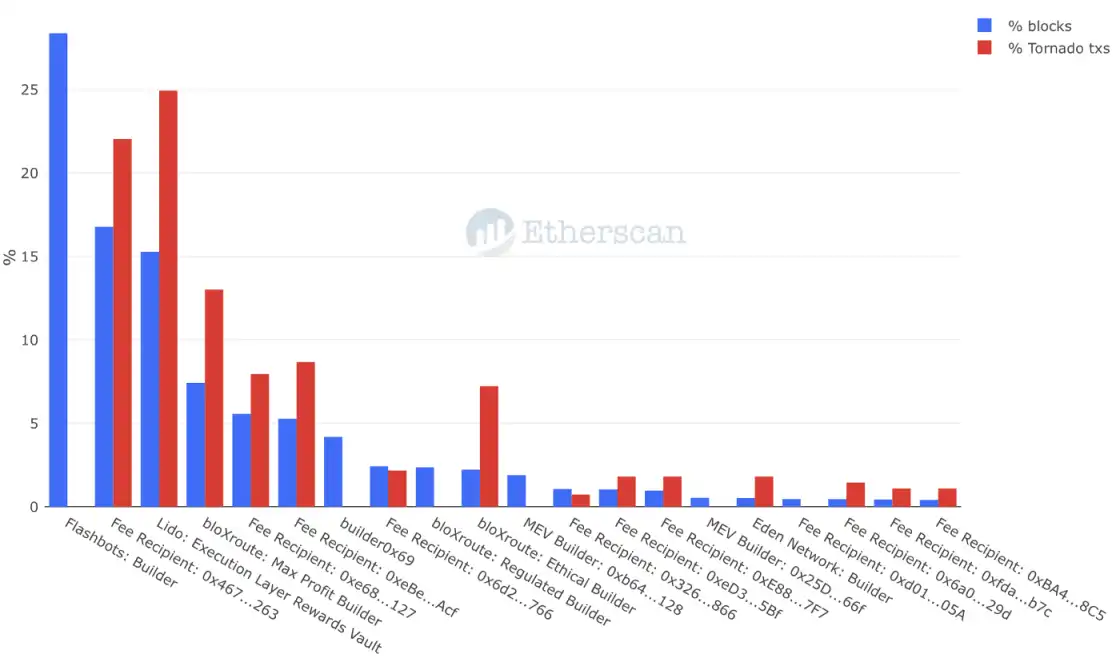
Data source: Etherscan
Charbonneau stressed the importance of the issue, and unabashedly said, "Ethereum can survive on higher fees, but it can't survive on censorship." Slashing is one of the existing tools for network to solve this problem. The verifier may punish others for such practices. Slashing happens occasionally on the network now, with some sort of solution provided by Eric Wall and others.
Note: Slashing aims to stop malicious authenticator behavior and motivate networks to participate in blockchain.
Conclusion: Decentralization
As mentioned above, PoS introduces considerable fluidity into the consensus that was not available with Gpus and proof-of-work prior to the merger. But mobility is also a double-edged sword: if you can move quickly to decentralisation, you can also move quickly in the opposite direction.
These highly "mobile" verification networks have two types of decentralization: latent and realized. All networks have this property, but PoS may have a higher rate of change on this gradient, that is, it is possible to move rapidly between extremes. In other words, the verifier can easily move their operations both physically and across the block build service. While the network of physical validators and corresponding nodes can remain the same, the wiring of the network can theoretically be centralized very quickly: from separate block builds to reliance on centralized builders.
Ethereum now has hundreds of thousands of unique verifier addresses. This means that there are a lot of overlapping entities (witch problem; See Etherscan for some statistics on users), but this still means that Ethereum's PoS has extremely high decentralization potential. If all depositors run their own nodes, there could be thousands of separate entities proposing blocks.
But the decoupling of proposer and builder brings a second source of concentration: block builders. Builders affect node operator margins, and incentives exist between builders and proposers, meaning that a very successful builder can reduce the decentralization of the network, such as verifiers can flock to beautifully designed build tools. As you can see from the graph over the past 2 weeks, Flashbots (red band) have started to dominate block building, accounting for more than 30% of its prime billing addresses alone. This somewhat reduces the decentralization that Ethereum has achieved.
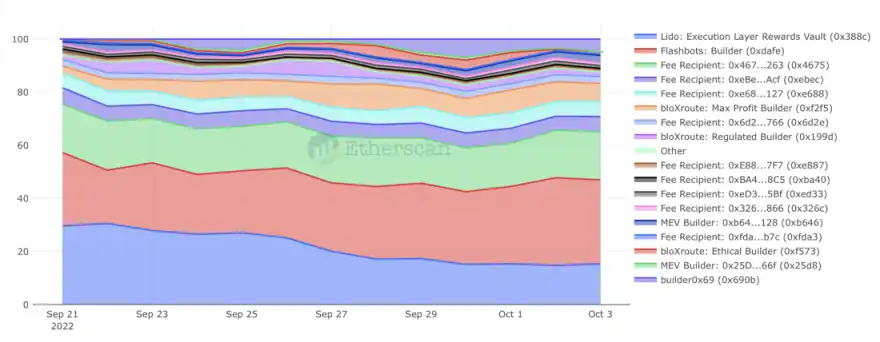
Data and drawings were performed using Etherscan tool
Flashbots share a transparent dashboard to report all relay and build activities. (They also recently announced goals to share infrastructure, create grants around transparency, and ultimately contribute to a more decentralized block building.) At the time of writing, the total dominance of their services is about 40%, and one can get a clearer picture of why they are an attractive resource for the proband:
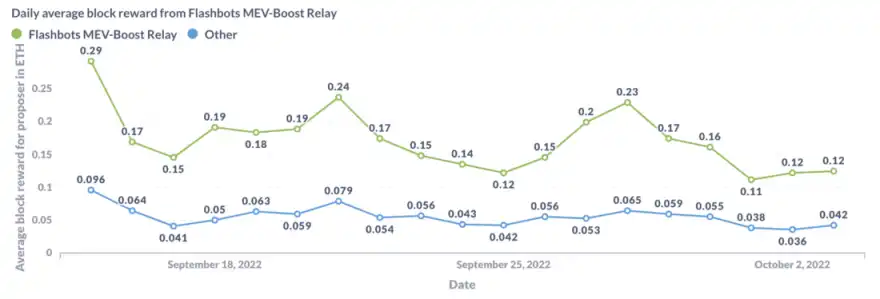
Data source: Flashbots Transparency dashboard
Expect these ideas shared by Charbonneau, Buterin, and many other developers to be further implemented, not only to adjust energy efficiency and flexibility in the protocol, but also to enable large-scale potential decentralization of Ethereum after the merger.
The original link
Welcome to join the official BlockBeats community:
Telegram Subscription Group: https://t.me/theblockbeats
Telegram Discussion Group: https://t.me/BlockBeats_App
Official Twitter Account: https://twitter.com/BlockBeatsAsia






