How We Escaped a Ponzi Scheme

Original title: "How We Escape Ponzinomic Hell"
Original author: Kerman Kohli
Original compilation: Leo, BlockBeats< p>
As early as April this year, I wrote an article called "We Need to Escape Ponzinomic Hell" ; I think this article was slightly ahead of its time, as we were still experiencing bullish highs (Terra hadn't crashed yet, and people thought 4Pool was going to take off). Re-reading this article now, it feels like an industry cliché. Sometimes I feel that such articles should be scheduled for the next 6 months so that they are more relevant to the current state of the industry.
At the time I had some ideas about how to escape a Ponzi scheme. Now that the industry is changing I can see how we can start to clean up the trash and make room for the next phase of growth in the crypto industries.
Current situation
crypto industry, crash and flow in UST Now going through a phase of self-reflection and picking up the pieces after total sexual depletion. The dollar is destroying everyone, plus the market is completely risk-averse. The status of cash has changed from garbage to king, as Ray Dalio, the founder of Bridgewater Fund, said: "I changed my view of cash as an asset. I don't think cash is garbage."
< p>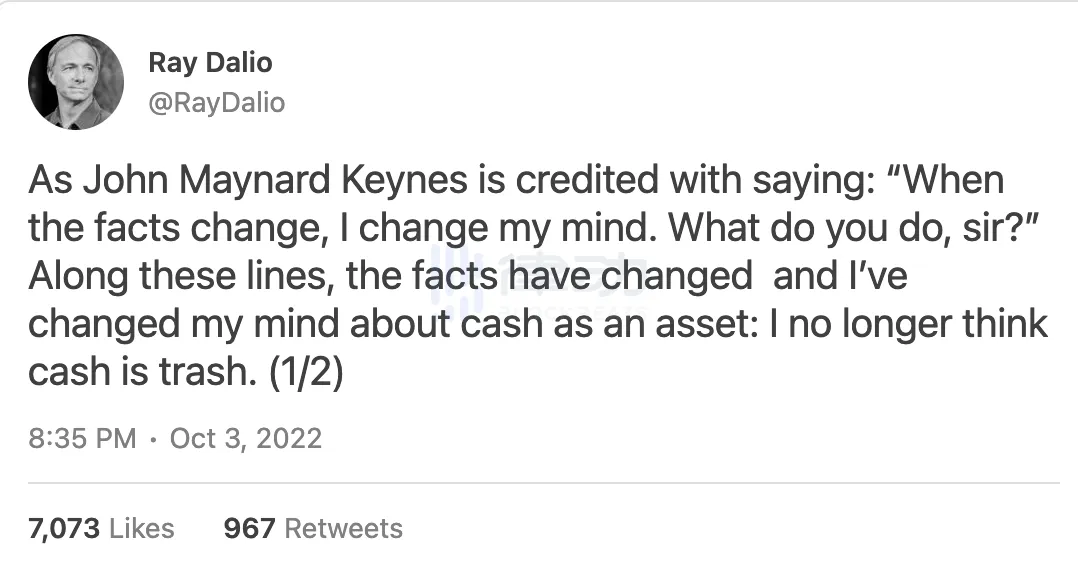
Engineers are no longer as scarce as diamonds, and venture capital is as dry as a desert. However, for those who remain in the crypto game, only one thing matters: value — that is, users.
In order for crypto to mature, I think there are 3 key issues that need to be addressed:
-Carefully incentivize/acquire consumption
-Better understanding of usage/income and its sources
- Tighter User Acquisition Loop
Issues
Careful incentive/capture consumption
Summer of DeFi This ushered in the era of token spending mechanisms where giving away 90% of a startup’s equity in a week was considered a good idea. From then on, we made the game more complex and dangerous by creating a proper loop:
-High Incentive Draw
b>
-Use high incentives to attract large TVL
-Use high TVL to justify higher Token Valuation Price
- Higher Valuation Price = More Incentives
-repeated bullish pump
-exit when liquidity peaks, let the rest crash
To make matters worse, people have only recently realized that when calculating a startup's revenue they should subtract their incentives to see how much of it is real.
Previously, Token Terminal released this income leaderboard, reducing dollar incentives to understand the actual income of many projects.
Based on this data, we are starting to move in the right direction, as the incentive to extract uselessness can be clearly seen in the unit economics. However, there is one key takeaway: the industry will only become more data-driven in the coming months.
Higher quality usage/revenue segmentation
During Solana's peak, emotions were running high due to its ridiculously touted TVL. The TVL of an agreement exceeds 10 billion U.S. dollars, and it is undoubtedly on the way to surpass Ethereum! ? A few weeks ago, we found out that the ridiculously high "TVL" was actually just being recycled multiple times by some people.
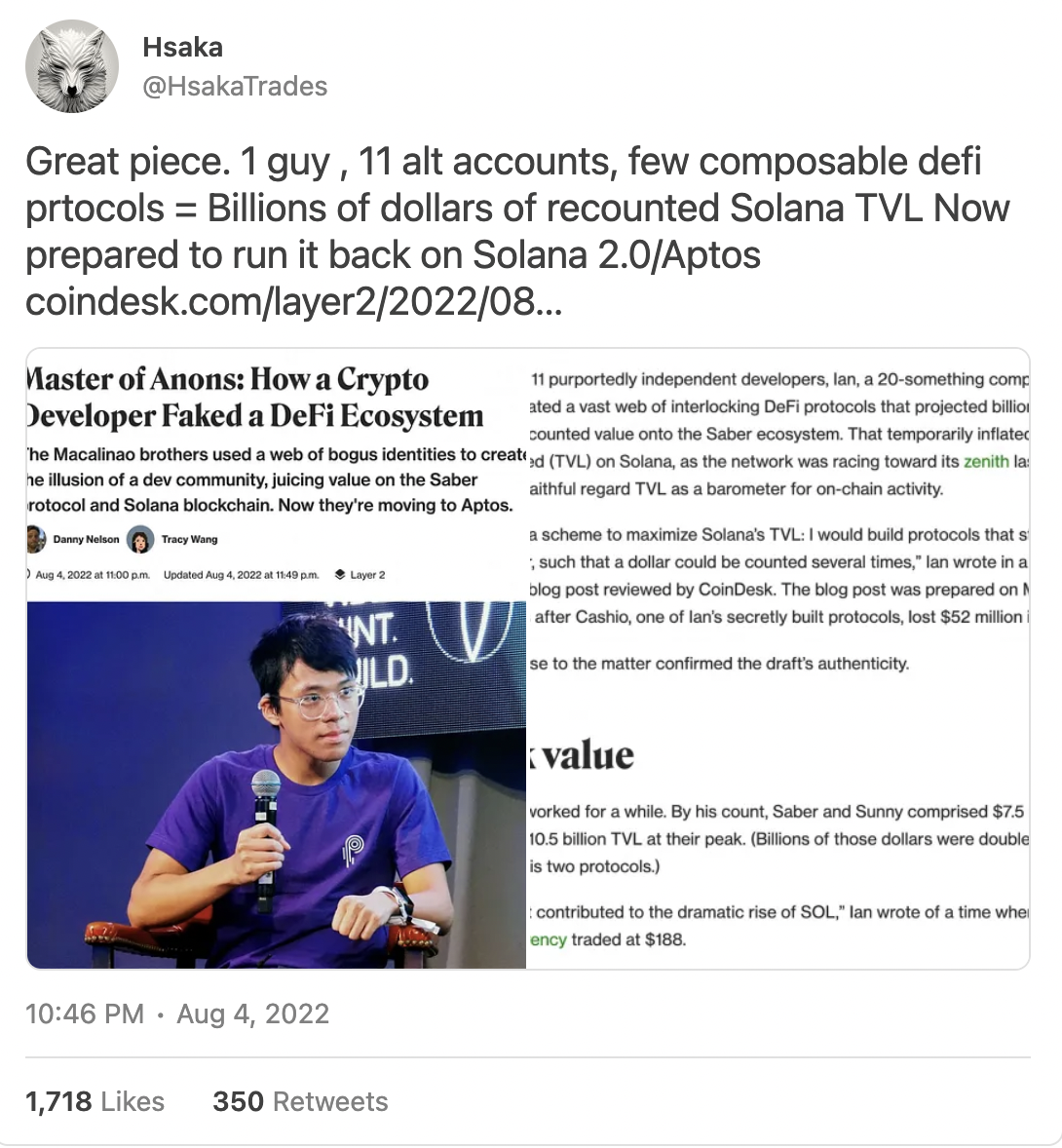
In fact, this kind of operation is not very difficult to find. All data are open and transparent. Seeing the same address doing the same thing on-chain would give a better understanding of where the usage/revenue is coming from, however we didn't realize this until a few months into the bear market. This is just the tip of the iceberg. Similar to traditional businesses, a business with one large customer is much more vulnerable than a business with 10 customers. Current crypto valuations also fail to discern this nuance. So the incentive becomes to get a whale or two that you know, and then get lots of spam accounts to grow the user count so you have enough safe numbers to keep your ponzi going. To fix this, we need a more detailed analysis of who is using everything. Is it real, is it fake, is it sustainable?
Tighter User Acquisition Loop
Except for Uniswap’s first withdrawal airdrop, every airdrop after that has been destroyed and resulted in a very high price. The truth is, airdrops are a very poorly used user acquisition tool right now. The problem in its current form is much more complicated because you have a situation somewhat similar to:
- People know which products don't have tokens
-People use the product minimum or any criteria to qualify themselves for the airdrop
- The team is then forced to "airdrop" to low-quality users
-users receive airdrops
- Then User Dump Airdrop
- Token Price Drop
- Acquisition of Startups Smaller budget (lower prices + oversupply)
Conversely, more needs to be done on user acquisition Strict features and controls. This includes but is not limited to:
- Regarding which channels drive user agency
- data-driven labeling each stage of its process
-clear reasoning around the target population
Understand the product's lifetime value (expected and actual) and acquisition costs
Around desired outcomes and the product's value proposition Reasoning how to reduce acquisition costs over time
Again, it comes down to knowing who is using your product Users, who are the users you want to acquire to use your product. We'll keep playing silly games and winning silly prizes until we get it.
Approach
On-Chain Identity and Reputation – Encryption The last piece of the puzzle.
Once you know the behavior/intent of an address (not KYC details), then you can pass the and complex means to solve these problems.
Suddenly, you are no longer airdropping to 5000 addresses. The user you are airdropping has been using some protocol for X years, requires at least $Y, and has strict quality standards.
When examining a protocol's revenue, you can't just look at the macro numbers. Instead, it should be understood, what percentage of new users? How sticky are users who have experienced the app? Are all new users?
What your product team is doing is not based on Twitter Instead of the false narratives of cartoon characters, it's based on real data, based on your conversion process that nets millions of dollars per percentage point.
Original link
Welcome to join the official BlockBeats community:
Telegram Subscription Group: https://t.me/theblockbeats
Telegram Discussion Group: https://t.me/BlockBeats_App
Official Twitter Account: https://twitter.com/BlockBeatsAsia

 Related Articles