A Europe-centric crypto dead end
原文标题:《 以欧洲为中心的加密死胡同 》
Original article by Camila Ramos
The Block unicorn
Suffice it to say: a lot of money has been invested in blockchain, but the results are pathetic by comparison.
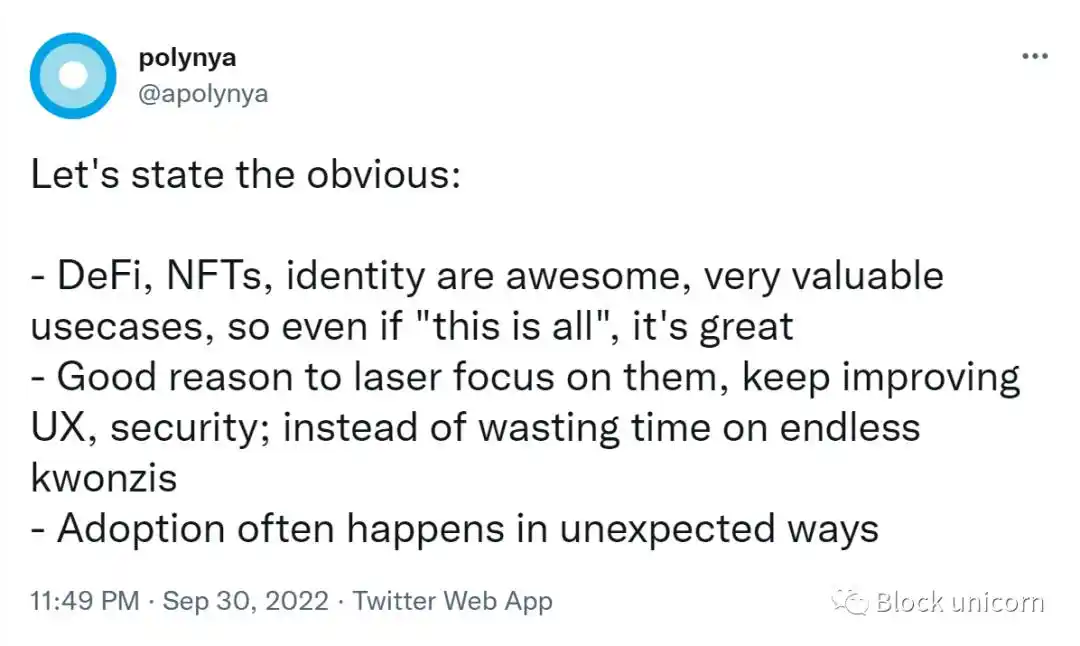
Polynya framed the post perfectly in the tweet above: So far, what we've done so far is probably all we've achieved using blockchain. We're working on technologies that are either teetering on the edge of changing the world or permanently on the edge of the nerd world. We have succeeded in capturing the world's attention, but we need to pivot quickly if we are to take action and deliver on our promises, or risk walking into what I have called the dead-end of Euro-centric encryption.
Although I can't find hard data on this yet, based on my real experience and that of my peers in this space, the majority of VC money invested in Crypto goes to teams in Europe and North America. We keep seeing the same people from the same backgrounds building the same things over and over again. If the industry wants innovative use cases and adoption, it needs to shift attention and capital to builders who are solving problems that require solutions. The industry can continue to build more L1, zkEVMs, and NFT platforms, or it can invest in driving the next generation of blockchain innovations, which will inevitably come from Latin America.
I believe that emerging regions will be home to most of the groundbreaking use cases for crypto and blockchain. Why is that? Because need breeds innovation. The financial, political and social problems experienced by the so-called "developing countries", coupled with an increasingly mature blockchain ecosystem, will create a ripe environment for the development of some of the most impact-making applications of our time.
Latin America is ground zero for encryption
Emerging regions have been affected by financial and social pressures. Latin America is of particular interest as consumers exhibit behaviors that make them keen to explore cryptographic based alternatives, such as mobile-first digital payment infrastructure, heavy use of new banking apps, and cross-border remittance payments.
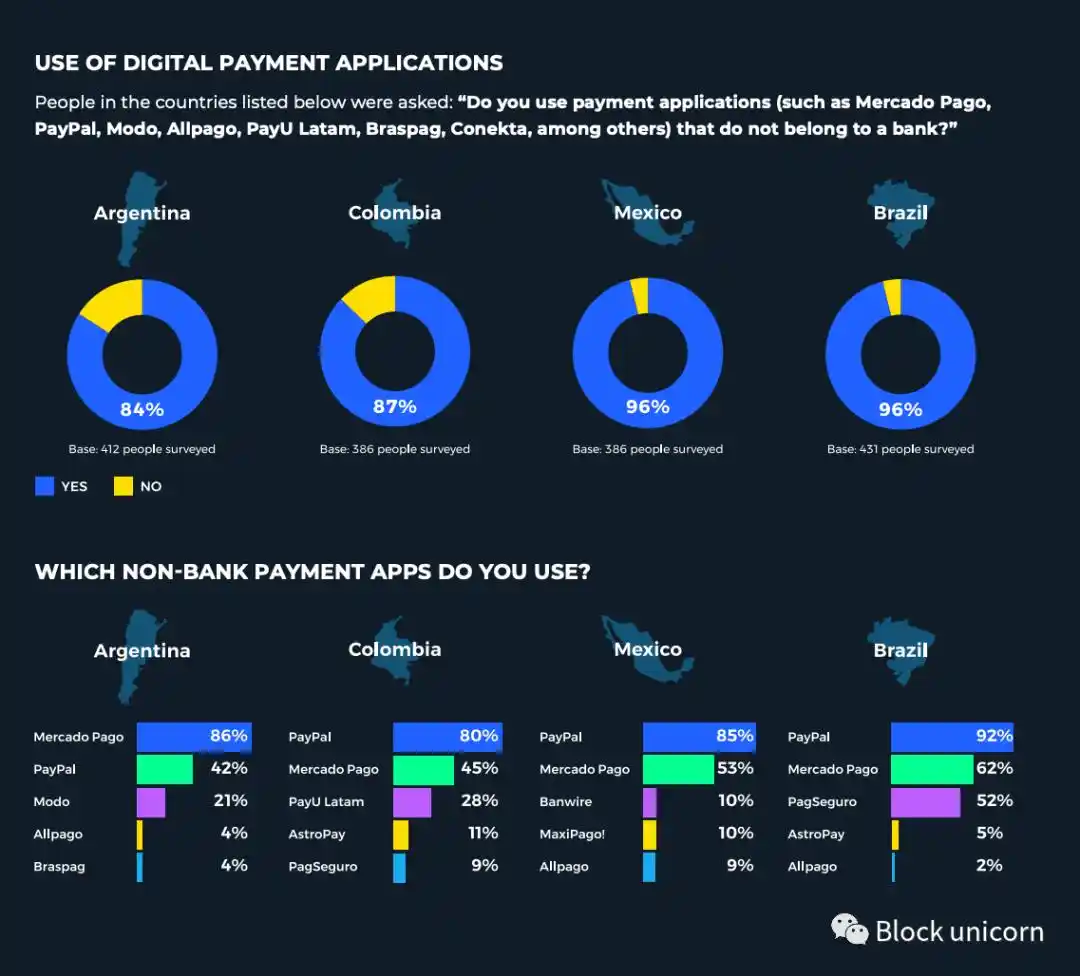
The case for these technologies becomes even more compelling when you look at country-specific data on mobile finance, alternative payment methods and banking. According to a study published by Rapyd, 96% of Mexicans and Brazilians regularly use non-bank payment apps such as PayPal, Modo and MercadoPago. Although Latin Americans account for only 8% of the world's population, they received 20% of all remittances in 2021. Online consumer payment systems are already widely used in Latin America through mobile phones, such as PicsPay in Brazil, PSE in Colombia, and Mercado Pago in Argentina, Brazil, Chile, Colombia, Mexico, Peru, Uruguay, and Venezuela. With the proliferation of digital payments on mobile devices, cross-border remittances, and growing insecurity in traditional finance, Latin America is well positioned to open the door to global adoption through new, high-impact use cases in crypto and blockchain.
A global, permissionless P2P payment infrastructure could provide an alternative to remittance fees, processing times, and severe currency devaluations, and provide a secure financial infrastructure for 666 million people in Latin America. However, the only way to achieve widespread adoption is to build secure, scalable, and affordable solutions for people with an average monthly income of about $500. In concrete terms, this means that transactions are a fraction of a penny and that dApp UX should have the same look and feel as a standard modern Web application. Teams such as Fuel, Bichonomy, Lens, Mirror, and Geo are looking for innovative ways to improve the user experience through parallel transaction execution, gas-free transactions, bulk transaction signing, and abstracting the wallet creation process for first-time users.
Overtake Latin American banks
(Credit: Rapyd)
Latin America has proven to be early adopters of new technologies, including e-banking and non-bank payment services, e-commerce platforms, Internet-based text applications, and encryption technologies. According to Rapyd's report, 1,687 respondents from Argentina, Brazil, Colombia and Mexico responded to the questionnaire, while nearly half remained unbanked. As a result, New Era bank and non-bank payment apps continue to grow in popularity and usage among users of all ages and socioeconomic classes throughout Latin America. In Brazil and Colombia, most transactions are made on mobile phones, and social commerce (i.e., purchases made using social media apps). Adoption is growing exponentially.
Mercado Pago is a shining example of the highly adaptive innovation taking place in Latin America. It is a digital payment platform designed to assist e-commerce platform MercadoLibre. Mercado Pago has grown from a payment platform created specifically for Mercado Libre and offers a variety of financial services from payment processing and gateway services to mobile payments and credit cards. Picspay, on the other hand, is the dominant digital payments app in Brazil, with over 60 million users and monthly transactions of 6.8 billion BRL, equivalent to approximately US $1,318,442,480 (source: PicPay). In Colombia, daily payments between individuals and businesses can be made using PSE. The mobile ACH service allows users to make online purchases and payments by debiting their bank accounts.
The popularity of digital payments is not limited to the aforementioned countries: 98% of bank customers in Brazil, 94% of bank customers in Mexico and Colombia, and 89% of bank customers in Argentina report frequent use of online payments (Source: Rapyd, pp. 7-10). The trend is also not limited to the services offered by banks, with the region also seeing high usage of non-bank payment apps. 96% of Mexicans and Brazilians, 87% of Colombians, and 84% of Argentines regularly use apps such as PayPal, Modo, and MercadoPago (Rapyd, p. 6). Let me put these numbers simply: Hispanics already operate largely outside the confines of the traditional banking system.
Blockchain transcends borders
(Credit: Chainalysis)
Latin America is unique in that its residents rely heavily on cross-border remittances -- payments made across borders where payers and recipients are located in different countries -- as a means of income. Hispanics often migrate to other countries to work and regularly send money home through remittance services. According to a report published by the World Bank, remittances to Latin America and the Caribbean reached $131 billion in 2021, a significant increase of 25 percent from 2020. According to the World Bank, remittances accounted for almost 25 percent of GDP in Honduras and El Salvador in 2021, and 14.8 percent of GDP in Guatemala. However, consumers pay a price for using remittance services so frequently: they pay an average fee of 5% per transaction (source: Americas MI).
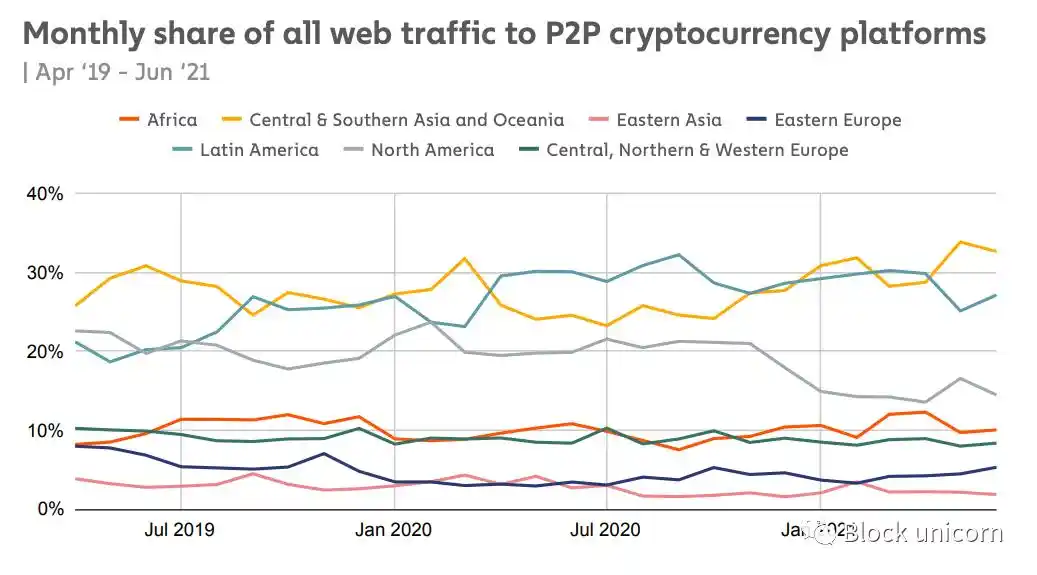
Two interesting data points in the Chainalysis report suggest that users have shifted to using P2P crypto payments as a common way to send money back to their country of origin. First, Latin America has above-average P2P crypto activity, driving about 28% of web traffic to P2P cryptocurrency platforms. Second, of all the value earned in Latin America, 11 per cent is domestic and 89 per cent is foreign. Crypto transaction fees provide a more affordable price for moving money across borders, and blockchain technology provides faster transaction speeds, making Latin America an ideal environment to bring cost, speed, and security to millions of users, as well as to leverage new technologies to successfully embed in Latin American lifestyles.
Earlier this year, I was on SAN Andres Island in Colombia, which is home to about 61,000 people. On the island, there is only one remittance service provider, and long lines of people waiting to send money to the mainland or abroad have been forming around the building. On that trip, I spent some time in Santa Catalina, Panama, a small fishing town that now attracts thousands of surfing tourists every year. But there are no ATMs in or around town, and the nearest ATM is about a 1.5 hour drive away. The community relies on an informal cash market to buy cash from the woman who runs the local grocery store. It's a tourist town now, but many businesses only deal in cash, and if you don't bring cash before you leave, you'll have to find someone to buy it or make the trek to San Diego to get it. This unique (but common in parts of Latin America) situation sets the stage for communities to benefit from these blockchains.
The intersection of finance, politics, culture and encryption
(Credit: Chainalysis)
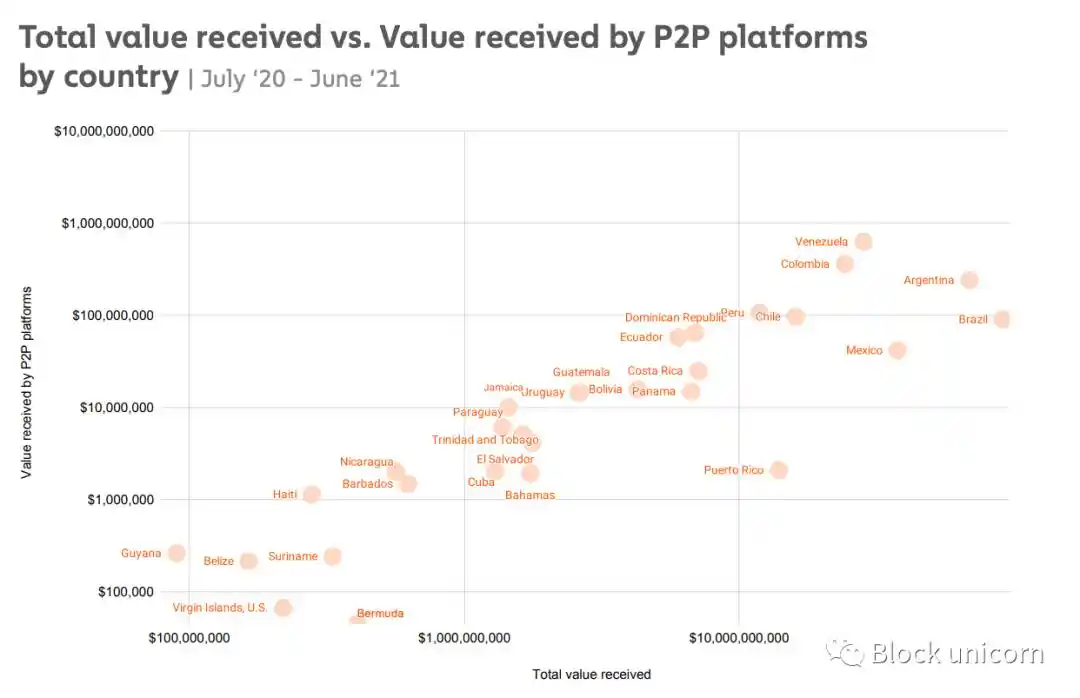
Due to growing insecurity and political instability, people in Latin America reported a willingness to experiment with bank-independent digital payment solutions (source: Rapyd). Latin American countries account for four of the top 20 countries in the 2021 edition of the Chainalysis Global Crypto Adoption Index, as measured by on-chain value obtained, on-chain retail value obtained, and volume of transactions on P2P trading platforms. The Chainalysis report further noted that Venezuela's high ranking in the index is mainly due to the country's high volume of transactions on P2P platforms. Venezuela has faced a period of increased economic turmoil over the past two years, with inflation at 2,000,000 percent in 2018. Although Venezuela ranked seventh in the index and Latin America accounted for 20 percent of the top 20 countries and territories, Latin America did not top the list of DeFi app users. This suggests that the adoption of encryption in geographical locations is motivated more by the need to store value than to access DeFi applications.
The figure above shows the total value obtained for each Latin American country/region compared to the total value obtained through P2P platforms. It clearly shows that the countries with higher rates of P2P crypto transactions are the same countries that are currently experiencing periods of socio-economic and socio-political conflict. Argentina, Venezuela and Colombia have all faced record currency devaluations this year. Elections in Colombia and Brazil this year have shaken both countries to their core. Although the Chainalysis report doesn't specifically analyze how the adoption of P2P transactions relates to major changes ina country's basic structure. But data from many reports suggest that countries with the highest levels of political instability or social inequality have much higher rates of home-grown crypto use than countries with low or no instability in the same region.
Adapt or die
Latin America's heavy reliance on digital payments and cross-border remittances, coupled with low levels of institutional trust, puts the region center stage when considering the customer segments the industry should build for it and the developers we should seek to empower. We made great progress this year, hosting large-scale Ethereum developer conferences in multiple Latin American countries for the first time, and it was a huge success.
Diversity (diversity of experience, not just diversity of ideas) is a catalyst for innovation. Each region of the world faces unique challenges and opportunities to provide a unique living experience for the people living in the region. No matter how hard we try, the global West will never be able to deliver the level of blockchain innovation that Latin America can, simply because innovation in Latin America is largely demand driven.
In the end, Eurocentric encryption is a road to a dead end. Adapt or die.
The original link
Welcome to join the official BlockBeats community:
Telegram Subscription Group: https://t.me/theblockbeats
Telegram Discussion Group: https://t.me/BlockBeats_App
Official Twitter Account: https://twitter.com/BlockBeatsAsia

 Related Articles