BlockBeats x Light Source Capital Roundtable Review: The trough of the cycle, how do the industry leaders get through and lay out?
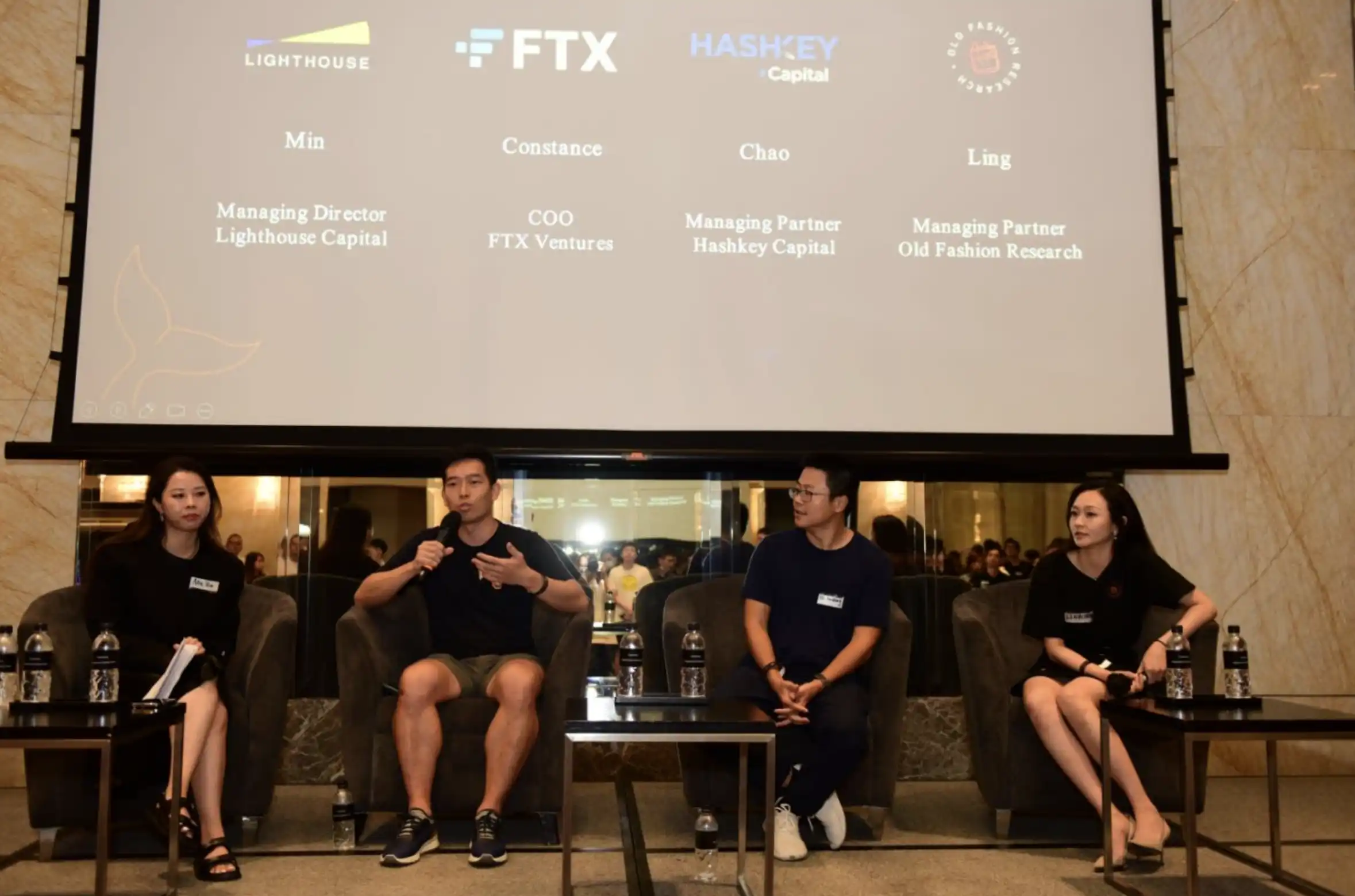
On September 26, BlockBeats and Light Source Capital co-hosted in Singapore the theme "Cycle trough, how industry leaders get through the Layout?" Offline Meetup, including Adam, partner of FTX Ventures, Min, managing director of Light Source Capital, Ling Zhang, executive partner of OFR, Chao, CEO of Hashkey Capital and other guests attended the meeting, discussing Web3 industry development, macro policies, and industry mainstream track issues, etc. On the other hand, share views and discuss.
Among them, Hashkey Capital CEO Chao believes that the worst time for the industry has passed and the industry is spiraling An upward cyclical trend. Adam, a partner at FTX Ventures, recognized the regulatory value brought by regulation to the industry, and said that Solana, Sui, and Aptos are ranked in parallel in FTX's strategy, regardless of priority. Ling Zhang, managing partner of OFR, said that he is optimistic about the Web3 social track, hoping to find a bridge that truly bridges the Web2 and Web3 worlds, and build a Web3 application that allows "I can interact with anyone I want to connect with."
The following is a selection of roundtable content organized by BlockBeats:
Min: Many people say that this bear market is different. How do you view the current market stage? What do you do in a bear market?
Chao: I entered the crypto world in the bear market in 2014 and have personally experienced it since then 3 rounds of encryption cycle. Looking back now, many standards, the number of users, the number of applications, and the number of developers at that time have all achieved more than tenfold growth. Although we are going through a price correction at this stage, I can't say exactly where we are now, but the industry is spiraling cyclically, and the worst is over.
Adam: First of all, my speech does not constitute any financial Suggestions, the following are my personal views. The current stage we are in is caused by many factors, such as lack of liquidity, the global epidemic, and the Fed’s interest rate hike. These events happened at the same time, which brought enormous pressure to the market. Overall, I expect the market to experience a downturn in the short to medium term, coupled with regulation, etc., but in the long run, the market will eventually pull back. Because the possibility of these three events happening again at the same time is not too great.
Ling: I agree with Chao even though I I just joined the encryption world, but I witnessed the "IC0 boom" in 2017. Countless entrepreneurs and companies flooded into Web3 hoping to stand on the front line, but when the bear market came, few people could continue to persist. And we want to really pay attention to our users and hope to incubate real builders. We made large asset acquisitions in mid-2019, timing this because we identified builders who still had ambition and strength. We want to support real builders.

< /p>
Min: What is the status of Asia-Pacific entrepreneurs, especially Chinese entrepreneurs, in the Web3 industry? What are our strengths and weaknesses?
Adam: In view of the fact that the topic of Web3 has become a boom in China, and many Chinese entrepreneurs The developers have extensive experience in building Web3, and they know what users, consumers, need. So I think Asia-Pacific entrepreneurs are in a good position and have great potential for development.
Chao: I noticed that there is a kind of A dichotomous view that separates Western investors from Eastern investors. I don't think this is the right way to look at the problem. We hope to build a global Web3 project. Regardless of whether the founding team is from China, we all have various areas of expertise and advantages. As Web3 practitioners, we should collaborate and build together, just like a community.
Ling: This question reminds me of some personal experience, Because I lived in Shanghai for three months this year and met many VCs, whether it is the Web2 or Web3 industry, they are very optimistic about China. And I choose to stay here.
Now may be the best time to invest in China, we think apps may be the next The track to pay attention to, but there should still be a lack of large-scale user adoption and application scenarios. We are willing to provide help and guidance to builders to help Chinese and East Asian founders enter the Web3 world.
Min: There have been a lot of discussions about regulation recently. Many people think that OFAC's sanctions on Tornado Cash are just the beginning, and may even be a small regulatory effort, but it has already begun to affect the censorship resistance of Ethereum POS nodes. There is a point of view that supervision has not really started, do you agree with this point of view?
Adam: In the long run, regulation is necessary. In the short term, this may inspire more flexibility and bring more potential growth value to the industry.
Chao: The encryption industry needs rules tailored for it , if not clearly regulated, will damage the entire industry. We are actively applying for various types of regulatory clearances.
Min: Why FTX Bet on Sui and Aptos, How to Arrange Solana, Aptos, Sui The strategic position of the chain?
Adam: In terms of investment strategy, Solana, Sui and Aptos They are parallel and not ranked. Solana is working great, Aptos and Sui are just getting started with completely different end goals. What we value is an excellent leadership team and technical background, who will lead projects that are beneficial to the growth of the entire ecosystem.
Min: Which tracks are you currently optimistic about?
Ling : I am very optimistic about Web3 social networking A track, we hope to find a bridge that truly bridges the worlds of Web2 and Web3, and build a Web3 application to realize "I can interact with anyone I want to connect with", which is what the market lacks. ”
Chao: Our strategic investment style is not passive , currently focusing on four areas, namely infrastructure, Layer1, Layer2 and decentralized applications.
Therefore, under this relatively free investment framework, we invest in "the first ten years development of". Because I think it takes ten years to build the technical layer before the ecology matures, and then we should think about how to use technology to create more value for the majority of users.
In the next cycle, we will focus on the application layer. In addition, we will expand our investment to the United States and Asia, and develop the blockchain industry in Africa and Southeast Asia. Second, we see an urgent need to build Web3 infrastructure for institutions.

Before we talked about infrastructure and data. The third part is encryption payment. Encryption payment may be used in a small range just like ordinary payment for a long time. How to make the best choice? I am more optimistic about practical applications, like payment systems or products that people can actually use. For example, practical tools like WeChat.
Min: In this round In the bull market, you can share what you think is the most successful investment, and the most regrettable investment you missed.
Adam: StepN is the most successful project because it provides a good user experience, friction very small. Instead of having to sit in front of a computer to experience the Web3 world, StepN fits almost seamlessly into everyday life. The most failed project, I can't remember it for a while, my memory is not very good, haha.
Chao: I saw many colleagues at the scene, out of business Due to confidentiality protection reasons, it is inconvenient for me to disclose the specific investment portfolio in public. We have invested in more than 300 projects, and conduct relevant reviews and audits every quarter to clarify which excellent projects have been missed and learn from them. At the same time, we also pay attention to maintaining close communication with project parties.
Ling: This question is very interesting, and it also leads to my A thought: "How to define whether the project is successful?". Because in the encrypted world, projects that seem promising may also be zero within a few months. We need to understand that many excellent projects may be in the early stages of the project when they release their Token economics, economic models, and ICO. We do not want to use the short-term performance of the project as the only criterion for measuring the success of the project, especially the performance of the secondary market. Because it takes time for a project to grow, it can be as long as several years. As investors, what we need to consider is how to acquire customers? How to promote project growth? How to make Token achieve value capture? How to keep users sticky? As for the price of Token, there is no clear time, sooner or later, sometimes even a year or two. However, if you continue to build, eventually Token will bring value to your users.
Min: Thank you for sharing.
Welcome to join the official BlockBeats community:
Telegram Subscription Group: https://t.me/theblockbeats
Telegram Discussion Group: https://t.me/BlockBeats_App
Official Twitter Account: https://twitter.com/BlockBeatsAsia
 Related Articles