Demystifying the Bear Market Investment Preferences in the Primary Market: Games, NFT and Metaverse
Original title: "Web3 Investment in a Bear Market: Which Tracks Are Worthy of Planning?" Searching for top funds and Alpha"
Original author: Jessica, Aaron, Rosie, A&T Capital
Table of Contents
Overview of primary market data financing
Alpha & Beta project trend summary
Main investment preferences of some leading institutions
Investment Summary
Preface
First define the investment direction involved in our research.
Layer 1 includes data layer, network layer, consensus layer and incentive layer expansion solutions, typical examples include Avalanche, Solana, etc.
Layer 2 includes - contract layer projects, typical examples include Perpetual protocol, Scaling, etc.
There are 21 application layer projects involved Different industry labels, which need to be specified are:
Web Builder: Indicates the difference between web3 network, blockchain construction service, and infrastructure
p>
Legal: Indicates compliance services
Environment: Indicates ESG-related services
01 Overview of Encrypted Primary Market Financing
01 h3>


Based on the above Statistics, 2022.5.1-2022.8.13 The application layer is the most favored by the capital of the Web3 industry, and the most invested projects appear: 87% of the funds flow into the application layer, and 94% of the financing projects are also in the application layer.
1.1 Layer 1


< br>

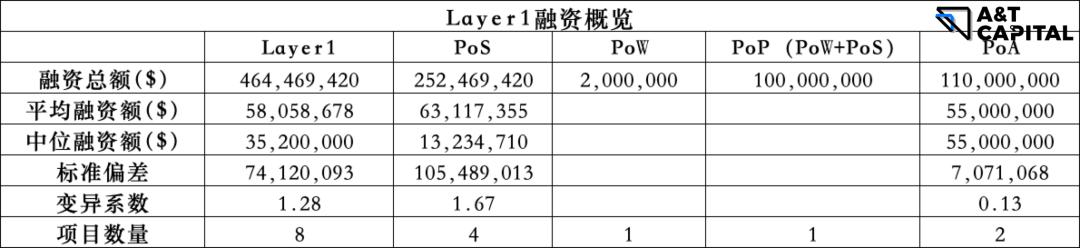
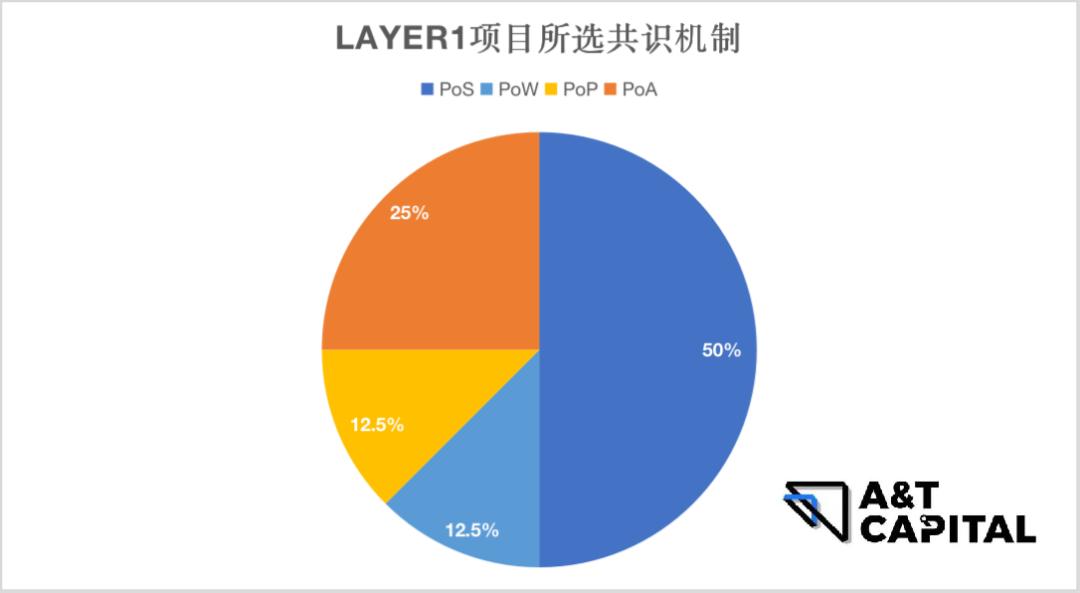
The proportion of PoW is very small, and its financing amount is less than 1% of the total financing amount: it can be seen that there are many problems in PoW (too high Energy consumption, inefficiency in large-scale use scenarios, and the high hardware cost and competitive environment of PoW have brought capital-intensive features to the mining industry and spawned a trend of centralization), so capital prefers models other than PoW.
PoS is the track with the best financing performance in layer1, accounting for about 50% of the total amount, which obviously surpasses other categories. Looking at the financing situation, the market is particularly optimistic about PoS Layer1. Compared with PoW, PoS has lower energy consumption, higher scalability and transaction throughput.
PoP (mixed mode of PoW and PoS): the amount of financing obtained accounts for 22% of the total
. PoS is not a perfect solution, the hybrid mechanism combines the benefits of PoW and PoS
. Avoid 1. Centralization 2. Security risk 3. MEV risk 4. DoS risk caused by PoS protocol
. Avoid the high energy consumption and low performance of PoW
PoA accounts for about 25% of the financing amount. Patterns can guarantee speed and high performance without sacrificing security. Different from the traditional operation of blockchain, but provides an emerging blockchain solution that may be very suitable for private blockchain applications
1.2 Layer 2


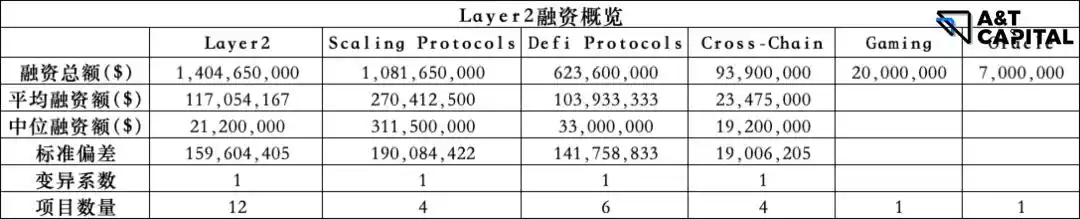
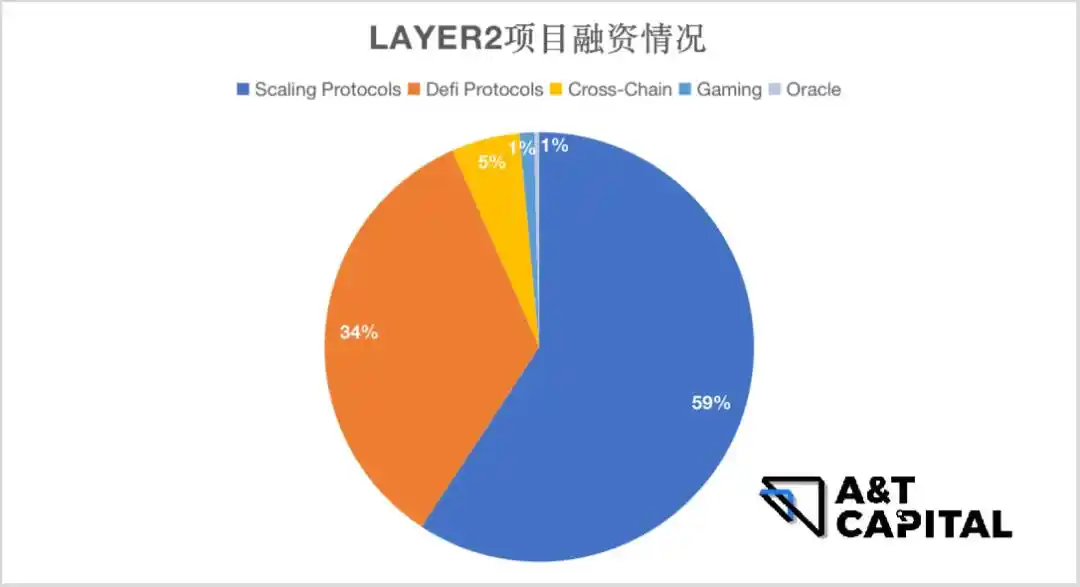
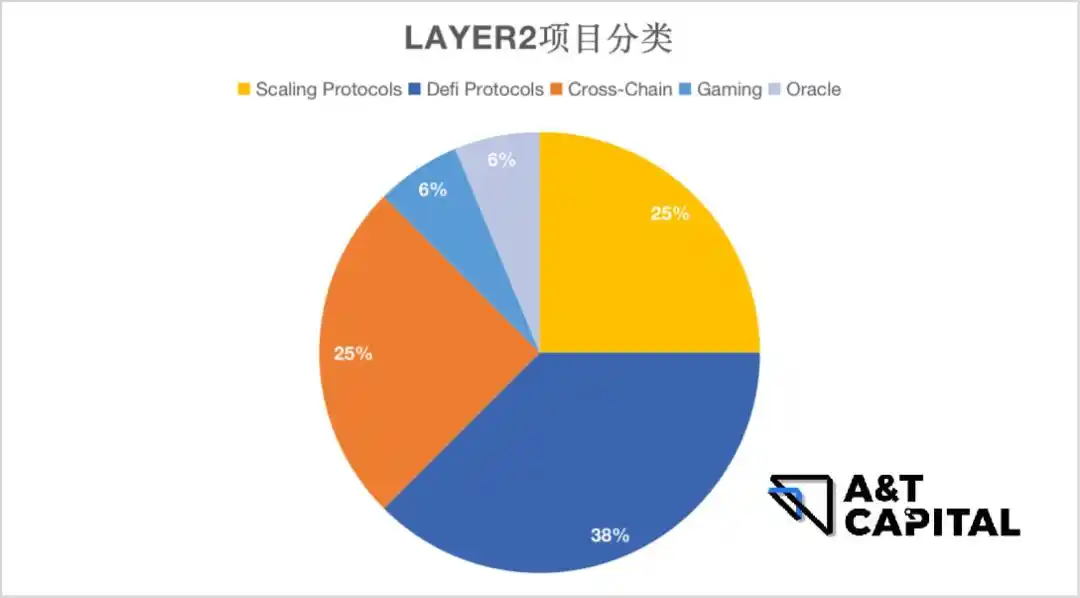
In general, Scaling Protocols and DeFi Protocols have better financing performance.
Scaling Protocols
. Scaling Protocols: Investment institutions have increased their bets on the overall track of the scaling protocol
. The market demand for expansion solutions is stronger because of higher gas fee / TPS / latency
Defi Protocols
. The overall attention of the Defi Protocols track is high (34%)
. 66% of the projects are in the direction of cross-chain agreement (DEX cross-chain aggregation agreement), but the performance is not outstanding in terms of financing amount, accounting for only 11.5% of the total financing amount
. Among Defi Protocols, infrastructure financing accounted for 56%, and stablecoin lending agreement financing accounted for 32%
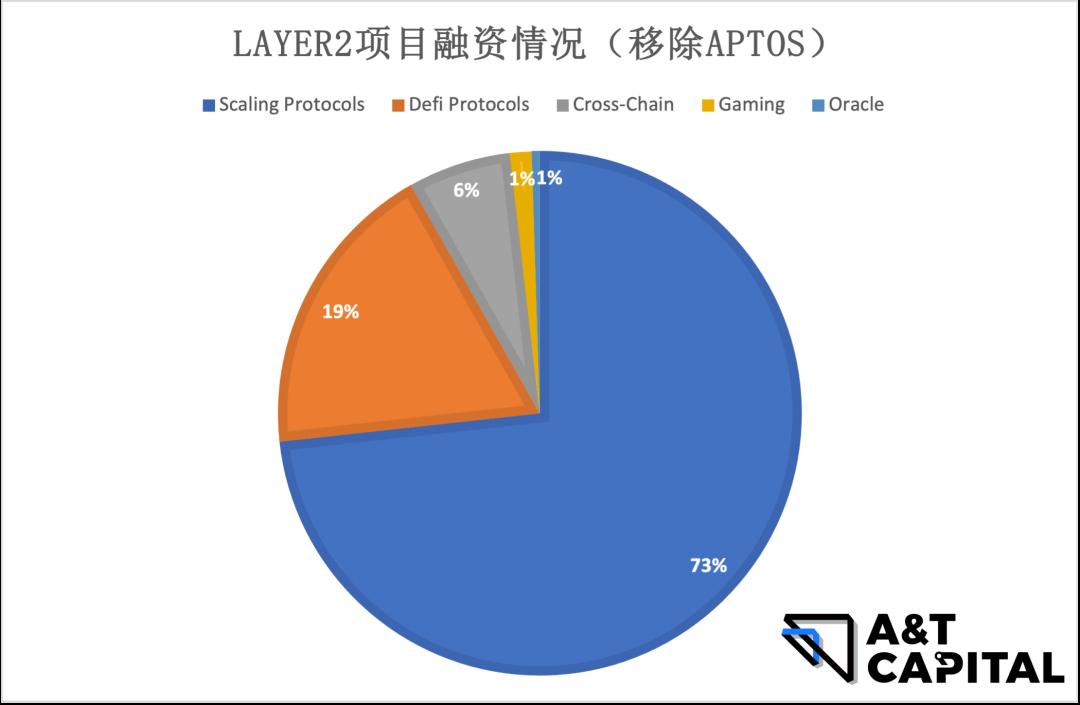
. Aptos is industry alpha and considered an outlier. With the removal of Aptos from Defi Protocols, the proportion of the funding amount of Defi Protocols decreased to 19%, indicating that the attention of the Defi track is cooling down, while in comparison, the proportion of the Scaling Protocols track has reached an overwhelming majority (73%), which is the most popular trend in the market.
Oracle
< /p>
There are very few projects in the Oracle direction that have received financing, accounting for 1% of the total financing amount of L2. The reason may be that 1) there is no innovation in the concept of Oracle; 2) the use of Oracle is restricted by the industry and requires real-life data (i.e. insurance/real estate), and most of the hot tracks i.e.GameFi and NFT do not need Oracle
Games
GameFi compared to other Tracks such as Defi have higher requirements for transaction speed and gas fee. General Layer 2 provides a potential expansion solution, but in the project narrative covered by this research, a protocol specially built for GameFi appeared. This may indicate that GameFi-type applications have specific requirements that cannot be perfectly solved by the general Layer 2, and this direction is worthy of further research.
1.3 Application

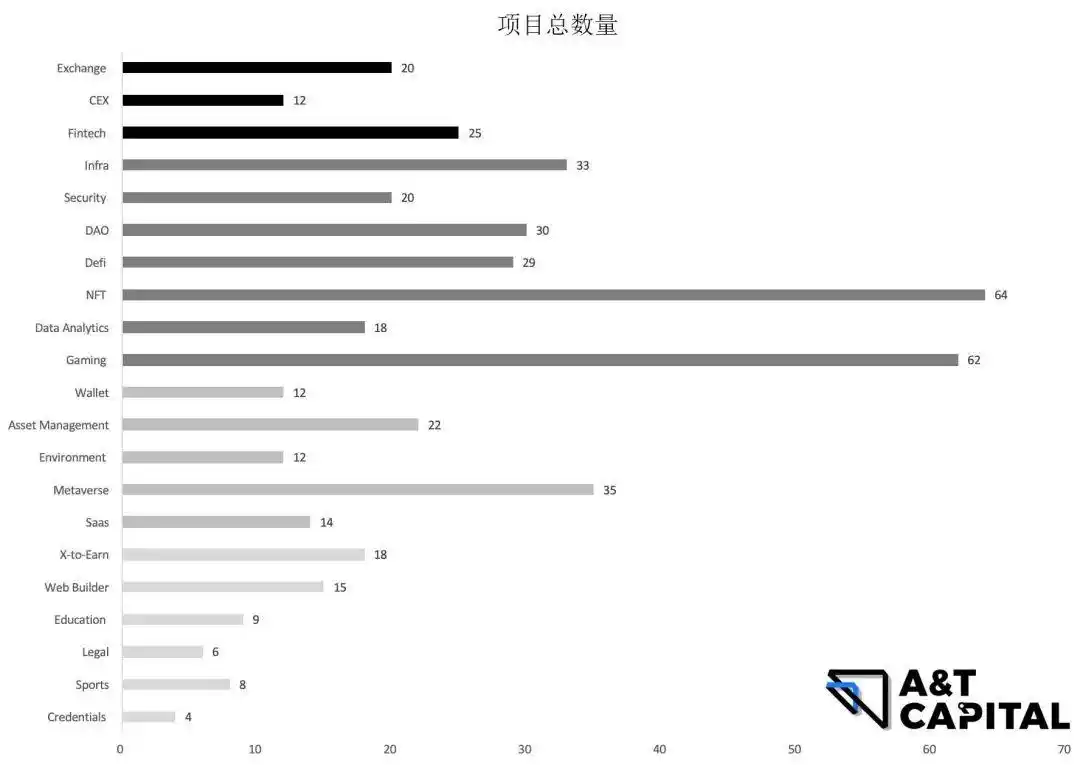
As can be seen from the above figure, trading platforms and financial technology accounted for 47% of the financing targets, and the rest were less than 6%, with a relatively even distribution.
Major trend (overall)
The top three categories of financing amount: trading platform, center trading platform, financial technology.
The top three categories of financing projects: NFT, games, metaverse.
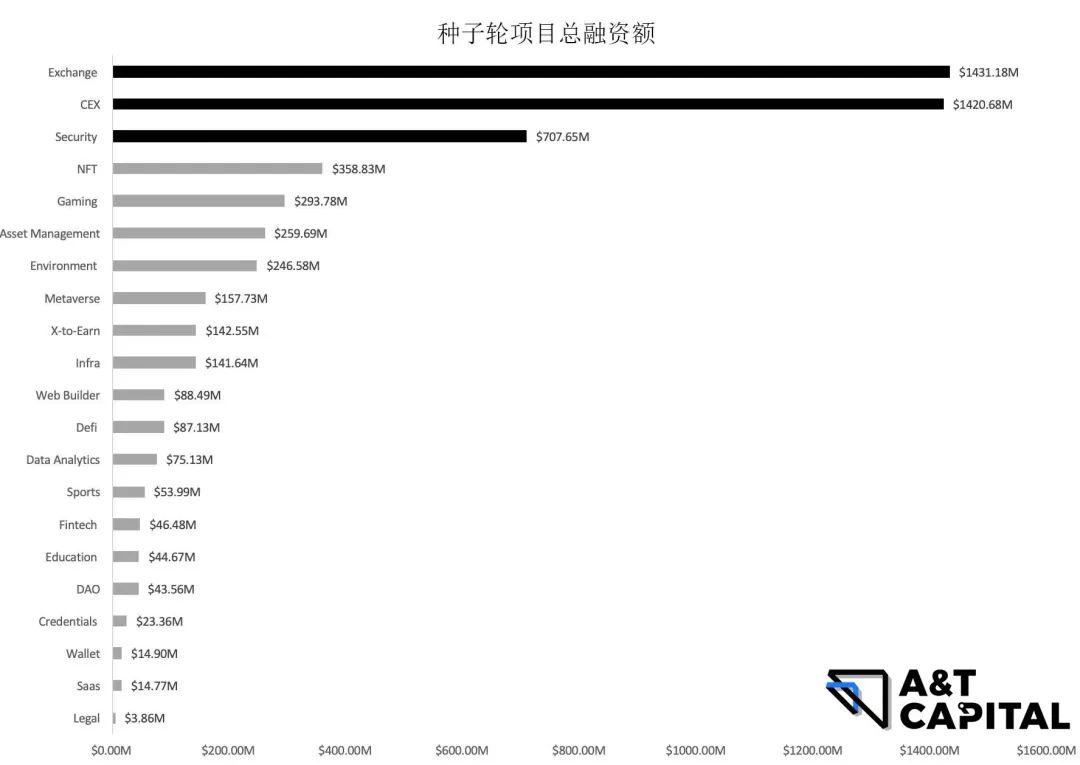
New trend (pre-seed round - preA round)

 < /p>
< /p>
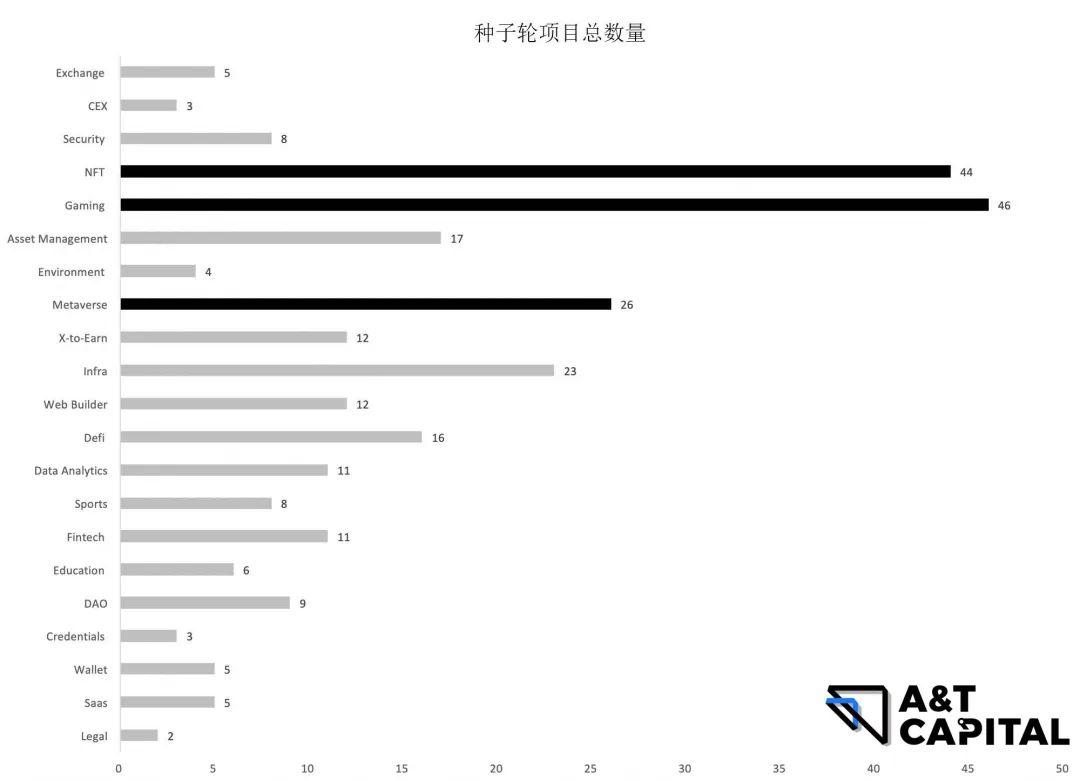
As can be seen from the figure, the top three categories of seed round financing projects are games, NFT, and Metaverse. The top three categories of seed round financing amount: trading platform, centralized trading platform, security.
1.4 Summary
Layer 1 - with PoS and hybrid chain as the main trend , it can be seen that the attention of hybrid chain is getting higher and higher, which indirectly proves that everyone has paid attention to the potential security problems of PoS and is looking for a solution that can balance security and efficiency.
Layer 2 - General scaling protocol is the most popular trend, and new directions include layer 2 chain for the industry.
Application - The general trend and the new trend are projects that can be circulated in the secondary market in the short term as the hot trend, and a new general direction is security.
02 Alpha & Beta Trend
2-1 Alpha
< p>First define Alpha:
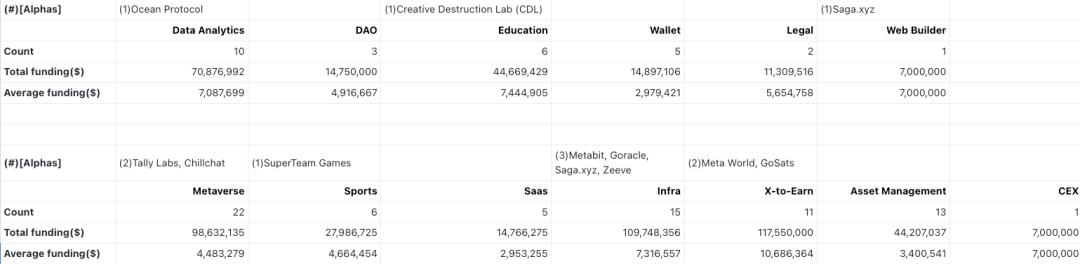
The characteristic of the Alpha market is transaction-driven financing. Items with Alpha characteristics need to be clearly superior to other items in the category of the same Layer. The Alpha projects we are looking for in this article need to have a total financing that is more than twice the average financing of their track.
2-1.1 Layer1
< br>
As shown in the figure, there is no alpha in Layer1.
2-1.2 Layer2

< br>
As shown in the figure, Alpha exists in the Seed-Angel stage in Layer2, and Polygon is the alpha item in this stage. Others such as PreA-A, B-C, C+ have no Alpha.
2-1.3 Application Layer
Seed -Angel

PreA-A

B-C & C+

2-2 Beta
Definition of Beta:
Beta market characteristic is the market drive financing. Beta measures how bullish the market is on an industry/technology category as a whole. Track financing with Beta attributes is generally good. The lower the statistical dispersion coefficient (coefficient of variation), the lower the dispersion of track financing, which in turn reflects the beta attribute of the market. We further use the difference between the mean and the median for cross-contrast validation. Markets with low CVs and small differences between average and median are more beta-characteristic. We judged with CV < 1.5 and log(average)/log(median) < 1.05.
2-2-1.Layer 1 & Layer 2
< /p>
The overall number is too small to be statistically significant. Generally speaking, Layer 1 & Layer 2 belongs to the high financing amount and hot track. According to the technical flow of projects, the financing amount is not much different.
2-2-2.Application
As can be seen from the above figure, from the perspective of low dispersion below CV1.5, the beta market can be roughly defined as Wallet, Gaming, Web Builder, Sports, Education, Environment, X -to-earn, Credentials, and Legal. However, because the amount of data in one quarter will affect the credibility of CV, AVE-MEDIAN is used for cross verification here, as follows.


As can be seen from the figure above, X-to-earn, Web Builder, and Legal are verified betas. The specific financing data are as follows.
2-2-3. Summary
In the application layer, through the comparison of the two beta calculation methods, it is concluded that X-to-earn, Web Builder, and Legal have beta attributes.
03 Main preferences of some leading institutions
3.1 Digital Currency Group

DCG invested in 10 projects in total. There is no preference in stages, there are layouts from seed to series F. The layer 2 project invested by DCG is polygon, and the other nine projects are application. Among the 9 applications invested in, the preference is from high to low:
Wallet, this also includes the wallet with built in in the exchange
Security, including code auditing, security detection
Analytics tools, mainly data analysis, tracking, alert
3.2 A16Z Crypto

A16Z took 7 shots in total, including 1 Layer 1 project - Aptos, and 6 application projects.
Among the 6 applications invested, the rounds include 2 rounds of seed and 4 rounds of series A, and the directions include:
5 gaming/x-to-earn
1 nft project
3.4 Tiger

Tiger made 14 shots in total, 1 layer1, 1 layer 2 and 12 applications. The Layer 1 item is Aptos, and the Layer 2 item is polygon. In terms of investment stage, 14 projects have been sold from seed to series D, and there is no obvious stage preference.
Among the 12 applications invested, the preference is from high to low:
4 Infra projects, including staking service, DID, deployment platform
4 asset management
2 analytics and 2 exchanges
3.5 Lightspeed

Lightspeed has taken 7 shots in total, and the investment time of 7 shots is application. In terms of investment stage, there are shots from seed to series D, and there is no preference in stage.
Among the 7 applications invested, the preferences are from high to low:
2 asset management
2 wallets
2 exchanges
3.6 A&T Capital

A&T Capital has invested in a total of 14 projects, including 1 Layer1 - Mysten Labs. In terms of investment rounds, there is a clear preference for early stage, including 7 seed rounds and 2 A rounds.
Among the 13 applications invested, including:
3 infrastructure
3 infrastructure
p>
3 gaming/x2e
2 wallets
2 DAO tools
3.7 Paradigm
Paradigm made 4 shots in total, and all 4 investments were application. In terms of investment rounds, all 4 shots are seed rounds. The 4 applications invested include nft marketplace, gaming/x2e, social, and metaverse.
3.8 Dragonfly

Dragonfly A total of 12 shots were taken, including one layer 2 cross chain bridge, and the other 11 shots were application. In the investment round, the main focus is on the early seed round and the growth stage. Among the 12 investment applications, the preference is from high to low:
5 gaming
3 asset management
< p>2 social3.9 Sequoia

Sequoia made a total of 5 shots, including 1 layer 2 - starkware, and the other 4 are application. In terms of investment rounds, there is a clear preference for later stages, including an ICO round of projects. Among the 4 applications invested, including:
2 metaverse
1 asset management
1 insurance
Summary
In this article, we review the crypto industry during 2022.5 - 2022.8 Projects that have received investment from institutional funds have the following main trends:
From the perspective of investment stage, funds in the market are more willing to sell very early or late-stage projects in a bear market ;The exit method is mainly to enter the secondary market in the short term, and the number of investments in chain games and encrypted fund management projects can be seen to increase;
From the direction of investment Look, Layer 1 is dominated by PoS, and the attention of hybrid chain has increased significantly; Layer 2 is dominated by general scaling, and the attention of industry-specific chain has increased; the application layer is dominated by games and NFT, and the attention to safety tracks obviously increasing.
Original link
Welcome to join the official BlockBeats community:
Telegram Subscription Group: https://t.me/theblockbeats
Telegram Discussion Group: https://t.me/BlockBeats_App
Official Twitter Account: https://twitter.com/BlockBeatsAsia