Bankless Report: Best investment strategies for Ethereum merger process

Original title: 《 Bankless Report: Best Investment Strategies for Ethereum Merger Process 》
Original author: Ryan Sean Adams, Bankless
Original translation: Katie Gu, Odaily Planet Daily
The merger will cause Ethereum to undergo a massive structural shift as fees will effectively drop to zero. This shift will give rise to the first massive structural demand asset in the history of cryptocurrency. This article highlights the positive aspects of Ethereum's core model and some key fundamentals, such as supply reduction and post-merger pledge rate.
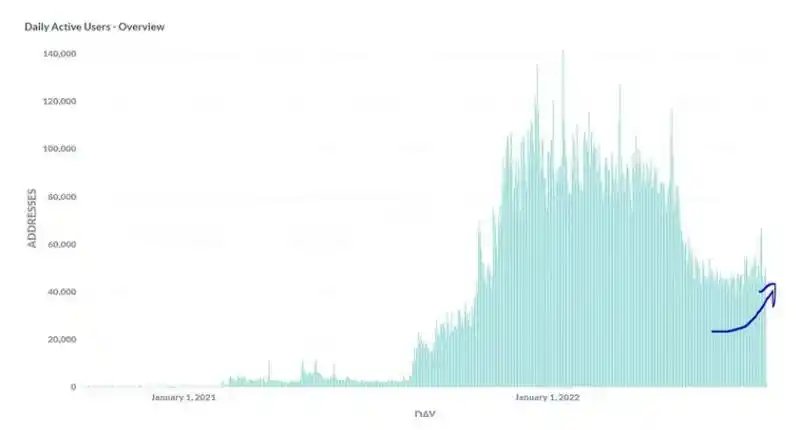
The biggest change since December is the sharp drop in fees denominated in ETH. However, while fees have fallen, active users have been on a steady upward trend since late June.
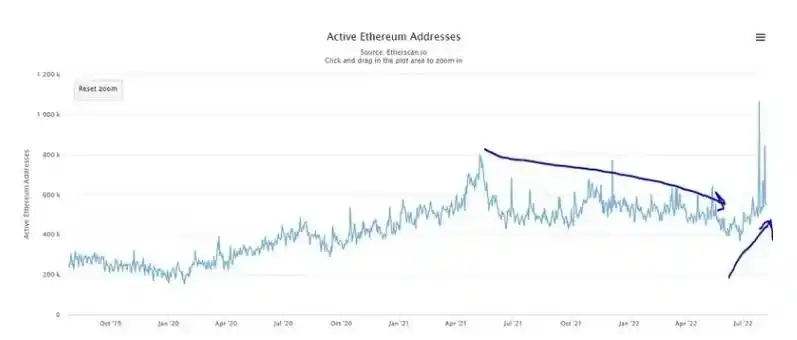
This may seem inconsistent, as more users should lead to higher gas fees. However, we believe this dynamic is caused by recent efficiency optimizations in various popular Ethereum applications. For example, Opensea improved its gas efficiency by 35% when migrating the Seaport protocol. This led to a decrease in gas, but was not associated with a drop in on-chain activity.
In fact, multiple indicators show that on-chain activity has been increasing recently despite low gas readings. This leads to an interesting question: what is the optimal operating fee rate for Ethereum? Higher fees mean more ETH is consumed, and after the merger, they are also associated with higher staking rates, but these higher fees also limit Ethereum's adoption.
As we have seen in 2021, when fees are too high, some users will flow to other L1 ecosystems. After proper scaling, Ethereum should be able to achieve high fees and sustained adoption. It's interesting to think about the optimal portfolio in the current environment. We believe the biggest advantage should be fees high enough to burn all newly issued tokens. This will keep the ETH supply stable while keeping fees low enough to not inhibit adoption. Interestingly, recently, fees have found a balance. Lower fees also seem to have a positive impact on the adoption of games, with active users starting to increase after a long downward trend.
While we appear to be close to an optimal fee run rate, reduced fees do have a negative impact on the outputs of various models. This effect is not material, however, as at the current run rate, the burn is still large enough that ETH will be slightly deflationary after the merger. What is important is that the current run rate will continue to drive structural demand, as the majority of issuance is unlikely to be sold, and the fees used must be purchased on the open market.
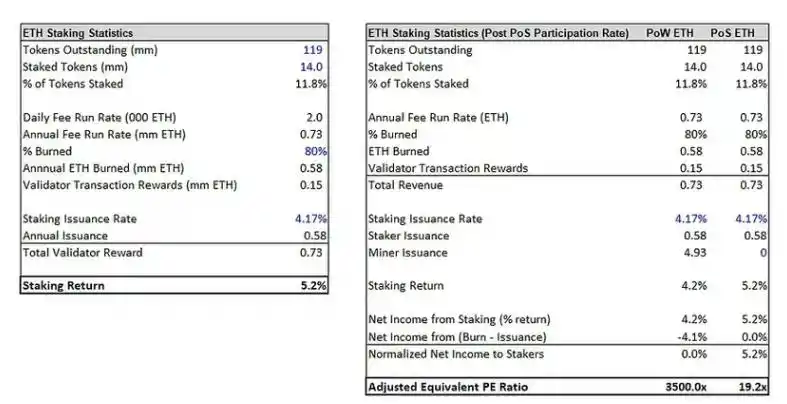
The collateralization ratio will increase by about 100 basis points after the merger, from 4.2% to 5.2%. However, this does not properly capture the true impact. To fully appreciate this shift, we must evaluate the real yield, not the nominal yield. While the nominal yield is currently about 4.2%, the real yield is close to zero, as 4.4% of new ETH is issued each year. In this case, the real yield is currently about 0%, but will increase to about 5% after the merger. This is a huge shift and will create the highest real yield in cryptocurrency by a large margin. The only other comparable yield is BNB, which has a real yield of 1%. ETH's 5% yield will be market-leading. What is the significance of this yield?
Stakers will receive a net 5% interest rate, equivalent to 100/5 = about 20 times the yield. This multiple is much lower than the yield multiple because the staking participation rate is low, which means that stakers receive a disproportionate share of the total rewards. From an investment perspective, this is one of ETH's key advantages.
There are many other uses for ETH throughout the crypto ecosystem, and most ETH ends up being locked in these applications rather than being staked. This in turn allows investors to obtain super high actual yields.
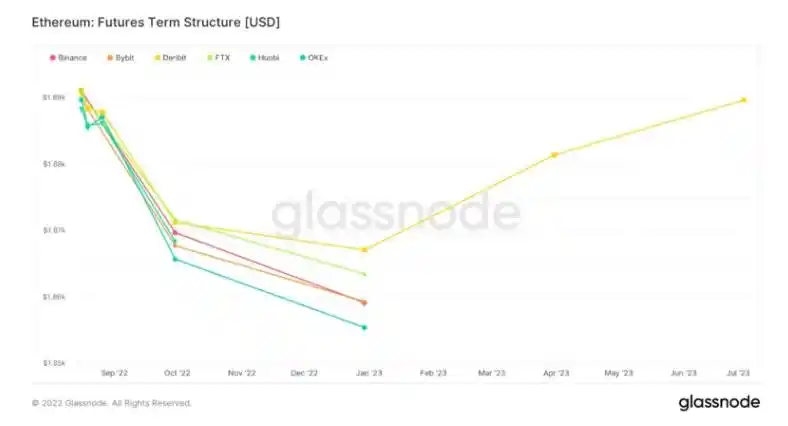
In terms of liquidity, ETH will transition from a sustained structural outflow of about $18 million/day to a structural inflow of about $300,000/day. Our estimate of the reduction in ETH-denominated supply is actually larger than before. This is due to the fact that the price drop from the highs was not accompanied by a corresponding drop in hashrate. As a result, miners' profitability has dropped significantly and they are likely to sell close to 100% of their ETH.
For the sake of calculation, I assume that 80% of miner-issued Tokens have been sold. In this case, ETH finds an equilibrium where miners sell approximately 108k ETH ($18m) per day. Considering that average fees are around $2m, this would generate a net outflow of $16m. After the merger, this selling pressure will drop to zero and a structural inflow of approximately $300k/day is expected after the merger.
In summary, while many of the data have changed significantly over the past 8 months, the conclusion remains largely unchanged, ETH will go from needing $18 million of new money to enter the asset to prevent the price from falling, to needing $300,000 of money to exit the asset to prevent the price from rising.
To summarize, the collateralization rate and structural demand are down from 6 months ago. However, this is to be expected in a period of slowing economic activity, and if economic activity continues to rebound, these rates will rise. The main investment case remains the same, there is a huge opportunity to get ahead of the largest structural shift in the history of cryptocurrencies.
Another point that is often overlooked is that the merger is not just a shift in supply and demand. It is also a massive fundamental upgrade for Ethereum as the network becomes more efficient and secure in many ways. This is one of the differences between the merger and the previous BTC halving.
Finally, there are two more factors worth discussing.
The Power of Yield and Time
Before addressing the relationship between mergers and ETH, it is important to first lay some background foundation.
Why has the S&P 500 (SPX) or almost any US/global stock index been such a long-term profitable and stable investment vehicle? Most people believe that this trend is almost entirely driven by earnings growth and P/E expansion. They would assume that if economic growth slows, or multiples stop expanding, these investments are unlikely to have positive returns in the future. This is incorrect.
The primary and most reliable source of price growth for these indices is time.
Here is an example to illustrate this point. Lemonade Stand = Business, Lemon Token = Lemon Stock, Earning $1 per year. There are 10 Lemon Stocks outstanding. Lemonade Stand has no cash or debt on its balance sheet. The market currently values $1 of earnings ex-growth stock at 10x. How much is Lemonade Stand worth now? What about each lemon?
If we assume that Lemonade Stand continues to make $1 per year next year and the market is the same multiple, what will Lemonade Stand/Lemon Token be worth in one year? Take a minute to think about the answer.
If you answered $10/$1 to the first pair of questions, you are correct. If you answered $10/$1 to the second pair, you are wrong. In the first part, Lemonade Stand is worth $10 because the market values its $1 of earnings at 10x and its balance sheet at $0. In the second part, the market still values $1 of earnings at 10x, but importantly, it also assigns $1 to the $1 of cash on Lemonade Stand’s balance sheet. The lemonade stand is now worth $11, and each share is worth $1.10. When a company makes money, the money doesn’t disappear, it flows into the company’s balance sheet, and its value flows to the owners of the business (equity holders). Despite zero growth and zero multiple expansion, the lemon Token appreciated 10% in one year because of the earnings they generated.
Such is the power of yield and time.
Cryptocurrencies have not benefited from this dynamic at all. In fact, cryptocurrencies have actually been affected in the opposite way. Since almost all crypto projects have expenses greater than their revenues, they must dilute their holders to generate the necessary funds to make up for their negative net income. Therefore, unless earnings grow or their multiples expand, the price of each Token will fall. The most notable exception I can think of is BNB, which is currently the only L1 with revenue greater than expenses.
It is not surprising that the BNB/BTC chart is essentially ascending, having recently broken the highest price (ATH).
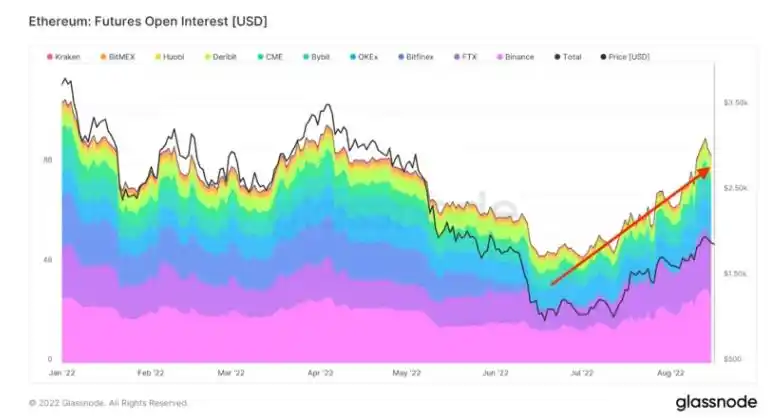
When ETH switches to PoS, it will enter this exclusive category. The combined ETH will generate an actual yield of about 5%. This yield will be very different from almost all other (non-BNB) L1s, where the investment yield comes simply from inflation offsetting the yield. All else being equal, ETH holders will receive 5% per year. For 99.9% of other projects, time will be the catalyst.
This will also change the psychology of holders, incentivizing them to adopt a stronger long-term buy-and-hold strategy, effectively locking in more illiquid supply. Additionally, the "real yield" thesis and the fact that ETH will be the first large-scale real yield crypto asset will be particularly attractive to many institutions and should help accelerate institutional adoption.
Merger Panic
Over the past few months, investors have been extremely skeptical of technical risk, edge cases, and timing risk.
The edge case that has recently attracted attention is Ethereum's PoW fork, which may survive after the merger. Some PoW maximalists (miners, etc.) prefer PoW ETH and believe that the current forked version of ETH is better than ETC, which already exists as an alternative to PoW. We don't think there is much value in forking, but our views on this issue are not particularly relevant.
The important point is that this fork will not have an impact on the merged PoS ETH. All potential risks are either easily managed or not a risk at all. For example, replay attacks will most likely not be a problem because PoW chains are unlikely to use the same chain ID. In addition, even if they maliciously choose to use the same chain ID, this can be managed by not interacting with the PoW chain or sending assets to the split contract first.
Finally, even if a user were to be hit by a replay attack, it would only affect that user’s personal assets, not the health of the chain as a whole. What the PoW fork does do is provide dividends to ETH holders, further increasing the value of the merger. If there is any value in the fork, ETH holders will be able to send it to exchanges and sell it for additional capital, much of which will be recycled back into PoS ETH. While we believe this is positive for the investment case associated with the merger, many are concerned about the potential risks and a host of other edge cases. We weighed each of these risks and concluded that the pros far outweigh the cons.
Still, these concerns have caused many long-term Ethereum believers to “sideline.”
As we get closer to the merger, many of these issues will be resolved. Eventually, many Ethereum skeptics will “come around,” creating momentum for continued capital inflows as the merger approaches, and ultimately a large number of buyers will buy ETH on the day the merger is successful. This should help offset any “sell-off” dynamics.
Just last month, less than a third thought the merger would occur before October. Now that date has been confirmed as mid-September, the market still sees only a two-thirds chance of it happening before October.
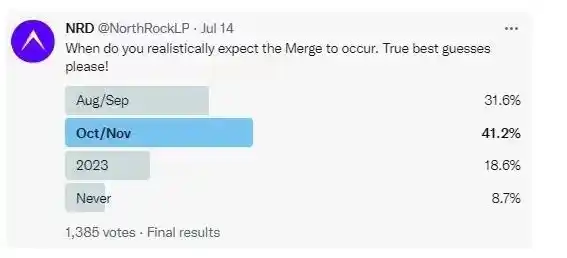
Against this backdrop, how should we expect prices to move as the merger approaches?
First, we acknowledge that macro will continue to have a significant impact on absolute price levels despite the merger. However, it is also important to consider how merger-related alpha will develop in the coming weeks. It is always difficult to make the first move, but it is easy to get there.
Short-term traders
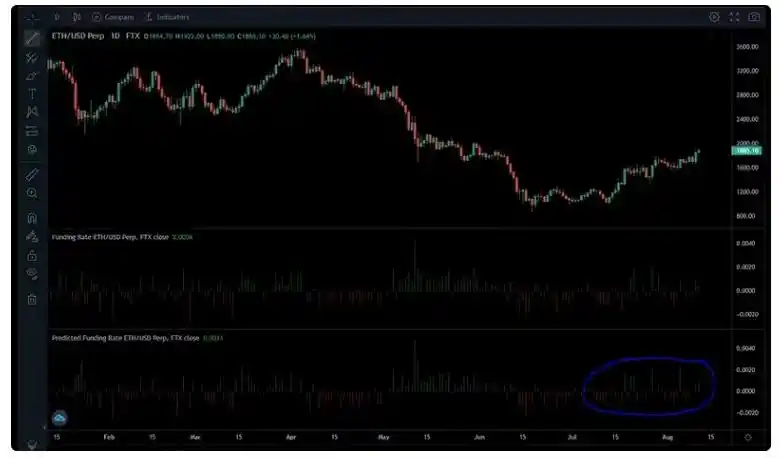
Despite the narrative that has built around this merger, positioning remains fairly loose among the more casual groups in the market. Perpetual funding has been negative throughout much of the rally since June, suggesting more bears than bulls in the perpetual market.
Another notable discretionary ETH exposure, Bitfinex long positions were reduced to lows recently.
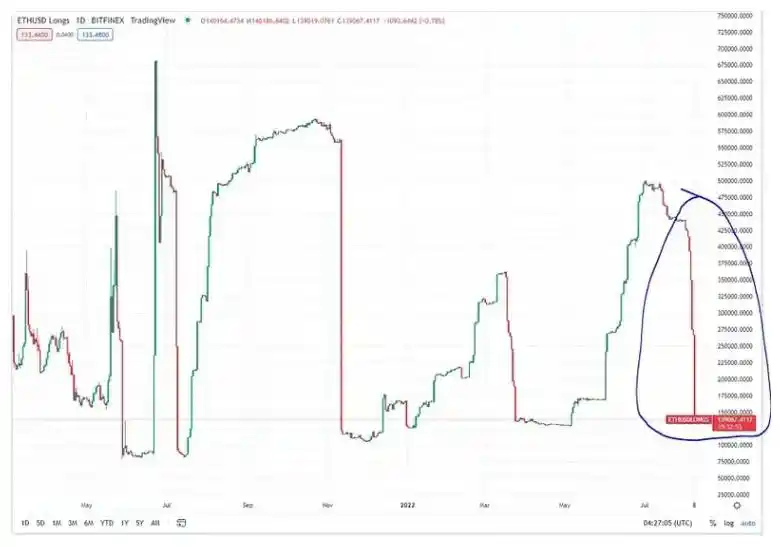
In my opinion, this lower positioning is likely because many of the larger players see this as a “bear market rally” and therefore want to hedge if we continue to move higher.
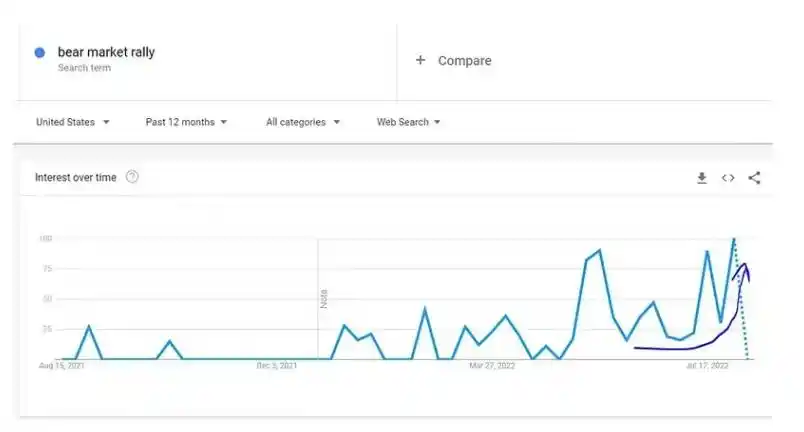
Historically, there is a large group of investors that favor the direction of BTC maximization and always want to downplay the merger narrative. Their arguments mainly revolve around one of two central points.
The first is: “The merger is 6 years and 6 months away.” The second is about technical/execution risk. Earlier this week, after the final testnet Goerli was successfully merged, the core developers set a target for the mainnet merge on September 15-16. The rest is coordination.
While many are concerned about execution risk, the upgrade has been extremely “stress tested” for many years and cross-checked by many teams. In addition, one of the core pillars of Ethereum is resilience. This is why there are so many different clients - like a safety net to protect against a single extreme case or bug. It would take multiple (usually more than two) unrelated fluke events happening simultaneously to impact the protocol.
With this built-in resilience, the most accomplished development team in the space, and years of preparation, technical issues (although risky) are unlikely to arise.
Given investors’ cautious positioning and the continued desire to “fade” trades, I expect the next four weeks to follow similar market conditions to the previous four weeks. There are clear periods of fear when people overanalyze extreme cases. However, I don’t expect the price declines during these periods to be too large, as there are many underexposed institutions looking to add exposure on any weakness. Furthermore, almost everyone who sells ETH in the coming weeks is only selling strategically, with the plan to buy back at some point before or after the merger occurs.
This dynamic implies that net outflows will be measured. On the other hand, I expect the hype around the merger to be amplified as the merger date approaches and mainstream media reports on it. I believe this article is very convincing to both institutional and retail capital, and I expect inflows to accelerate as the merger approaches, creating higher highs and higher lows.
What happens once the merger actually happens? Normally, people would think there is a risk of a "sell on the news" reaction; many investors are concerned about technical risks and plan to buy after the merger. They believe they will get the structural effects of the merger without the technical risks. The post-merger period will also depend on how much FOMO is generated as we approach the merger and positions.
We expect a lot of buying and follow-through after the merger as the merger effectively "de-risks".
Medium-Term Traders
We expect a period of range-trading as short-term traders sell off, and this selling flow will be absorbed by structural demand and larger, slower-moving institutional accounts. Price action during this period is less predictable and depends on the macro environment. As I said before, macro is hard to predict.
The macro environment for crypto is driven by one core metric: whether adoption is growing, stable, or declining. This metric is somewhat influenced by the broader macro environment, but ultimately it is the adoption metric that matters most. The reason this metric affects price is that adoption in the space also drives long-term inflows or outflows of capital. Simply put, when users adopt crypto, they also typically invest new capital into the crypto ecosystem, which is what drives macro. When adoption is declining, macro is hostile, when adoption is flat, macro is neutral, and when adoption is growing, macro is accommodative. So what does the macro look like today?
We have been in a declining adoption environment for most of the past 8-9 months, with a net outflow of users leaving the ecosystem.
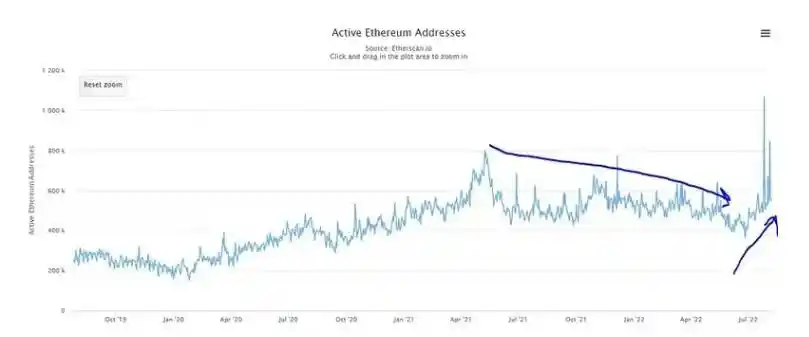
Daily active users were trending down from May 21st through the end of June. Over the past 6 weeks, we have seen a nascent recovery, with users steadily increasing. These are the green shoots of recovery, and suggest a possible thaw in the macro environment. We were in a declining adoption phase, and now we are entering at least a steady adoption phase, and potentially an increasing adoption phase. There have been a few other “green shoots” recently.
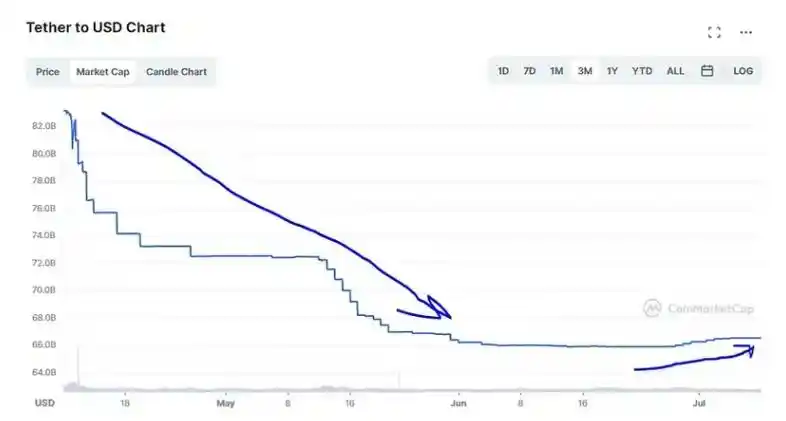
After weeks of redemptions, Tether has slowly started minting new Tokens . After a long period of capital outflow, new funds have begun to enter the field.
This effect is not unique to the Ethereum ecosystem, AVAX has also recently seen an increase in daily active users.
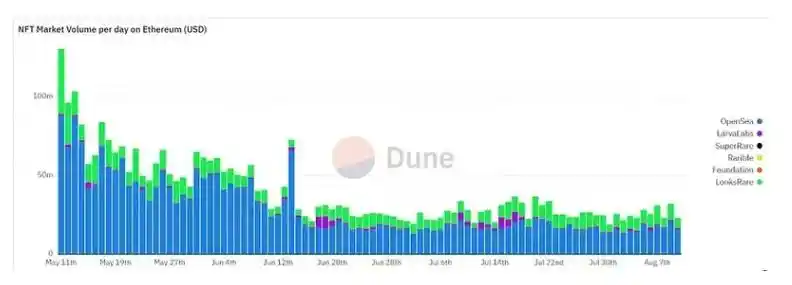
NFT users and transactions have been stable recently.
Some web search results for cryptocurrencies have begun to show positive effects.
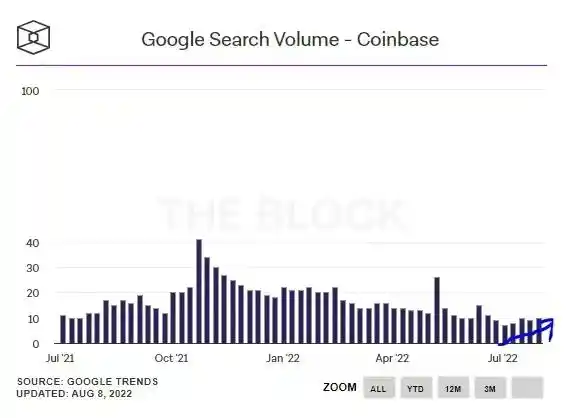
This is not a surge, unlike the exponential growth we saw at the beginning of the bull market in 2021. That's why I call them "sprouts". Because they are still young and fragile. They can die at any time, but if they are carefully cultivated, they can become influential.
We believe that the broader macro environment will play a key role in determining whether these "sprouts" live or die. For us, inflation is the most important macroeconomic variable. Therefore, if inflation slows and allows the Fed to adjust and ease monetary policy, these "sprouts" are likely to become stronger. However, if inflation remains high and the Fed is forced to continue tightening policy, they will likely "choke". After evaluation, we believe that slower inflation is the most likely outcome, which should give these "buds" a chance to bloom.
Another advantage in favor of a more durable bottom is that a large amount of investment launched in projects over the past 24 months has now been absorbed. In addition, with most projects down 70-95%, all future vesting USD notional outstandings have also been significantly reduced. These two dynamics combined have helped to meaningfully reduce the total daily supply that the crypto space must absorb.
Finally, we believe the last variable that affects this equation is consolidation. Investors underestimate the impact of consolidation on the macro environment of the entire space. There is some uncertainty as to the extent to which the supply reduction caused by the previous Bitcoin halving drove the subsequent price action, rather than coincidentally aligning with the natural cycles of human emotions and monetary policy. We sympathize with these uncertainties and believe there is an element of luck in the timing. However, we believe that the supply reduction also had an impact, and the truth is likely somewhere in between. Another common criticism is that changes in supply don't drive price, it's changes in demand that matter. We disagree with this idea. A decrease in supply is no different than an increase in demand.
Let's assume miners are selling 10k ETH/day, and instead of getting rid of this selling pressure, we simply add 10k ETH/day of buying pressure. This will have the exact same effect as removing miner selling pressure, but it will be a change in demand, not a change in supply. Clearly, both options have the same impact, so we don't see why one is more important than the other.
If we believe that the Bitcoin halving has impacted crypto macro, then the merger will also impact the macro picture. While Ethereum dominance was significantly lower than BTC at the last halving, the impact of the merger is almost as large as the impact of the previous BTC halving on total crypto market cap as a percentage of total market cap, and significantly larger on an absolute basis.
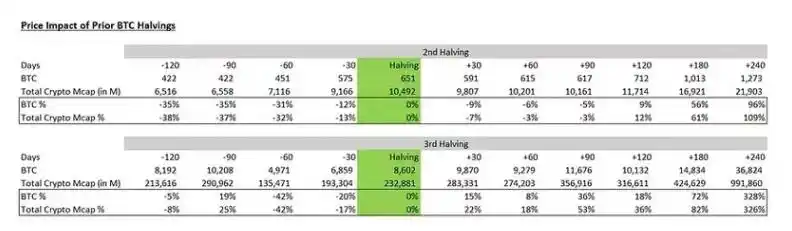
The merged crypto will reduce daily supply by about $16m. This is not an insignificant number. To appreciate this, the cumulative impact needs to be considered.
We believe a TWAP (time weighted average price) of 70k ETH per week will have an impact on the market. This is the effective impact that the merger will have unless it stops after a year. Or continues forever. This has the potential to be positive for the entire crypto space as the positive flow effect flows into other parts of the market. This will provide an additional macro wind to help nurture the “germination phase” we mentioned earlier and increase their odds of survival.
Then there is a good chance that what initially bounced off the bottom of a capitulation decline will evolve into a more sustainable and organic recovery, and consolidation should help this process.
Long-Term Traders
In the long term, the future becomes easier to predict because structural flows are the most important and easier to predict in this time frame. This is where the impact of consolidation is most significant. We believe that as long as Ethereum continues to adopt the network, structural demand will continue to exist and further capital inflows will also exist. This should lead to sustainable and sustained appreciation for many years to come, especially compared to other Tokens . We expect Ethereum to surpass Bitcoin as the largest cryptocurrency in the next few years because we believe that flow is the most important variable in crypto. Ethereum will always have tailwinds after the merger. Bitcoin will always face headwinds. The BNB/BTC chart can be used to understand the possible changes.
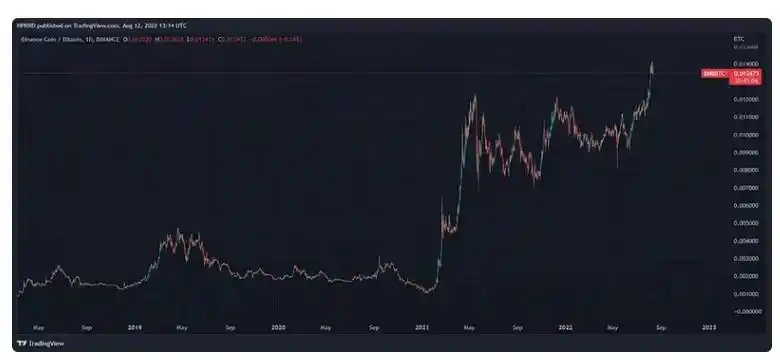
BNB/BTC has steadily grown in this bear market and created multiple new paths despite little narrative momentum. We believe this is primarily because BNB is the only L1 with structural demand. The merged Ethereum will have greater structural demand than BNB on both an absolute and market cap weighted basis.
Winning Merger Investment Strategy
1. ETH/BTC
We believe PoS is a fundamentally more secure system. First, PoS has a lower cost per unit of security. To understand why PoS provides more effective security than PoW, we first need to explore how these consensus mechanisms generate security. The security of a consensus mechanism is equivalent to the cost of 51% attacking it. The efficiency of the system can then be measured by the cost required to generate a unit of security ( Token Issuance).
In other words, how many dollars does the network need to pay to get $1 of protection from a 51% attack. For PoW, the cost of a 51% attack is mainly the hardware required to obtain 51% of the hash rate. A related metric is how much it takes for a miner to invest $1 in mining hardware. The calculation is often close to 1 to 1, meaning that miners need a 100% annual return on their investment, in other words, they need to issue $1 of Tokens per year for every $1 they spend on hardware and utility. In this case, the network needs to issue about $1 of supply per year to generate $1 of security.
In the case of PoS, stakeholders do not need to purchase hardware, so the question becomes what return do stakeholders need to lock in their stake in the PoS consensus mechanism?
Generally speaking, stakers require a much lower return than the 100% return that miners typically require.
The main reason is that there is no added cost expenditure and their assets do not depreciate (mining hardware usually depreciates close to 0 after a few years). The required interest rate should generally be in the 3-10% range. As we calculated earlier, the current estimated 5% combined stake falls right in the middle of this range. This means that to get $1 of securities, PoS needs to issue $0.03-$0.10 of Tokens . This is 10-33 times more efficient than PoW (20 times more in Ethereum’s PoS).
To sum up, this means that a PoS network can issue about 1/20 of what a PoW network issues and be just as secure. In the case of Ethereum, they will actually issue about one-tenth of the issuance, and the network will be twice as secure as during PoW.
This efficiency is not the only advantage. Both consensus mechanisms share a common problem in that the security of the chain is correlated to the price of the Token . This has the potential to create a self-reinforcing negative feedback loop, where a reduction in the price of the Token leads to a reduction in security, which leads to a reduction in confidence and drives a further reduction in the price of the Token , and then repeats. PoS has a natural defense against this dynamic, while PoW does not. The attack vectors of PoS are much safer than those of PoW.
First, to attack a PoS system, you must control a majority of the stake. To do this, one must purchase at least the same number of Token as there are Tokens held on the market. However, not all Token can be sold. In fact, much of the supply has never been traded and is effectively illiquid. Furthermore, and most importantly, with every Token acquired, it will become harder and more expensive to acquire the next Token .
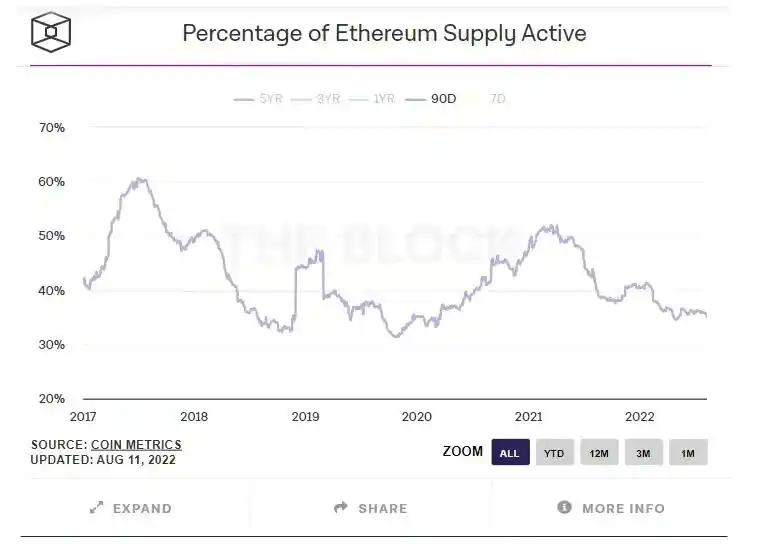
In the case of Ethereum, only about 1/3 of the Tokens are liquid (moved in the last 90 days). This means that once a steady-state staking ratio of close to 30% is reached, it becomes very difficult to attack the network, regardless of how much capital one has. An attacker would need to buy up the entire liquidity supply, which is impractical and nearly impossible.
Another important feature of this defense mechanism is that it is relatively price-insensitive. Because the limiting factor for the attack is the liquidity supply, not the currency, it is not easy to attack the network at a low price. If there is not enough liquidity supply (measured as a percentage of total Tokens ) to buy, it does not matter how cheap each Token becomes, because the limiting factor is not price. This price-insensitive defense mechanism is important to stop the potential negative feedback loop that price declines can create.
In the case of PoW, there is no such defense mechanism, except that it is 20 times less efficient. Each hardware unit may be harder to obtain than the next, but there is no direct correlation between them, and even if there is a correlation, the correlation is weak. Importantly, as the number of hardware units required decreases linearly with price, and the supply of hardware units does not change, it becomes easier to attack at a lower price.
It is not as "reflexive" as the PoS liquidity supply defense.
Other advantages of PoS include better energy efficiency and better recovery mechanisms/Another misconception about PoS is that it drives centralization by rewarding large stakers instead of small stakers. We believe this is incorrect.
While large stakers receive more staking rewards than small stakers, this does not drive centralization. Centralization is the process by which large stakeholders increase their stake percentage over time.
This is not the case in a PoS system. Since large stakers start out with more stake, greater rewards do not increase their percentage of the pool. For example, if there are 10 ETH between two counterparties, counterparty X has 9 ETH and counterparty Z has 1 ETH. X controls 90% of the stake. After a year, X will receive 0.45 ETH and Z will receive 0.05 ETH. X received 9 times the reward as Z, but X still controls 90% of the stake and Z still controls 10%. The proportions did not change, so no "centralization" occurred.
Most people view ETH and BTC as completely different assets because they view ETH as a decentralized SoV (replacing gold) while BTC is like gold. We believe that Ethereum is better suited to be a long-term SoV than Bitcoin in many important ways. Before we compare the two, it is first necessary to assess Bitcoin's current security model and how it will evolve over time.
As mentioned earlier, the security of the system comes from the cost of a 51% attack. As a PoW network, this cost is determined by the amount of money required to purchase enough hardware platforms and other equipment/electricity to control 51% of the hashing power.
This is roughly equivalent to the cost required to recreate the mining hash rate that currently exists on the network. In an efficient market, the total hash rate is the product of the issuance value that miners receive. Bitcoin is as secure as its issuance price. As mentioned earlier, this security is both inefficient and lacks the self-reflexive defense capabilities of a PoS system.
What would happen if Bitcoin issuance halved every four years? Assuming all other variables remain constant, the security of the system would decrease by 50%. Historically, this has not been a big problem because the value of issuance (and therefore securities) is a function of two variables: the number of tokens issued and the value of each token .
Since the price of tokens more than doubles every half cycle, this makes up for the decrease in issuance on an absolute basis. The absolute security of the network increases with each cycle, despite the number of tokens issued halving. However, this is not a sustainable dynamic long term for a number of reasons. First, it is unrealistic to expect the value of each token to continue to more than double with each cycle. Mathematically, exponential price increases are impossible to sustain over the long term.
To put this into context, if the price of Bitcoin doubles every halving, then in about 7 more cycles, the price of Bitcoin will exceed global M2. Eventually, the BTC price will stop rising at this rate. When it does, each halving will significantly reduce its security.
If the price of Bitcoin falls around the halving cycle, the reduction in security will be more significant and may trigger the negative feedback loop mentioned earlier. This security system is fundamentally unsustainable as long as the price is capped. The only way to solve this problem is to generate meaningful fee income.
This fee income can replace part of the issuance and continue to provide incentives for miners, thus providing security even after the issuance is reduced. The problem with Bitcoin is that fee income has been negligible and declining for a long time.
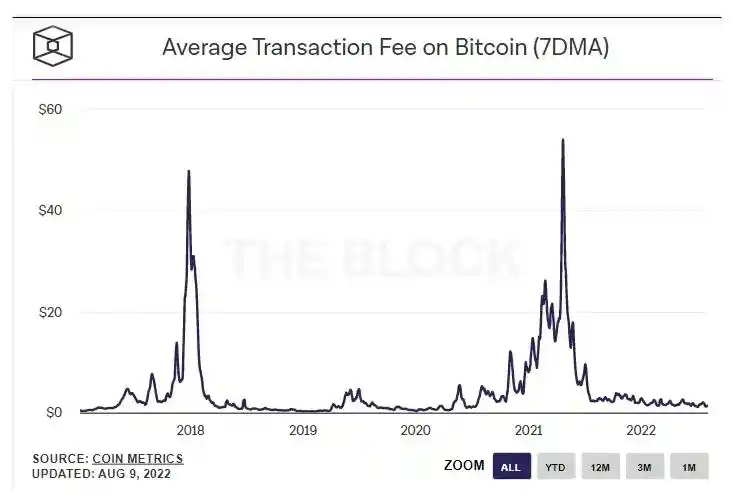
In our opinion, the only viable way to obtain long-term security is through significant fee income. Therefore, to be a sustainable SoV (alternative to gold), a system must generate fees. The alternative is emission, which will certainly lead to inflation that harms the utility of the SoV.
Long-term security is the most important characteristic of a SoV. For example, gold has captured the majority of the SoV market as long as almost all market participants believe that it will remain legal for a long time to come.
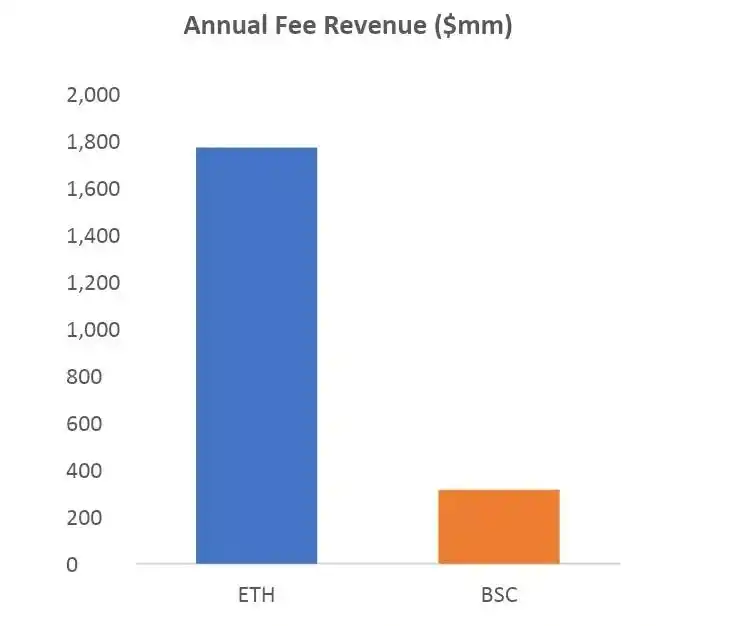
For a cryptoasset to be a successful SoV, it must also convince the market that it is extremely secure and its legitimacy is guaranteed. This is only possible if the security budget of the protocol is sustainable in the long term, which essentially favors PoS systems with a large and persistent fee pool. We believe the most likely candidate for this system is ETH. It is one of only two L1s with a sizable fee pool. The other, BNB, is extremely centralized.
Reliable neutrality is the second most important characteristic of a successful SoV. Gold has no loyalty or reliance on anything. This independence is what makes it successful as a SoV. For another asset to gain widespread adoption as a SoV, it must also be credibly neutral. For cryptocurrencies, credible neutrality is achieved through decentralization. Today, the most decentralized cryptocurrency is undoubtedly Bitcoin. This is mainly because Bitcoin has very little development work and the protocol is mostly rigid, but despite this, it is still the most decentralized protocol out there. If you wanted to kill Bitcoin today, it would be extremely difficult. If you tried to kill ETH today, it would still be extremely difficult, but probably easier than BTC.
However, Ethereum has a clear roadmap. We believe that while we are currently only in the middle of this roadmap, eventually (I estimate 8-12 years) this roadmap will be completed and the core development team will become less important.
At this point, ETH will be more decentralized than BTC, in addition to having far superior long-term security.
Contrary to popular belief, PoS naturally promotes decentralization more than PoW. Larger PoW miners gain clear benefits from economies of scale, which drive centralization. For PoS, scale is much less relevant because the cost of setting up a node is far lower than PoW equipment, and there is no real benefit to large-scale electricity because PoS requires more than 99% less electricity than PoW equipment. Economies of scale are an important factor for PoW, but not for PoS.
There are currently 400,000 unique ETH validators, with the top 5 holders controlling just 2.33% of the stake (not including smart contract deposits). This level of decentralization and diversity separates ETH from all other PoS L1s. Additionally, the top 5 mining pools today control 70% of the hashrate compared to BTC.
While some critics will point out that liquidity staking providers control the vast majority of Ethereum’s stake, we believe these concerns are overblown. Furthermore, we expect these concerns to be addressed with the Liquidity Staking Protocol, and for additional checks to be put in place to further guard against them.
To sum up, PoS is fundamentally a better consensus mechanism for crypto SoVs. This is why the merger will represent a major milestone on Ethereum’s roadmap, marking a critical node in its journey to becoming the most attractive crypto SoV.
The underlying reasons discussed above are why we support ETH/BTC trading for the long term, especially around the merger. However, liquidity, especially structural flow, will be the most important factor in determining price. It is the structural shift in deal flow triggered by the merger that makes this trade so attractive and why the merger is such a big catalyst. Historically, the structural flows of BTC and ETH have been very similar.
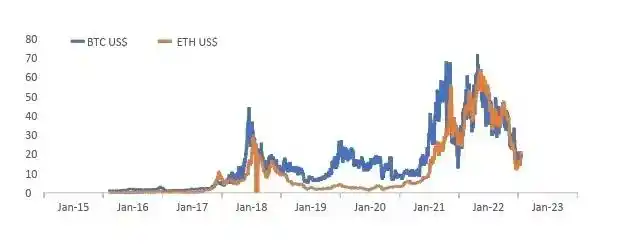
Despite ETH's smaller market cap, its issuance has been about 3x larger on a market cap weighted basis. This larger issuance makes it difficult for Ethereum to surpass Bitcoin in market cap, as it would require Ethereum to absorb 3x the daily USD-denominated supply. The chart above clearly shows a strong relationship. The values on the chart are the result of Token Issuance and Token Price. What happens if you reduce the Token Issuance variable, but want to retain that correlation? This results in you having to increase the Token Price.
So what should we expect when we reduce Ethereum’s Token Issuance variable by 90%? It’s not that the price should go up 10x to offset this drop, as the impact is not necessarily linear, but the relationship between them is worth considering.
In summary, after the merger, the passage of time will always be a tailwind for Ethereum and a headwind for Bitcoin. We believe that this immediate reality will be the main driver of the eventual reversal.
2. Staking Derivatives
Since Ethereum is a large ecosystem, many other areas will be indirectly affected by the merger. As an investor, consider the second and third order effects of certain catalysts to look for opportunities that may not be effectively priced in the market. Regarding the merger, there are many options, such as L2, DeFi and Liquid Staking Derivatives (LSD) protocols.
After a thorough review of the different alternatives, we concluded that the liquidity staking protocols would be the largest fundamental beneficiaries of this merger (even more than ETH).
The argument is simple. LSD protocol revenues are directly impacted by the price of ETH and multiple other merger-related factors. Moreover, shortly after the merger, their largest expense, the cost of subsidizing the liquidity pool between their holdings of derivative tokens and native ETH, dropped to effectively zero. At a high level, I expect a 4-7x increase in merger-driven ETH protocol revenues (assuming only a small increase in ETH price) and a 60-80% reduction in the largest expense. This is a unique and powerful fundamental impact.
We have to look at the revenue and fee models of these protocols. Let’s take Lido as an example, as it is the largest of the LSD protocols.
Note that these principles also apply to other players, as they are often very similar. Lido's revenue comes from a percentage of the staking rewards of its liquid staking derivative stETH. Lido receives 5% of all staking rewards generated. If a user deposits 10 ETH in exchange for 10 stETH, and generates an additional 0.4 stETH over the course of a year. The user keeps 90% of the 0.4, the validator keeps 5%, and Lido keeps the remaining 5%. It can be seen that Lido's revenue is purely a function of the staking returns generated by its LSD.
These staking rewards are a function of four independent variables: total ETH staked, ETH staking rate, LSD market share, and ETH price.
Importantly, staking rewards are the product of all four variables. If multiple variables are affected, it will affect the output. In other words, if you double one and triple another, the impact on staking rewards is 600%. All variables except market share are directly affected by the merger.
Total ETH staked could increase significantly from the current 12% to close to 30%, an increase of 150%. As mentioned earlier, the staking rate could increase from 4% to 5%, an increase of 25%. There is no reason to think that the merger will significantly affect LSD's market share, so we can assume that this is unchanged and has no impact. Finally, we assume that the price of ETH increases by 50%. The combined effect of these different variables is 250%*118%*150%= 444%, which is about a 4.4x increase in returns.
Expenses also dropped significantly. The biggest overhead for these LSD protocols is incentivizing the liquidity pool between LSD and native ETH. Given that there are no withdrawals yet, it is extremely important to create deep liquidity to manage large-scale flows between LSD and native ETH.
However, once withdrawals are possible, these incentives will no longer be needed. If there is a significant difference between the two, then arbitrage will occur and natural market forces will keep them relatively pegged as arbitrageurs buy LSD on dips. This will allow the LSD protocol to significantly reduce its issuance (fees), which will also greatly reduce the selling pressure on the Token .
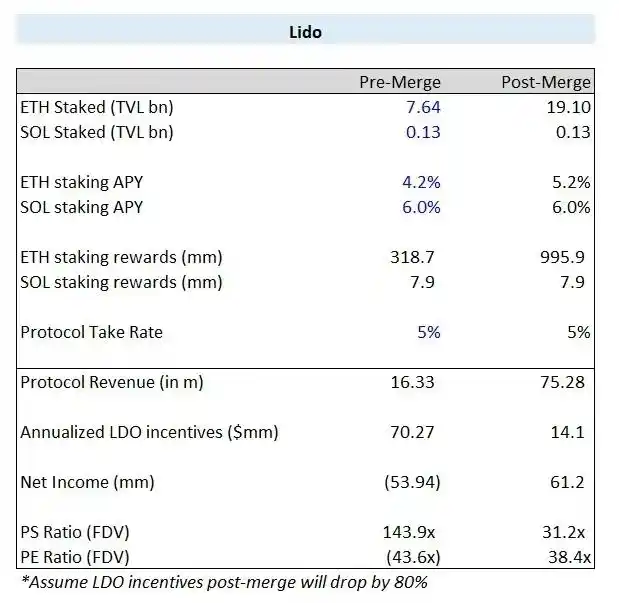
In the pre-merger data, LDO is trading at about 144 times revenue, but in the post-merger data, this will drop to about 31 times. While this is not cheap by traditional measures, it is attractive for a high-growth strategic asset in the crypto space where valuations are generally high. Importantly, this is actual revenue that the protocol will receive.
A common concern among LDO critics is that these revenues are not being passed back to holders. For this reason, they often compare the protocol to Uniswap.
While it is true that revenues are not being passed on to Token holders at this time, we do not believe this is a valid concern, nor do we believe the Uniswap comparison is correct - just because Token holders do not receive cash flows today does not mean they will not receive them in the future.
We believe that these revenues will be returned to holders one day. We also know that multiple large stakeholders agree on this issue. Furthermore, we do not believe that Lido should be returning cash at this time, and would actually be very concerned about the competence of management if they were to return cash. This is a very early business and is still in the early stages of growth. They need to raise cash regularly and are currently burning cash on a run rate basis (this will change after the merger).
Raising funds from investors to cover losses and then distributing protocol revenue to Token holders, thereby increasing losses, is unwise. This is like a startup still distributing early earnings to investors when revenue is not enough to cover expenses. This situation would never happen in traditional capital markets because it is irrational.
Many cryptocurrency participants are also concerned about Lido's dominant market share. They have 90% of the LSD market share, while stETH accounts for 31% of total ETH staked. While we believe that concerns around centralization are exaggerated, we still believe that Lido should maintain a share below 33% to eliminate any doubts about Ethereum's credible neutrality. In terms of the investment case for the protocol, we do not think the 33% market share cap is worrisome. In our view, Lido has many other growth vectors to pursue besides market share, and the investment is already quite compelling given its current share.
In summary, Lido is a critical infrastructure in the Ethereum ecosystem that has established product-market fit and dominant market share, and will continue to grow incredibly fast in the market. In our opinion, the concerns about the protocol are either misplaced or unfounded. Moreover, given its past and expected future growth prospects, it is reasonably priced and therefore one of the most worthwhile assets in the space.
While Lido is the market leader and largest player, there are two other LSD protocols Rocketpool (RPL) and Stakewise (SWISE) that are also worth considering. Each of these LSDs has many unique aspects and complex details that can be expanded. However, for ease of understanding, we will mainly focus on the main differences and further refine them in later discussions.
Both RPL and SWISE liquid staking protocols should benefit from any share that Lido cedes due to centralization issues. While we believe any loss in Lido shares will be modest, for smaller companies even a modest loss will equate to a large gain.
For example, if LDO loses 4% of its market share, RPL gains 2.5% of it and SWISE gains 1.5%, LDO will lose ~12% of its market share, but RPL will gain ~50% and SWISE will gain ~125%
The second largest player in the market, Rocketpool (RPL), has a unique staking mechanism and Token economy. To stake with RPL, validators must pair RPL with native ETH and need to maintain a minimum ratio between the two. This dynamic creates predictable and guaranteed demand for RPL as ETH staking participation increases and more validators adopt the solution.
Another benefit of RPL is the practice of validators being shared with other users, allowing the required ETH to set up a staking node to be reduced from the normal 32 ETH to just 16 ETH. This lowers the minimum, allowing smaller operators to set up nodes, and further incentivizes decentralization. This makes RPL a perfect complement to LDO, which should be a catalyst for RPL market share as they will be the main beneficiaries of Lido's effective market share.
Finally, Risk Management is another interesting alternative to LDO. Their model is very similar to LDO's, but they are increasingly focusing on institutional adoption, which should put them in a good position in the merged market. They also benefit from a highly driven and professional team that continues to execute well. Notably, they discussed plans to eventually achieve a "token holder-friendly" token economy, where token holders will directly receive additional protocol revenue.
Additionally, SWISE has gained traction with larger clients looking to diversify their staking offerings (DeFi insurance project Nexus Mutual alone recently approved a proposal that would increase their TVL by 20-25%). Because they are the smallest player with the highest valuation, they are likely the highest risk/reward investment in the category.
In summary, it is difficult to distinguish value within the teams. LDO is the cheapest and safest, but has the smallest market share upside. SWISE is the most expensive, but has the largest market share upside, and RPL is somewhere in between with the advantages of a unique Token economy and decentralized staking mechanism. Relative valuations are reasonable, which shows us that the market is effectively pricing in different opportunities.
We chose to own these three protocols. Because we believe LSD Token is the highest return of Ethereum merge-related investments. They may outperform ETH, but investors should expect higher volatility and lower liquidity.
Original title
Welcome to join the official BlockBeats community:
Telegram Subscription Group: https://t.me/theblockbeats
Telegram Discussion Group: https://t.me/BlockBeats_App
Official Twitter Account: https://twitter.com/BlockBeatsAsia
 Related Articles