



PoS+ sanctions may be the biggest risk in the history of Ethereum
Original title: "Resistance to censorship and acceptance of censorship, Ethereum may fall into a long-term regulatory dilemma. "
Original author: Liu Ye Jinghong
This article comes from the WeChat public account: Weissman notes
This This article does not have a strict conclusion, it is more for discussion and communication. Moreover, this article seems to discuss few things in the Chinese-speaking area, and I have not conducted rigorous and prudent research, and I am limited to information sources collected from public channels.
The recent major event in Ethereum is that the merge is ready to start, but under the iceberg of the merge, the waves are actually rough. Since I often discuss about KOLs in the English department, I have summarized some recent events that are considered to be very important and hidden under the merge.
Interested readers can delve into this beacon chain anti-censorship thing.
The United States is promoting protocol-level review
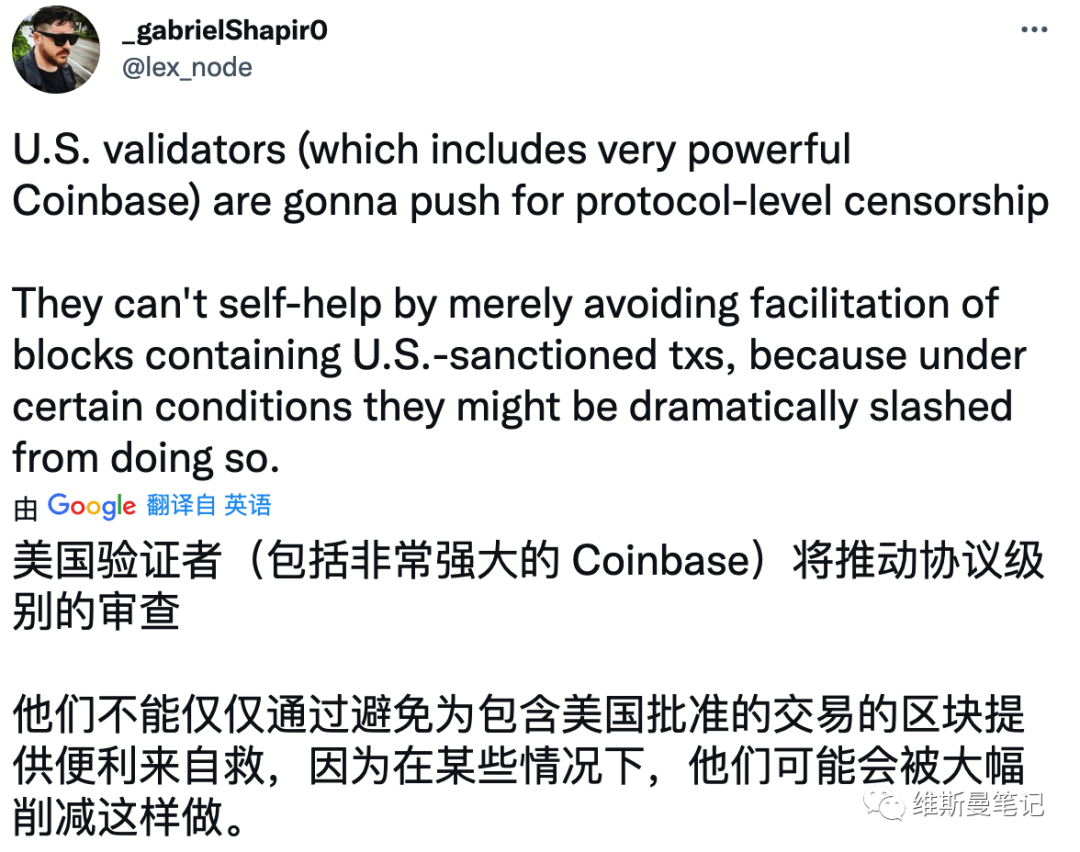
First of all, back to two days ago, the well-known KOL @lex_node tweeted that "US validators (including the very powerful Coinbase) will push for protocol-level censorship".
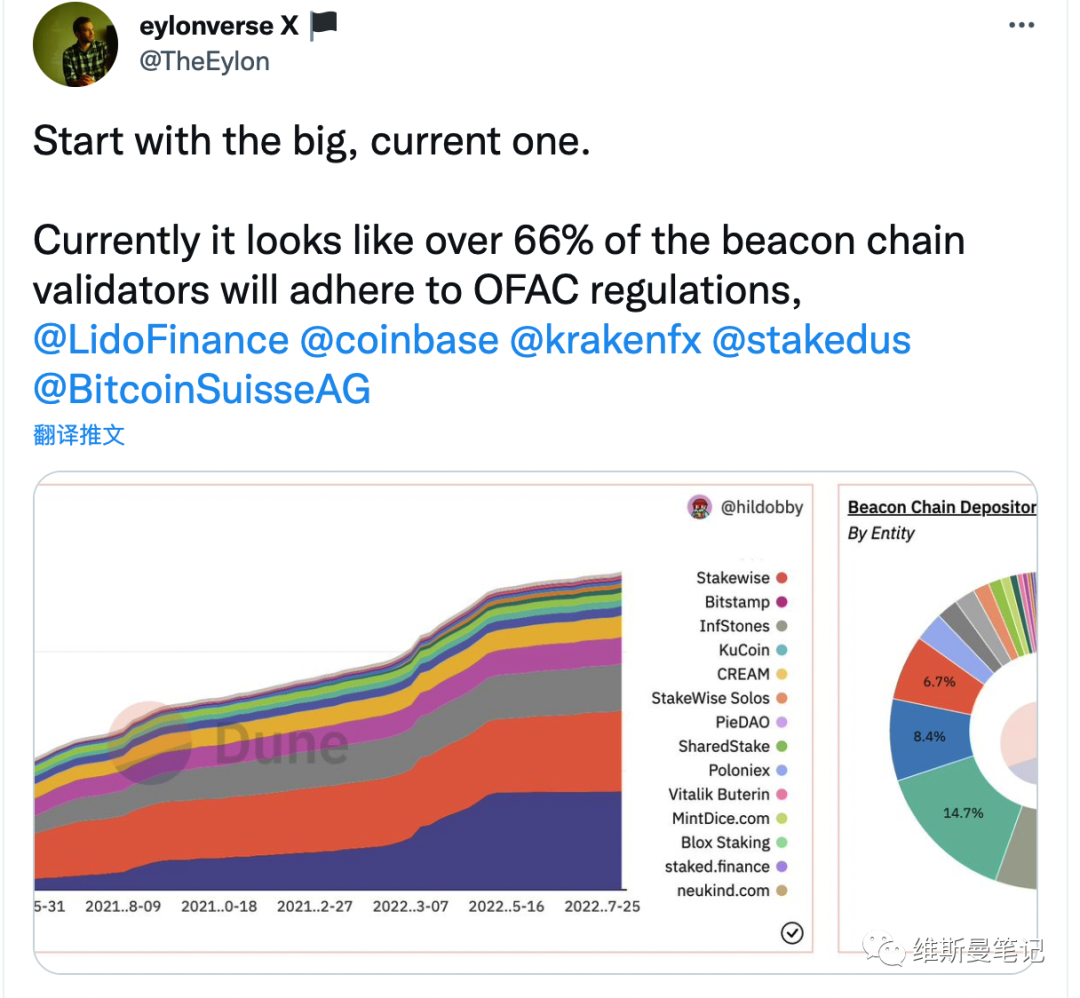
The reason for this remark is that there are about more than 66% will comply with OFAC regulations.
OFAC, the Office of Foreign Assets Control of the US Department of the Treasury, whose mission is to administer and enforce all economic and trade sanctions based on U.S. national security and foreign policy.
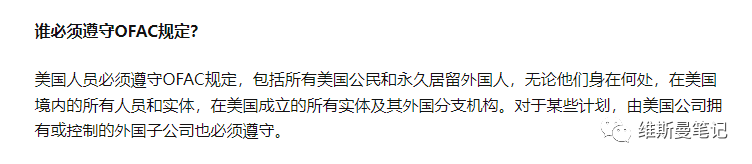
In other words, if it is necessary for OFAC to impose sanctions on an Ethereum account, it is completely achievable. Sanctions as now against Tornado.
More directly, OFAC can theoretically control whether an Ethereum account can perform transfer transactions and other behaviors. Because once your Ethereum account is sanctioned by OFAC, the verifier node of Ethereum will not execute the corresponding block packaging according to the relevant policies. This means that the corresponding account is disabled at the blockchain level.
Why are blockchains no longer censorship resistant?
Everyone’s established impression of the blockchain is that it has a good anti-censorship mechanism, but why it has developed to the present can be seen through a series of judicial cases and sanctions , the blockchain does not reflect a good anti-censorship mechanism.
There are two core points. First, as the blockchain industry develops and grows, it is inevitable to meet the corresponding regulations. From the increasing market share of USDC, it can be seen that both institutional investors and individual investors tend to use compliant stablecoins and Web3 protocols.
Second, U.S. regulators not only keep pace with the times in technology, but even have a better understanding of blockchain than most industry professionals.
Specifically, a blockchain like Ethereum is decentralized and very difficult to supervise and review. But after Ethereum promotes merge, regulators can conduct block/transaction review through validators of the beacon chain.
From the current status quo, whether it is the verifier on the beacon chain or the verifier after the future merge, they all rely on institutional verification/project verify. Such as Coinbase, Lido, KRAKEN, BITCOIN SUISSE and so on.
However, such nodes will be subject to OFAC regulations and must respond to regulatory policies. In other words, because validator nodes are affiliated with US agencies, they need to respond to the US government's review of the Ethereum blockchain. And it’s at the protocol level, down to the review of every transaction.
So what to do?
Fortunately, V God and the Ethereum Foundation are not willing to see Ethereum being reviewed by the US government at the protocol level. are committed to opposing such censorship.
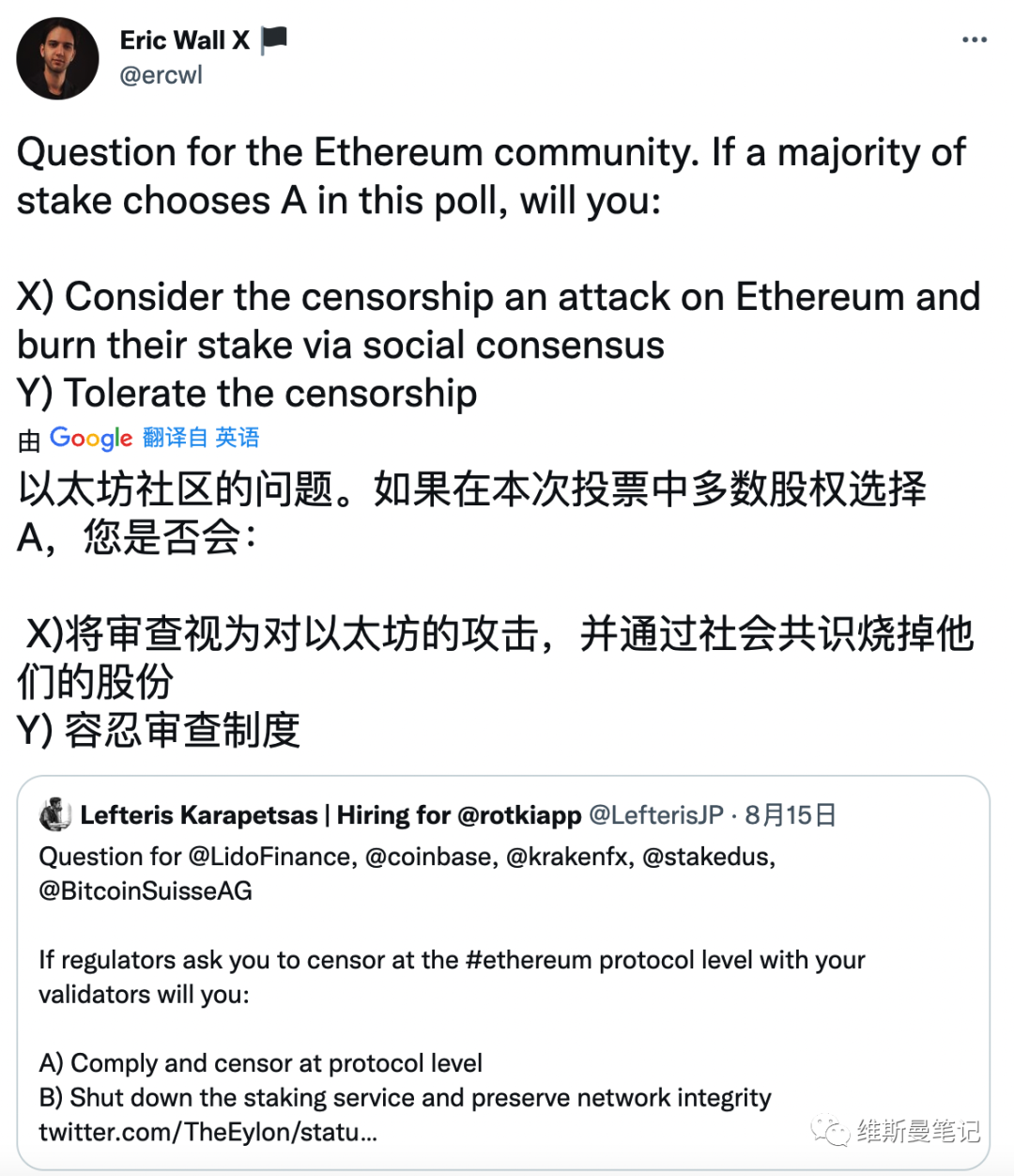
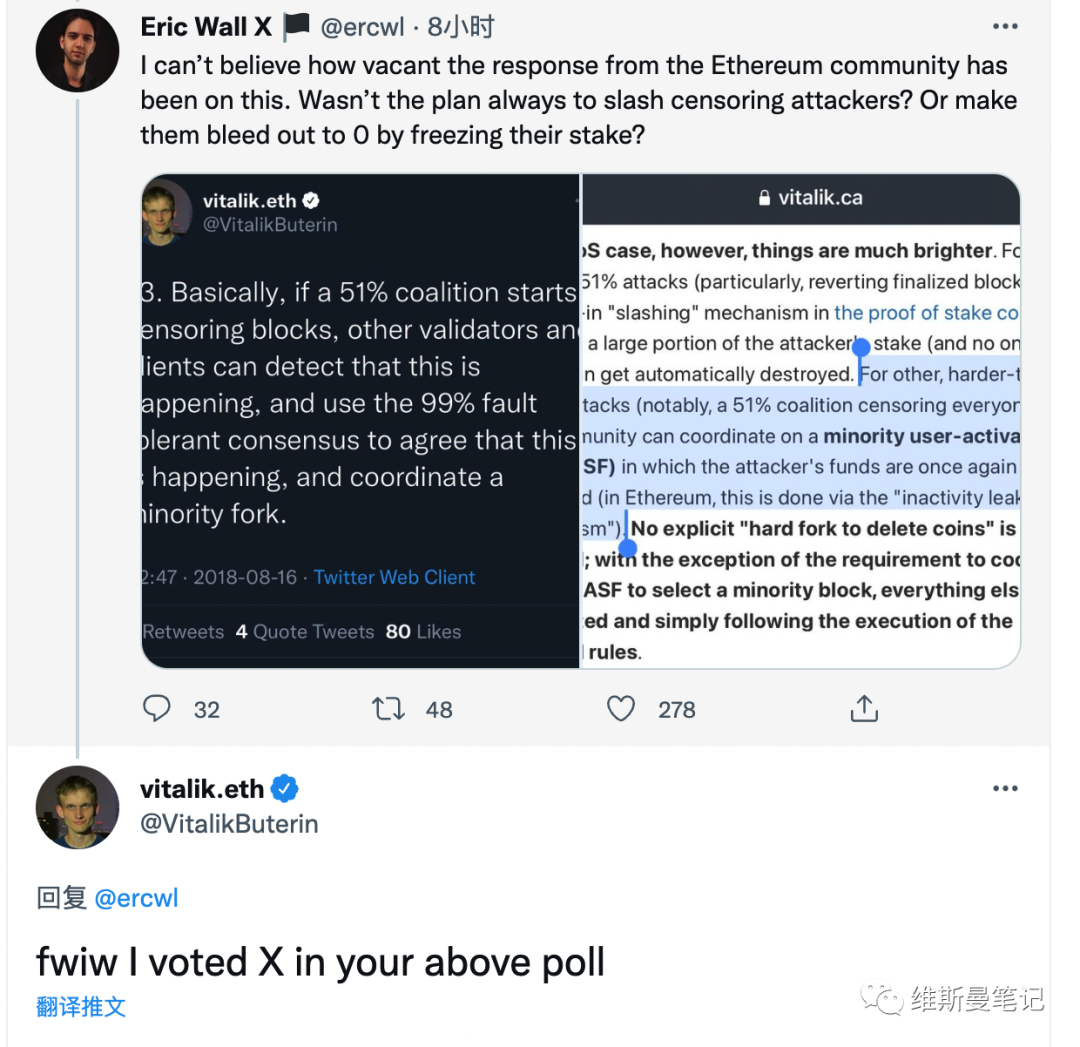
In the latest Ethereum community survey on Twitter, V god voted for X, that is, he believes that "the review is regarded as an attack on Ethereum and passed The community consensus destroys their node."
Of course @LukeYoungblood, creator of Coinbase’s beacon chain staking service, tweeted in private The form describes the node operation mechanism of Coinbase.
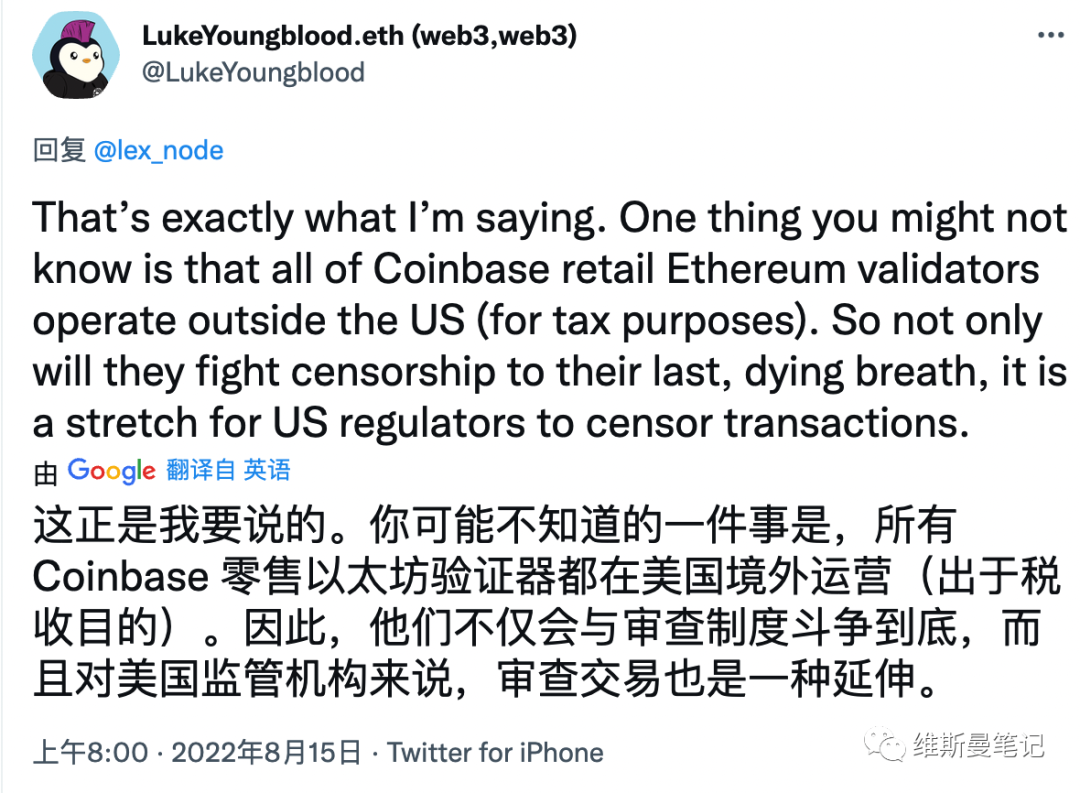
However, looking back at OFAC's jurisdiction, it seems that regardless of whether the validator is inside or outside the United States, As long as the main body of the company, that is, Coinbase, is within the scope, it must be subject to supervision.
On the technical side, Vitalik and the Ethereum Foundation have recently been actively researching the Block Proposer Separation methodology. scheme, namely BPS, the block proposer separation scheme.
If you are interested in technical solutions, you can refer to the following information:
https://writings.flashbots.net/writings/why-run-mevboost/
https://ethresear.ch/t/proposer-block-builder-separation-friendly-fee-market-designs/9725
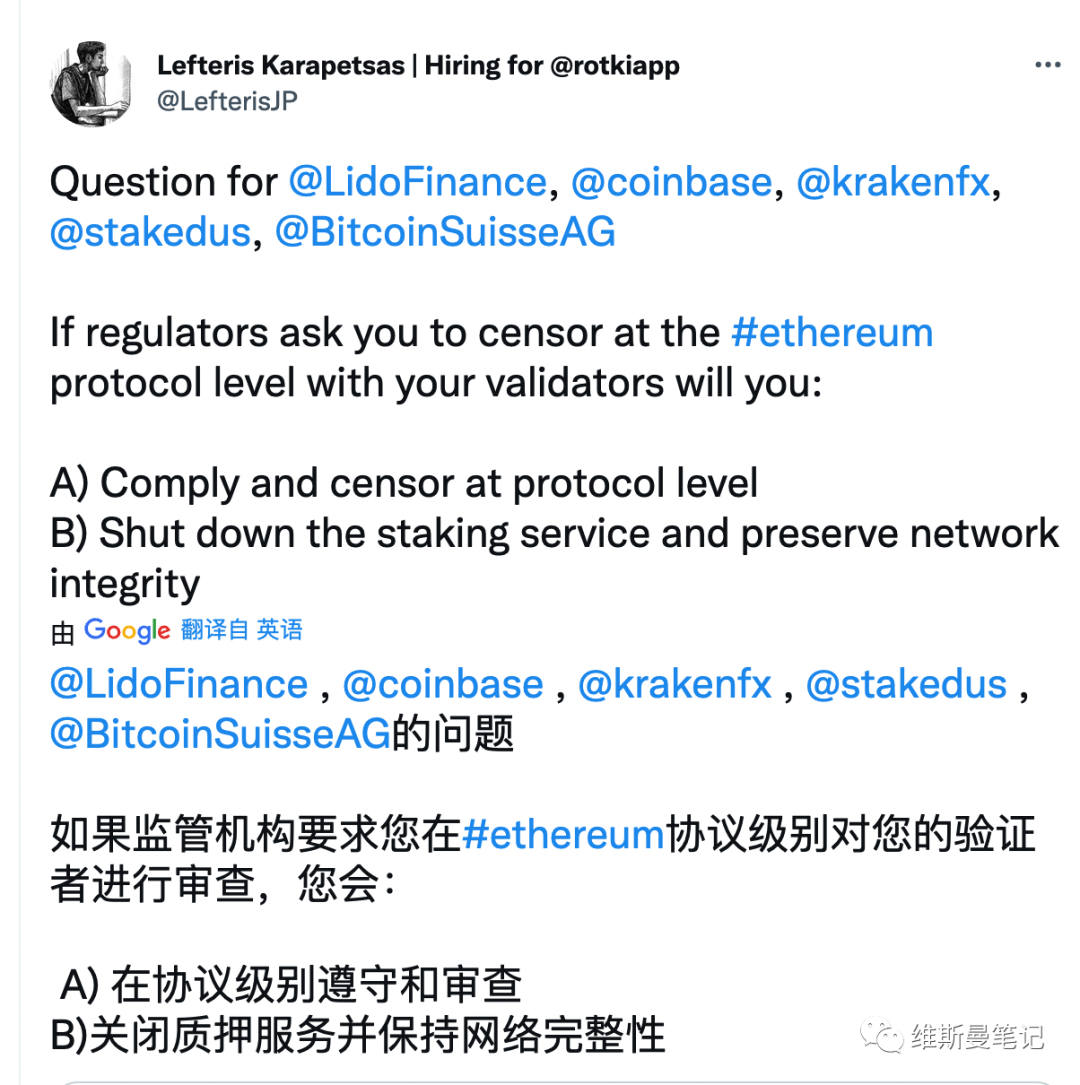
Including some well-known KOLs are also asking the major pledge institutions through public channels, but they have not received an answer so far.
Summary
Ethereum is now The anti-censorship storm carried out, in fact, I think the influence is far higher than merge. Strictly speaking, merge is just a change in the economic model of Ethereum. However, the anti-censorship storm of Ethereum has shaken the foundation of the entire blockchain industry. Once the anti-censorship storm of Ethereum is on the table, it will inevitably cause the blockchain consensus to split.
Some of them are mainly American institutions, advocating that the United States should control and review the blockchain. The other part is dominated by idealistic developers, working on blockchain anti-censorship. And the various blockchain-based applications in the middle need to stand in the middle.
Perhaps, a huge struggle between resistance to censorship and acceptance of censorship has begun.
Welcome to join the official BlockBeats community:
Telegram Subscription Group: https://t.me/theblockbeats
Telegram Discussion Group: https://t.me/BlockBeats_App
Official Twitter Account: https://twitter.com/BlockBeatsAsia







