Who is the developer of Monkey Land? NetEase also voted

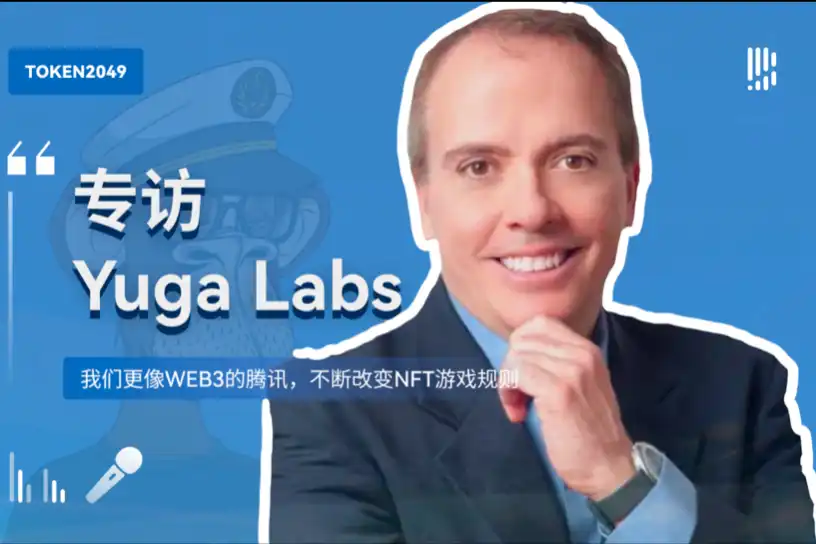
Recently, the Yuga Labs metaverse project Otherside completed the "First Trip" internal test, which attracted the participation of many players (Voyagers, Otherdeed plot owners), the highest More than 4,000 people were online at the same time.
In this test, Voyagers can participate in a variety of activities, in a game specially designed for the test Navigate in the venue, experience actions such as walking, running, jumping and dancing, or display the NFT you hold. Although the current functions are not perfect enough, for Otherside, which was officially launched in May this year and built by the developer of the Improbable metaverse, the response of players to this internal test is generally good.
Improbable is one of the best funded European video game development companies in recent years and has also received Investments from a16z, SoftBank and NetEase. Using Improbable's technology, Otherside will enable more than 15,000 people to simultaneously interact in a single virtual space and experience rich, immersive gameplay powered by AI and physics, while players will break through barriers of scale, bandwidth and rendering , creating more new gameplay and social possibilities. For Improbable, what else is worthy of attention, BlockBeats will give readers some introductions.

The metaverse platform founded by Cambridge students
Computer Science major Herman Narula met another Improbable co-founder 10 years ago Rob Whitehead, both were studying at Cambridge University at the time. Narula has always been fascinated by games and the online world, he sees games as part of their generation, and the relationships he builds in games are important to him. Meanwhile, Whitehead is making money selling items from the online game Second Life.
As avid gamers, though, both Narula and Whitehead wondered why they were playing Game complexity is limited. Why can't more players play together at the same time? What's holding the game back from scaling?
When they graduated in 2013, they launched Improbable with their third co-founder, Peter Lipka , and try to solve this problem.

From the beginning, what Improbable wanted to do was to create large games and bring large numbers of players into a single world. Even though games have made huge strides in visual effects, the amount of information that can be exchanged between different players and entities in a game is still limited, which is a complex data and networking problem.
Narula explained that adding 10 players to the game means sending 100 times more data. Their need to render a large number of animated characters on screen, each with unique animation states and potential customizations, required building a server architecture that could handle the density of game logic, artificial intelligence, and world physics, At the same time, the development experience is still recognized by designers and programmers.
“As Cambridge graduates, we naively thought that this could be solved quickly , which will probably take about a year. But in reality, it took us about 10 years to build the solution we imagined," Narula said.
Over the years, Improbable has focused on the fundamental technical challenges of scale and complexity in the game world, aiming to Processing low-latency, high-capacity, high-throughput data replication means that potentially 10,000 players will be able to join a virtual space with higher levels of simulated content.
In 2015, Improbable successfully obtained $20 million in Series A financing from a16z and participated in the investment Parties include Horizons Ventures and Temasek. In 2017, Improbable received another US$502 million Series B financing led by Softbank, as well as follow-up investment from Horizons Ventures and a16z. The valuation reached US$2 billion. Improbable has also become the most well-funded company in recent years. One of the European video game development companies.
After seeing the huge technical potential of Improbable, in order to enhance its game manufacturing for the Asian market NetEase also made a strategic investment in Improbable in 2018 to help produce and publish games based on its game development platform SpatialOS that transcend the limitations of a single server architecture.
Multiplayer Game Service IMS
Additionally, Improbable is passionate about helping game developers build their own interactive virtual worlds. From its first product, SpatialOS, to the acquisition of online game hosting company zeuz and multiplayer co-development studio The Multiplayer Guys for game server operations and orchestration, Improbable is constantly advancing and enhancing its offerings to developers.
Since making a multiplayer game is a complex process, Improbable hopes to alleviate Development tasks for private games and premium content. Therefore, it launched the Improbable Multiplayer Services (IMS) brand, which aims to provide game developers with back-end technology and professional services for making online multiplayer games as a service to solve common development challenges.

By integrating existing products - SpatialOS network engine and zeuz game server operation and orchestration, with further backend and professional services aimed at developing and operating GaaS games, IMS will support developers in more fields and free them to be creative by removing the burden of evaluating, customizing and integrating third-party products.
And, to help developers struggling due to the incompatibility of new engines and services introduced by Unity Improbable and Epic Games launched a $25 million joint fund to help developers transition to a more open engine, service, and ecosystem.
In terms of security, by combining gaming and digital entertainment innovations with computational modeling, artificial Combining intelligence and data analytics, including a partnership with Microsoft's security and intelligence business, Improbable's security division provides a cutting-edge synthetic environment of enormous scale and complexity. These simulations strengthen defenses by allowing users to explore complex security threats in a virtual world before taking action in the real world.
Based on this, Improbable is deeply involved in making some of the largest and most innovative Web3, supported areas Blockchain and GaaS multiplayer game studio trust, it provides a new, open, expanding ecosystem of interoperable products, services and expertise, and publishes for approximately 60 games worldwide, including Metaverse Provider support, half of which are AAA studios, Yuga Labs among them.
With IMS, Improbable is changing the rules of the game by providing end-to- An end-to-end solution that enables developers to offload tasks such as evaluating and integrating products, freeing up time and in-house skills to focus on making great games.
Creating a Metaverse for Yuga Labs
Nowadays, more and more people believe that the metaverse is the future of gaming.
The metaverse is a huge expansion of society, essentially enabling everyone to increase and The new reality of democratizing value creation. People build interconnected user experiences in the virtual world of the metaverse, meaningfully expanding their life potential, providing new opportunities for economic, social and cultural change; at the same time, these fulfilling online experiences will also increasingly permeate people. In daily life, further enrich such as on-site interactive activities, entertainment and social spaces.
As companies and individuals around the world begin to create, experiment and participate in increasingly complex metaverses Immersive experience, with ten years of experience, Improbable will be able to provide the necessary infrastructure, including technology, expertise, creativity and services, to help users unleash the potential of virtual worlds and metaverses.
Otherside, a well-known metaverse project under Yuga Labs, is a technical support provided by Improbable and is currently The development of a gamified, interoperable metaverse that combines massively multiplayer online role-playing games (MMORPGs) and Web3-enabled virtual world mechanics to open the door to new experiences in gaming, entertainment, art, and more.

In it, NFTs can become playable characters that thousands of people can play together at the same time. And Yuga Labs will also provide an SDK that allows creators to make things for Otherside and sell them on the game market: this is not just characters, but also clothing, tools, structures and even games.
In this regard, Improbable CEO Narula said that Otherside will subvert people's thinking and at the same time subvert Decades of ideas about games and open platforms.
Interoperable Metaverse Network M²
< /p>
In April this year, Improbable also announced the launch of a new project M² (MSquared), an interoperable metaverse network designed to In creating interconnected virtual worlds and experiences for users to socialize, play games, attend concerts and create value over time.
The M² Network will combine Improbable Morpheus technology with The combination of new services governed by Web3 brings together sports, music, fashion and entertainment companies, existing communities and fans, enabling them to interact with unprecedented fidelity in dense virtual spaces and supporting Integration of existing worlds as well as new projects.

The Morpheus technology, an evolution of Improbable's earlier SpatialOS product and at the heart of M², addresses the density and player presence challenges of real-time online experiences to enhance social interaction in virtual spaces Interaction and presence to create great experiences in games and live events, as well as building, operating and serving new virtual worlds for other businesses in an open metaverse.
Moreover, Morpheus enables more than 10,000 real users to , and interact in a lag-free environment. The platform now handles more than 350 million communication operations per second (ops), and was first demonstrated at a live event with thousands of players in 2021.
For example, in the multiplayer game Scavengers developed by the original Improbable’s Midwinter Entertainment game studio, the experimental Game mode ScavLab showcased Morpheus technology live, allowing more than 4,000 people to interact simultaneously in a shared game world. And last November, a Metaverse fan event with K-Pop star AleXa, where fans danced on a giant virtual stage and interacted with the artist in a groundbreaking metavirtual experience.
In addition, M² has completed financing of US$150 million, led by a16z and SoftBank Vision Fund, At a post-money valuation of $1 billion, the financing will be used to develop the video game based on blockchain and Metaverse technology.
Currently, Improbable is enabling new types of shared immersive experiences that will accelerate a variety of emerging user behaviors, including fair player-managed communities, complex player-driven economies And open developer-driven experience, and these have gradually taken root in the Web3 world, Improbable may create a new way to connect Web2 and Web3 across the interconnected virtual world to entertain, create and discover value.
Welcome to join the official BlockBeats community:
Telegram Subscription Group: https://t.me/theblockbeats
Telegram Discussion Group: https://t.me/BlockBeats_App
Official Twitter Account: https://twitter.com/BlockBeatsAsia

 Related Articles