1 euro < 1 dollar, it is not only the exchange rate that falls below
Original source: WeChat public account Yuyuan Tantian
We have witnessed history again:
On July 13, the euro fell below 1:1 against the dollar for the first time since December 2002.
This is not just a change in the euro itself - the euro, which came out after a long discussion and planning, not only has currency functions, but also bears the responsibility of European countries Long-cherished wish:
Lead Europe towards political and economic integration through currency integration.
Euro supporters believe that the European integration process driven by the euro will reduce the risk of war and crisis, allowing European countries to Frictions and problems may be resolved through peaceful means.
However, what we see in Europe today is precisely wars and crises. "Nationalization" has also made the euro farther and farther away from its own mission.
The pusher is the United States.
In the more than 20 years since the birth of the euro, the United States has never been absent at some key nodes that affect the exchange rate of the euro against the dollar.
Now, the exchange rate of the euro against the US dollar has fallen below 1:1. process of transformation.
This is a trend chart of the exchange rate of the euro against the US dollar this year.
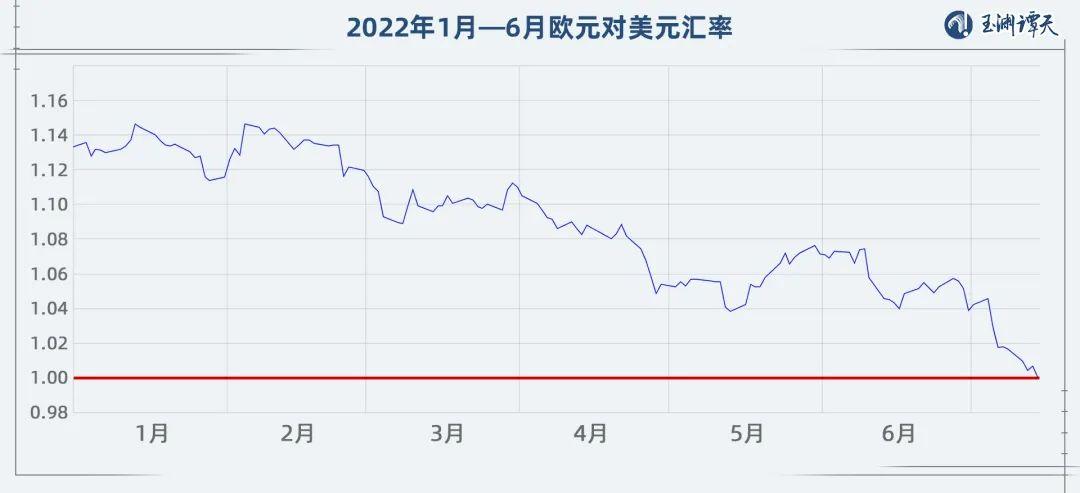
It can be seen that in the past 6 months or so, the exchange rate of the euro against the US dollar has shown a downward trend as a whole. Since the United States entered the interest rate hike cycle, it has formed a siphon effect on the world, and the currencies of various countries have generally depreciated against the US dollar, and Euro is no exception.
But it can be clearly seen that the euro has experienced several sharp falls.
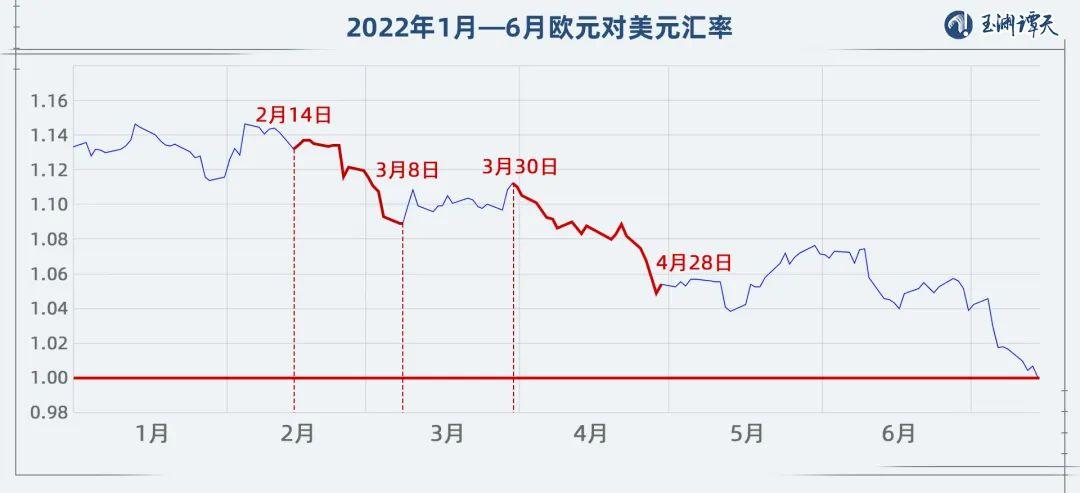
The time of the first sharp decline, from February 14th to March 8th - Russia Before and after the escalation of the Ukraine conflict. The instigator and biggest pusher of the Russia-Ukraine conflict is the United States.
More than a month after the escalation of the conflict between Russia and Ukraine, more than 27 billion US dollars of funds have flowed out of the European stock fund market. At the same time, just in the first three weeks after the escalation of the conflict between Russia and Ukraine, more than 40 billion US dollars of funds flowed into the United States.
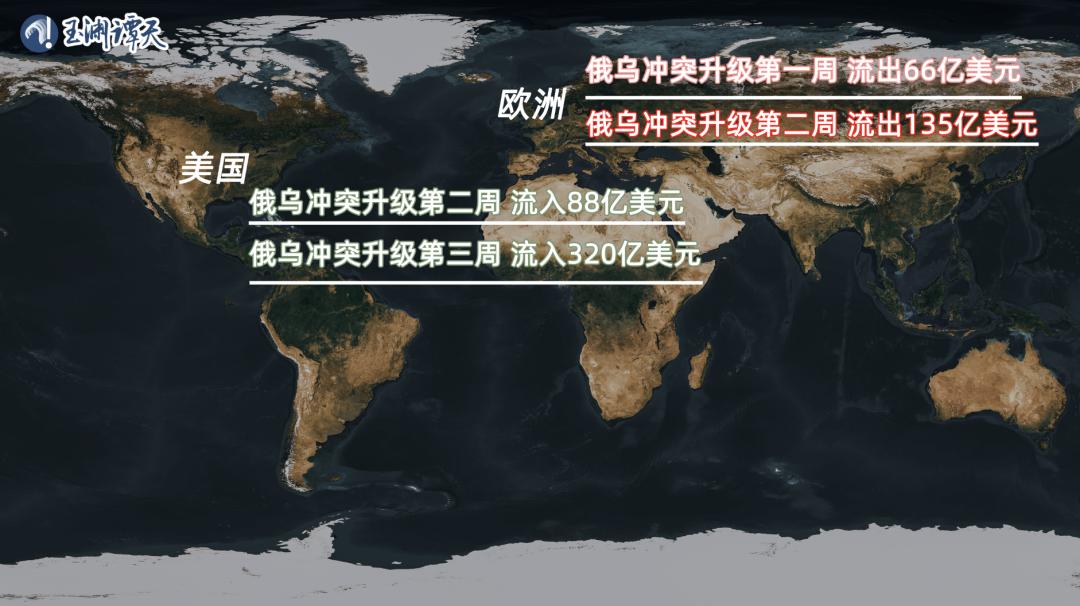
As the weathervane of the market, the flow of these funds has caused panic to spread in the European market.
Subsequently, the United States focused on the key points of European countries and used a killer trick-provoking European countries to sanction Russian energy. The energy crisis triggered by the sanctions has caused structural damage to the European economy, again hitting the euro hard.
The damage was most evident in Germany.
According to the latest data released by the German Federal Statistical Office, in May this year, Germany experienced a trade deficit of 1 billion euros for the first time in more than 30 years.
You know, as a traditional industrial power, Germany has always maintained a trade surplus relying on the export of automobiles, machine tools and other industries. The reason for the deficit is the sharp rise in energy prices caused by the energy crisis—for an energy-importing country like Germany, the cost of imports has increased significantly, resulting in higher imports than exports.
The increase in the price of export commodities cannot keep up with the increase in energy prices, which will inevitably reduce the profits of German foreign trade companies. Nearly one-third of the employed people in Germany are engaged in export-related jobs - one can imagine the pressure on Germany.
As an economic powerhouse in the Eurozone, the German economy is also a bellwether of the Eurozone economy. Germany's plight undoubtedly cast a shadow over the European economy.
The energy crisis is still consuming the future of the European economy.
Dong Yifan, an expert on European economics at the China Institute of Contemporary International Relations, told Mr. Tan that the EU originally wanted to promote digital transformation and green transformation, but now, these financial resources It is necessary to lean towards energy subsidies and other aspects, which will cast a shadow over the competitiveness of the European economy in the next one to two years or even longer.
The euro, which has suffered multiple blows, has to face a more difficult problem:
The latest data shows that the US consumer price index (CPI) in June increased by 9.1% year-on-year, the increase hit a new high in nearly 41 years. The market is pricing in a 75 basis point chance of a 100 basis point rate hike by the Fed.
What about the euro? This is another problem for the ECB.
Without raising interest rates, Europe can only watch assets flow into the United States, and the euro exchange rate will fall further. At the same time, inflation in the euro zone will not be eased.
What if the interest rate is raised?
Rising interest rates will put more pressure on the already weak European economy.
Yu Xiang, a senior researcher at the China Construction Bank Research Institute, told Mr. Tan that the stubborn disease of the European economy is that the economy itself lacks endogenous growth momentum and is highly dependent on energy sources Imports, fiscal policy and monetary policy have long been divided. These problems are further exacerbated under the current background of high global inflation and the conflict between Russia and Ukraine. In the future, the European economy will face the pressure of sluggish growth and rapid rise in prices.
The conditions for raising interest rates in Europe are not as mature as those in the United States, and a faster rate hike will hurt the European economy.
What is more serious is that rising interest rates will increase the borrowing costs of euro zone countries, which for some highly indebted countries, Undoubtedly a catastrophic blow.
Italian Prime Minister Draghi's announcement that he will resign is a signal. Data show that Italy's debt scale accounts for more than 150% of GDP, and raising interest rates will undoubtedly increase the risk of its debt default.
It is embarrassing that Italian Prime Minister Draghi served as the president of the European Central Bank 10 years ago. , Draghi said, to defend the euro at all costs. Now, he chooses to resign and leave. And the debt crisis may have to make a comeback in Europe.
Inflation, energy crisis, exchange rate drop, all kinds of factors are intertwined, and the European economic outlook is becoming more and more uncertain. This pessimism started to spread further when the euro fell below parity against the dollar. Now, the American media has begun to hype the "Euro Recession Theory".
The United States does not know what impact the United States will have on the world when it enters the interest rate hike cycle. Taking the opportunity to hit the European economy will undoubtedly push the euro to a dead end.
Why does the United States not see the euro?
The answer is simple, before the emergence of the euro, the dollar dominated. And the United States has repeatedly used the special status of the US dollar in the international system to harvest the world.
The euro broke this situation. From the moment it was born, it has automatically become the second largest currency in the world, and it has provided another possibility for the international monetary and financial system - the possibility of choosing a currency other than the US dollar.
Facing the challenger, the United States tried its best to suppress it and even provoked a hot war in Europe. This is not the first time the United States has done this.
This is a trend chart of the exchange rate of the euro against the US dollar since its inception.
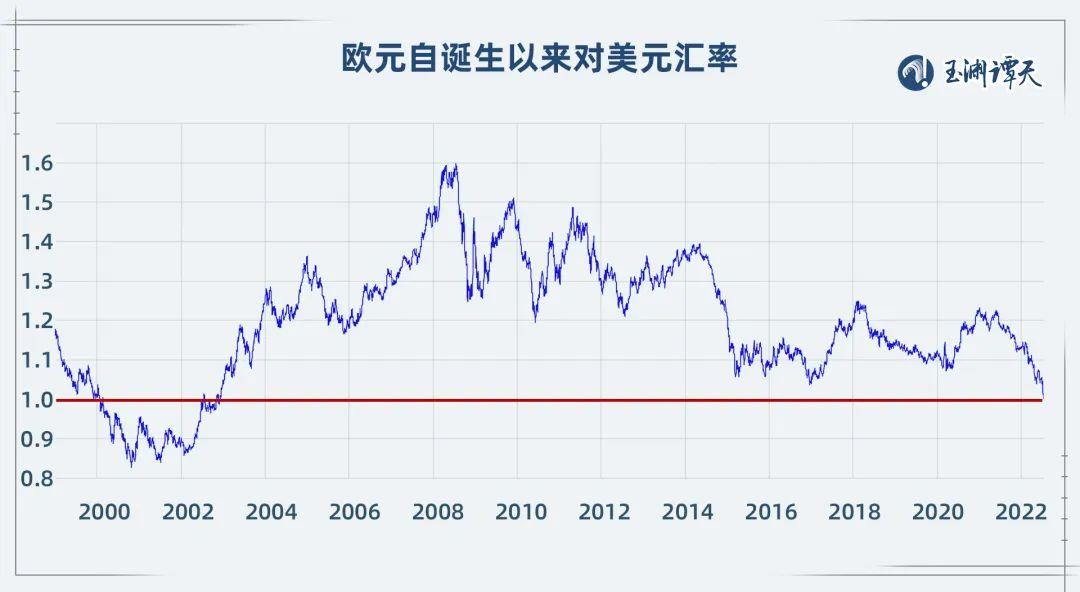
It can be seen that the exchange rate of the euro against the US dollar, which has just been born, has experienced a wave A cliff-like fall.
At that time, the total GDP of the euro zone countries was higher than that of the United States, so there was no reason for the euro to plummet all the way. All of this is about America.
On March 24, 1999, under the impetus of the United States, NATO bypassed the UN Security Council and launched an attack on Yugoslavia in the name of "avoiding humanitarian disasters". air raid.
The market is the most sensitive. A conflict is enough to change the situation in the capital market, and it will also cause exchange rate fluctuations.
After a war, the exchange rate of the euro against the U.S. dollar plummeted, and it has been hovering at the bottom ever since. Until July 2002, the exchange rate of the euro to the dollar returned to the 1:1 mark. The euro has also begun to gain a firm foothold in the international market.
In the same year, the chief market analyst of the Organization of the Petroleum Exporting Countries also stated that the EU’s oil purchases were more than that of the United States, and the balance of payments was more balanced, suggesting that the Organization of the Petroleum Exporting Countries Oil transactions settled in Euros.
In addition, Russia, Indonesia, Japan, South Korea and other countries have also made plans to increase the proportion of euro reserves. The euro is getting more and more attention, and its exchange rate against the U.S. dollar is also rising.
Yu Xiang told Mr. Tan that the daily fluctuation of the exchange rate is determined by the market mechanism, but the deeper determinants are comprehensive national strength, development prospects and macroeconomics Regulatory ability. The outside world pays attention to the trend of the euro, but pays more attention to the strategic autonomy and macroeconomic trends of the EU and the euro zone.
The higher exchange rate of the euro against the U.S. dollar shows that people are more optimistic about the euro zone countries than the United States. Naturally, this is not what the United States wants to see. This time, Wall Street capital has become a tool for the United States to intervene in the market.
In 2001, Greece joined the Eurozone. At that time, according to the treaties of the European Union, countries joining the euro zone must meet two basic conditions-the country's budget deficit must not exceed 3% of GDP; the debt ratio must not exceed 60% of GDP.
Greece did not meet these two hard conditions. At this time, Goldman Sachs said it could help Greece solve the problem. But the method used by Goldman Sachs is to make false accounts. In the process, Goldman Sachs also received a benefit fee of 300 million euros.
In 2009, under the impact of the financial crisis, Greece’s debt problem could no longer be concealed, and other countries in the euro area were also implicated. This outbreak.
When the debt crisis spread in Europe, Goldman Sachs also collaborated with Wall Street to profit by shorting the euro.
After such a "snipe" by Wall Street, the exchange rate of the euro against the US dollar fell off a cliff. In the next few years, the exchange rate of the euro against the U.S. dollar will also rise in stages, but it will never be able to reproduce the scene of the year. This situation has continued to this day. Under the shock of the Russia-Ukraine conflict, the exchange rate of the euro against the dollar even fell below parity.
Looking back at the history of the euro, since the birth of the euro, whenever the development of the euro is improving, the United States will always attack the euro. Whether it is using financial means or directly provoking a hot war, the purpose of the United States is to undermine European unity and weaken European integration.
This is the game behind the exchange rate changes between the euro and the U.S. dollar. Europeans should understand.
Otherwise, it will not only be a tragedy for the euro, but also a tragedy for Europe.
Welcome to join the official BlockBeats community:
Telegram Subscription Group: https://t.me/theblockbeats
Telegram Discussion Group: https://t.me/BlockBeats_App
Official Twitter Account: https://twitter.com/BlockBeatsAsia