Talk to Vitalik and His son: Networking is more important than financial use cases, prioritizing improving Ethereum and its technology
Original title: Ethereum Creator Vitalik and His Father, Dima Buterin, On this "morally clarifying Moment" and why there's More to crypto than money
By TAYLOR LOCKE, Fortune & NBSP;
This article is compiled from wechat official account:Old yuppie
The creator of Ethereum isn't worried about the current cryptocurrency collapsing, but he doesn't like the fact that his work has become so speculative.
He learned about bitcoin as a teenager from his father, a Russian-born engineer and entrepreneur named Dmitry Buterin, who moved his family to Canada.
Vitalik and Dmitry told Fortune they're used to the volatility by now, but this Father's Day, one of DeFi's most famous father-son duos has another message: Think about what else crypto could be used for.
"Cryptocurrencies have gone up and down before, and they will go up and down again," Vitalik told Fortune on Wednesday. "The trough is certainly challenging, although it is also when the most meaningful projects are nurtured and built."
Money, Vitalik explains, has never been his focus or motivation. He doesn't like the speculative aspects of Ethereum, and thinks networking is more important than financial use cases. Vitalik and Dima both want to see more applications outside of finance, while continuing to prioritize improvements to Ethereum and its technology. Their actions bear this out.
On occasion, Vitalik posts his thoughts on future fields on his website -- recently, for example, he shared the idea of a soul-bound token in which an individual's credentials could be recorded on a chain. At other times, he writes about Ethereum's much-anticipated "merger" upgrade, which will transform the network from a proof of work mechanism to proof of equity and dramatically reduce its environmental impact.
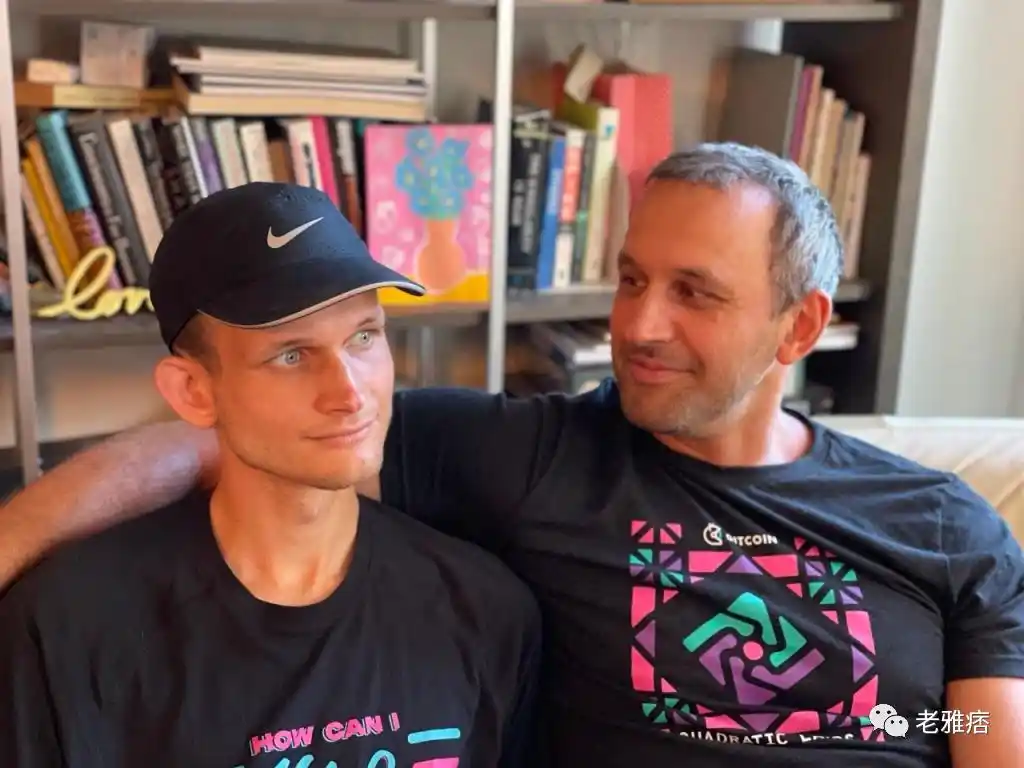
In a wide-ranging Q&A, Vitalik and Dima spoke with Fortune about their journey through the space, Ethereum's regrets, hopes for the industry's future, the much-anticipated merger, the collapse of the Terra ecosystem and more.
Fortune :Dima, youisWhen did you first notice Vitalik's interest in numbers?
Dima:He was about three years old. His grandfather was a very clever man and he taught Vitalik math, letters, numbers and so on.
Do you know about Legos? Vitalik loves using them to spell numbers. Growing up in the Soviet Union, I had very little access to toys and things like that. So when Vitalik was growing up, I was dying to get him some cool toys. I started with Lego because lego is a really cool building kit and it was really interesting to see how he used it in a very different way than I did.
Vitalik: After I came to Canada, my father bought me some books about programming, and I started programming. I started making games for myself, and I remember thinking it was fun from the start.
《财富》: Dima,是你先介绍 Vitalik 接触比特币的,对吧?比特币最初吸引你的是什么?
Dima:I'm very curious. Technology, computers, that sort of thing is one of the richest fields of human knowledge. I've been listening to podcasts about this. The host of the podcast touches on many different topics. And then on his podcast, I heard about Bitcoin. He's very good at explaining things, which I find fascinating.
I'm so happy for Vitalik -- I mean, he's curious about a lot of things. So it's always fun for me to say, "I found this interesting thing. Hey, Vitalik, check it out. Maybe you'll be interested."
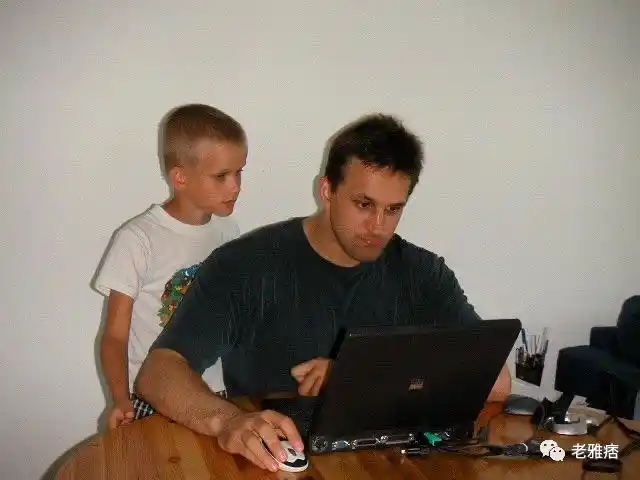
《财富》: 当 Vitalik 开始着手创建以太坊时,你是怎么想的?
Dima:One thing I remember very clearly is that Vitalik shared his white paper with me when we were at home, and it was very well written. I was impressed because frankly, I don't follow cryptocurrencies that closely, but when I read the white paper, it made a lot of sense. I think this is one of Vitalik's gifts. He can explain very complex things in a way that is easy to understand.
Vitalik:In December 2013, I went back to Toronto, and my dad was very interested in my plan, and I showed him the white paper. He must have found it fascinating.
《财富》: 随着以太坊获得越来越多的关注,当人们开始使用它时,你感到惊讶吗?你有没有预料到它会变成什么样子?
Vitalik:No. At first, I thought it would be a small project that we would finish in three or four months, and after that, I would go back to college. But in January, I saw a lot of interest in the project, and it became clear that it was going to take a long time, so I finally realized I had to scrap the plan.
Another thing I didn't expect at all was how big the cryptocurrency space would become in 2017 and 2021. I think the rapid growth of this segment is definitely a big surprise to me.
《财富》: 你们对目前的市场状况有什么看法?你有什么担忧,或者对未来的想法吗?
Vitalik:Cryptocurrencies have gone up and down before, and there will be more ups and downs. The down times are certainly challenging, and they are often when the most meaningful projects are nurtured and built. I am confident that the Ethereum ecosystem will grow more mature and successful, ready to fulfill the hopes and dreams of millions of people in the cryptocurrency space over the next decade.
Dima:Markets are cyclical. Cryptocurrencies are highly cyclical. I've been studying cryptocurrencies for over a decade, and they go up and down. It will go up again, and it will go down again.
In terms of its long-term potential, nothing has changed for me. What is clear to me is that... [It] is now entering the era of mass adoption.
It's never a straight line, it's not that smooth. Right now, there are a lot of fears and questions. There is a war going on in Ukraine and there are other things going on in the world. But humans are resilient. We're going to build more stuff. Ethereum is going to be integrated into PoS, which is very exciting. For me, nothing has changed [in terms of the world view]. There is some short-term fear that speculators will be weeked out and, yes, there will be some pain and then life will go on.
《财富》: 自从 Terra 生态系统崩溃以来,人们担心系统性风险。它的多米诺骨牌效应在该领域产生了影响。这里是否有一个重要的结论是没有被充分讨论的?
Vitalik:I think overall, Luna's crash was in some ways an important, healthy moment in cryptocurrencies, reminding people that the downside is real. You can't just set up a system and magically pretend that negative situations will never happen. You can't just worry about what interest rates are going to be in the short run, you also have to worry about fat tails and think about these special cases. I think this insight will ultimately lead to a more stable cryptocurrency ecosystem.
In addition, I think every time this happens in the field of encryption currency, at least in my experience, will always be another a glimmer of hope is that this is a moral clarify moment, at this moment, you can see how different people made the response, you can better understand their character, and they are actually what kind of person.
Dima:It was a very traumatic event for a lot of people and they lost a lot of money. I hope we're not limited to "let's limit, ban, stop this." There are all kinds of consequences, and the lessons we learn from them. [But] these lessons can allow us to move forward instead of trying to keep us safe.
《财富》: 对你来说,加密货币的优势是什么?你最感兴趣的方面是什么?
Dima:I was impressed by how well ukrainians and the cryptocurrency community supporting Ukraine organized around these things like DAO. They're using cryptocurrencies very effectively to raise money and then funnel it to a particular city because there's already infrastructure there for people to convert it into local currency and then use that money, so it's really cool to see that.
I think another aspect of cryptocurrencies that I'm really interested in is the ability of people anywhere on the planet who have access to the Internet to be connected to the world economy. This is very important to me. The cryptocurrency blockchain is some of the key technologies that people [can use] to make money, get involved in companies, get involved in DAOs, you can sell your art around the world, write code, etc. I was very interested in this aspect because I grew up in the Soviet Union, which was very isolated from the rest of the world.
Finally, I have to say something about the new organizational structure DAOs -- I think there's a lot more to figure out about how they're governed, how they control resources, make decisions, and other things. But to me, this is the future of how humans are organized.
Vitalik:I feel the same way. One thing I noticed on a trip to Argentina late last year was that there were different attitudes towards cryptocurrencies. In the West, even supporters sometimes subconsciously see it as a gamble by the rich. But in places like Argentina, it's a lifeline for many people. People there sometimes use cryptocurrencies to save money, and sometimes to buy and sell things. Projects like Proof Of Humanity are trying to use cryptocurrencies to build a universal infrastructure there. Several projects are experimenting with DAO and other techniques such as decentralized mediation.
So, I think there really is a lot of that energy in many corners of the world. NFT is also a good example.
《财富》: 快速致富计划是你最不喜欢的以太坊部分吗?我知道你无法控制人类如何使用以太坊,但你是否曾对以太坊的任何使用方式感到遗憾?当你看到不那么好的用例时,感觉如何?
Vitalik:Yeah, I mean, I think a lot of this financial speculation stuff is totally uninteresting. I think it's fair to say that sometimes it does go hand in hand with some good things, like NFT, where I know there are a lot of these artists in all the far corners of the world who get the opportunity to participate in the global economy, but at the same time, rich people sell $3 million monkeys to other rich people.
I think the other thing is that it's an open system. Which ultimately means that you can't control precisely who can do what with it and who can't. There are things you can do and we should do. We should actively support a lot of apps that better reflect our values, but at the end of the day, if you really believe in freedom, you have to trust people.
Dima:Humans are very lonely, and we all seek love and acceptance from others. It's like, "I have a Lamborghini. I have this [boring] ape. I have this much money." Really, it's about hope. In the back of our mind, we think, "Oh, I'm terrible, but if I show the world that I have all these cool things, maybe eventually people will like me and get the human connection."
《财富》: Vitalik,我看到你最近让你的推特粉丝分享他们对你最不赞同的事情。这是什么引起的?
Vitalik:I'm curious. I just want to understand where different groups of people have different opinions than I do, to give a safe space to people who are my fans and might be afraid to express opinions that are different from mine. This is an interesting experiment. I think some of the answers are definitely interesting.
《财富》: 最大的收获是什么?
Vitalik:I don't think there are any big gains. There are many small gains. There is some disagreement about the extension of life. A few people complained about my fashion style.
Some people say I shouldn't be involved in politics, or I should be less involved in politics. And then there are those who say, "No, you shouldn't try so hard to be neutral, you should be willing to be more openly involved in politics when you believe in something."
You can't please everyone.
《财富》: 你会向政治组织或政党捐款吗?
Vitalik:I think the challenge with giving to political parties is that politics is a very complicated, very messy system. It's easy to have a completely different effect than you want. I just don't know much about the inner workings of the American political machine.
So far, my thinking has been that I'm going to focus on other paths for the time being, and I think that's worked out well so far.
《财富》: 很多人也对你关于灵魂绑定代币的帖子做出了不同的反应。你对他们的回应有什么看法?
Vitalik:There are certainly a lot of good, interesting discussions, and a lot of people who misunderstand the concept. This is normal. And I think that's something we have to address, because no matter what you say, it's going to happen.
One of the interesting dynamics THAT I see is that I do think people get things a little bit wrong, and I've noticed that people tend to frame the debate between two prepackaged solutions where you can only talk about all the benefits and all the costs of one over the other. That's not the way I like to argue. The way I like to argue is: Let's break it down question by question.
I think there are always more than two choices. In the discussion of soul bound tokens, people imagine the existence of such a thing, even though soul bound tokens are not a thing. It's just a collection of ideas in a PDF document.
Sometimes it's nice to do things on the chain. Sometimes it's good to do things off the chain. We should figure out which is which under what circumstances and try to find the best solution.
Dima:One area where blockchain technology hasn't been well explored is all sorts of reputation systems, and I think we're going to see a lot more happening in that area. As Vitalik describes it, soul bound tokens are basically a collection of thoughts and ideas. It is too early to talk about specific methods.
《财富》: 让我们来看看备受期待的合并。为什么PoS是一个更好的机制?
Vitalik:我认为转向 PoS 有很多好处。环境方面的,总的来说,让以太坊生态系统消耗更少的资源是非常好和非常重要的方面。此外, PoS 可以提高系统的安全性。这使得攻击成本更高。它使人们更容易从攻击中恢复过来,这是人们没有想到的。它更耐审查,就像矿工比运行验证节点的计算机更容易被检测和关闭。所以,它实际上有很多不同的优势。
我认为,将其转换为 PoS 是以太坊的一个明确计划。我想自 2014 年初以来,如果我们发现了一种让我们满意的算法,它就被描述为一种可能性。但在 2014 年年底,我认为我们已经到了对这些信息有足够信心的地步,我们就准备好开始开发。
Dima:The dramatic reduction in energy consumption is obviously a big deal, as is the security of the network. Based on all the research I've seen, I firmly believe this is a good thing. This is very important for the network.
From a human point of view, I'm really happy to see this happen, because I've seen how much effort has been put into this.
But with PoS, [it's] not like, "We're at the end of the line. This is the perfect technology." At some point, [PoS] will probably be replaced, who knows when. But this is inevitable.
《财富》: 你对合并有什么担忧吗,比如 Lido Finance 和中心化的风险?这是否属于你在合并后考虑的首要问题?
Vitalik:是的。我的意思是,我肯定会担心。我认为这是我们在试图弄清楚如何长期改变 PoS 时考虑的更大问题之一。但我也认为,重要的是不要把这个问题过度灾难化,因为很多人都是这样做的。
For example, Lido. Lido owns about a third of the pledged Ethereum deposits on the Beacon chain. First of all, if you hold a third, you can't restore the Beacon chain or anything. Actually, the worst thing you can do is let the merger stop for about a day or so, which is inconvenient, but not that scary. That's one thing.
In addition, Lido is not a single pledge node. I think they have 21 representatives and nodes running these validators inside Lido and they are decentralized between them. It's not like there's a building, and if you send a team of heavily armed men in ski masks into that building, kidnap some people, you can take out the whole Lido. You're going to 21 different places, some of which I'm not even sure we know where they are. So there is a big difference between Lido and a centralised pledge platform or even a centralised pool.
Even something like today, I think, is pretty manageable, and it's still a healthy, decentralized proof of equity system. But at the same time, I think we've really set a very high bar for ourselves in the Ethereum community, and a higher level of decentralization is definitely something we're actively pursuing.
《财富》: 反思整个领域,你认为好的方面多于坏的方面吗?
Vitalik:Yes. I think the loudest use of cryptocurrencies is actually far from the most common. Someone's got to be trading $3 million monkeys, and every once in a while something's going to get hacked for $20 million. All of this is true. But I think the more common thing that cryptocurrencies do is not that, is that people around the world now find it easier to move money internationally, to get businesses to collaborate across borders or store savings and so on. The people who do these things do it silently, but it's also very real.
Dima:It's very complicated when we try to evaluate things as good or bad. There are a lot of different things, projects, people, etc. Everything has eternal and infinite consequences. There is all this awesome stuff, but there is speculation, scams, deception and so on. That's life.
《财富》: 最后,你认为这个领域,或者仅仅是以太坊,如何朝着更好的方向发展?
Vitalik:I think one of the most important things is obviously to continue to improve ethereum technology.
So switching to PoS makes it a more energy efficient and secure system; Add scalability improvements such as sharding and roll Up, which will significantly reduce the transaction fees people have to pay; Finally, make the ecosystem cheap enough for ordinary people to use it -- it just takes a lot of work to make the blockchain ecosystem safer, friendlier, and easier for different types of people to participate in. I really hope to [be able to] recapture some of the positive experimental energy that we had in 2015, 2016.
Also, I'm glad to see the growth of all the different applications we're seeing, especially outside of finance. I do think daOs are an amazing improvement for many people to collaborate, organize, and work together. It does take a lot of trial and error to figure out which DAO mechanism really makes sense. But great progress has been made in what people are doing. I think we're going to see more amazing experiments and successes in the future.
In addition to the DAO and the entire Ethereum identity and soul bound token, it's also interesting to see applications built around things like attendance proof protocols or proof of humanity. I think there's a lot of amazing things happening in the Ethereum ecosystem and it's only going to get better.
《财富》: Dima,在这个父亲节,你对父母有什么好的建议吗?
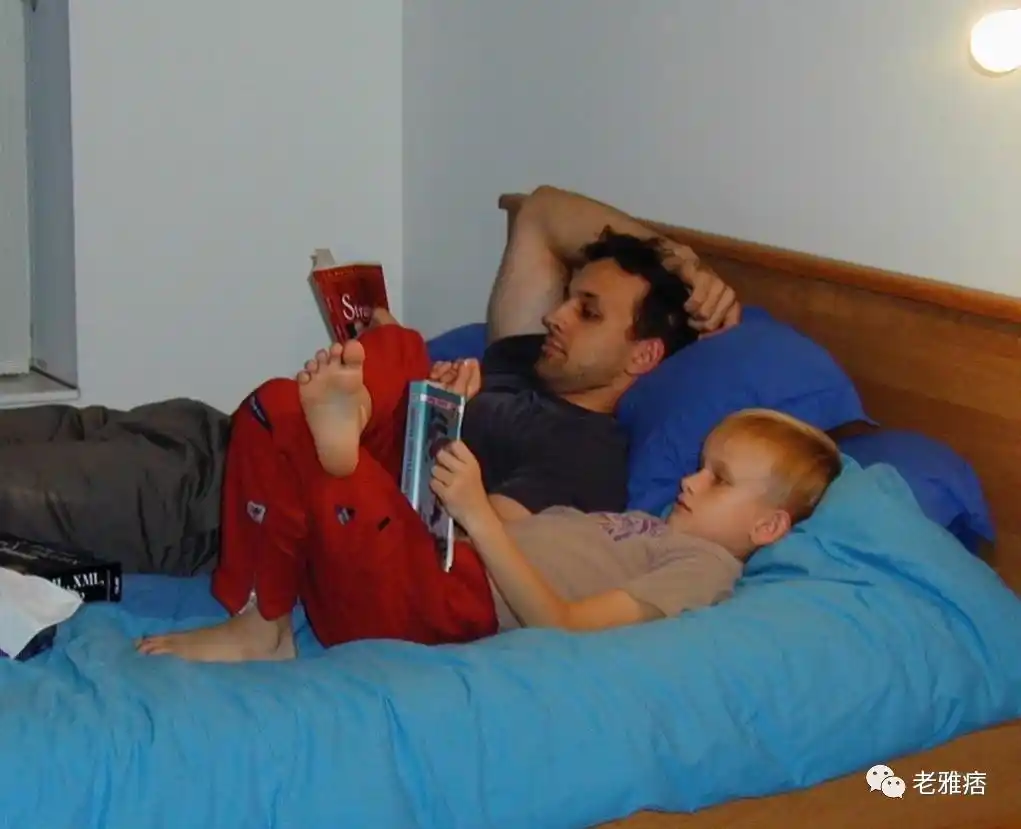
Dima:Parenting is one of humanity's greatest challenges. Besides Vitalik, I have two daughters. They are younger, and supporting the growth of another person is a wonderful and challenging aspect of being human. There is too much growth and too much difficulty. I want to wish all the parents a happy Father's Day.
No matter what you do, you're going to screw up at some point. We are all trying to create the best future for our children, but the future is full of hope and uncertainty. At the end of the day, it's not about our vision of the future, it's about how we as parents can be more present, more loving and supportive of our children as much as possible. So, I want to celebrate the concept of parenthood.
The original link
Welcome to join the official BlockBeats community:
Telegram Subscription Group: https://t.me/theblockbeats
Telegram Discussion Group: https://t.me/BlockBeats_App
Official Twitter Account: https://twitter.com/BlockBeatsAsia
 Related Articles