



Hutt Capital's 2021-2022 Crypto VC Growth Report

原文标题:《 Hutt Capital Blockchain VC Landscape—2022 Edition 》
Source: Hutt Capital
Old Yuppie
This article is from wechat official account:Old yuppie
We are pleased to release our fourth annual review of blockchain venture capital. Last year was a particularly prosperous year for blockchain venture capital, and in the spirit of transparency in our industry, we want to share aggregated data publicly.
This report focuses only on blockchain venture Capital funds, with the objective of understanding the investable scope of institutional LPs, consistent with our mandate at Hutt Capital, the leading independent blockchain venture Capital fund platform.
All the data came from Hutt Capital's internal tracking system, showing the current size of blockchain venture Capital funds.
Abstract
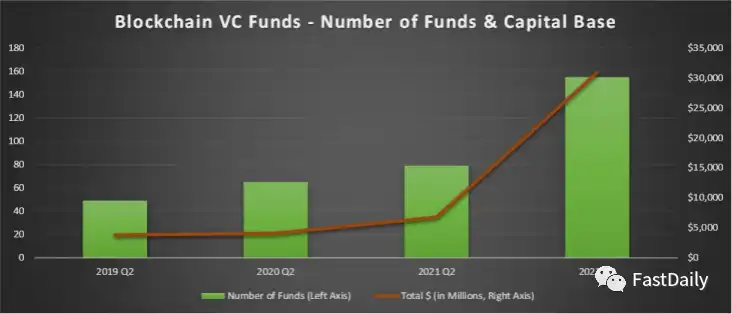
This has been a record year for blockchain venture capital fund launches, with 76 new blockchain venture funds launched in the past 12 months. We are currently tracking 155 blockchain venture funds, up from 79 a year ago and up 96% year over year.

The blockchain venture capital space is growing fast, but the amount of capital funds control is expanding even faster. These blockchain venture funds have $30.9 billion in committed capital in their current fund, up from $6.8 billion a year ago, an annual growth rate of 357 percent. Blockchain venture capital is no longer the copycat industry of the past few years.
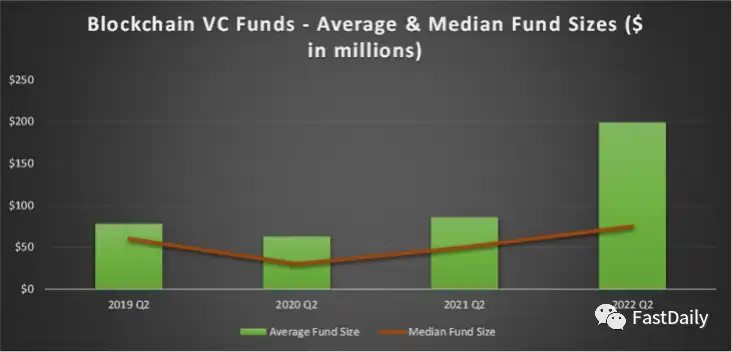
The average fund size is up 132 percent from a year ago, from $86 million to $199 million, indicating that existing funds are rapidly expanding. The median fund size increased by 50 percent, from $50 million to $75 million, as a few of the largest funds had a big impact on the average figure.
Blockchain VC fund series
Of the 155 blockchain venture funds, there are 100 initial funds, 36 S funds (Secondary Funds) and 19 Third Funds. .
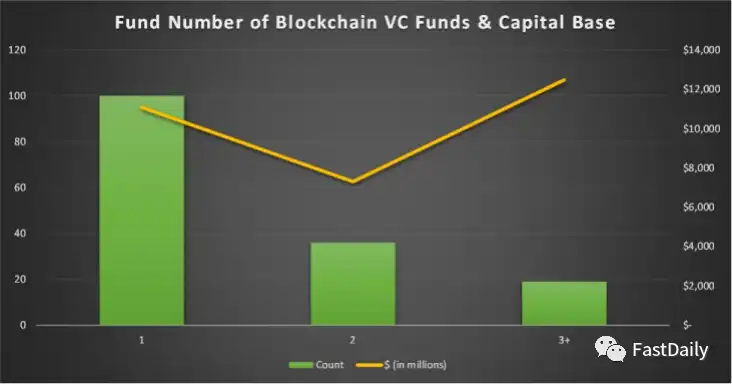
Long-lived funds have the most capital. Third Funds account for 12 per cent of funds but 40 per cent of capital. 19 third funds Has a total capital of more than 100 initial funds.
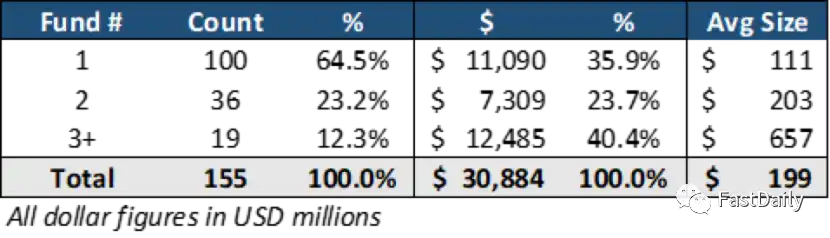
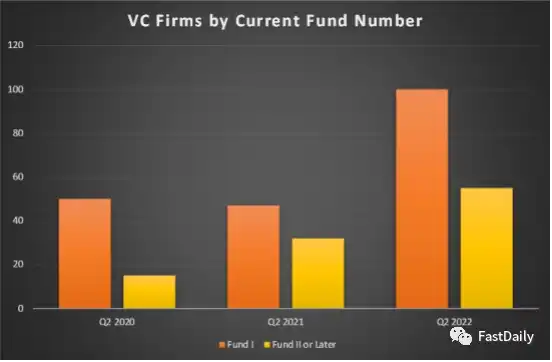
In the past year, initial funds, the S Fund and third Funds; The division has not changed materially as each category of funds has seen strong growth.
Blockchain venture fund size
The size of blockchain venture funds has grown dramatically over the past year, with the largest funds controlling unprecedented levels of capital.
$18.2 billion of capital, or 59 percent of the industry's capital base, is controlled by just 14 funds with more than $500 million. The funds themselves have almost three times as much capital as the industry as a year ago.

The industry is more fragmented than ever. The 33 funds had an average fund size of $713m and controlled 76% of the capital. Another 122 funds control the remaining 24%, with an average fund size of $60m.
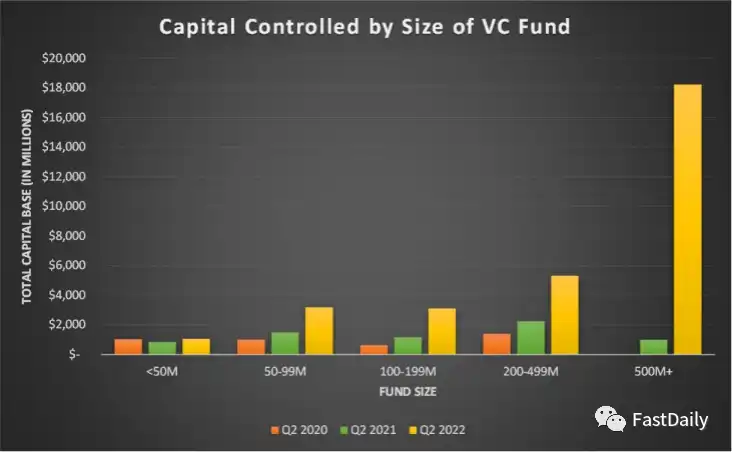
Despite this divergence between large and small funds, 122 funds with less than $200m still control 9 per cent more capital than the industry as a whole a year ago.
Every category has grown significantly from last year except for funds under $50 million, which have been able to maintain some degree of isolation due to the growth of many of their peers and the uptick in the market. The 44 funds under $50 million controlled $1.1 billion, up a modest 28 percent from the 35 funds that controlled $838 million a year ago.
We are already seeing the emergence of opportunity and growth funds as capital becomes easier to raise. These are growth-stage funds raised to complement existing early-stage platforms, which are common in traditional VCS but are now moving into the blockchain space.
Blockchain venture capital fund geography
North America remains the primary location for blockchain venture capital funds, with 68 percent of funds located in the region, accounting for 87 percent of the industry's capital base.
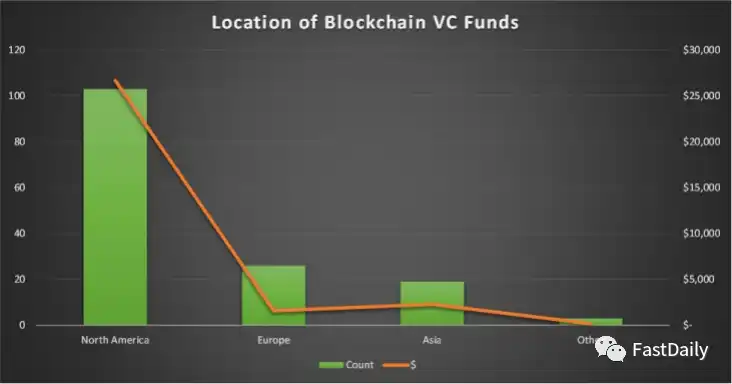
North America is also driving the mega-fund trend, with an average fund size of $259m, compared with $61m in Europe and $120m in Asia. Only one of the 14 $500 million-plus funds is outside North America.
The geography of a blockchain venture capital firm's home is less important than that of a traditional venture capital firm. Many of these funds are globally focused, regardless of their location. Therefore, although not covered in this analysis, we expect the underlying blockchain VC transaction data to be more skewed towards global and distributed rather than the location of blockchain VC funds.
Other observations
The blockchain venture capital market has changed significantly in the last 12-18 months.
· Emergence of mega-funds/asset aggregators
· The supply of capital makes trading competition among funds more intense
· High-quality blockchain venture capital funds have been heavily oversubscribed and difficult to obtain
· DAO and guild are stealing market share from traditional VC funds
· Increase of professional funds
· Web3 has become the trend of general-purpose venture capital funds, but professional funds dominate
Observation 1: Emergence of mega-funds/asset aggregators
There is enough demand to invest in blockchain venture capital funds so that companies interested in raising large amounts of capital can do so for the first time. These players have moved upmarket with their growing fund sizes and now need to write bigger checks to big rounds to deploy their money. This has resulted in more funds being deployed to the growth stage of the company and floating tokens, either through direct purchases or Treasury transactions.
The move upstream in the market has opened a gap in pre-seed funding and the seed stage, which has been filled by new and existing small funds that will support founders in the earliest stages. Many larger funds (or their GP) and industry strategists act as LPS in new early-stage funds as a way to generate vetted deal flow for their own companies.
Observation 2: The supply of capital has led to more competition for deals between funds
One effect of a 357% increase in the industry's capital base in a year is that competition for deals has become brutal. Until 2021, almost anyone with a checkbook can get a good deal. That has changed. Now funds are competing fiercely on the basis of reputation and value proposition, or in some cases willingness to pay the highest price, and valuations are increasing as a result.
From a LIMITED partner perspective, it is critical to understand which firms have built differentiated brands and value propositions in order to sustainably repeat historical successes. Each fund's track record looks good, but that track record generated an environment that was hardly as competitive as today's.
Observation 3: High-quality blockchain venture capital funds have been heavily oversubscribed and hard to come by
LPS have more options than ever when it comes to investing in blockchain venture funds, but LP demand to invest in blockchain venture funds is clearly growing faster than the fund's capital base. Each fund was oversubscribed. Many are turned away, and LP's are fighting for a share of the investment. Institutions are coming in with big checks, and the threshold games we saw in traditional VC are now being replicated in the cryptocurrency space.
Observation 4: DAO and Guild are taking market share from traditional blockchain vc funds
Venture DAOs and game guilds are receiving funding from early-stage venture funds, primarily pre-seed and seed. High-quality risk DAOs are an attractive source of capital because founders have access to a diverse network of individual members who bring a variety of expertise and relationships. We saw it firsthand at Seed Club Ventures. Today, most risk DAOs are relatively small and therefore write smaller checks in very early rounds, but we believe this source of capital will grow over time.
Gaming guilds provide a unique source of strategic capital for blockchain gaming startups that is difficult for traditional venture funds to replicate. There is a growing world of game guilds, and these groups have been taking up space in the equity structure of early games. Guilds often have venture capital funding themselves, and venture capital funds that don't know much about games may be happy to get their hands on new games rather than trying to pick winners in an unfamiliar category.
Observation 5: The growth of specialist funds
We believe specialization is increasing for two main reasons. 1) The industry is too big and broad to cover everything, different categories require unique expertise and relationships, so funds must identify where they have a competitive advantage and aim to be the best in the field; 2) Specialization is a way for emerging funds to differentiate themselves from existing players and gain an edge, especially in younger categories such as DeFi, games, NFT or DAO, where we most often see proprietary niche funds.
Observation 6: Web3 is now the trend for general-purpose funds, but dedicated funds dominate
General-purpose venture capital firms are increasingly interested in Web3, and many are assigning people to the space, but most are late to the game and have too little to grab, especially at this stage. You will see cryptocurrency native funds and other industry players in the early stages with dominant ownership structures.
Welcome to join the official BlockBeats community:
Telegram Subscription Group: https://t.me/theblockbeats
Telegram Discussion Group: https://t.me/BlockBeats_App
Official Twitter Account: https://twitter.com/BlockBeatsAsia







