Conversation with Haun Ventures: How to manage the $1.5 billion encryption fund?
Original title: "A dive into Haun Ventures with the firm's first deal lead, Sam Rosenblum"
Original author: Connie Loizos, TechCrunch
Original compilation: 0x9F, Rhythm BlockBeats
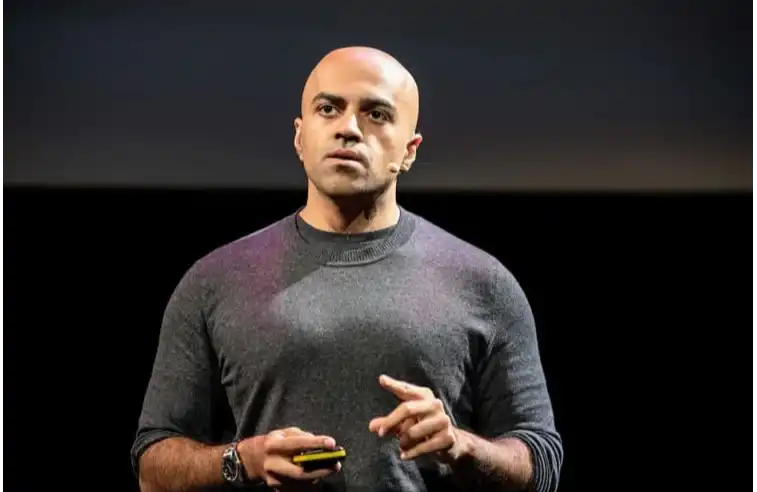
Sam Rosenblum never imagined he'd be working at a Crypto-focused investment firm. As a Southern Californian, "I spend most of my life outside in the sun, playing ball and hanging out with my friends". Crypto didn't really become a science until he was in college at UCLA. Rosenblum worked for the U.S. Department of Justice and as an analyst at a business consulting firm, but a year at Visa opened his eyes to the boom in digital assets — so much so that when Coinbase recruited him and his colleagues in 2014, , Rosenblum decisively seized this opportunity.
This job-hopping is worthwhile. At the time, Coinbase was a 30-person company that had exploded in the five years since Rosenblum joined. Later, he decided to join Polychain Capital, a Crypto fund founded by colleagues at Coinbase. In fact, when former a16z partner Katie Haun invited him to join the newly established new company last year, Rosenblum was planning to raise his own fund by virtue of his network in Coinbase and Polychain.
Now, Rosenblum, along with Chris Ahn, who spent four years at Index Ventures, is helping Haun leverage the $1.5 billion her firm Haun Ventures raised earlier this year. Capital is committed for investment. To get a better idea of how this young company works and how it manages to invest in the current market conditions, late last week, we spoke with the Sun Valley, Idaho Rosenblum. Excerpts from the chat follow, edited for length and clarity.
TechCrunch: Let’s recap first. a16z is an investor in Polychain Capital, and the founder of Polychain is Coinbase's No. 1 employee. Katie sits on the board of Coinbase and spent ten years as a federal prosecutor at the Department of Justice. You spent your first year out of college at the Department of Justice. There are so many fates, when did you first meet?
Sam Rosenblum: Katie and I first met in 2017 when she joined the Coinbase board. After I left Coinbase, we didn't stay particularly close. But last November, when I was planning to launch my own venture fund, some friends and I were doing pitch preparation and brainstorming before financing. They also happen to be friends with Katie, and Katie heard about these things I was doing from them. She took the initiative to contact me and told me her thoughts. Then I flew to Menlo Park and walked around the Stanford campus with her, determined to join her team. After that, it is now.
TechCrunch: You are the first head of deals Katie hired, how many employees do you have right now?
Sam Rosenblum: We now have a total of 12 people, and the transaction team has 3 people. We may keep the entire company lean and nimble. The trade team will add one or two people this year, but never more. Haun Ventures will stabilize at around 15 to 20 people.
Although it is funny to say, what needs to be clarified is that what we deploy is a traditional fund, and in fact all the funds are transferred in US dollars. None of the capital commitments received were in the form of Crypto.
Despite a very aggressive Crypto strategy, our structure is fairly ordinary, a typical VC structure. We ended up closing a $1.5B fund through two funds: a $500M early-stage fund and a $1B accelerator fund for a slightly later stage.
TechCrunch: Marc Andreessen and Chris Dixon are your limited partners. Besides them, who are your supporters?
Sam Rosenblum: Most of our LPs are institutions, from sovereign wealth funds to university endowments to pension plans even the medical system. There are also individuals, friends of Katie and me, or friends of the company.
TechCrunch: I see that many Web3 transactions and projects do not use the typical "A round", "B round" and "C round" in terms of post-support the term. In your opinion, what constitutes the later stage?
Sam Rosenblum: The key difference is only: where has the project been developed and what is it being used for now. The concept of stages may look a little different than traditional tech VCs. Historically, the script of technology venture capital is often that the company you invest in grows into a billion or even billion-dollar unicorn in the end, and the company at the top of the technology stack in the Crypto field is also this script. But when you look at the companies at the bottom of the technology stack, that is, various Layer 1 protocol networks. Oncesuccessful, they can reach market caps of not just billions, but trillions of dollars. So, in defining stages for this sort of thing, the question we're thinking about is what scale would it be in case it ends up winning? Those are the things we focus on.
TechCrunch: So far, what projects have you participated in?
Sam Rosenblum: There are almost a dozen of them now, across different transaction structures and asset types.
TechCrunch: Two of the companies you support have recently announced funding, including Zora, a two-year-old Ethereum NFT marketplace that raised $50 million in new funding. funds. Is this early or accelerated?
Sam Rosenblum: The Zora team has been going all the way in the past two years, and there have been several quite important turning points. It's hard to say in which rounds they are defined. You can't give it a typical classification, say it's in round A or round B or something. No matter how you define it, it's not quite right. They've got some big announcements coming up about where they're headed. I won't reveal it up front, but they're coming in a really cool way.
TechCrunch: Have they raised money before?
Sam Rosenblum: Yes, they raised money. I don't know what they've said publicly about who they've raised money from, but they're a great team in the eyes of investors. We work with them a lot and know them well.
TechCrunch: As an investor, how did you find this company?
Sam Rosenblum: I've actually known Zora's co-founder since around 2018. Their entire co-founding team came from Coinbase.
TechCrunch: What about Highlight? It’s a 14-month-old company that claims to provide creators with NFTs and community features. What attracted you to this company?
Sam Rosenblum: The Highlight team is equally impressive, with members from Web2's Square (now Block), DoorDash and other Designed Web2 products and services. Ultimately, what they want to do is enable people who are not yet expert crypto engineers to be able to build a community with Web3 tools. To achieve this, Highlight is therefore a no-code platform.
TechCrunch: Based on this very limited data sample from Highlight, it looks like you're following a lot of Web2 operators and founders who are entering the Web3 world. is that so?
Sam Rosenblum: We are equally willing to support founders who have been in the Crypto field for ten years, as well as those who have invested in one year. What we really care about is their commitment to the things they're building, and their unique insight and intuition as to why they're building them.
TechCrunch: There are still many gaps to be filled in Web3. Will you consider the conflict of interest from the usual perspective of investors? For example, I see that there are many companies that mint NFT. Will you invest in another one?
Sam Rosenblum: This is an important question, especially for Crypto VCs. In a general Web2 environment, founders or startups build on a set of very well-defined prerequisites, such as TCP/IP, HTTP, SMTP, the Internet protocols we use every day.
Founders are doing the exact opposite of what they are doing in Crypto, where every layer of the tech stack is evolving in parallel. Even the most fundamental part of the Crypto stack—the idea of decentralized consensus—has continued innovation in this type of decentralized consensus or consensus mechanism.
So founders and start-ups often, if not change course, at least in the entrepreneurial process when every building block is being innovated Takes a lot of new information into account.
We do take conflicting ideas seriously and we do want to make sure we are really good partners with our portfolio founders, so We don't put them in jeopardy. But what we're seeing now is that founders may start two different startups, starting with similar ideas but ultimately building on different layers of the Crypto stack. So, there is a lot of flexibility in how things go.
TechCrunch: Speaking of NFT, the last deal Katie completed before leaving a16z was the NFT music copyright startup Royal, which was led by a16z in November last year. It raised $55 million in financing. Does Haun Ventures have a stake?
Sam Rosenblum: You are right, it was a deal led by a16z. Part of the deal is Katie joining its board of directors. Katie is still on the Royal board of directors, but she is not in the Haun Ventures portfolio at the moment.
TechCrunch: Does this make it trickier for you guys to invest in yet another NFT music rights startup, or does it give you a better chance of getting involved in Royal’s late-stage round?
Sam Rosenblum: That's a good question, I think both options are possible. Digital royalty management and on-chain copyrights are interesting and a very challenging category. This is very complex field. I speculate that there will be quite a few really talented founders building here, probably trying all sorts of different approaches in terms of what market they're trying to serve and how. We will definitely continue to monitor this market.
Speaking of Katie's board seat, she is also a board member of OpenSea. This reminds me of a recent conversation with Benchmark's Sarah Tavel, who said that Web3 companies like OpenSea and Sorare (both backed by Benchmark) are actually centralized companies built on decentralized infrastructure, never No entity that really wants to be fully decentralized. Do you agree?
At the heart of the Web3 concept is the idea of decentralization, but I think a lot of people probably don't think about how important this ends up being. In my opinion, centralized platforms will and should exist for some purposes. The whole point of the decentralization of the Crypto stack is that platforms do not have the ability to "lock in" their users.
Not targeting any one Web2 company, but you think about these social networks, every action of yours - every upload A photo, a so-called social graph, a network of friends and family, is maintained and managed by a central gatekeeper, and there is no way for you to clear this information. The idea of Crypto is that you can publish content on a centralized platform, but you can leave this platform with your network, because they are all built on an underlying open infrastructure.
TechCrunch: Crypto has crashed in the past week or two, and the cryptocurrency market value has lost $400 billion. How do you feel about what's happening now? It seems like a good time, everything is for sale and you guys have $1.5 billion at your disposal.
Sam Rosenblum: I have been working in this field since 2014. When I joined Coinbase, it was a bit like today. For three years or so, you may have to bury your head down and not feel the excitement of the field for the past year.
The crypto bear market is really tough, financially, psychologically, emotionally. But history proves that many of the best Crypto projects were born at such moments. Looking back, Bitcoin rose in late 2013, but showed signs of collapse in early 2014. Ethereum was pre-sold in June 2014, and the ups and downs were repeated in the cycle of 2017 and 2018. In it we experience ecstasy and face collapse. But it was 2018 and some amazing projects like Uniswap and dYdX were founded during this period. So I think on the surface, maybe in the next few weeks to months, we will see the birth of some new startups and projects in the Crypto field. Three or four years from now, we'll look back and say, "Wow, thiswas born in the last Crypto winter."
TechCrunch: Is Haun Ventures registered as an investment advisor?
Sam Rosenblum: No, we are an ordinary tax-exempt venture fund.
TechCrunch: Some say Coinbase is for sale right now, and investor Cathie Wood just spent $3 million on stock. Now that you have a lot of money at your disposal, would you or would you take a stake in a recently battered public company like Coinbase?
Sam Rosenblum: I personally hold Coinbase stock, can't remember who said that, but someone said for those who don't To the average person, who must have had access to amazing early-stage deals, being able to invest in Coinbase in 2018 for less than 2x its Series C valuation seemed like the buying opportunity of the century. I personally tend to agree with this point of view. Since I own Coinbase stock, I certainly agree that this week is a rather exceptional buying opportunity. But clearly people should do the necessary research to make independent financial decisions. As a fund, we really don't look at the public stock market.
[Correction: After this article was published, Haun Ventures reminded us that Katie is not on Rotal's board. The firm also wrote to us to clarify that Haun Ventures is currently a tax-exempt registered investment advisor and plans to complete registration within the year. ]
Original link
Welcome to join the official BlockBeats community:
Telegram Subscription Group: https://t.me/theblockbeats
Telegram Discussion Group: https://t.me/BlockBeats_App
Official Twitter Account: https://twitter.com/BlockBeatsAsia
 Related Articles