



LiquiFi: A platform for automatically managing Token ownership for Web3 companies|Project Introduction
Written by: Victoria, Rhythm BlockBeats
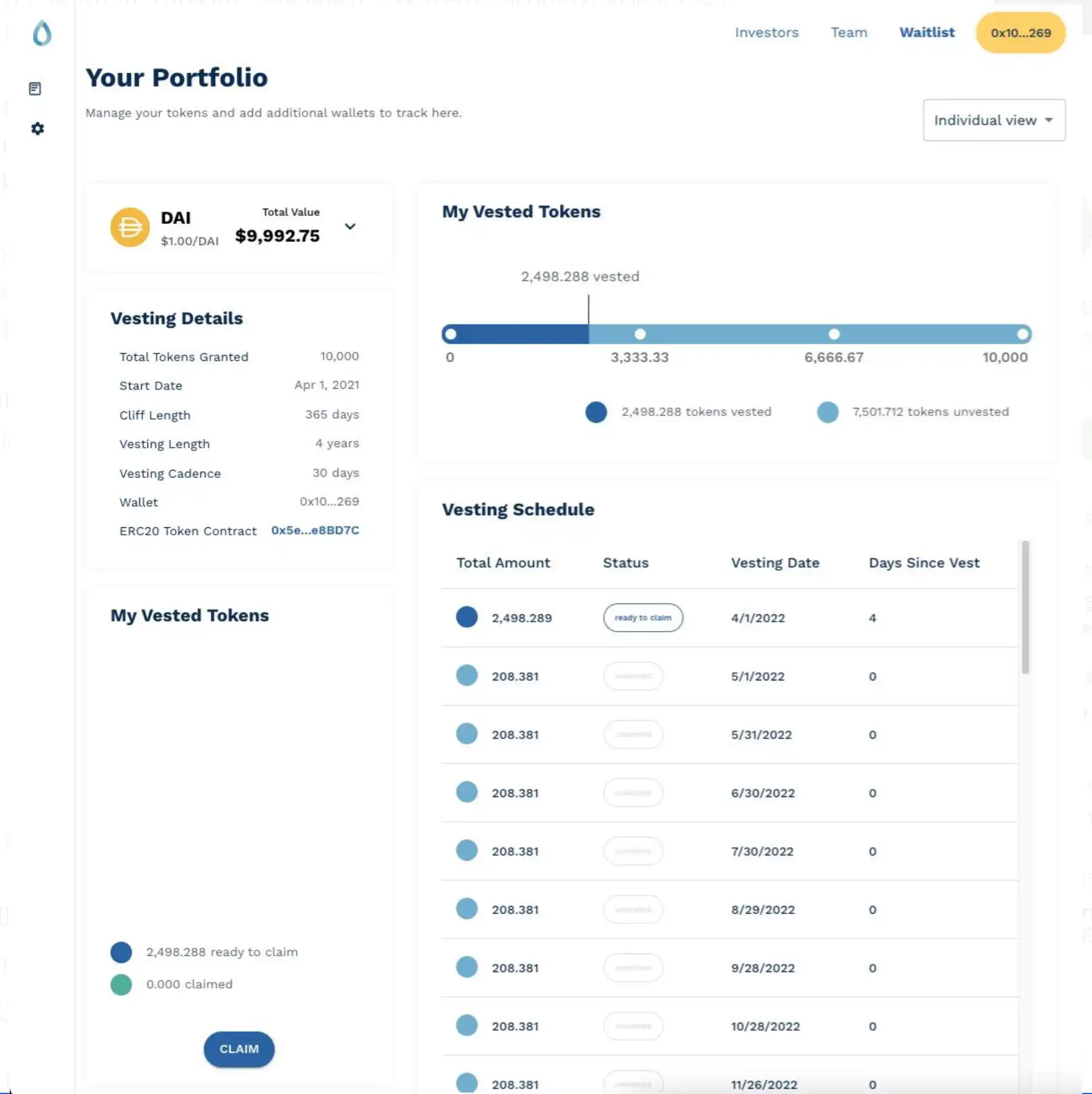
With the popularity of cryptocurrency, Token is an attractive form of compensation for web3 companies. However, since Token-based transactions are decentralized and manual management takes a long time, how to automate the management of Token ownership has always been a pain point for Web3 startups. LiquiFi can help Web3 companies and DAOs automate token attribution in minutes, manage their token cap table, save time in token distribution and track ownership, and ensure the traceability of token whereabouts.
What does LiquiFi do?
LiquiFi is a platform for automatically managing Token ownership, which can ensure timely ownership through smart contracts Token, and save a lot of time and resources. Founded in 2021 with three employees, the platform raised $5 million in April 2022. Since its inception last year, the company has gone live on ethereum and Polygon, and is “expanding rapidly to other chains.” Currently, LiquiFi's client list includes both large DeFi protocols and small startups launching tokens for the first time.

For investors, LiquiFi can track and obtain all Tokens owned by individuals. For finance or accounting, LiquiFi eliminates the need to spend valuable time manually tracking and distributing Tokens, and provides security, compliance, and ease-of-use tax/financial reporting support. In addition, LiquiFi is innovative in that it is also developing a product that allows individuals who hold locked or vested Tokens to obtain additional income when holding these Tokens.

The LiquiFi platform helps to establish the framework and Simplify the process necessary to hire top performers using tokens as compensation and automatically manage their offers over time.
Add Wallet Tracking Address
< /p>
Create Token Attribution Plan

Token real-time attribution

Because At present, the company is still in an ultra-early stage, and it is not yet clear whether the platform is attractive enough to customers, whether the company's future development speed can keep up with the development speed of the encryption market, and whether issues related to Token-based compensation can be resolved. A good solution is still a problem that the company needs to face in the future development.
The benchmark product Carta
LiquiFi is building a token attribution and equity solution for Web3 startups. Its long-term vision is to become the Carta of Web3, helping companies and DAO organizations to automatically manage currency rights Cap table, currency rights allocation and exercise issues. So what is Carta for equity management transactions for Web2 companies?
The smart equity trading platform Carta was established in 2012, the platform is committed to providing simple Clear equity management transactions. In terms of customer development, Carta adopts a partnership system to attract accountants, lawyers and venture investors to join the Carta platform. The platform gives partners and referral companies certain business benefits. Currently, Carta has helped more than 900,000 shareholders manage more than $800 billion in equity, and more than 14,000 companies, more than 900,000 investors, law firms and employees use the Carta platform. Carta's corporate clients include Robinhood, Greycroft, Intercom, Flexport and other well-known companies; partners include Amplify, Cooley, TechCOX and other institutions.

< /p>
In addition to issuing equity, the employee incentive form of Web3 start-up companies usually also issue Token representing ownership. Since the practice of token-based compensation is relatively new, many Web3 companies manage their cap tables manually using custom in-house systems and spreadsheets, which is problematic. In response to these problems, referring to Carta, LiquiFi hopes to replicate its model for the nascent Web3 startup group by focusing on Token management.

The standard of Web2 equity allocation can be used as a guideline for Token allocation of Web3 startups. In a traditional equity cap table, the founders typically own 20% of the equity, employees distribute 20% through the pool, and investors own 60% of the company. Web3 startups can consider using these ratios as a standard to calculate employee token compensation.
Introduction of the Founding Team
Robin Ji, Co-Founder & CEO
Former Product Owner at Eco, Adobe, Coffee Meets Bagel and LinkedIn. Eco is a Crypto deposit and withdrawal and payment transfer app invested by a16z Crypto, Founders Fund, L Catterton, Coinbase Ventures, Lightspeed Venture Partners, Pantera Capital, Slow Ventures, Tribe Capital, Valor Capital Group and other institutions. After graduating from UCLA, he joined Morgan Stanley as an investment bank analyst.
Oliver Tang, Co-Founder & CTO
Engineering Manager and Senior Software Engineer at Amazon, Set Protocol, Twitch, Salesforce and Expedia . Studied Computer Science and Engineering at the University of Michigan in Ann Arbor.
Ian Rust, Founder & CEO
Ian Rust is Cruise's Founding Engineer 丨 Covariant (AI robotic arm company - C round) Advisor ; Bachelor's and Master's degree in Mechanical Engineering from MIT.
Investment Institution
Web3 startup LiquiFi completes $5 million in seed round financing led by Dragonfly Capital Partners, Nascent , Alliance DAO, 6th Man Ventures, Robot Ventures, Y Combinator and Orange DAO, as well as well-known angel investors in the crypto space, including Balaji Srinivasan, Katie Haun, Packy McCormick, Anthony "Pomp" Pompliano and Anthony Sassano participated.

References
Welcome to join the official BlockBeats community:
Telegram Subscription Group: https://t.me/theblockbeats
Telegram Discussion Group: https://t.me/BlockBeats_App
Official Twitter Account: https://twitter.com/BlockBeatsAsia







