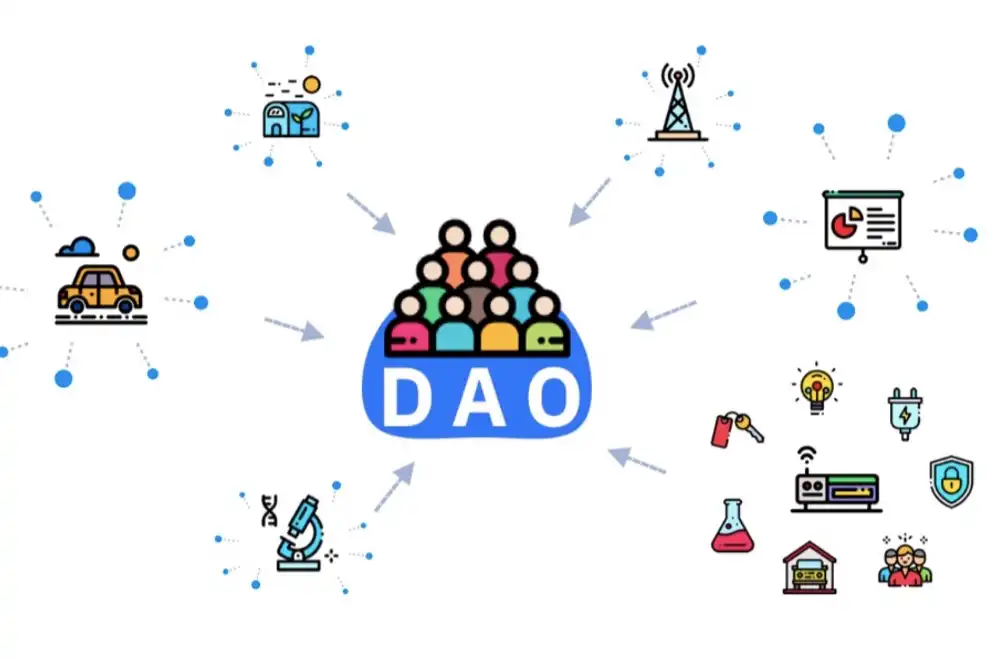
From the membership and governance mechanism of DAO, how to start DAO
原文标题:《 What is Membership in a DAO? 》
Original author: Gideonro
shaun@DAOrayaki.org, DAOrayaki
By joining the DAO, you agree with the way it works
To understand why people join a decentralized autonomous organization (DAO), the term "Permissionlessness" is a good place to start. Finding the most appropriate definition of entry point is the master key to uncharted territory, and I like the following definition of "unlicensed" :
If participation in the use, development, and governance of the system or infrastructure does not require permission from an authority by following publicly stated procedures, then the techno-social system is considered unlicensed.
-- Kelsie Nabben and Michael Zargham
In my opinion, DAOs are inherently permissionless. Integrating/joining the DAO is not an employment decision made by someone about you personally. As Nabben and Zargham put it, it depends on whether or not you follow "procedures for public statements." When you decide to follow this procedure, you become a member of the DAO.
The reality is that we are still in the early stages of becoming a DAO member. Today, the onboarding process for most DAOs is fairly simple and usually boils down to owning a token. Just like getting into the subway system, you just show your ticket and get in. However, this simple, token-based DAO membership is just the surface of joining a DAO by "following common procedures."
The DAO "membrane"
The form of organization integration in the future will be more permeable than it is today. Like all organizations, DAOs have boundaries that separate their internal operations from their surroundings. Nabben and Zargham point out that anyone can cross unauthorized borders without obtaining approval from some authority. You can participate as long as you follow the procedure for making public statements.
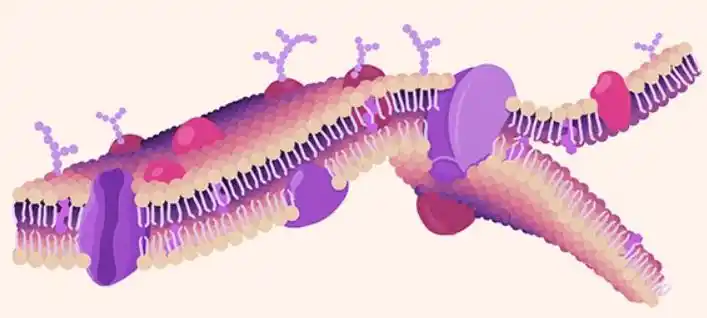
In general, when the simulator has tested nature's design sufficiently, he will know whether he is moving in the right direction. "Permissibility" simulates some basic components required by life itself, such as the "permissibility" of DAO, much like the permeable boundary membrane that a biological cell has.

Membrane: form of future integration into the organization
Cells have similarities to the publicly stated procedures that participate in the USE, development, and governance of the DAO. In the image above, a special class of proteins called transporters are embedded in the two membranes of a cell. These proteins act as a bridge between the inside and outside of the cell. There are many types of transporters, each designed to move energy and matter across cell membranes in very specific ways. Each type of transporter can be considered as a specific protocol involved in unit collaboration.
This is how cells maintain boundaries while remaining open to their surroundings. This membrane is not licensed. There is no external force directing traffic, no artificial human in the cell authorizing what can and cannot be entered. Things can be added to cells simply by complying with the "open" interfaces exposed by these transport vehicles.
Permissionless organizational structures are thus embedded in the code of life. It is an emerging, modular coordinated design. It is also the key to the truly large-scale forms of human cooperation that are now emerging with decentralized autonomous organizations.
How do YOU define DAO membership
We can now return to the question of what it means to cross this membrane and join a DAO.
Membership is defined inconsistently throughout the DAO domain. For some people, simply joining a Discord server constitutes membership, while for others, you need an unforgeable token that can cost hundreds of thousands of dollars. Of course, each DAO should be free to choose how to define membership. But are there any general patterns that illustrate DAO membership?
I believe there is a common narrative for DAO membership that builds on the permissionless concept proposed by Nabben and Zargham. Simply put, membership boils down to "new entrants agreeing to abide by public statements and participate in the DAO's procedures." In other words, membership is a permissionless agreement made by members to abide by the agreement to use, build, and manage daOs.
DAO membership and entry
The real question is what this permissionless membership agreement actually looks like. The onboarding process today tends to be pretty simple, usually having a token or even just agreeing to community terms and conditions on your Discord server. But the protocol that actually agrees to use, build, and manage daOs is more complex than that. Daos are complex systems that rely partly on technology, partly on sociology, and even partly on biology.
Programs that follow daOs are much more nuanced than rules that follow blockchain protocols. In order to follow the procedures of these complex socio-technical systems, members need to first understand them. This means that training and mentoring processes are absolutely necessary for newcomers to endorse the DAO's protocol. The idea of compliance is moot without understanding and training in the process of using, building, and managing daOs.
The introduction of DAO is closely related to the training and guidance process. Because they are unlicensed, these training and mentoring processes look very different from those of a traditional enterprise. There is no human resources department overseeing the hiring process. Anyone who wants to join can do so, as long as they agree to abide by the agreement.
Internal member development of the DAO
The reality of this new type of joining organization requires a rethinking of its training and mentoring processes. The DAO will need to clarify for new members what public commitments are and what forms of contracts the community might take. Making these agreements clear would mean that all DAO members should share their use, contribution, and management of the organization, and agree on a basic level of understanding from the outset. This understanding will have to deepen over time as member responsibilities increase, and greater responsibility requires greater commitment to abide by the DAO's protocols.
As members participate in the DAO, the expanded responsibilities mean that the work involved will become deeper. It looks more and more like continuous personal professional development. DAO membership begins with a standardized and public onboarding agreement and evolves over time into an increasingly personalized journey of professional and personal development. At each step, the protocol for using, building, and managing the DAO must be explicit, public, and unlicensed. This will not be easy, especially as the responsibilities of members increase and things become more complicated. That is the challenge now before us. A clear role statement and community reputation system were only part of the key to expanding membership and participation, but did not meet the evolving needs of today's DAO.
DAO is the materialization of cybernetics
Daos serve as a new kind of technological nest to host human communities and work. The onboarding process constantly adjusts the way individuals use, build, and govern these systems based on the differentiated community values that daOs design at different stages of development. It acts as a kind of technological nest that forces the DAO and the community to function together as a cybernetic entity, partly through people and partly through machines.
Getting new people into a cybernetic system like this may sound a bit mysterious today, but that's because we haven't tried enough. The blueprint for corporate-machine collaboration doesn't usually work out well for people and the planet from the start.
DAO membership and governance mechanism
DAO creates an opportunity to change this partnership by placing the management of these technical systems firmly in the hands of community members. Using and contributing to DAOs are important functions, but governance is a concrete way of clarifying the mission and operational parameters of these systems. Governance has a lot of power, and with it comes a lot of responsibility.

The first step in assuming responsibility for DAO governance must begin with agreeing to abide by its agreements. To do this, the DAO administrator needs to understand these protocols first. In other words, they need to be positioned, just like any other member of the DAO. In fact, directors need more upfront guidance and orientation because their responsibilities are much greater.
If membership is achieved by agreeing to abide by the DAO's protocol, the same requirement applies to a trustee, and by definition a person cannot truly be a DAO trustee without also being a DAO member. Both need to follow and understand the underlying protocols.
Linking DAO governance to DAO membership is a logical extension of this argument. This is different from the way companies are governed by shareholders today. Requiring membership and positioning may prove too burdensome to attract capital into the DAO. It may also be more seriously questioned because of token-based governance, but these are important parts of the way DAO works today.
There are still many questions that deserve further study about the relationship between DAO members and DAO governance. DAO is an important new form of organization. They hold the future of human communities and human work in their hands. We now have a window to revisit basic assumptions about how we work with these systems and maintain oversight. We have reason to respect the way things have been done in the past, but we also have to create more space for these future institutions of human cooperation to develop.
The original link
Welcome to join the official BlockBeats community:
Telegram Subscription Group: https://t.me/theblockbeats
Telegram Discussion Group: https://t.me/BlockBeats_App
Official Twitter Account: https://twitter.com/BlockBeatsAsia
 Related Articles