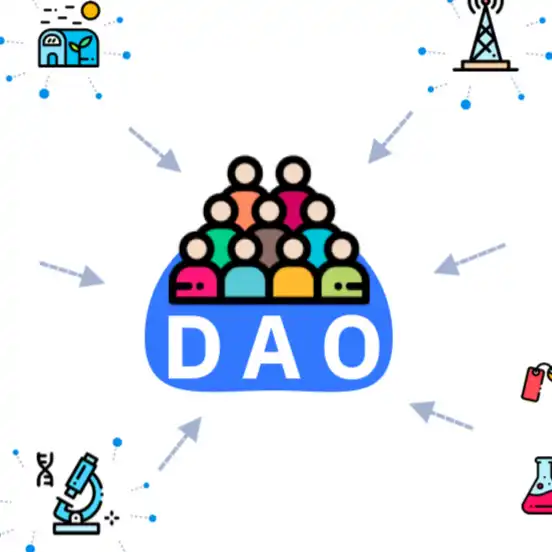
Daos don't need a CEO, they need a mission
原文标题:《 DAO 不需要 CEO,他们需要一个使命 》
Written by Samantha Marin
Block unicorn
A few weeks ago, there was a trending topic on Twitter:
"DAO doesn't need A CEO, They need a mission"
The comments were filled with mixed comments -- some strongly disagreed that a single CEO was too centralized, while others felt that the DAO needed more direction and that a centralized leader could provide that guidance.
They are both right, and the DAO's desire for direction and unity is a given -- today's DAO chaos can quickly become very tiresome. But CEO is the opposite of decentralization. If a DAO had a CEO, would it still be a DAO?
I think the tweet went something like this:
"The DAO should have a clear mission to guide everyone."
Because we need more solidarity in Dawes, don't we? Everyone who has worked at the DAO probably knows what it's like to leave the berth and look for that North Star to guide them, and that North Star is the mission.
Today, I'll explore how to define mission in a decentralized system. Then, I'll suggest three strategies that DAOs can use to establish and refine their tasks as quickly as possible.
Chasing a mission like a fish of fish
"Think of a school of fish and how they're swimming perfectly, but without any clear instructions or maps to show where they're going," Cabin Dao wrote in an article about decentralized branding. First, treat DAO as a school of fish, and the expression of DAO as the whole school changes as it travels across the sea to its destination.
They describe this as a key "sense and response" process that allows the DAO to move as a whole, but not get stuck in the old, slow ways.
A mission as a school of fish sounds great. But like a flock of birds flying south or a school of fish swimming in unison, how do we learn to act in unison without hierarchical structures?
Let's look at how animals do it. The jury is still out -- geese have clear leaders, but other bird groups are still being studied.
However, this fish is easier to study and yields interesting findings. This is how fish swim, according to biologist Dmitrii Radakov, quoted in Audoban Journal:
Even if only a few people know where the predator came from, they can guide a large school by initiating a turn that their neighbor mimics -- and their neighbor's neighbor, and so on. So it only takes one person to feel threatened to move the entire school to safety.
Audubon continued: "Unlike linear geese, which do have clear leaders, clusters are democratic. They operate from the grassroots; any member can start a movement and others will follow.
When applied to DAOs, this means that the process of defining tasks in a "shoal" approach can be incredibly democratic and grassroots. Or consider that we humans have not evolved to sense and react in groups, nor have we been taught to work effectively in groups that lack hierarchy, are scattered and hard to follow.
How do you keep track of a single, coherent mission when everyone can define it?
Other great thinkers in the field have similar ideas about the emerging "grassroots" mission, but have little to say about how to keep it coherent and cohesive. Everyone continues to rely on our natural world for guidance. Ted Lowe, "Who Decides who?" The author. He wrote: "in a decentralized, the mandatory system, the power does not exist in the above relationship between the layers. The forest cannot ask tree grows faster. Provide more resources can't tell a tree forest. This is not the way it works. I like the parable of the forest, but I still want to know what's in daily work.
The website on which Turquoise's management practices are based, Reinventing The Organisation Wikipedia, sees strategy as a living organism, akin to Cabindo's fish analogy and Lowe's analogy of forests.
, according to the site in the strategy of the Teal group "at any time, any place is organic, because people with ideas and test them in the field. In response to the collective wisdom process, organization evolution, deformation, expansion or contraction. However, this strategy is completely" purpose "as the guidance, this is higher than the strategic level. Goal is to organizations are called to do things. This is the reason why this organization exists. In the Teal organization, target can change, that's why it's called evolutionary goals, this is to change. I like DAO from social system and the idea of young people the organization's strategy. But I also questioned whether the DAO goals should have a change. Changing strategy -- the means to achieve that mission or purpose -- makes sense, but when I imagine a DAO radically changing its purpose or what it was originally intended to do, I get stuck.
Our mission and strategy remain unchanged
Perhaps social institutions are a better way to look at the DAO's organizational mission than Teal's. The mission shouldn't change too much over time, Law wrote, but the way to achieve it, such as goals and strategies, should.
Let's explore this concept further using Cabin's mission as an example.
Their 1-year mission was to "be the embassy for DAO" and their 10-year mission was to "be a decentralized city for creators."
The strategy they use to achieve both missions may change -- they may create an IRL DAO Contributor retreat, host a DAO focused conference, have AMA's Twitter space, write about DAO, or whatever they feel further their mission.
The strategy could change -- maybe they decide they don't want to host the DAO conference and would rather plan the event around a general blockchain /Defi conference, but their main mission will remain the same.
Another example is the Maker Dao. Their mission is to create "the world's first unbiased currency," but their strategy to achieve that goal has changed multiple times. They used to be DAOs, then foundations, then daOs again. They made these choices to adapt to the changing Defi landscape. That's because in our 21st-century VUCA world -- volatile, uncertain, complex, ambiguous -- it's not realistic to have a one-size-fits all strategy.
I think the mission should be clear. It should be narrow and specific, not broad and vague.
But who set the mission in the first place? It could be a small group or just one person. They set a mission and let the community take over from there.
That mission guides the community, but that mission has been set by others. Then we come back to where we started, how to create missions in a decentralized way.
I will propose several options to harness the spirit of decentralization to set and define a coherent mission:
1. Mission set by the founding group and reviewed annually by the community.
2. After an organization ends its life, community leaders assemble a task into a cohesive document (see the Blue Pill book).
3. A task that starts with constraints, working background (see MolochDAO manifesto).
1. The mission set by the founding team is reviewed annually by the community
Daos may start small, and when they do, they should immediately define their mission. This definition will inform where the DAO will go next -- everything from new members on board to the delivery of their first product or service will be mission-guided.
But, given our VUCA (uncertainty, complexity, variability) world, sticking to a laser-focused precision mission can be disruptive. Let's take a look at centralized organizations. Apple has always had a different mission when it comes to user experience. While the overall mission has changed semantically, it hasn't changed much in terms of the main goal of making powerful technology easy to use. In response to our VUCA world, Apple slightly changed its mission and strategy.
The DAO could take a page from Apple's book and set a broad mission with many paths, but continue to refine that mission as the world changes.
Revisiting the mission might look like an annual vote. Or, an all-staff town hall-style meeting where contributors discuss whether the mission should change. It might even be an IRL retreat where DAO contributors talk about what the mission means to them.
The DAO can revisit the task in the way that works best for them, but it's important that they continue to have a conversation around the task.
2. After the organization, community leaders put the mission together into a cohesive document
One of my favorite examples of setting tasks in Daos is Yearn's foundational book, The Blue Pill. The blue pill is "a spiritual guide to the past, present and future." The book is an illustrated history of aspiration, how it has evolved and where it can go. It reads, "These pages are dangerous. Naming our vision might limit us, and we are infinite... We are putting our vision on paper so that when there is a fork in the road, contributors have a place to go." Is it a desire? I love that they worked out the protocol (the famous Year Year aggregator) and the start of the community (YeardDAO) before writing the book. Then, once they had the start of the task, they wrote it down. This is an example of an urgent task -- the book is just a record. Need clear is that the agreement itself is developed by a founder and mission. And a large part of the DAO task is to maintain the deal. So, there are several asterisk is accompanied by the "urgent" task. But the main harvest is that this mission can be perfect in the future by the community, without the need for constant from day one.
3. Put mission constraints first
MolochDAO has a simple, short manifesto in the form of a "yes" and "no" list. "Moloch does not cater to speculators" and "Moloch is a public good & NBSP;" Two examples on their list.
I love this "yes" and "no" list. This list defines the boundaries within which tasks can appear. These limitations help narrow the focus of a contributor and provide boundaries to the wilderness that contributors can explore as they seek their true mission.
MolochDAO also clearly defines its threats, which can be used to inform missions and strategies and further refine its boundaries. They don't want a world that turns into what they call a "paperclip machine," in which a superai gains enough intelligence that it can essentially destroy humanity to achieve its original goal -- which, in this case, is making paperclips. They write, "Smart contracts & GT; an automated global financial system & GT; universal ARTIFICIAL intelligence that turns the world into a paperclip machine = a very real existential risk that should be taken seriously."
They define their "yes" and "no", then put some threats into the picture (in their case, existential threats to humans, which might be a bit high for most DAOs), and the mission comes from there.
I think this "constraint first" approach is a good way to set some boundaries for tasks. Start wide and scale it down. Boundaries help contributors narrow the scope of their tasks even further than before.
The mission is critical to the success of the DAO.
Failure to set missions is hampering DAOs, many of which were formed just for "vibe" but never defined a cohesive enough mission to hold together. The DAO can use these three strategies to set the mission in a decentralized manner and then break the strategic elements into separate teams to achieve the mission in different ways.
The old saying, "Haste makes waste, but if you want to go far, go together" applies to the mission in the DAO. Only with a common mission can DAO work together to create a better world. This article is both a rallying call and a toolkit for the DAO community's hard work of defining the mission in a decentralized manner.
The original link
Welcome to join the official BlockBeats community:
Telegram Subscription Group: https://t.me/theblockbeats
Telegram Discussion Group: https://t.me/BlockBeats_App
Official Twitter Account: https://twitter.com/BlockBeatsAsia