A16z: 6 Web3 Attack Types and Lessons Learned

Original title: "A16z: 6 Attack Types and Lessons Learned for Web3"
Original Author: Riyaz Faizullabhoy, Matt Gleason, a16z
Original Compilation: The Way of DeFi
The security of Web3 depends largely on the special ability of the blockchain to make promises and resilience to human intervention. But a related feature of finality -- transactions are often irreversible -- makes these software-controlled networks attractive targets for attackers. Indeed, as blockchains -- the distributed computer networks that underlie Web3 -- and their accompanying technologies and applications continue to accumulate value, they are becoming an increasingly coveted target for attackers.
Although Web3 is different from the early Internet, we have observed similarities with previous software security trends. In many cases, the biggest problem remains the same as before. By studying these areas, defenders -- whether builders, security teams, or everyday crypto users -- can better protect themselves, their projects, and their wallets from would-be hackers. Below we present some common themes and predictions based on our experience.
Money Chasing
Attackers usually aim to maximize return on investment. They can spend more time and effort attacking protocols with more “total value locked” (TVL) because the potential rewards are greater.
The most resourceful hacker groups attacked high-value systems more often. The most valuable new attacks are also targeting these valuable targets more frequently.
Low-cost attacks -- such as phishing -- are never going away, and we expect them to become more prevalent for the foreseeable future.
Closing Vulnerabilities
As developers learn from proven attacks, they may Will improve the state of Web3 software to become "secure by default". Typically, this involves tightening up the application programming interface, or API, to make it harder for people to introduce vulnerabilities by mistake.
While security is always a work in progress -- and to be sure, nothing is hacker-proof -- defenders and Developers can increase the cost of attack by eliminating easy targets for attackers.
As security practices improve and tools mature, the success rate of the following attacks may decrease significantly: governance attacks, price oracle manipulation, and reentrancy bugs. (explained in more detail below).
Platforms that cannot ensure "perfect" security will have to use vulnerability mitigations to reduce the likelihood of damage. This deters attackers by reducing the "benefit" or upside of their cost-benefit analysis.
Categorizing Attacks
Attacks to different systems can be classified according to their common characteristics . Defined characteristics include the sophistication of the attack, how automated the attack is, and what precautions can be taken to defend against them.
The following is a non-exhaustive list of the types of attacks we have seen in the biggest hacks of the past year. It also includes our observations on today's threat landscape and our expectations for the future development of Web3 security.
APT: Apex Predator

Expert adversaries, often referred to as advanced persistent threats (APTs), are the demons of the security world. Their motivations and abilities vary widely, but they tend to be rich and, as their name suggests, persistent; unfortunately, they're likely to stay. Different APTs run many different types of operations, but these threat actors are often the most likely to directly attack a company's network layer to achieve their goals.
We know that some advanced groups are actively targeting Web3 projects, and we suspect that there are others who have yet to be discovered. The people behind the most high-profile APTs tend to live in places that don't have extradition treaties with the U.S. and the EU, making it harder for them to be prosecuted for their activities. One of the most well-known APTs is Lazarus, a North Korean group that the FBI recently deemed responsible for the largest encryption hack to date.
Example:
Ronin Authenticator Hack
Ronin Authenticator Hack
p>
Overview
Who: Nation-state, deep pockets criminal organizations and other advanced organized groups. Examples include Ronin hackers (Lazarus, with extensive ties to North Korea).
Complexity: High (only for well-resourced groups, usually in countries that don't prosecute).
Automation: Low (mainly manual, with some customized tools).
Expectations for the future: As long as APTs can make their activities profitable or achieve various political goals, they will continue to be active.
Phishing for Users: Social Engineer

Phishing is a well-known, ubiquitous problem. Phishers attempt to lure their prey by sending bait messages through a variety of channels, including instant messengers, email, Twitter, Telegram, Discord, and hacked websites. If you browse your spam box, you'll likely see hundreds of messages trying to trick you into revealing information, such as passwords, or stealing your money.
Now that Web3 allows people to directly trade assets such as tokens or NFTs with almost instant end results, phishing campaigns are targeting Web3 users. These attacks are the easiest way for someone with little knowledge or technical expertise to steal cryptocurrency for profit. Even so, they remain an important method for organized groups to pursue high-value targets, or for advanced groups to launch widespread, wallet-draining attacks through things like website takeovers.
Example
directly targeting users ;OpenSea Phishing Campaign
BadgerDAO Phishing Attack
Overview< /b>
Who: Anyone, from scripting newbies to organized groups.
Complexity: Medium-Low (Attack can be low-quality "spray" or over-targeted, depending on the effort of the attacker) .
Automation level: medium to high (most tasks can be automated).
Expectations for the future: Phishing is easy, and phishers tend to adapt to -- and bypass -- the latest defenses, so we expect these The incidence of attacks will rise. Users can better defend against attacks through increased education and awareness, better filtering, improved warning banners, and stronger wallet controls.
Supply Chain Vulnerability: The Weakest Link
< /p>
When automakers discover a defective part in a vehicle, they issue a safety recall; the same is true in the software supply chain.
Third-party software libraries introduce a huge attack surface. This has long been a system-wide security challenge long before Web3, such as the log4 j vulnerability last December, which affected large-scale web server software. Attackers scan the internet for known vulnerabilities, finding unpatched issues they can exploit.
Imported code may not have been written by your own engineering team, but its maintenance is critical. Teams must monitor components of their software for vulnerabilities, ensure updates are deployed, and stay informed about the momentum and health of the projects they depend on. The real and immediate cost of exploiting Web3 software vulnerabilities makes it a challenge to responsibly communicate these concerns to users. The jury is still out on how or where the teams communicate this information to each other in a way that doesn't accidentally put user funds at risk.
Example
Wormhole Bridge Hacking< /p>
Multichain Vulnerability Disclosure Hacker
Overview
< /p>
Who: Organized groups such as APTs, lone actors, and insiders.
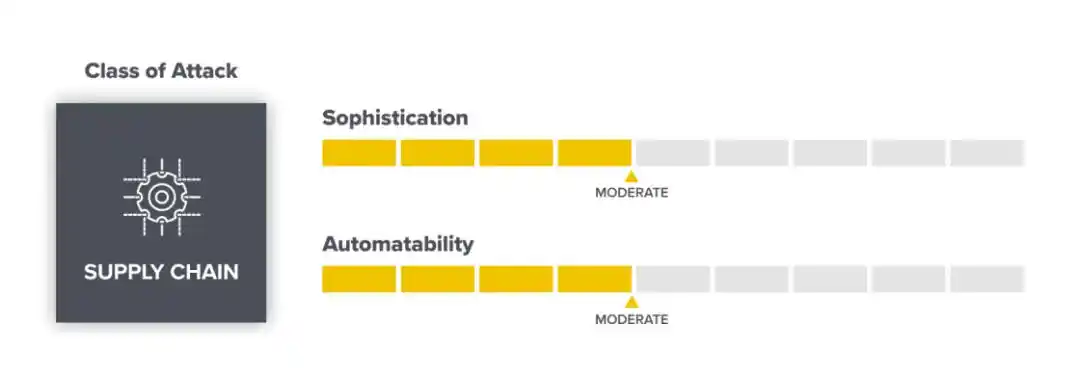
Complexity: Moderate (requires technical knowledge and some time).
Automation: Moderate (scanning for problematic software components can be automated; but when new vulnerabilities are found, exploits need to be built manually).
Expectations for the future: As software systems become more interdependent and complex, supply chain vulnerabilities are likely to increase. Opportunistic hacking is also likely to increase until a good, standardized approach to vulnerability disclosure is developed for Web3 security.
Governance Attack: Election Stealer

This is the first crypto-specific question on the form. Many projects in Web3 include governance, where token holders can make and vote on proposals to change the network. While this presents an opportunity for continuous development and improvement, it also opens a back door for the introduction of malicious suggestions that, if implemented, could disrupt the network.
Attackers have devised new ways to circumvent controls, expropriate leadership, and loot wealth. Governance attacks were once a theoretical concern, but are now proven feasible. Attackers can influence votes through massive “flash loans,” as happened recently with decentralized finance (DeFi) project Beanstalk. Governance votes that lead to automatic execution of proposals are more easily exploited by attackers; it is less likely to succeed if the enactment of the proposal has a time delay or requires manual signing by multiple parties (for example, through a multi-sig wallet).
Example
Beanstalk Theft of Funds< /p>
Overview
Who: Anyone from Organized groups (APTs) to independent actors.
Complexity: low to high, depending on the protocol. (Many projects have active forums, communities on Twitter and Discord, and licensing dashboards that can easily expose more amateur attempts).
Automation level: from low to high, depending on the protocol.
Expectations for the future: These attacks are highly dependent on governance tools and standards, especially related to monitoring and proposal enactment processes.
Pricing Oracle Attack: Market Manipulator

Pricing assets accurately is difficult. In the traditional world of trading, manipulating the market to artificially inflate or depress the price of an asset is illegal and you could be fined and/or arrested for it. In DeFi, it gives random individuals the ability to "flash trade" hundreds of millions or billions of dollars, causing sudden price swings, and the problem is obvious.
Many Web3 projects rely on "oracles" - systems that provide real-time data and are sources of off-chain information. For example, "oracles" are often used to determine the exchange price between two assets. But attackers have found ways to fool these supposed sources of truth.
As oracle standardization progresses, more secure bridges between the off-chain and on-chain worlds will become available, and we can expect the market to become less vulnerable to manipulation attempts more elastic. With any luck, one day such attacks may disappear completely.
Example
Cream Market Manipulation< /p>
Overview
Who: Organized groups (APTs), individual actors and insiders.
Complexity: Moderate (requires technical knowledge).
Automation: High (most attacks likely involve automated detection of exploitable issues).
Expectations for the future: As accurate pricing methods become more standard, these types of attacks are likely to decrease.
Novel vulnerability: unknown uncertainties

"Zero-day" vulnerabilities -- also known as zero-day attacks, which refer to security vulnerabilities that are exploited maliciously immediately after being discovered -- are a hot issue in the field of information security, and the Web3 security field is no exception. Because they appear suddenly, they are the most difficult attacks to defend against.
If anything, Web3 makes it easier to benefit from these expensive, labor-intensive attacks because once cryptocurrency funds are stolen, it is difficult for people to recover it. Attackers can spend a lot of time researching the code of applications running on-chain to find a vulnerability that justifies all their efforts. Meanwhile, some once-novel bugs continue to plague unsuspecting projects; a reentrancy bug that killed early ethereum venture TheDAO continues to resurface elsewhere today.
It is unclear how quickly or easily the industry can adapt to these types of breaches, but continued investment in security defenses such as auditing, monitoring and tools , will increase the cost for attackers seeking to exploit these vulnerabilities.
Example
Poly cross-chain transaction Vulnerability
Qubit Infinite Minting Vulnerability
Overview
Who: Organized groups (APTs), single actors (unlikely), and insiders.
Complexity: Medium-High (requires technical knowledge, but not all vulnerabilities are complex enough for people to understand).
Automation: Low (discovering new vulnerabilities takes time and effort and cannot be automated; once discovered, it is easier to scan other systems for similar issues).
Expectation for the future: More attention attracts more white hats, making the "threshold" for discovering new vulnerabilities higher. At the same time, as Web3 adoption increases, so does the incentive for hackers to find new vulnerabilities. This may still be a game of cat and mouse, as it has been in many other areas of security.
Original link
a>
Welcome to join the official BlockBeats community:
Telegram Subscription Group: https://t.me/theblockbeats
Telegram Discussion Group: https://t.me/BlockBeats_App
Official Twitter Account: https://twitter.com/BlockBeatsAsia
 Related Articles