29 new projects, a list of Avalanche Hackathon winning projects

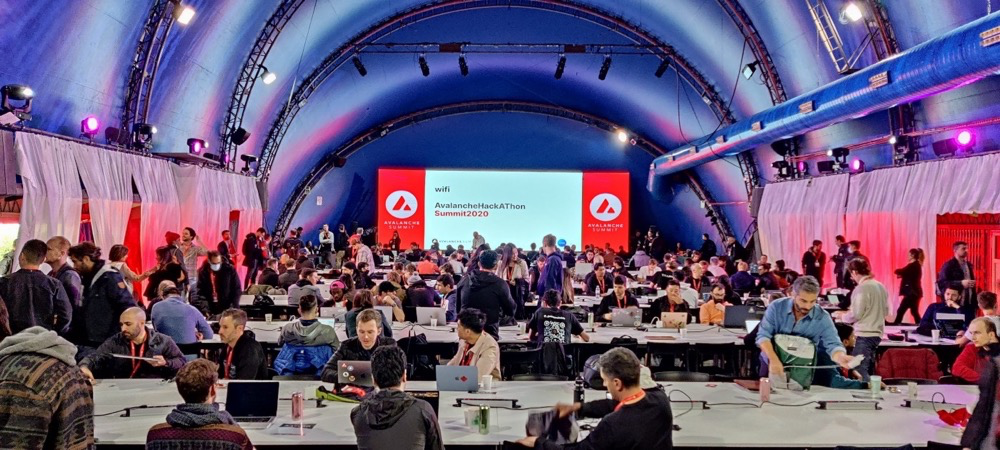
On March 27th, the Avalanche Summit Hackathon in Barcelona just concluded. In this hackathon, several sponsors provided prize pools and asked questions on the spot for the team to solve. Let's take a look at the projects that won this compelling competition, as organized by Encode Club.
< /p>
5 Winning Projects from the Avalanche Foundation
The Avalanche Foundation proposes five challenges. One is to create an optimally optimized precompiled EVM to solve problems such as the inability to use Solidity contracts and the high cost. The second is to build an optimal subnet UI compatible with Ledger, making it possible to add validators, send transactions, deploy assets/contracts, etc. The third is to create a tool for subnet operators to have a management subnet validator and get a notification service when a specific subnet validator is about to expire. The fourth is to run the most creative and innovative virtual machines in the subnet, and find the best custom VM. The fifth is to create an excellent Dapp on the subnet.
The five winning projects are OracleEVM, SubnetX, subnet.center, AEVEREST, zkID, and each project has received a prize of 20,000 US dollars.
OracleEVM
OracleEVM is a custom EVM that uses stateful precompilation to create high-fidelity financial Efficient access to information, the main advantage is the conservation of block space, efficient access to financial data through pre-compilation, and the validity of financial data is enforced by vm block verification and consensus.
SubnetX
SubnetX is a ledger-compatible subnet creation and management tool with a simple dashboard where users can create subnets and set expiry validators notify.
Subnet.center
Subnet.center is a real-time monitoring/notification system that can notify validators and delegators in different scenarios, such as notification: validator pledge expires, delegation stake expiry, uptime warning (when below 80%), validator stake capacity available (WIP, template/email code ready, trigger required) and new delegators (WIP, template/email code ready ready, requires a completion trigger).
AEVEREST
AEVEREST is a custom VM subclass based on C++ language on Avalanche network.
zkID
zkID is a zero-knowledge proof project, which is used to build a merkle tree using Poseidon hash on the AVAX public chain state, which can be used without the user disclosing his specific address It can be proved in the case of certain circumstances, such as the number of a certain Token owned, a certain type of NFT owned, and participation in the ICO of a certain project, etc.
The 3 winning projects of the Axelar prize pool
Axelar hopes that challengers will use the Axelar SDK to build Axelar Dapps, and the best ones will be rewarded.
CrossChainSwap
First place CrossChainSwap won $2,500, a contract built by @traderjoe_xyz with software engineer @Louis_Mslf and the team to perform cross-chain swaps.
Solity Network
Second place Solity Network, $1000, is a multi-chain revenue aggregator built by the team of @EralpKocas, a master student at the Technical University of Munich.
Skia Safe Wallet
The third place Skia Safe Wallet gets $500, which is a Wallet built by @constacrypto, @guillem_puche team, browser independent, users can use it on mobile devices.
The 6 winning projects of the Covalent prize pool
The first challenge from Covalent is to build your own projects using Covalent API endpoints, such as building NFT marketplaces, galleries, on-chain analytics, wallets, asset tracking, ROI, cost basis and tax calculators wait. Among them, MatchMe.NFT and Babalaunch each received a $1,000 prize.
MatchMe.NFT
MatchMe.NFT is a new matching social platform created by the HER DAO team. People can chat in the community of different NFT projects, but it is difficult to Find people with many similar interests in different communities to meet and chat. MatchMe.NFT uses data-driven algorithms such as user NFT collections and interests, and connects their wallets to match people with each other, chat, discuss and share. The project will distribute Tokens in the form of Gamify, and later will provide advanced features that can be accessed using MatchMe Tokens for payment, incentivizing communication between users.
Babalaunch
Babalaunch is a launchpad Dapp on a local subnet.
The second challenge was to build a project using the Covalent API with one of the other Avalanche Summit Hackathon sponsors. Ruby and the WowSwap Probabilistic Liquidation Bot received $2,000 each.
Ruby
Ruby is an NFT marketplace aggregator tool built by @jeansymolanza with @RichardAwoyemi that allows users to buy NFTs in bulk across multiple collections and marketplaces, it also won Joint bounty of Axelar and Covalent.
WowSwap Probabilistic Liquidation Bot
WowSwap Probabilistic Liquidation Bot is a liquidation bot built by the team to improve old bots while remaining lightweight for many users to run.
ExpiryDator and Skia Safe Wallet
ExpiryDator and the aforementioned Skia Safe Wallet each received $500. What ExpiryDator does is that subnet maintainers can be notified when a validator's uptime is reduced to a certain level or when a validator's end time is about to expire.
1 winning item of the Ankr prize pool
Ankr's challenge to the entries was to create a comparison tool that could compare Ankr's Public Avalanche RPC with other projects'. Real-time speed is displayed in the interface, and all endpoints can be optionally added or modified for transparency, presenting accurate results.
ANKR Endpoints
The award went to ANKR Endpoints, a script that pushes metrics to Prometheus and displays the results in Grafana, winning $2500.
3 Winning Projects from Aventures DAO
Aventures DAO is a project that wants to participate in the challenge and can establish a smart contract for DAO investment and fund management. Specifically, fund collection is processed based on pre-calculated shares, and then investment tokens are allocated to each DAO member to invest in specific projects based on the multi-signature of DAO funds.
DAO investment and treasury management Smart contracts
DAO investment and treasury management Smart contracts (DAO investment and treasury management smart contracts) won a $5000 prize, allowing authorized users to create investment events, investors can Among them, the custom investment native Token or ERC20 Token is open to everyone, and the investment can also be cancelled.
The second challenge is to develop tools that can provide a decentralized mechanism for some NFT treasuries (such as guilds). Its goal is to build a trade-in NFT system that allows governance to allocate emissions to sell targeted NFTs.
AVentures Token Distribution
AVentures Token Distribution won $3,000 for a smart contract that handles token distribution from DAO to different investors.
YieldPool
Win $2000 for YieldPool, which lets users channel their own NFT funds, combining DeFi and social investing.
3 Winning Projects of the Chainlink Prize Pool
Chainlink proposes that a challenger must successfully use Chainlink to trigger a state change of a smart contract. The winning projects are
Avert Transfer
First place Avert Transfert wins $2,500, Avar Transform allows anyone with NFTs to transform them using Neural Art Transfer, showing that Chainlink external adapters can be used with Fuji Testnet connection.
The Attik
Second place went to TheAttik, an Avalanche-based shopify-like platform for managing NFT communities through dedicated rooms and events, $1,500.
MatchMe.NFT
The third place, MatchMe.NFT, won $1,000. As mentioned before, it is a data-driven Web3 matching platform.
The 5 winning projects of the Dexalot prize pool
Dexalot proposes to build market-making bots using its smart contracts and REST API endpoints.
Dexalot MarketMaker
The winning project is the first place Dexalot MarketMaker, which received $5,000. It can use the web3 package to build a simple Dexalot market maker in Python, and it can be configured and can be Adjust prices in response to OrderStatusChanged and Executed events.
Mathieu's Dexalot Bot
Second place Mathieu's Dexalot Bot, a market making bot on Dexalot that can use simple strategies, gets $2000.
Sujen's Dexalot MM, CryptoConquistadoras and Solity Network
Third place went to Sujen's Dexalot MM, CryptoConquistadoras and Solity Network ($1000 each). They are Nodejs robot for market maker, automated market maker and multi-chain revenue aggregator using Dexalot interface and smart contract respectively.
2 winning projects from the Hacken prize pool
Hacken proposed a data analysis challenge and conducted a speed test. The specific content was to submit AVAX’s largest cold wallet address and AVAX balance snapshots on large centralized cryptocurrency exchanges, such as Binance, Coinbase, FTX, Kucoin, Gate. There are two winning projects, the first is Tokenfreaks with $2,500 and the second is DEFYCA with $1,500.
3 Winning Projects from the LayerZero Prize Pool
LayerZero presents two challenges, the best overall application using LayerZero and the best NFT or game project using LayerZero.
Float Capital
The first award-winning projects include Float Capital and AnyDAO, each of which received a bonus of 10,000 US dollars. Float Capital allows users to mint/exchange "Magic Internet Assets”, and these chains share the same liquidity.
AnyDAO
anyDAO is a decentralized cross-chain governance protocol, which enables multi-chain projects to allow governance token holders on all chains to Participate in voting under the condition of Token.
Octo Bridge
The second category, Octo Bridge, is also a prize of 10,000 US dollars. Projects are used to transfer users' assets from one blockchain to another.
1 Winning Project of the WOWswap Prize Pool
WOWswap wants challengers to develop a bot that can send cleared transactions earlier than the project's current liquidation bot. And said that one way to achieve this is through a mempool that listens to swap transactions on Pancakeswap, which can recalculate the value of loans or collateral more quickly.
WOWSwap Probabilistic Liquidation Bot
WOWSwap Probabilistic Liquidation Bot won the award, winning $5000, which we mentioned above.
Coinbase Wallet has not yet been disclosed
Coinbase expects to help Avalanche developers build a web3 economy, and it hopes that participants can build their own Avalanche subnet Dapp that brings Crypto beginners into the world of web3 on Avalanche by using the Coinbase wallet. Winners have not yet been announced and are pending.
Welcome to join the official BlockBeats community:
Telegram Subscription Group: https://t.me/theblockbeats
Telegram Discussion Group: https://t.me/BlockBeats_App
Official Twitter Account: https://twitter.com/BlockBeatsAsia

 Related Articles