THORchain's liquidation-free lending may be the trump card to change DeFi

Original author: 0x137, Rhythm BlockBeats
< br>
In the recent discussions about DeFi, I repeatedly heard a name - THORchain, a project that has been silent for several months, seems to have gained some popularity recently. It was originally intended as a hotspot tracking, but after careful research, it became a little excited. THORchain's upcoming THORFi is likely to become a new model of DeFi lending.
THORchain? Is that the stolen item?
Before entering the THORFi rabbit hole, let's first understand what THORchain is. After all, for many people, the impression of THORchain is still that " Stolen item".
THORchain is an application chain built with Cosmos SDK, which aims to enable non-native encrypted assets to realize cross-chain transactions of various native assets, such as directly exchanging with BTC ETH. This sounds like a cross-chain bridge, but it's actually quite different.
For now, there are two main ways to transfer assets across chains: one is a cross-chain bridge, and the other is a centralized trading platform. Both methods have different degrees of centralization or hosting risks, and the unique feature of THORchain is that it creates a completely decentralized "cross-chain" transaction channel. (Rhythm note, in 《When you are cross-chaining, assets Did it really transfer? " has a detailed introduction to asset cross-chain)
THORSwap is the main application on THORchain, it is actually more like A cross-chain Uniswap provides a liquidity pool for the native tokens of the underlying L1 and L2 chains, and users realize cross-chain assets through transactions. But unlike Uniswap, which provides liquidity for each trading pair, THORchain's trading logic is centered on RUNE Token.
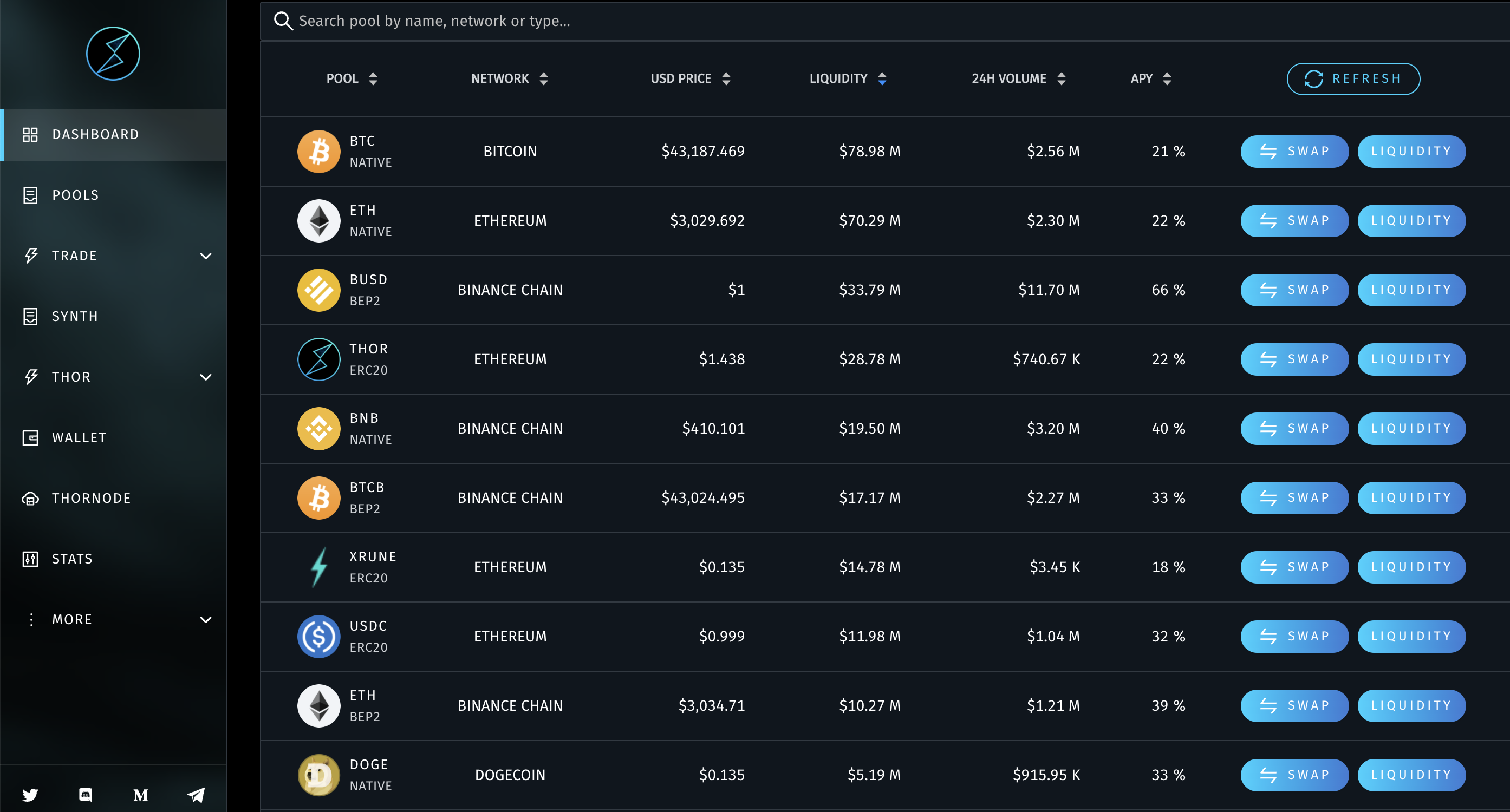
Taking BTC to ETH as an example, the user actually First exchange BTC for RUNE in the BTC-RUNE pool, and then exchange RUNE for ETH in the ETH-RUNE pool. One advantage of such logic is that it creates the possibility for RUNE to capture protocol value.
The consensus mechanism of THORchain stipulates that the ratio of Token in each LP liquidity pool must be 1:1, and secondly, the value of RUNE pledged by the verification node must be equal to or greater than The total value of the LP pool. In other words, the value of RUNE pledged on THORchain must be three times that of other assets, and the income generated by the agreement is distributed proportionally between LP providers and verification nodes.
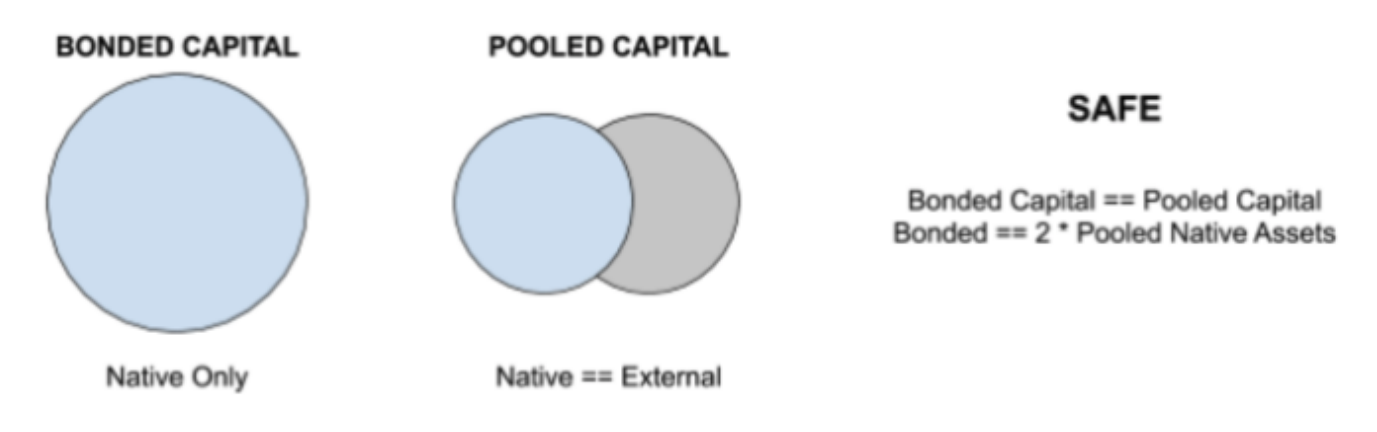
Image from Multicoin C apital report< p>
As long as assets cross-chain or more transactions, the more RUNE will be pledged. This creates a flywheel effect for RUNE's value capture and transaction volume growth.
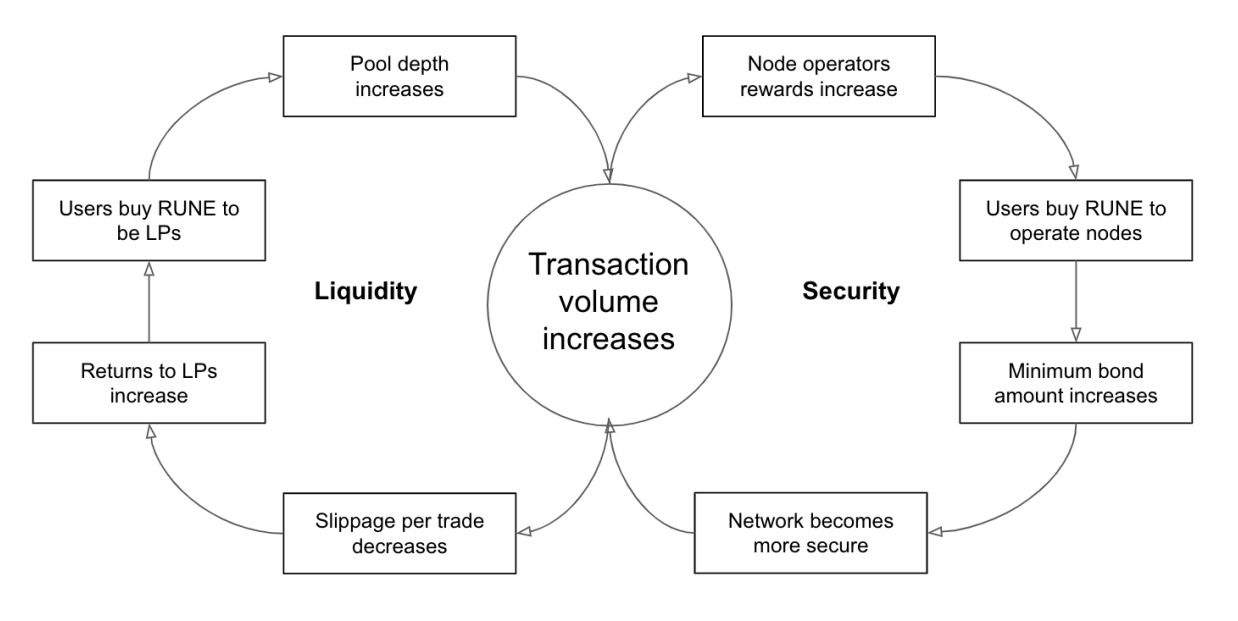
Image from Multicoin C apital report< p>
In addition, THORchain will also use its own income savings to provide impermanence loss protection for LP, and the compensation will increase by 1% every day for 100 days. After 100 days, LP providers will no longer face impermanence loss.
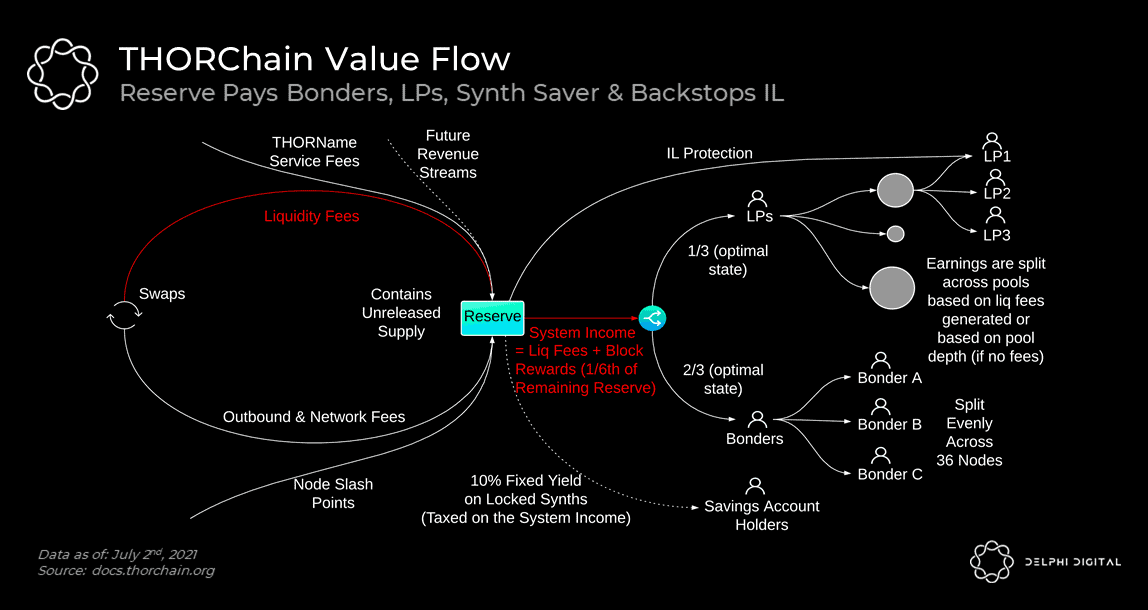
Image from Delphi Digit al report< p>
Sounds interesting, right, but there is a key problem in THORchain's design, which makes it an "always stolen project" in people's eyes.
The essence of THORchain is still a cross-chain of information. Users send assets to THORchain nodes on the BTC network. Equivalent assets are sent to users on the ETH mainnet. But if there is a problem in the routing process, it will lead to the loss of assets.
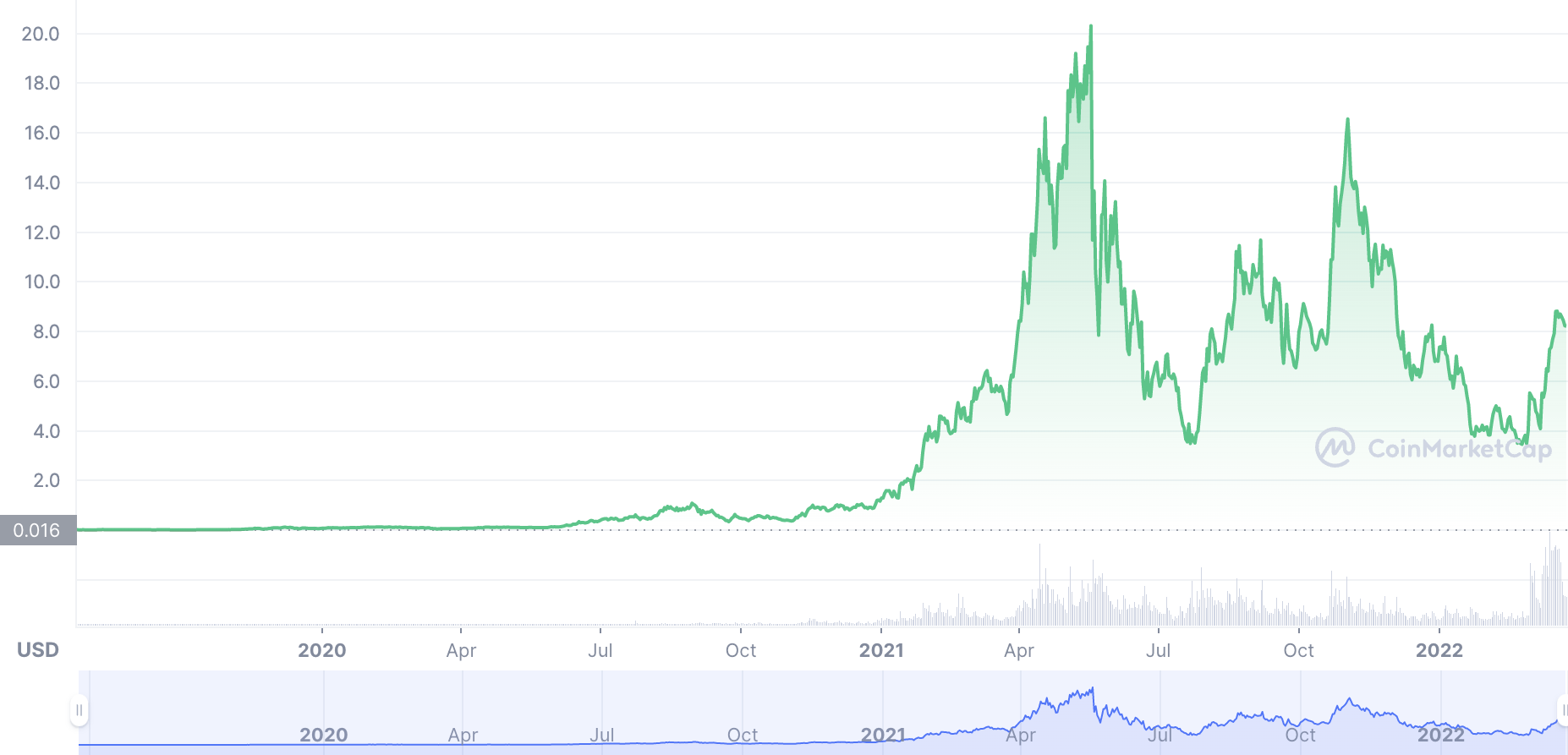
The exploit incident last June was the result of this. The hacker tricked the node into thinking he had deposited a large amount of ETH, resulting in a false outflow of $140,000. Although the THORchain network responded quickly, and the core developers immediately made repairs and compensation measures, this incident still caused people to worry about the code quality of THORchain, and the price of RUNE also dropped sharply.
Of course, after this THORChain team also agreement Many improvements to enhance the security of the network, including automatic solvency checkers, validator checks and control authority, large fund withdrawal delay mechanism, etc.
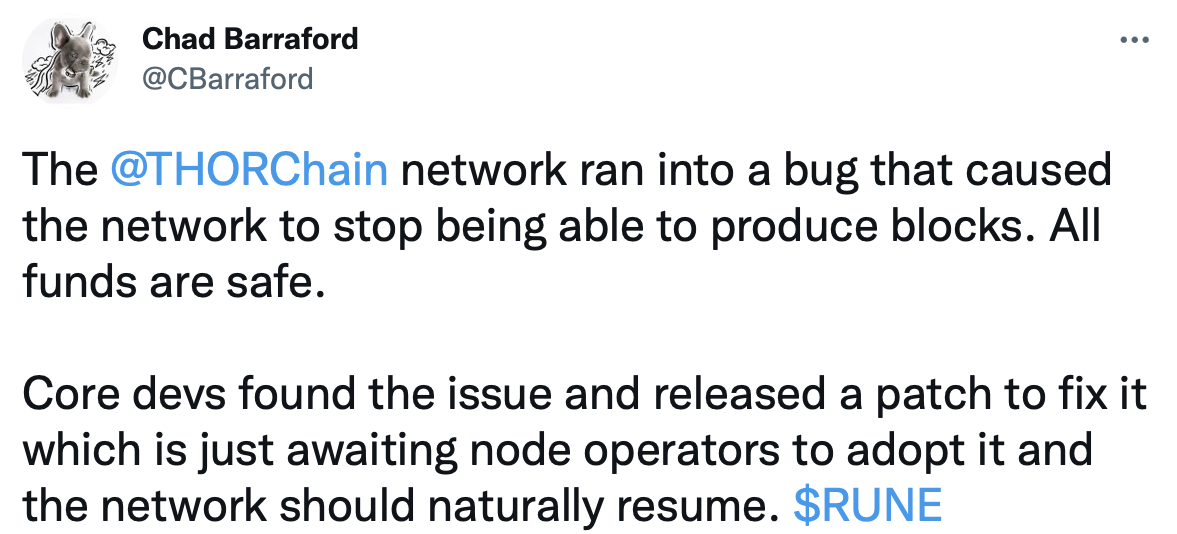
It should be emphasized that these upgrades and changes have had a number of negative impacts on the user experience. Bugs or updates frequently occur on the THORChain network, forcing the network and transactions to be suspended, the most recent one even happened a few days ago.
Recently, the cosmos team announced that it will no longer maintain 0 .42. x version SDK, THORChain was forced to undergo a hard fork to upgrade to the latest version 0.45.1. The performance of the THORchain network after the fork and the team's coding ability still need the test of time.
Nevertheless, THORchain has become the subject of heated discussions in the DeFi community recently.
Why is THORchain popular again?
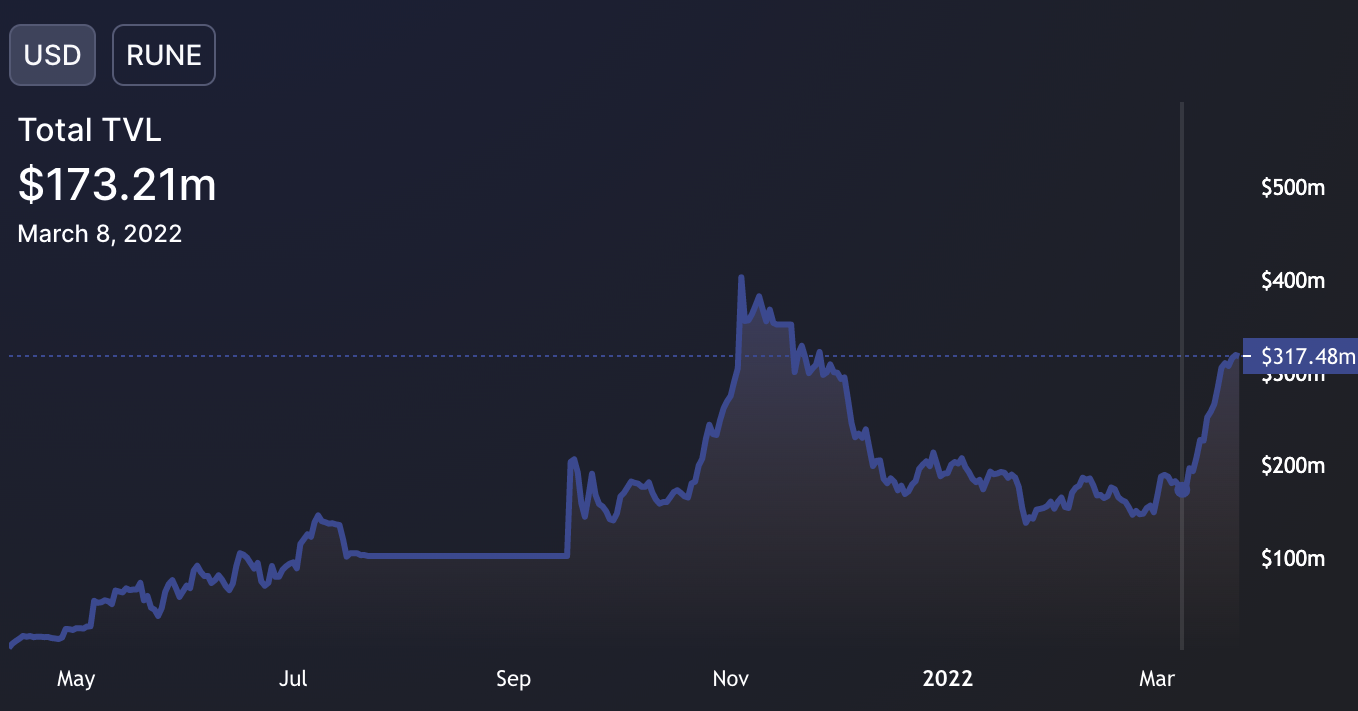
Opening DeFi Llama, we will find that THORchain's TVL has been steadily rising in the past month, thanks to the new features introduced by THORchain and further cross-chain development .
THORChain Synthetics
< br>
Now we know that the assets on each chain are not really cross-chain on THORchain, which creates a potential small problem. Taking ETH as an example, since assets are always transferred on the Ethereum mainnet, it is inevitable to face high gas, which hinders the improvement of THORchain's transaction volume and liquidity to a certain extent.
To solve this problem, THORchain launched its own synthetic assets.
Different from synthetic assets such as WBTC and renBTC, the synthetic assets on THORchain are endorsed by the LP pool in the ecosystem, half of which are RUNE and the other half are target assets , so it is more like an LP Token. Of course, it is also pegged 1:1 to the target asset.
With synthetic assets, users can complete most transactions on THORchain and reduce their own gas costs. Of course, these assets also unlocked the liquidity of the LP pool, and built a good platform for THORchain's various "money Lego" in the future.
IBC + LUNA
As mentioned above, the number of pledges of RUNE is related to the agreement There is a positive relationship between liquidity and trading volume, so where does liquidity come from? The answer is naturally new cross-chain assets.
THORchain has been in an "expansion phase" for the past few months, constantly adding new cross-chain assets to provide a source of liquidity for the protocol. In this regard, THORchain has many inherent advantages, because it is also built with the Cosmos SDK, so THORChain can more quickly integrate more Cosmos-based projects, such as Osmosis, Kava, etc.
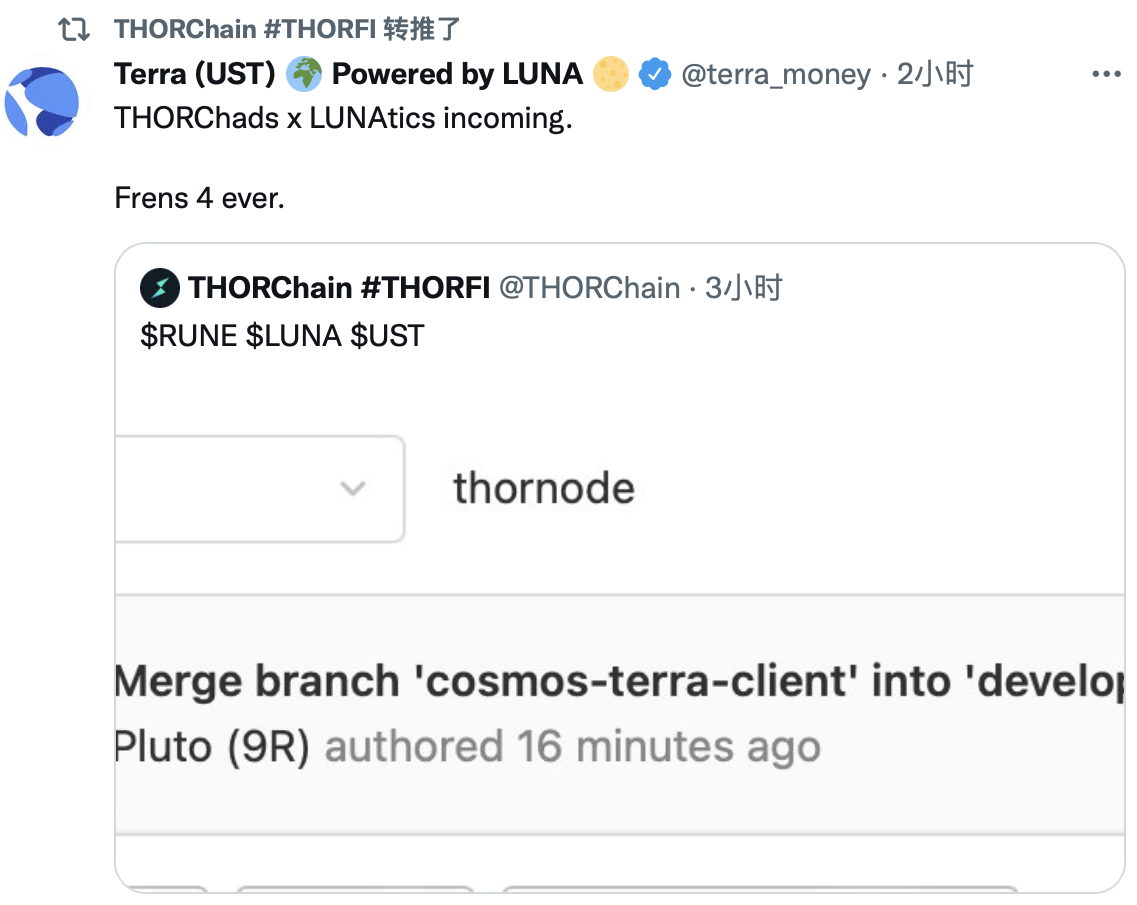
It is the integration with Terra that has caught people's attention recently. As the second strongest ecology of TVL, the liquidity that Terra can bring to THORchain is conceivable.
There is one more thing ...
Although THORchain Synthetics and the new cross-chain integration are indeed exciting, in my opinion, the real trump card of THORchain is the upcoming THORFi.
Although the market prospect of decentralized cross-chain transactions is very broad, if THORchain only wants to become a trading platform, then the pattern is a bit small. We all know that most of the income in the financial world comes from the lending market. The development of DeFi and even the entire Crypto industry also depends on the lending sector.
Currently, DeFi lending does not create enough space for capital utilization and liquidity improvement. One is the need for over-collateralization, and the other is that the liquidation risk is too high. At present, the solution of many protocols is still simple Looping. Although this improves the utilization rate of funds, it sacrifices liquidity.
If the lending of encrypted assets can achieve zero liquidation risk, will it solve many problems? It might sound like Too good to be true, but THORFi does, at least in theory.
Suffice it to say, THORFi is still in development and Doc has just opened up for community feedback, but as far as the design goes, I'm definitely intrigued.
Without further ado, let's jump down THORFi's rabbit hole.
THOR.USD
To build its own lending platform, THORchain created its own stable Coin THOR.USD. It adopts a similar model to UST, where users burn RUNE to mint THOR.USD and vice versa.
Same as LUNA, after the value is linked between the two, the usage rate of THOR.USD will be reflected in the price of RUNE, which needless to say.
Borrowing
Unlike other lending platforms, the collateral accepted by THORFi must be LP assets , so in essence, lending will make the liquidity pool on THORchain deeper and push the price of RUNE up.
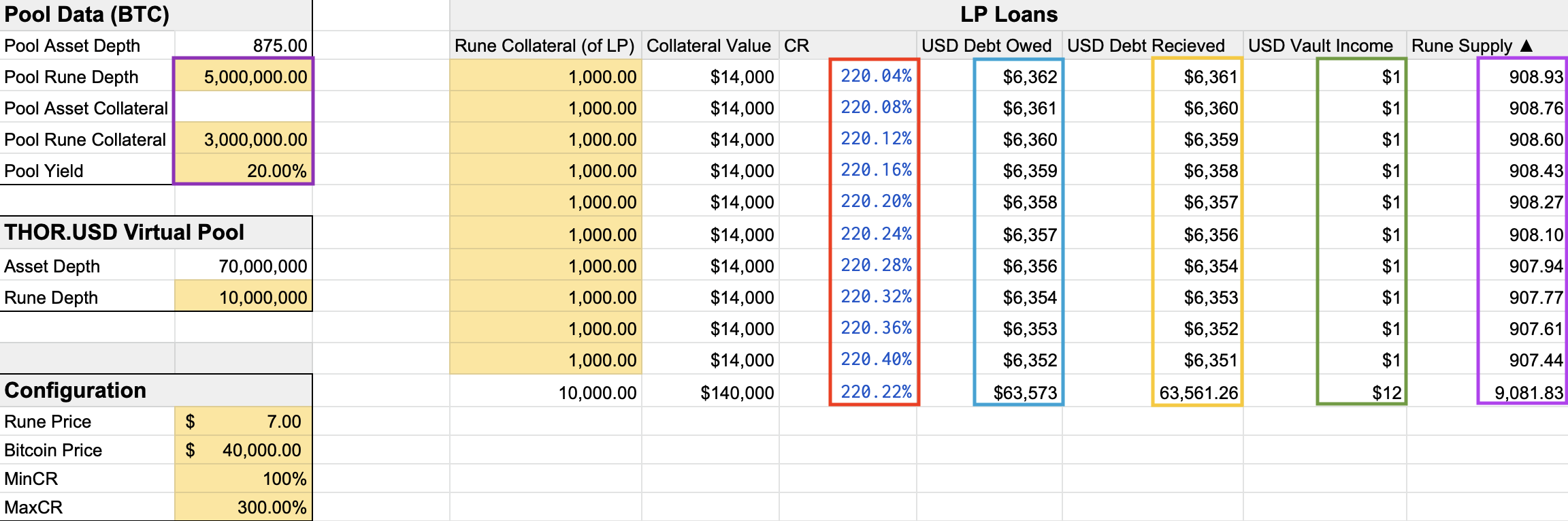
Another important part is the Collateralized Ratio, which is determined by the depth of the LP pool + the ratio of LP collateral to loan assets. The higher the mortgage value, the higher the CR value, and maxCR is the highest mortgage rate. For example, if the value of the mortgage is $1,000 and the CR value is 200%, then the maximum value that the user can borrow is $500.
As shown in the figure below, as old loans are continuously repaid and new loans are continuously lent, the CR value will continue to rise, which will also enable The network gets more benefits. And maxCR can be adjusted after a period of time to promote lending and lending to remain as active as possible.
With LP assets as collateral, who would To provide loans? This is where THOR.USD comes into play.
Still taking the data in the above figure as an example, when the mortgaged LP asset value is 14,000 USD and the CR value is 220.04% (red box), the user theory The value available for borrowing is $6,362 (basket).
But we see that the user actually received a loan value of $6,361 (yellow box). This is because after THORFi determines the loanable value, it will mint RUNE of the corresponding value, then burn it to mint THOR.USD, and charge a certain percentage of fees to inject value into THOR.USD, in this case 1 USD ( green frame). And because the values of THOR.USD and RUNE are always linked, the supply of RUNE will still increase after burning, 9081.93 in this example (purple box).
This step is critical as it turns the borrower from the user into the protocol itself. That is, THORFi takes the risk for the loan by minting RUNE. Of course, as a borrower, the proceeds of LP assets also belong to the agreement, in this case 20% (upper left box)
THORSaving
THORSaving is another core component of THORFi's realization of no-clearance lending. Simply put, it provides an opportunity to generate income for L1 Token holders who do not want RUNE exposure.
For example, a BTC maxi only wants to hold BTC, but at the same time wants to obtain higher BTC income through THORchain, then he can use his BTC is deposited into THORSaving, and the LP collateral income just now will be distributed to these depositors accordingly.
There is another key operation here, because the original BTC cannot be directly deposited into THORSaving, so the user actually needs to exchange for the same amount of RUNE, and then destroy it to mint thouBTC This synthetic asset.
Then the magic happens.
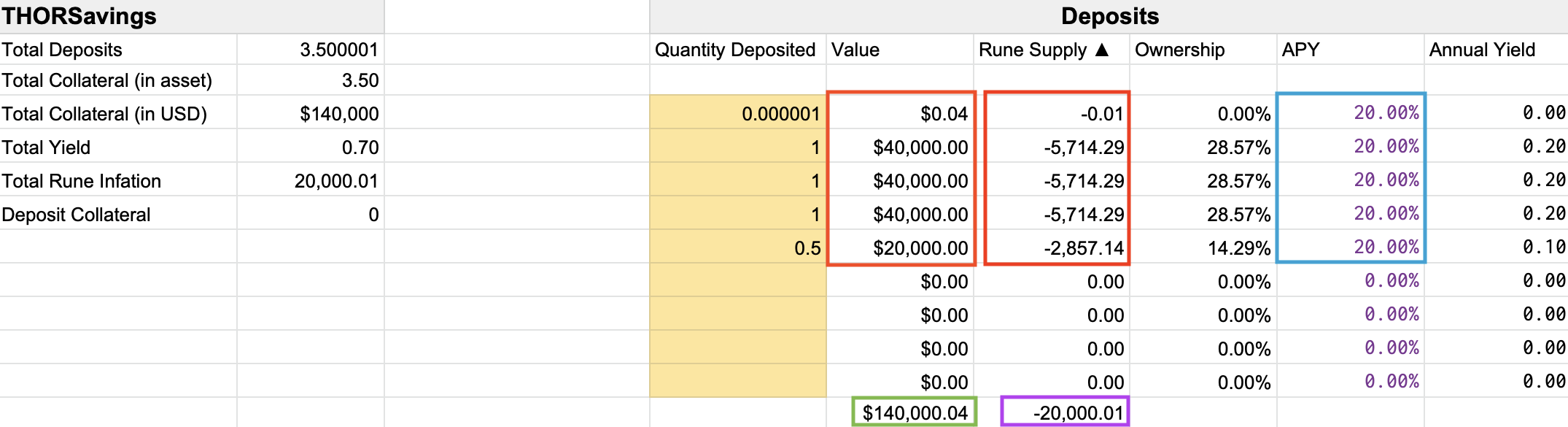
As we can see in the figure below, every time Hodlr deposits a synthetic asset, the corresponding RUNE will be destroyed (red box), and due to The CR value is always greater than 100%. When the deposit value is equal to the mortgage value (green box), the number of RUNEs destroyed must be greater than the number of minted. In this example: 908.93-20,000.01=-19,091.08 (purple box).
这样一来,协议作为借贷方,在De-risking has been achieved at this moment because the amount of RUNE burned has exceeded the amount minted.
That is to say, it does not matter whether the collateral value is lower than the loan value, because the loan issued by the agreement has been repaid in the previous step.
However, there is a problem here. If the deposit value in THORSaving is less than the mortgage value, there will be a risk of insufficient destruction. How does THORFi solve this problem?
In THORSaving, while the total LP collateral return is fixed, it is not for individuals as the return is prorated.
For example, in the picture below, there is only USD 40,000.04 deposit in the entire THORSaving, then the APY obtained by the user will reach 70%, and the LP pool will be 20% The APY will soon be bad, that is to say, people will be more willing to deposit in THORSaving at this time.
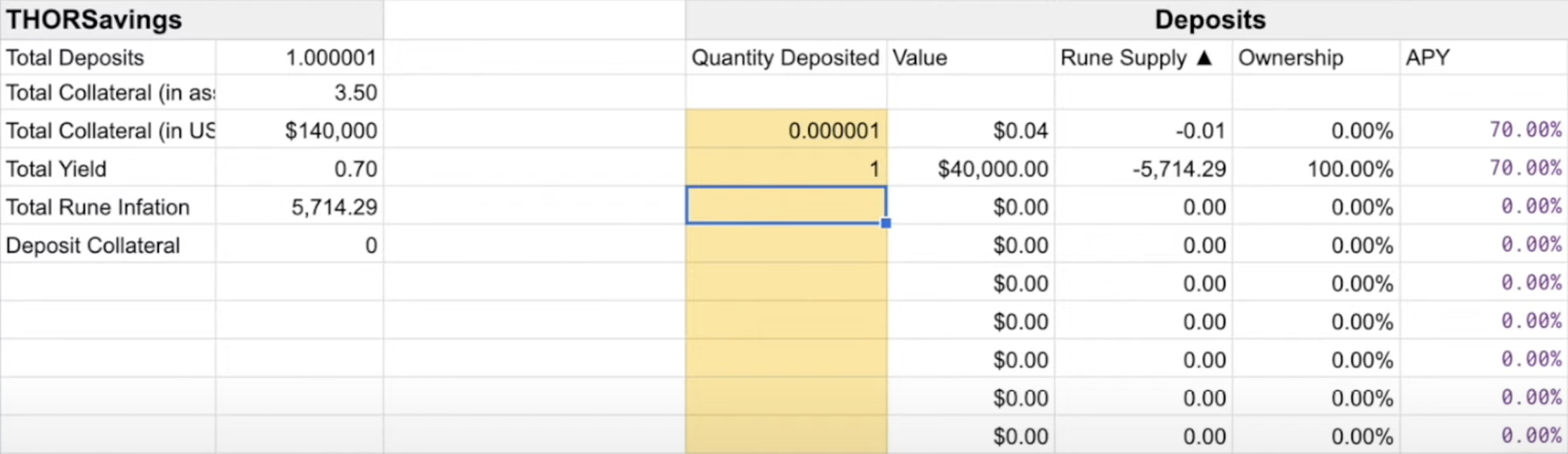
As the deposits continue to increase, THORSaving The APY is also It will continue to decline. When the deposit value reaches 140,000 US dollars, which is equal to the mortgage value, APY will return to 20% equal to the LP pool, and the deposits on both sides will also achieve a certain economic balance.
Self-repaying loans
In THORFi's initial Doc, the team introduced THORFi's lending function It's called a zero-interest loan. The borrower gives up the income of the LP collateral as interest compensation, and no other fees will be paid by himself.
In order for THORchain to generate sufficient yield, all loans must be open for at least 100 days, and an additional 1% fee will be charged for each day of early settlement.
The first thing to say is that zero-interest loans alone can stimulate a lot of liquidity. After all, THORchain is not aimed at any single public chain ecology , but the entire encryption field. However, in the process of community feedback, the THORFi team also decided to change it to a negative interest rate loan, which can be said to be extremely important for the further popularization of DeFi.
Imagine, if you don’t use your savings, how can ordinary working-class people invest in the encryption field? Obviously, part of the monthly salary is used to maintain daily expenses, so it is difficult to achieve a large amount of fixed investment.
But if there is a stable and convenient negative interest rate loan, the situation will be different. Because the invested property can be used as collateral to borrow living expenses, and at the same time, the collateral is used as an interest-earning asset, and the interest generated can automatically repay the loan.
For the entire encryption market, this will undoubtedly attract more funds to enter the market and accelerate the popularity and development of the industry.
Although THORFi's non-liquidation loan needs more practical tests, and the team's previous coding quality is somewhat worrying, its beautiful design really provides DeFi lending provides a new way of thinking, at least in my opinion, THORchain is on a correct and promising path.
References:
《THORchain Docs》, THORchain
THORFi Economic Design, Son of Odin
《THORChain (RUNE) Analysis》, Multicoin Capital
《Hardening the THORChain Protocol》, THORchain
Out From Chaos Comes THORSynths, Can Gurel
Welcome to join the official BlockBeats community:
Telegram Subscription Group: https://t.me/theblockbeats
Telegram Discussion Group: https://t.me/BlockBeats_App
Official Twitter Account: https://twitter.com/BlockBeatsAsia
 Related Articles