1.5 billion US dollars in crypto, a new fund manager from a16z
Original title: "Exclusive: Why star VC Katie Haun departed Andreessen Horowitz with an audacious plan to build a $1 billion crypto investing juggernaut"
Original author: Michal Lev-Ram
Original compilation: Deep Tide TechFlow
On March 23, according to The Block, Haun Ventures, a venture capital firm led by former a16z partner Katie Haun, has established Its two cryptocurrency-focused VC funds raised $1.5 billion, with $500 million in early-stage investments and $1 billion in an "accelerator" fund. The first female fund manager of a16z, Katie Haun, a former federal prosecutor of the US Department of Justice, has too many mysterious colors. This article will take you to understand this new encryption queen more intuitively.
Text
Katie Horn invited me to visit her art collection. It is very convenient that this visit does not require rushing to the gallery, or even going to her home-Haun's favorite collection medium is NFT, the so-called "non-homogeneous Token". So, what we're looking at is a whole suite of digital images on her phone. In Haun's tech industry, these digital collectibles stored on the blockchain like cryptocurrencies have become a highly sought-after fashion product.
To find her favorite, Haun flicked through pictures of lush flowers, as well as some edgier, cyberpunk-inspired avatars . "My collection tastes very diverse," she admits. Some of the hottest creations on the blazing NFT market have sold for tens of millions of dollars, but this pixelated image — of a girl with bright pink ponytails — didn’t cost her penny. It was a birthday present from her good friend Elena Sirenok at the end of 2021. It's worth pointing out that Elena is also the wife of Chris Dixon, a partner at Andreessen Horowitz. Dixon has co-chaired the firm’s cryptocurrency fund with Haun since she left her job at the U.S. Department of Justice to pursue venture capital.
But while the girl with the bright pink hair may reside on the blockchain forever, real-world human connections are more apt to change . Here is a ready-made example. The reason I'm here is that Haun just made the big announcement: She's leaving Dixon, and the mighty Andreessen Horowitz firm, to start her own fund.
While the average person may not know Haun, she has become an unexpected star in the cryptocurrency and wider Web3 world. Web3 includes not only cryptocurrencies such as NFT, Bitcoin, and Ethereum, but also the underlying blockchain facilities that support these cryptocurrencies. When Haun entered the field in 2013, she was not an innocent cryptocurrency fangirl. In fact, she was a federal prosecutor based in San Francisco at the time, investigating how criminals were using the technology to commit crimes.
“I did not choose this appointment.” Her previous legal work also includes prosecuting white-collar criminals, prison gangs and corrupt federal agents. "But I did choose to stay in the field," Haun said.
This choice comes from the kind invitation of Andreessen Horowitz. Andreessen Horowitz, also known as a16z, is one of the largest and best-known venture capital firms in Silicon Valley. At a time when many VCs were wary of investing in cryptocurrencies, a16z founders Marc Andreessen and Ben Horowitz were early believers in Web3. In Haun, the two legendary venture capitalists saw a much-needed expertise that few had: the ability to navigate the complex regulatory environment facing the fledgling crypto industry.
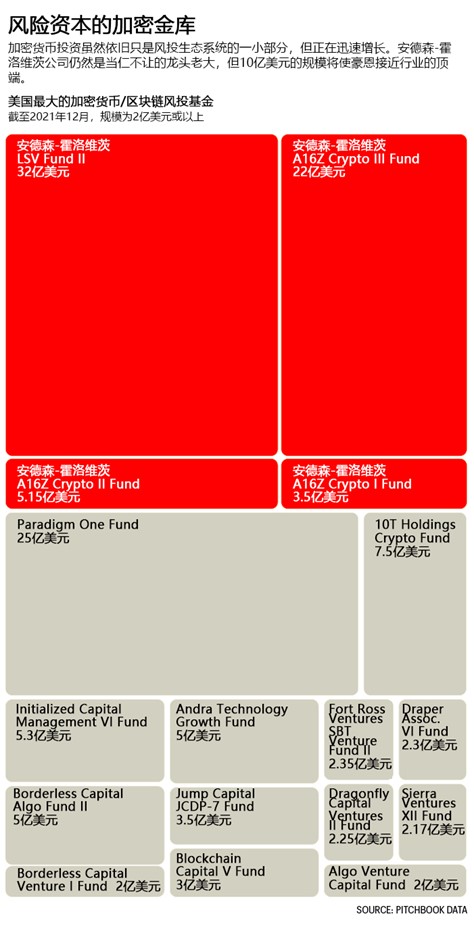
Subsequently, the former prosecutor was hired as a16z's first female investment partner. She co-founded the firm with partner Dixon and leads a cryptocurrency investing team of about 50 people. Its last fund raised a staggering $2.2 billion in total. It didn’t take long for the one-time outsider to become one of a16z’s most high-profile partners, investing in popular companies such as cryptocurrency trading platform Coinbase and NFT marketplace OpenSea.
In mid-December 2021, Haun suddenly announced that he would leave a16z and prepare to start a new venture capital company. As soon as the news came out, Silicon Valley was greeted with a series of shock waves of text messages: congratulations, praise, and even doubts. That's a big deal, especially considering Haun is said to be launching a $1 billion fund. If she gets her way, it will be the largest cryptocurrency fund ever raised by a female venture capitalist alone.
“In the field of cryptocurrency investment, there are not many women.” said Amy Wu, the head of FTX Ventures (FTX Ventures). She herself has just been invited to join FTX Ventures and is responsible for managing a $2 billion fund launched by the cryptocurrency trading platform in January this year. In fact, not many women write VC checks; in the US, women VCs make up only 15.4% of general partners.
Now, the former prosecutor faces a new challenge. Yes, Haun left a16z, where she had been in office for four years, with a popular image, rich network resources and dazzling investment performance. But she also gave up the company's strong team (a16z has more than 300 employees), deep pockets, enviable resources and reputation. Haun and her scrappy team of six have a very different proposition for startup founders. The new company is about to enter a world that alternates between dizzying gold rushes and nauseating price adjustments. Can Horn 2.0 survive such a turbulent environment and get the founders to sign their names on the dotted line in the investment agreement?
On a crisp January day of this year, Haun and I chose to meet for the first time at the Rosewood Hotel in Menlo Park, just a few meters from her former a16z office. steps away. We sat on an outdoor patio with a stunning view of the Santa Cruz Mountains. It's a very convenient meeting place for the many VCs working in the area, but the usually bustling hotel is deserted, with few customers. It makes sense: In the Bay Area and elsewhere, infections with the Omicron variant continue to surge. But even if the place is crowded with VCs as usual, Haun will be a very prominent one. She has blond hair and piercing blue eyes, and I've never seen her in a dress with an Arc'teryx or a Patagonia logo on it—on Windy Sand Hills Road, These two pseudo-casual brands are people's standard outfits. Haun wore a dress with black and white polka dots today. The last time we met, she was wearing a pale pink Valentino suit.
Horn is elegant but not reserved. There's an elusive quality about her, an ability to talk to anyone, whether it's in a boardroom or in a courtroom. She is persuasive and persistent. But she's also reassuring, and Haun appears excited—even a little dizzy—when talking about her new company.
A source broke the news that Haun is raising at least $1 billion for her initial fund. Haun would not confirm the figure. She said she was blocked from commenting for "legal and regulatory reasons". This is the standard rhetoric of VCs when raising funds. They worry that if they say something wrong, they could piss off the SEC. But $1 billion seems like a feasible, if not conservative, figure given the vast amount of money pouring into the cryptocurrency space today.
In 2021, venture capital funding in the U.S. will hit a record $128.3 billion, according to recent data from PitchBook. The share flowing to cryptocurrency funds is also growing rapidly, from less than 0.5% in 2017 to nearly 7% in 2021. Even as the VCs are spilling their money, their own investors, known as limited partners, are rushing in to fill their coffers. This, combined with Haun's ability to actually get involved in the hottest crypto trades, bodes well for her. And she plans to start with a small team and only focus on the encryption field, which may be good for her.
"True crypto-native funds are extremely attractive to limited partners." said Ilya Fuschman, a partner at venture capital firm Kleiner Perkins , "This is because these investors can attract exciting new founders."
Haun is seizing the moment. Her new company has made seven investments, including an undisclosed amount in Los Angeles-based startup Autograph. This is a company that helps athletes and entertainers launch and market NFTs. Fushman, whose company is another lead in the round, and Haun, will both join Autograph's board. An interesting fact is that the startup also has the backing of superstar Tom Brady, who currently plays for the Tampa Bay Buccaneers. But guess who else led the $170 million round? A16z, Dixon will also join the board.
It may be hard to believe -- after all, any breakup inevitably creates a certain amount of tension -- but both insist that Haun and Her former employer broke up amicably. She said that she had a very rewarding and fruitful time at a16z. She also credits the company's founders for giving her a chance. "Not many people thought, 'Oh, she's going to be a great venture capitalist,'" Haun said.
But Haun believes that working with the founders has changed her view of what she wants. “One of the things I’ve learned over the last four years at the company is that I’m actually pretty good at entrepreneurship,” she says. The moment a16z's third crypto fund is deployed in 2021, she feels it's time for a new chapter in her life. "This turning point prompted a long period of soul-searching," she said. "It was time to step out on my own. It's that simple."

Haun pointed to a terrace near our seats. She said that in December 2021, she and Dixon were there to discuss the details of her new start, such as how many old subordinates she could take away. (One insider dubbed these haggling negotiations "horse deals.") Ultimately, it was agreed that Haun would leave with six a16z employees, including her chief marketing officer, Rachel Horwitz, and the new company's CEO. Tomika Thielemann, head of global policy. It was also decided that a16z would be an early investor in her new fund. There's no doubt Haune's new company will be a competitor to her old owner a16z on some deals, but as an investor in her new company, a16z will benefit no matter who wins. Beyond that arrangement, both Horn and a16z say they will continue to work together on deals, as they just did in leading Autograph.
“We regularly discuss promising projects and teams and continue to work together on multiple boards.” Dixon said in a statement provided to "So we will continue to have a very close working relationship," Fortune said in a written statement.
Despite repeated pleas, Dixon has been reluctant to Talk to me directly. This shows that a16z adopted a media communication strategy that is very different from Haun's. As you'd expect from a former prosecutor -- a job that often involves using the media to advance your case -- Haun enjoys being in the limelight, a frequent media interviewer and longtime tech conference (she has spoken at three Fortune sponsored events). At the same time, A16z has become increasingly indifferent to the media. Its co-founder, Mark Anderson, is even more famous in the media circle for blocking journalists on social media. The venture-capital giant has even started an internal content operation in an attempt to avoid the media entirely.
You know who else hates the media? celebrity.
But this does not prevent Mindy Kaling from revealing her first impression of Haun to the author of this article. “She’s a VC I really want to go on vacation with,” she told me via email. Kaling is an actress, writer and producer, perhaps best known for her role on The Office.
Karling met Haun at a dinner in Los Angeles in the fall of 2021, along with a group of women in showbiz. One of the purposes of the meetup was for Haun to share her experience investing in the crypto world with entertainers, some of whom were interested in dabbling in Web3. Famous actress Gwyneth Paltrow also attended the party that night, according to people familiar with the matter. She later announced an investment in bitcoin miner TeraWulf.
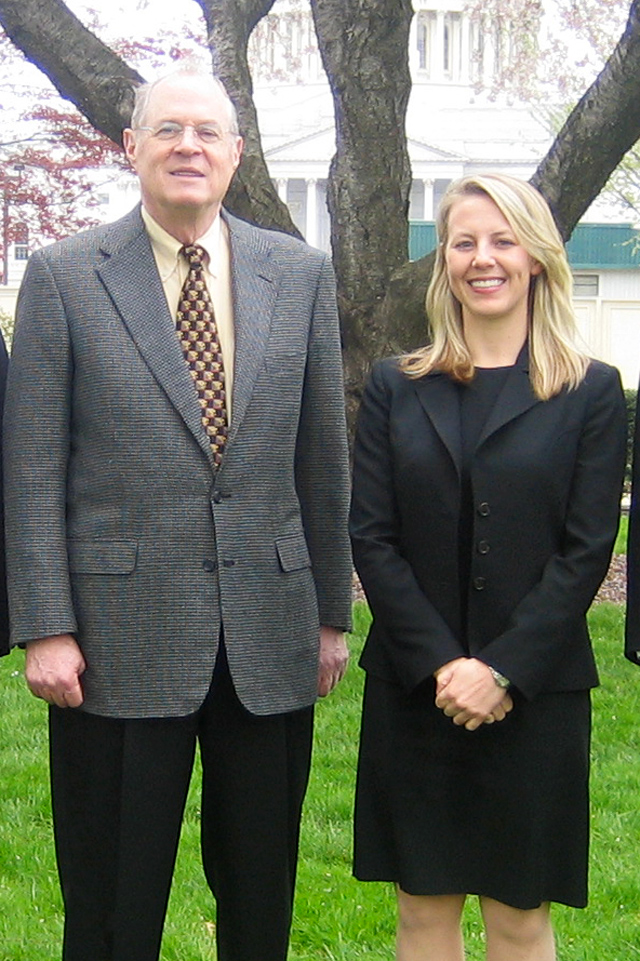
Image source: COURTESY OF KATIE HAUN
In 2004, Haun and the highest Court Justice Anthony Kennedy poses for a photo. She clerked for the justice from late 2004 until 2005.
In order to stand out from the competition, one of the ways Haun thought of was to plan to focus on "vertical fields" and bring in expert consultants for each field. She hired Jared Cohen, chief executive of Google think tank and incubator Jigsaw, and William Frentzen, also a prosecutor, to head technology and government policy, respectively. When Haun needed an entertainment consultant, she called Kaling.
“I think I said yes before she finished speaking.” Kaling said, “She is a legend in the encryption community, who Don't want to be around her?"
Furthermore, according to Horn's plan, her new company will Some big changes are needed. She has no intention of going for that kind of sheer size. "To be nimble, we're building a small, lean team," she says. a16z is known for providing a full suite of services, from marketing to legal, to the companies it invests in, but Haun sought a more focused approach, clarifying what her firm can and cannot do for founders.
For Horn, small-scale and targeted services do not conflict with globalization. She plans to find startups far from startup hot spots like Silicon Valley. “I think some of the best cryptocurrency founders tend to be hidden in some of the less visible corners,” Haun said. Global vision.” (A16z claims that the vast majority of crypto companies it invests in are “registered” in the United States, although many companies have employees scattered around the world.)
Of course, the new company has to have a name. So far, Haun has referred to the new company by her initials, "KRH," an acronym for Katherine Rose Horne. But the investor said it was done only to facilitate the signing of legal documents. "I don't want to rule anything out, but I'm not going to put my name on the company," Haun told me. "I'm building a franchise. Let someone else take care of it."
It's hard to quantify how successful Haun has been as a venture capitalist. This is partly due to the nature of the job - it's normal to lose bets, and those successful investments often take 10+ years to "exit", that is, go public or be acquired. Over the past four years, Haun and the cryptocurrency team under a16z have made more than 60 investments. Those investments have resulted in just one exit so far: a direct listing by cryptocurrency trading platform Coinbase in 2021 at a whopping valuation of nearly $100 billion. Although Coinbase was Haun's first job as an insider in the crypto world (Coinbase invited her to join the board after Haun left the U.S. Department of Justice in 2017), it was actually long before Haun joined a16z in 2013. A venture capital institution made its first investment in the company.
Nevertheless, there are many businesses in her portfolio that have achieved eye-popping growth in valuation. This is perhaps the most often cited measure of success before a VC exits a startup. For example, OpenSea has become the dominant player in the NFT market, with its valuation soaring from $1.5 billion in 2021 to over $13 billion today.
“She’s a heat-seeking missile,” says Jesse Walden, a former investor at a16z. Also know who you need to know to keep up with the industry trends. For investors, this is a superpower.” Walden left a16z in 2020 to start his own cryptocurrency fund.
Indeed, finding the right founders and getting their approval to invest seems to be a big part of Haun's success thus far. At her new firm, she plans to put that superpower to good use, building her own team, helping companies she invests in build their teams, finding deals and, of course, closing them.
"This is how I have made a living for more than a decade." She was, of course, referring to her previous career as a federal prosecutor. "I make deals, I negotiate, I sit opposite someone I have to see through quickly."
"Katy is a veteran player." Royal's joint Founder and CEO Justin Blau said. Royal is a company that helps musicians sell royalty rights to fans. "She has been active in this space for a long time, and her connections not only reach all corners of the crypto world, but also go far beyond the scope of the crypto community."
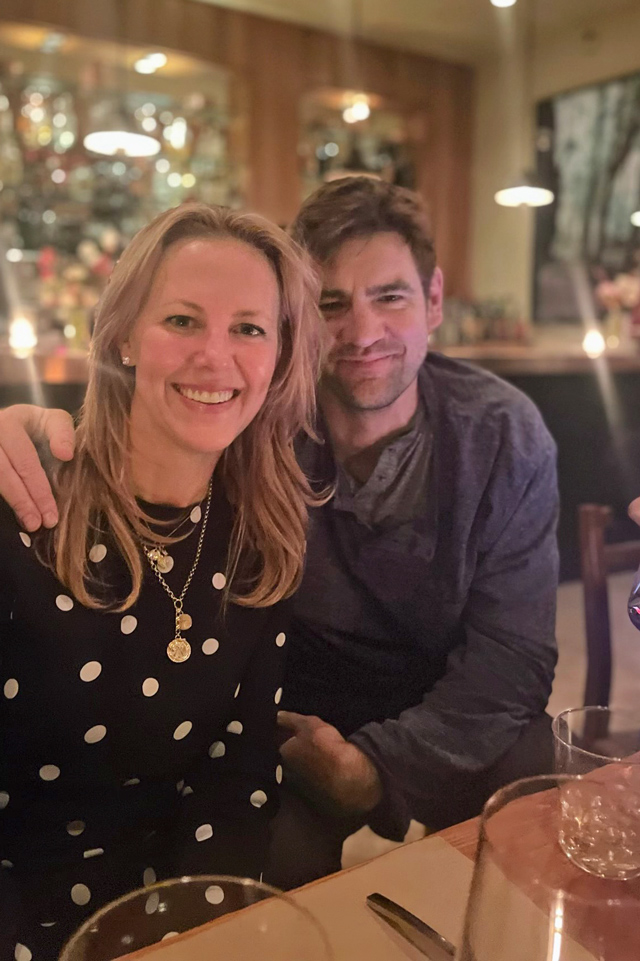
Photo credit: COURTESY OF KATIE HAUN
After the announcement of her departure, Haun joined Dixon at a16z's team dinner.
Emily Chua, Coinbase’s chief operating officer, recalls a time when a potential director was considering a job at another company, and at that point, Hown stepped in. According to her description, Haun invited the gentleman out for dinner. After the two parties sat down, she told the other party that it was too crazy not to join Coinbase. It worked. "She knows what to say to turn things around," Cai said, "and she won't stop until she achieves her goal."
Horn is building a16z's cryptocurrency team has played a pivotal role. Over four years, the team has grown from two to about 50 people. Haun said she recruited "most" of the team members herself. (“Hiring is a team effort, and Katie is a great part of that team,” Dixon said in an email.)
There is no doubt that Haun will need to constantly bring in top talent to allow her new company to gain a foothold in the increasingly competitive crypto investment market. But she also needs to dig into the regulatory and legal expertise that brought her to Silicon Valley's attention in the first place. The crypto world may not be as full of unknowns as it was when a16z first knocked on the door, but it is still full of mystery - if not more sinister.
As cryptocurrencies began to expand globally, so did their challenges and controversies. China legislated to ban cryptocurrencies in 2021, and other countries are restricting their use for fear of undermining government control over the existing monetary system. There's another concern brewing:Some digital currencies are notoriously energy-hungry, leaving a huge carbon footprint. This issue has also become the focus of attention. At a hearing held by the U.S. House of Representatives Energy and Commerce Subcommittee on January 20 this year, several members of the U.S. Congress debated how to make cryptocurrencies greener.
“Regulatory compliance is the most important topic in the crypto space this year.” said Amy Wu of FTX Ventures.
In addition to external threats, the rapid growth of cryptocurrencies has also drawn criticism from the tech ecosystem. The founders of some heavyweight startups, such as Box's Aaron Levy and Airbnb's Brian Chesky, are skeptical about the adoption and impact of Web3. And within the crypto community, there is growing concern that power is increasingly concentrated in the hands of an elite few, especially large start-ups with huge venture capital dollars. It's a real shame for those who have embraced the rosy vision of Web3. It had been expected that Web3 would promote the "decentralization" of information control, theoretically able to spread power in a way never seen before on the traditional web.

Image source: BLOOMBERG/GETTY IMAGES
Coinbase successfully listed in 2021.
In the face of raging doubts, Horn's old club a16z made a fierce rebuttal, saying that Web3 is still very young, but it will eventually fulfill its promise. In keeping with his usual style, Anderson even blocked another tech mogul, Twitter founder Jack Dorsey. The two have previously engaged in a public spat over whether cryptocurrency companies are promoting "decentralization" or exacerbating "centralization."
Haun, on the other hand, took a more tactful way of responding. “It’s heartening to see people like Mosey Marlinspike (an industry insider who is skeptical of Web3) and Jack Dorsey focus on this space and make nuanced comments.” Haun explain. "I welcome that."
However, despite the criticism she often hears, Haun said she has no concerns about the future of cryptocurrencies. Yes, the infrastructure isn't fully in place yet, but it's on its way. In the meantime, the technology's potential has exploded. When she entered the investment field in 2018, most people believed that the only real meaningful application area of cryptocurrencies was financial innovation. "I'm finding now, wow, there are so many more applications than we thought," Haun said.
Now there are more pressing issues . In January, as Haun was raising money for his new fund, the crypto market crashed, wiping $1.4 trillion off its value. Some call it a "carnage," others a "price adjustment." Haun isn't worried about that. She noted that wild swings are not new to the field. "The essence of running a crypto fund is taking risk."
The structure of many cryptocurrency deals themselves, including the forthcoming investment deal by Haun's new firm, is at risk. Extremely high risk. Unlike traditional VC deals where cash is exchanged for equity, many cryptocurrency investors are willing to accept so-called tokens as part of their holdings. These tokens are essentially digital securities stored on a blockchain and face the same wild swings as the broader cryptocurrency market.
What is important to Haun, though, is to separate the risks inherent in this field from the uncertainties that she has never experienced .
“Like many times in my professional life, I think things are either a ‘do it with all my heart’ or a ‘don’t do it’ ...Whether it was when I joined Andreessen Horowitz, or when I decided to go solo, I was totally committed. I have experienced many similar moments in my previous legal career. I always listen to my heart, Follow your instincts, and where my interests lie. It really doesn't make a difference. Have I ever had the slightest bit of doubt about what I'm doing in the last few weeks? Yes, absolutely. Still, I'm very invested in it. I Knowing it was the right decision.”
Bet on Blockchain
Horn Already invested in some of the fastest growing and most promising cryptocurrency startups. The industry is still young, and many of the winners haven't been officially crowned — or, rather, the losers aren't out of the game yet. Below are some of Haun's most notable investments to date, and companies of which he has served as a director.
Arweave
This Berlin-based The company claims that it is the pioneer of a new type of data storage that uses blockchain technology to "store" information. Haun led a $5 million funding round in 2019. The round was entirely token-based, meaning investors were buying digital securities recorded on the blockchain, rather than traditional equity.
Autograph
The football superstar The start-up company co-founded by Tom Brady, which focuses on the NFT market, raised $170 million in January this year. Hahn's new company (and her former employer, Andreessen Horowitz), participated in the round, and Haun has now joined Autograph's board of directors.
Coinbase
Horn in 2017 Became the first independent director of the start-up. The move eventually led to her joining a16z, an early investor in the cryptocurrency trading platform. Coinbase went public in April 2021 at a valuation of nearly $100 billion, marking a rare VC exit in the crypto industry.
OpenSea
As a fast-growing NFT One of the hottest new startups on the market. OpenSea is currently valued at more than $13 billion. During his time at a16z, Haun led two funding rounds for the company and joined its board of directors. She’s investing again through her new company, taking part in the auction platform’s $300 million Series C round in January.
Royal
This is Horn in Another investment made while working on a16z. Royal is a brand new NFT app dedicated to helping musicians sell royalty ownership to fans. In 2021, artists such as electronic music duo The Chainsmokers and rapper Nas participated in Royal’s $55 million Series A round, among other VCs.
Original link< /a>
Welcome to join the official BlockBeats community:
Telegram Subscription Group: https://t.me/theblockbeats
Telegram Discussion Group: https://t.me/BlockBeats_App
Official Twitter Account: https://twitter.com/BlockBeatsAsia

 Related Articles