Six months after Arbitrum went live, what ecological projects are worth paying attention to?
Original title: "Arbitrum: A Deep Dive into the Layer 2 Scaling Solution and its Fascinating Ecosystem"
Original author: The Average Joe's Crypto
Original compilation: Nanfeng, Unitimes
Cryptocurrencies have been dominated by a lot of fear and uncertainty lately. Macro concerns such as turmoil in some regions, future rate hikes and rampant inflation have pushed the crypto market back from its all-time highs hit in November. As a result, a lot of focus has shifted from cryptocurrencies to other larger macro events. Granted, the macro economy is worrisome. But for the purposes of this article, let’s put aside all those troubling events that are going on and focus instead on what’s going on in the crypto space.
Whether we are entering a full-blown bear market or not, one thing is clear: cryptocurrencies are not going away. Of course, the price may continue to fall, but eventually rebound. So much innovation and activity is happening. Regardless, builders, developers, and innovators will continue to push the boundaries of crypto and continue to grow this new asset class. One development we've been following closely is Arbitrum! With its low fees and vibrant ecosystem, this L2 (layer two) scalability solution on Ethereum offers a glimpse into the future. Not sure what I'm talking about? Read on to learn all about the Arbitrum and all it has to offer.
Let's get started.
What is Arbitrum?
When you think of Ethereum, the first thing you think of is its fees. For all the great things Ethereum does, its biggest downside is its high fees. While paying fees isn't a bad thing in itself, high fees can become especially prohibitive for small retail investors. In fact, Ethereum's high fees are one of the main reasons driving the explosion of other alternative L1 (layer one) blockchain networks in 2021. On January 1, 2021, nearly 97% of DeFi TVL (Total Locked Value) resided in the Ethereum network; today, Ethereum’s DeFi TVL ratio has dropped below 60%. As shown below:

Above: the gray scale represents the Changes in the proportion of DeFi TVL. Source: DeFi Llama
Obviously, Ethereum is still the most successful L1 smart contract platform, but there is also a huge demand for other cheaper alternative L1 networks. It should be pointed out that although these alternative L1 networks, such as Solana, BSC, Avalanche, Fantom, etc. may be cheaper than Ethereum, they all have their own shortcomings in terms of security, liquidity, and decentralization. Now, what if there was a way to interact with Ethereum without paying ridiculously high fees? Enter Arbitrum.
Arbitrum is a Optimistic Rollup L2 of Ethereum Scalability solution. If you are new to cryptocurrencies, then this might just be a bunch of convoluted words to you. We will try to avoid getting too technical and try to make this article easier to understand on the surface.
Basically, you can put L2 scalable The revolutionary solution is imagined as a blockchain network built on top of another blockchain. In the case of Arbitrum, Arbitrum is a blockchain network built on top of Ethereum. By building on top of Ethereum, Arbitrum enables cheaper and faster transactions while benefiting from the security of Ethereum. This is a huge advantage over sidechains or other alternative L1s. A perfect example is the recent attack on Solana cross-chain bridge project Wormhole. When you cross-chain Ethereum’s native assets to other different L1 networks, you face the risk of “cross-chain bridge” vulnerabilities or hacking. However, when you connect Ethereum-native assets to the Arbitrum network, there is no such risk. Rest assured, holding ETH on the Arbitrum network is safe, according to Ethereum co-founder Vitalik Buterin.
Arbitrum How to achieve faster and cheaper transactions ? This has to do with being an Optimistic Rollup network. In essence, Optimistic Rollup (L2 network) will "roll up" transactions in "batches" and execute them off-chain, and then the transaction data will be compressed and submitted to the Ethereum L1 chain. Additionally, an Optimistic Rollup network assumes that all transactions it is processing are correct (hence "optimistic" Rollup).
Because of Optimistic Rollups assuming that the transaction data is Correct, rather than directly proving its correctness, Optimistic Rollups therefore have a "challenge period" (challenge period), during which suspiciously fraudulent transaction data can be discovered and the transaction can be restored. That's why bridging funds from Ethereum (L1) to Arbitrum (L2) only takes about 10 minutes, while bridging funds from Arbitrum (L2) back to Ethereum (L1) can take about 1 week.
If you don't believe Arbitrum yet, allow us to use Two simple sentences to convince you. At the time of writing, a typical transaction on the decentralized exchange Uniswap costs around $30 on Ethereum L1 (compared to when Ethereum is congested, this is already relatively cheap). On the Arbitrum network, on the other hand, a typical Uniswap transaction only costs about $3.
This sounds great without paying the exorbitant price on Ethereum cost, so how to invest? In short, you can't, at least not directly. Arbitrum Currently has no native token associated with it. All gas fees are paid in ETH. However, many speculate that Arbitrum will issue tokens at some point in the future. Personally, we believe this will eventually happen, especially when you consider that the team behind Arbitrum Offchain Labs raised $120M in August 2021 at a $1.2B valuation. For those investors, the easiest way *probably* to realize a return on investment is through their native token.
As of this writing, the Arbitrum Network is at TVL ( The total lock-up value) is 2.16 billion US dollars, it can be seen that Arbitrum has become a valuable smart contract platform. Arbitrum's TVL already ranks 10th among all smart contract platforms (whether L1 network or L2 network). We think this is just the beginning for Arbitrum as L2 networks should continue to be popular in 2022 and beyond.
Currently, due to the fact that Arbitrum Token, the only way to "invest" in Arbitrum is through its rapidly growing ecosystem. Time to dive into Arbitrum's vast ecosystem.
Ethereum native protocol deployed to Arbitrum
If you are not a risk appetite and tend to only interact with established Ethereum DeFi protocols, then this chapter is for you. Perhaps the most important factor in the success of Arbitrum is the successful migration of Ethereum-based DeFi protocols to the Arbitrum network. After all, why use an Ethereum scalability solution if you can’t interface with any Ethereum-based protocol? Thankfully, Arbitrum was created with this specific purpose in mind. Arbitrum is highly compatible with the Ethereum Virtual Machine (EVM). If you don't know what that means, it basically means Arbitrum's coding language is very similar to Ethereum's. Developers already familiar with the EVM can build and write code on Arbitrum as easily as on Ethereum, making it simple to deploy Ethereum dApps and protocols on Arbitrum.
In the early stage, these Ethereum native protocols deployed in the Arbitrum network constituted the largest TVL of the Arbitrum network part. Starting with the decentralized exchange SushiSwap , which is currently the largest protocol on the Arbitrum network, accounting for 28.90% of all TVL value on the Arbitrum network. Perhaps most interestingly, Sushiswap generates good TVL on the Arbitrum network compared to the Ethereum main chain: $623 million is locked in the Sushiswap protocol on the Arbitrum network, and $2.6 billion is locked Locked in the Sushiswap protocol on the Ethereum L1 network.
The successful deployment of the Sushiswap protocol on the Arbitrum network is a huge positive for its ecosystem. This DEX (Decentralized Exchange) provides ample liquidity to the Arbitrum ecosystem, allowing users to trade their favorite trading pairs with virtually no slippage. In the past 24 hours, Sushiswap's AMM (automated market making) trading volume reached 74 million US dollars. Additionally, trading pairs like WETH-USDC, DPX-WETH or MAGIC-WETH consistently exceed $100 million in weekly volume.
While Sushiswap is without a doubt the most successful Ethereum protocol deployment on the Arbitrum network, there are many others. Are you a Stablecoin enthusiast? Arbitrum has got you covered. The stablecoin protocols Curve Finance and Abracadabra Money have both been deployed on the Arbitrum network. The TVL (Total Value Locked) of these two DeFi protocols on the Arbitrum network is $235 million and $222 million, respectively.
In short, many of your favorite Ethereum dApps and protocols are already deployed on Arbitrum. To name a few, Uniswap, Balancer, Ren, Multichain, and Synapse have all been successfully deployed. If you're worried about these deployment slowdowns, just last week DeFi yield aggregator Yearn Finance was deployed on Arbitrum. More and more dApps and protocols will continue to launch on Arbitrum over time.
Arbitrum native app
Although these Ethereum-native dApps and protocols deployed on Arbitrum may represent the majority of the TVL of this L2 network, but many exciting new protocols and dApps are being launched natively on Arbitrum The three most successful projects so far are Dopex, GMX , and TreasureDAO. If you're looking for projects whose valuations continue to grow as Arbitrum grows, this is probably the best place to start. These three projects already facilitate most of the activity on Arbitrum, let’s give an overview of each of these three Arbitrum-native projects.
Dopex
Dopex is the first Arbitrum’s primary protocol launched locally, the two have become synonymous with each other so far. Created by the anonymous TzTok-Chad and backed by notable DeFi whales like Tetranode and DeFiGod1, the protocol has found its way into every DeFi veteran’s portfolio. Dopex is a decentralized options platform that claims to enable users to trade options while maximizing liquidity and minimizing risk.
Currently, the main product of the protocol is its structured option vault Single Staking Option Vaults (SSOVs): users can deposit ETH, DPX, rDPX CRV, BTC, BNB and other assets into bullish or bearish vaults, and Collect premiums and farming rewards on it. Essentially, by depositing assets into these vaults, you are either writing a call or a put. On the other hand, users can also buy these options.
Dopex utilizes the intuitive "Double Token Model" to best capture the value of the protocol. DPX is the governance token of the Dopex protocol, which is used to vote on any governance proposal of the Dopex protocol. In addition, all fees generated by the Dopex platform will be distributed to DPX holders through a veTokenomics system transaction fee).
rDPX is Dopex protocol Secondary Token, its original intention is to provide a discount Token for option underwriters who have suffered losses. However, additional value will also be added to rDPX as it will be used to mint synthetic assets and Dopex’s own stablecoin, according to the rDPX v2 paper.
GMX
GMX is a Network) and Avalanche (L1 network), a decentralized perpetual contract trading platform. GMX allows you to trade ETH, BTC, LINK and UNI perpetual contracts with up to 30x leverage on a decentralized platform, instead of using leverage to go short or long through centralized exchanges such as Binance or FTX. Although GMX has few products, the protocol has certainly become a major player in the decentralized perpetual contracts trading platform market. To date, GMX has traded over $16 billion in volume and generated over $22 million in fees.
Similar to the Dopex protocol, GMX also implements the "dual token model". GMX is its main governance token, allowing users to vote on any governance proposal. In addition, users can also stake GMX to get a 30% platform fee. The second Token of the GMX platform is GLP. The Token is a liquidity provider Token. When the Token is pledged, the liquidity provider can obtain 70% of the platform's fees.
The last thing we want to discuss before discussing TreasureDAO, Arbitrum's third native project, is the interesting way GMX has cultivated a community around its project. In December 2021, a NFT collectible called the GMX Blueberry Club was launched around the GMX protocol. While this NFT collection of 10,000 NFTs can be used as your social media avatar, the NFT also brings tangible financial benefits.
The team behind this NFT project has amassed a coffers of over $650,000, the proceeds of which can be distributed to members of the GMX Blueberry Club . Personally, we think this is a great way to create a community around a project and promote it. In this way, users of the protocol can empathize with the protocol in an easy way, and even get some financial benefits from it. The success of the GMX Blueberry Club has even inspired other protocols like Dopex to launch their own line of Dopex NFTs. It will be interesting to see if other Arbitrum native protocols continue to adopt this NFT approach to grow and promote their communities.
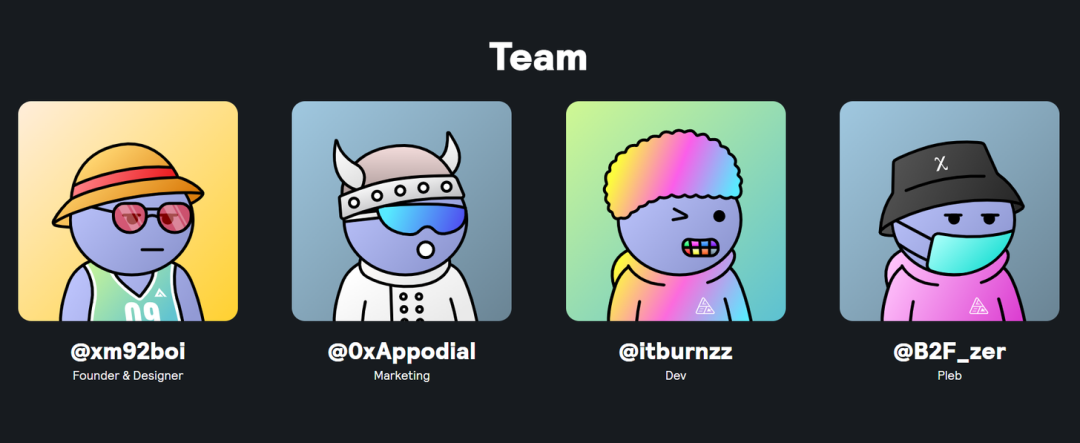
Above: GMX Blueberries NFT
TreasureDAO
One of the hottest narratives of the past few months has been " Metaverse". So Arbitrum wouldn't be complete without an interesting Metaverse project building on top of Arbitrum. Here comes TreasureDAO! TreasureDAO has some ambitious plans around the Bridgeworld game it is building. However, Bridgeworld is no ordinary game. The goal of Bridgeworld is to be a "bridge" between all the different metaverses and NFT projects. Bridgeworld will be the link between different types of independently developed Metaverse projects.
Additionally, TreasureDAO's Token MAGIC will be the reserve currency for all these interconnected projects. In order to interact with any of these metaverse marketplaces, MAGIC is required. TreasureDAO and Bridgeworld are still in their infancy, but MAGIC’s market capitalization of over $100 million suggests high expectations for its potential. Granted, we've only recently started following TreasureDAO, so we're still learning about it.
Newcomer
TracerDAO
TracerDAO is an innovative decentralized perpetual contract trading platform. As one member of the project’s Didcord channel put it, the project’s goal is to become “the Uniswap of derivatives.” The key innovation of TracerDAO is the introduction of "Perpetual Pools". This is important because it allows users to have their long or short positions tokenized. This brings various benefits, including borrowing against this tokenized position as collateral, or trading in the secondary market without the risk of being liquidated. Although these "Perpetual Pools" aren't live yet, they should be live on Arbitrum within the next few weeks.
We are very excited about its release and will be keeping an eye out for it! TCR is the Token behind TracerDAO, and it is a typical governance Token. This token is used to vote on proposals for deploying new code, modifying existing code, and controlling treasury funds.
Jones DAO
Jones DAO is Arbitrum The last brand new agreement has just completed a public sale. Its goal was to raise 5000 ETH, but it smashed that goal and raised 23000 ETH! Jones DAO is closely related to Dopex, a decentralized options platform, because Jones DAO aims to be an options strategy platform. By its very nature, users who are not willing to actively manage their positions can deposit assets into the Jones DAO and the protocol will manage them for them, primarily through the use of Dopex SSOVs vaults. Various permissionless vaults will eventually be deployed on the Jones DAO, thereby capturing large amounts of crypto assets.
The native token of Jones DAO is JONES. JONES will have different use cases including governance, fee earning, and liquidity mining. For all veTokenomics fans, JONES will also implement veJONES (that is, stake JONES to get veJONES) in the second quarter to improve the efficiency of the protocol. We think Jones DAO has great potential and will help make the Dopex protocol more suitable for small retail investors with limited experience.
Vesta Finance
Vesta Finance is what we want to highlight on Arbitrum The last of the latest agreements. Vesta Finance is a protocol for minting a stablecoin called VST. Basically, users can deposit collateral such as ETH, renBTC, gOHM, etc. into Vesta Finance to mint VST Stablecoins. In fact, VST is an overcollateralized stablecoin backed by the above assets. The team behind Vesta Finance plans to add more assets as collateral. Vesta Finance works similarly to MakerDAO or Abracadabra Money.
The Token behind the Vesta Finance platform is called VSTA. The benefits and uses of this token are still being discussed by the team and the community, but it is very likely that Vesta will implement veTokenomics. It will be interesting to see if Vesta Finance can scale up and offer an Arbitrum native Stablecoin. If it does, it will be of great benefit to the entire Arbitrum ecosystem.
Summary
As you probably know by now, The Arbitrum ecosystem is thriving. Since it's growing so fast, we couldn't cover everything it has to offer in this article! If you want to learn more about Arbitrum and its ecosystem, we think the best way is to try it yourself. Finally, if you have assets on FTX or Binance, you can withdraw directly to Arbitrum.
Original link
Welcome to join the official BlockBeats community:
Telegram Subscription Group: https://t.me/theblockbeats
Telegram Discussion Group: https://t.me/BlockBeats_App
Official Twitter Account: https://twitter.com/BlockBeatsAsia

 Related Articles