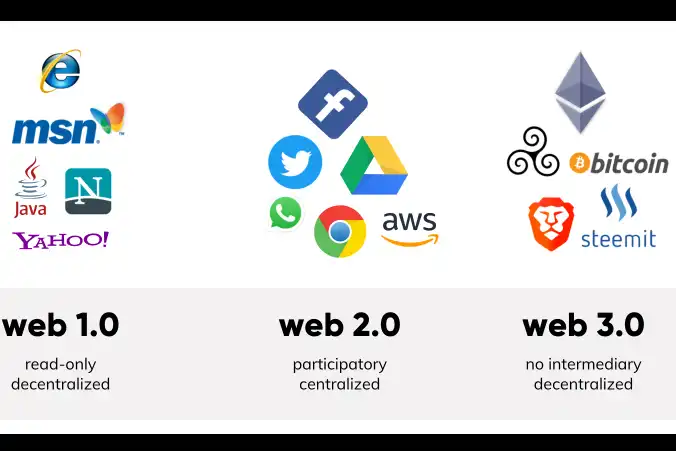
Benchmark founding partner: Web3.0 will split with cryptocurrency, decentralization is no longer the goal

Original source: TechCrunch
Original compilation: Public account Old yuppie< /a>
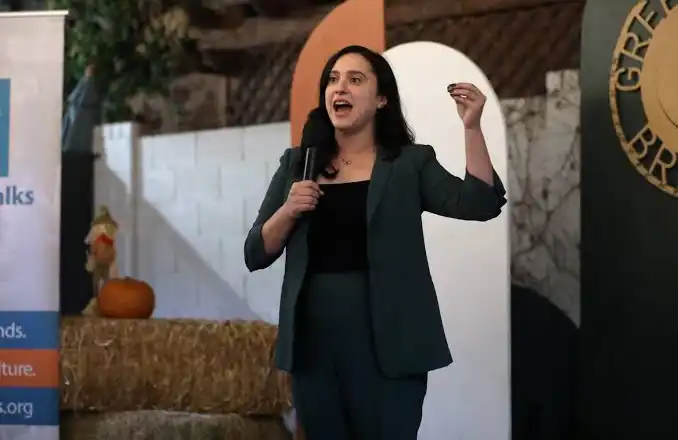
As the only five One of the general partners, Sarah Tavel may be the most crypto-inclined, but that doesn't mean she's active in the business. Instead, Tavel has been one of Benchmark’s few leading cryptocurrency-related bets in recent years, making an early investment in blockchain analytics firm Chainalysis after helping crack the famous Mt. Gox exchange debacle.
Another Web3-type investment that Benchmark has announced in recent years is Sorare, a Paris-based company whose fantasy football game uses NFTs, which secured a whopping $730 million in funding last year over two rounds, the first of which The financing was led by Benchmark.
It wasn’t for lack of interest, Tavel said. She has long been fascinated by the idea of blockchain-based smart contracts, has hosted “white paper reading parties” in the past, and thanked federal prosecutor-turned-investor Katie Haun for bringing her Leads to Chainalysis. (Haun mentioned to Tavel a few years ago that she used the company's technology in her government work; Tavel immediately sent the company's founder, Michael Gronager, an email).
Although the pace of Benchmark appears to be very slow compared to other top companies, some of which have completely restructured in order to take their cryptocurrency investments into overdrive , but Tavel said Benchmark prefers its age-old practice of concentrating its bets across all sectors, with each general partner leading only one or two new deals a year. Tavel might even say that Benchmark's deliberate approach gives the team more time to reflect on the changing situation. She's clearly thinking a lot about it, as we learned in a conversation with her last week about cryptocurrencies, Web3, and so-called decentralized autonomous organizations.
The following is an edited portion of the chat.
TC: There is a lot of debate about Web3 now, whether we will really see a new Internet era, more decentralized organizations , or whether this is a rebranding exercise, there are still many of the same power players operating. What do you think?
ST: Going back to Bitcoin, it is against centralized entities being sought after. A lot of the conversation you hear on Twitter these days is people shaking their fists at Facebook's totalitarian rulers. The idea of decentralization is completely intertwined with the idea of creating value for users, which has led to the cryptocurrency ecosystem we have today, where there are layer-one solutions like Bitcoin, Ethereum, and Solana. Confidence in breadth and diversity builds on these protocols. The whole point of this cryptographic infrastructure is to be decentralized because of all the benefits that come with it.
But this is not what I think Web3 is. To me, when people talk about Web3, they almost use the word as synonymous with cryptocurrency, but it is not. To me they are very different. You have cryptocurrencies, it's about decentralized infrastructure and financial incentives, tokens, you need tokenomics to coordinate all the decentralized entities and the people behind them.
But decentralization is no longer an end in itself. To me, decentralization is like a new palette for builders building new consumer experiences, and decentralized infrastructure is now a means. You're creating value for consumers, but that doesn't mean you need to be as decentralized as possible in order to do that. If you look at the consumer names being mentioned — Sorare, Axie Infinity, OpenSea — these are actually centralized companies built on decentralized infrastructure as a means of creating more Multi-value means.
In the context of history...
In other words something broader than token economics is going to build these consumer companies, and part of my assumption for the future is that we're going to start seeing more and more More and more forks of Web3 and cryptocurrencies, Web3 is the revolution of Web2.0, not just the evolution of cryptocurrencies.
What is the place of decentralized autonomous organizations in this? What role do you think they play?
Like many things in the cryptocurrency space, it's one of those concepts with vast potential -- and provocative. But I think the most meaningful use cases for DAOs should start out a little narrower than where people use them.
Back to the idea of forking, for crypto companies, companies that are already decentralized, almost as a regulatory requirement, must continue to go decentralized path of. DAOs are a further manifestation of the decentralized ethos, and there is no doubt that these organizations are economically aligned and have enormous value behind their ideas. The Constitution DAO, even if it wasn't successful in what it was trying to achieve, was a very good use case for a DAO with a very specific goal, in this case, to buy something offline. These are great ways to pool on-chain funds and make decisions collectively….
At the same time, if you put everything in your DAO, it will take a long time to build what you need. The value of a centralized entity is that it allows you to move fast, make difficult decisions, and build that kind of consumer product that is quite unique and hard to create.
What do you think are its downsides? So-called PoW blockchains have environmental problems; PoS blockchains have their own problems.
There's a lot of noise right now. A lot of incredible progress has been made by people working on these different blockchains.
What about NFTs? Many people today think of them as digital artwork or media. Do you expect we'll see very different use cases over time, like tracking fine art and real estate rather than pictures of cartoon monkeys?
I think we are in a phase of virtual reality based on digital scarcity. That's why you see these collectibles. I understand it, and while initially skeptical, I remember thinking at one point, I don't just want a picture of a CryptoPunk, I want to actually own it; there's an emotional connection to the idea.
But the current generation of NFTs is mostly these collectibles or profile pictures - that's a bit much. I think there's definitely a boom around it that's going to fade. I'm looking forward to it because these digital tokens can have many attributes. We have already started to see several different categories of NFTs. One is games where you create or earn money. Also, beyond the idea of NFTs in a closed ecosystem, with a decentralized infrastructure, you'll start to have the opportunity to actually see what you've won and have your own wallet, trade it or trade it in They are sold on OpenSea.
The second thing you see is companies like Royal that are innovating around the possibilities of NFTs. For example, does an NFT give you access to the future cash flow of a song? Does it give you access to artists? Does it get you into a community? We will see more coming out.
Before I wrap up, I would like to ask, what do you think of the rise of dedicated crypto funds? There's Pantera, Polychain Capital, Paradigm, Andreessen Horowitz, Sequoia Capital, and now Katie Haun has one too. Do you think it makes sense to continue blending these types of investments with more traditional venture capital, as Benchmark is doing now?
First of all, I'm excited for Katie.
Listen, I think this comes back to the forking issue I described. The first generation of investments in this space is in these protocols and these blockchains. And this is a specialized field. Investment protocols and DeFi are a very specialized field.
I also think investing in consumer-facing products and founders is its own specialty. It is useful to understand the underlying infrastructure, how people in the network are motivated and inspired, and the pros and cons of the various options that consumer builders must work through. But at the end of the day, I think the experience of building an enduring consumer company is its own specialty that will increasingly make sense in this new Web3 world. That's why I'm focused on Web3, but I admit I'm not focused on protocol level encryption.
So, you're not leaving to start your own company, are you? (half joking). I went to an event with Katie in November, and three weeks later, bang, she launched her store. I don't want to miss this opportunity to ask if you have other plans.
Part of the reason people have to launch crypto-focused funds is when they invest and buy tokens at the protocol level , my understanding is that these are technically a passive investment, so that's why you have to register as a Registered Investment Advisor. For traditional VC funds, there is a certain percentage of funds that allow you to make these types of passive investments, and once you pass that threshold, you have to sign up.
Our model at Benchmark is that we treat the work we do with companies as our own product, so we gravitate towards those that need to build organizations, hire people and create experienced company.
Welcome to join the official BlockBeats community:
Telegram Subscription Group: https://t.me/theblockbeats
Telegram Discussion Group: https://t.me/BlockBeats_App
Official Twitter Account: https://twitter.com/BlockBeatsAsia
 Related Articles