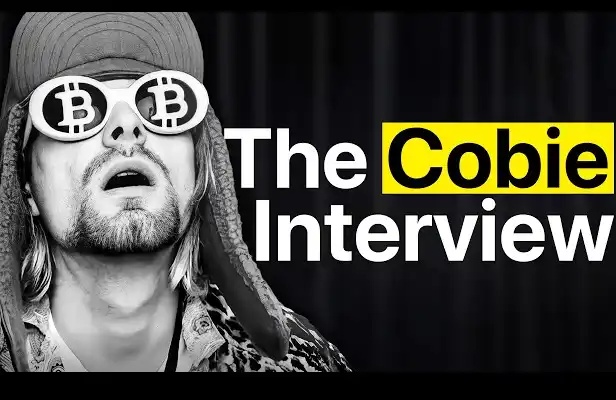
Cobie: 60% of people will lose everything they gained in the last cycle
The original title: "UpOnly: Chats with Crypto Experts | EP59"
Source: UpOnly
Dong Yiming, chain catcher
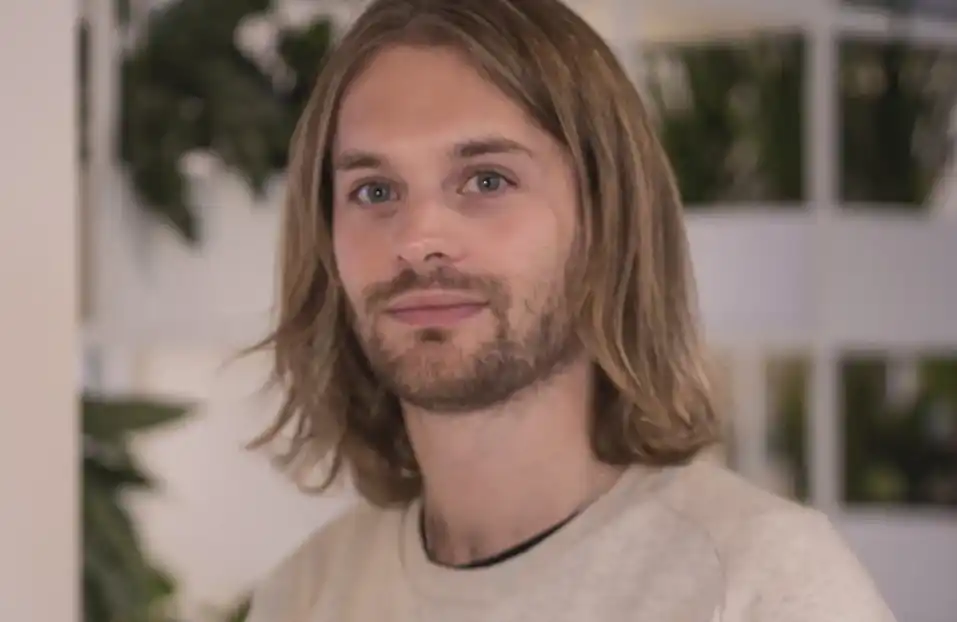
Recently, encryption video podcast UpOnly and well-known encryption industry KOL Cobie dialogue. Cobie told the story of when he started in 2012, talked about ethereum and Ethereum 2.0, the DAO, and made some bear market predictions. The following is a partially abridged compilation of the podcast by Chain Catcher.
Summary of views:
1. I wouldn't be surprised if ETH2.0 isn't available by next year, as the Ethereum community isn't very supportive of expansions, and the attitude is terrible right now. Optimistic Rollup has been a disappointment so far, and ZK Rollup isn't compatible with EVM.
2. Maybe nothing really makes sense, and the sense is not that important, especially when it comes to short-term trading. Instead of focusing on encryption itself, some project parties are very good at content marketing. Narrative can drive supply and demand, but people underestimate how out of control it can be.
3. If a bear market does occur, 95% of the current popular L1 alternative ecosystems will fail because they pay too much to maintain ecological security and liquidity.
4. I think the CURRENT DAO is a kind of regulatory arbitrage. The DAO could have worked better as a company, but they had to issue their own tokens, which made things worse.
5. In the future, it is very likely that a country's base currency will have a complete KYC national chain with DeFi function, without governance Token, and the base asset on this chain is CBDC.
I. Early stories
Uponly: & have spentI've read many of your blogs and heard some of your amazing stories, but I'd like to get more hands-on information today. For example, how many cycles have you gone through since you entered the crypto industry in 2012? Most people don't make it through these cycles, so as one of the few remaining in the industry, why did you choose to stick with it?
Cobie: I probably bought bitcoin at the end of 2012, but I didn't even think about what bitcoin was for a long time. -- IT wasn't until April 2013, when the price bubble doubled and I went down the rabbit hole, that I started to think about it. If you look at my Jordan Fish Twitter account, I tweeted a couple of times about bitcoin. I also liked to tip my friends in Bitcoin with "bitcoin tipper bot."
By the end of 2013, I was crazy. Not a day went by that I didn't think about Bitcoin, so I wanted to go back to the day in 2012 when I didn't touch it. The only person I knew back then who is still active today was Bob Laxative, then known as "King BTC", who was the first encrypted Twitter account I followed. I used to follow him a lot because he was Posting great ideas, but at the time the entire crypto market was $5,000. I then created two accounts, one of which followed Bob's advice to buy and sell.
It was a bloodbath after 2013, and 2014 was definitely a very shattering year, with several mtGox-like retractions before 2016-17 really returned to the highs of 2013. Many centralized exchanges such as Crypsy, MtGox, Bitfinex, etc. have been hacked and everything has gone to zero. Maybe eventually BTC will also be attacked by the government and all the fake coins will also go to zero. Ultimately, only the BTC (BTC account with its own private key) is likely to be secure.
Uponly:How much is your initial capital?
Cobie: I've only invested so farTwo or three hundred pounds(worth around $500) to cryptocurrencies. I did invest again until 2020, but that project was basically zero. In the early days, I got in at a very good time and bought a lot of shanzhai coins with good returns.Just because you did well in a bull market doesn't mean you're a great trader, it just means there's a bubble.
I was lured into the Cryptsy trap by Bill Still's video. Bill Still, it's like a doom economist telling everyone that the end of the world is coming, and I happen to like this idea, so I bought QuarkCoin, which he founded. Bitcoin is one hashing Algorithm (Jar256), while QuarkCoin uses seven Hashing algorithm, so in that case, it should be 7 times better than BTC. During my first week of buying coins, my account was locked out and I couldn't sell them. And it turns out. The hashing algorithm makes no sense. It's just a gimmick. But in the end I was lucky and sold at the high point.
Uponly:Are you fascinated by Bitcoin because of its underlying logic, or do you see it as a monetary experiment? Do you believe in its mission, or do you just want the numbers to go up?
Cobie: When I was younger, my motivation was impulsive and emotional. Bitcoin as an alternative to traditional finance hit me right away, and I was 100% sure at the time. In 2008, almost every one of my friends struggled with money in some way. Bank credit is lost due to unfair lending, the government because of the failure of monetary policy has lost its credit, many companies because of the financial crisis, bankruptcy liquidation, millions of unemployed workers, even retired people can't get their pensions, and the government and the bank did not appear to be affected, it seems to benefit from this. I saw the potential for bitcoin to eliminate middlemen and government interference, and I thought this must be the solution.
Uponly:When did you start reading charts and analyzing the psychology of people trading money and becoming a real trader?
Cobie: I'll probably never be a real professional trader. I'll do it as a sideline, like someone stir-fries shoes. I'm a very risk-averse person. Some very professional traders like to argue about whether prices are random walks or brownie geometry, and they do variance independence test analysis to test whether markets are efficient. I have great respect for them, but I can't be like them, and this lifestyle probably isn't for me either. I'm a very addictive person.
I found that I was good at studying human markets, using the past to find answers about the future. The cyclical nature of the crypto market means it is relatively easy to spot peaks and lows, but Bitcoin is special. My investment decisions tend to be instinctive, learning from my past mistakes.
Uponly:Do you think you got hooked on cryptocurrencies after you made enough money to change your life, or did you get hooked before you made money?
Cobie: If I'm completely honest with myself, my answer may sound unflattering and even arrogant, because deep down I think I'm going to be a millionaire or a multimillionaire anyway. Now I would be a millionaire without encryption, without investment, just working. The same is true of what I've done before, whether I've sold my company or been acquired.
Second, about the superloop
Uponly:Do you think there is a "hyperloop" in cryptocurrencies right now?
Cobie: I am a bit skeptical of the concept of "supercycle" in cryptocurrencies, because I have not seen it in the past, and I tend to analyze it from what has happened in the past. Some examples of actual supercycles include gold, Apple, and Google.
If you look at Apple's annual reports for the past 12 years, you can see that at the end of each year, the stock price chart is green. The idea of the superloop that we described with Su in the previous episode may be correct. If cryptographic technology becomes more integrated into society and becomes the financial backbone of society, and bitcoin becomes a store of value like gold, then the superloop will become the only thing that really makes sense. Gold, Apple, and Google are all contributing to society as a whole.
I don't think it's the right time for a hyperloop, it's the right idea but it's not the right time.If encryption were to disappear now, how many lives would actually be affected? It's just that a lot of people's crypto investments will fail, and there will be some impact on people in countries with high inflation, or people who play crypto games for a living, and that's the main impact on people's lives.For now, there will be no cases of people being unable to make payments because of the Solana outage.
3. Ethereum
Uponly:When did you get excited about Ethereum? How has this affected your life?
Cobie: If I'm completely honest, I think it was through the recent bear market. I was actually bearish on Ethereum at the beginning, because early series like ETH DAO hacks, ethereum and ethereum classic hard forks, IC0 delays, etc., give me little confidence in the project. I only bought a little bit of Ethereum at the beginning, thinking that if they were ambitious, they would make a good profit if they succeeded, but I didn't buy more ETH either, although I regret it a little bit.
I usually start investing or allocating assets by looking at the project itself and trying to see its future potential and the impact it will have on the world. I would be willing to allocate more assets if I could see that vision in action. Even if the price is higher, I'm less at risk, and I can see the future.
From 2017, OG projects like Chainlink and Eastland began to emerge, and more will follow in 2019-2020. If you look closely at these projects, you can see that the future they create is much more meaningful, even though they are not perfect right now. Rather than ponzification, focus on changes to existing products, such as their real use cases, such as on-chain loan projects being built. Construction blocks add value to the ecosystem because they can support future block construction. OG DeFi protocols like Metamask, for example, are leading the change.
Iv. How to create Lido and ETH 2.0
Uponly:How did you get involved with Lido and ETH & NBSP; 2.0, these things started before DeFi Summer, why do you have faith in them?(Editor's note: Lido is an unmanaged decentralized ETH2.0 pledge service platform that allows pledgers to freely circulate their stETH tokens through DeFi's AMM mechanism and participate in other services in the DeFi marketplace.)
Cobie: I was briefly the CEO of a company called PTP.org, which was a PoS data verification company. If I can be counted as a co-founder of Lido, then Constantine and Vasily, along with the core team, are the real brains behind it all. I had an argument with Constantine about his name. He wanted to be Lido. DPool (Decentralized (Pool), but now it seems that Lido was the right call on my advice.
When PoS blockchain was created, there was no concept of DeFi. Even when Ethereum released a roadmap to move to PoS, they didn't have the concept of DeFi. With PoS you are rewarded for pledging tokens to secure your network. With DeFi, you can lock in your assets for a return, and they're used as collateral. The two will compete -- "Should I put my ETH in Ethereum, or in Aave or Compound?" People get into crypto to make money, so people will choose the one with the highest APY at the right risk.
After you pledge your ETH in Ethereum, you can earn rewards for pledging your ETH, and you can use those ETH for other things in Ethereum. One simple new product I can think of is the emergence of a new base currency on Ethereum that earns the risk-free return that is the cornerstone of DeFi.
Uponly:Do you think ETH & NBSP; How will 2.0 be rolled out? What are the risks? Where do we end up with this?
Cobie: I don't really have a say in that. It's probably going to be Q2 or Q3 next year, but I wouldn't be surprised if it wasn't launched this time next year. The Beacon chain has been running for a full year and people can get pledge rewards in the chain. If ETH1.0 is merged with ETH2.0, the $35 billion on the Beacon chain will also be unlocked.
The ETH community does not approve of the expansion, and now the attitude is terrible. Optimistic Rollup has been a disappointment so far, and ZK Rollup is here, but it's not yet EVM compatible. I'm also skeptical of L1. Is it possible that all L1 games are due to capital rotation? Mobility is fragmented, and without incentives, most chains will not sustain ecosystems.
Bear market predictions
Uponly:How did you decide what to do next, and how would you act?
Cobie:I don't have a crystal ball, so rather than guess what's going to happen, I prefer to watch the market in real time and see what everyone is doing.For example, if everyone is building a bridge to Avalanche, it means that everyone loves Avalanche's ecosystem and it has PMF (product market convergence point). At that point I allocate money to the ecosystem, and then if they get better the way I want them to be, I invest more. Buying when prices are higher is less risky because I see reality better.
Instead of making predictions, I think it's better to allocate a small portion of your assets to something that you think is really cool and wait for it to explode. Or you can just watch and see how people do it, and then try to get involved when you see something coming.
Uponly:What do you think of meme coins such as dogecoin and "animal coin"?
Cobie: To be honest, do you really think dogecoin's rise is fundamentally different from the rise of some kind of "dex, tier 9 alternative to L1"? I know dogecoin seems a little spooky, but why would you put your money in a bottom-percentile L1 alternative? It seems to me that this is also incomprehensible. A lot of things seem silly at first.
Maybe nothing really makes sense, and the sense doesn't matter that much, especially when it comes to short-term trading.Instead of focusing on encryption itself, some project parties are very good at content marketing. Narrative can drive supply and demand, but people underestimate how out of control it can be.
Uponly:Assuming a bear market is imminent and not a recurring supercycle, how do you think it will affect the market as a whole?
Cobie: In general, projects that start in a bear market are more likely to rise in a bear market. If you think of price as a function of variables, you can adjust the factors that affect the price. In a bear market, one of the big variables is that everyone's portfolio goes down, even in some good projects there are a lot of bitter sellers of tokens because some tokens go down 60-70% and people can't stand that. If there is such a bear market, 95% of the current popular L1 alternative ecosystems will fail because they pay too much to maintain ecological security and mobility.
I think most NFT projects with a roadmap will also be abandoned and die in this bear market. The incentive to build an NFT is to make money, but if you're building a roadmap, you don't have any money left over to build an NFT.
I think metaverse games will also go to zero because most projects don't have enough money to survive a long bear market.
Meme coins will also go to zero.Any Token with a constant Token release requirement will also go to zero, because such a project requires constant Token release and requires users to put money into the system to make the product of the project work, but as the price drops, a whole bunch of liquidity providers will feel that they are not getting enough APY, So people are not going to support these agreements.
For projects with block funds, the main objective may be to protect the Treasury's cash without being threatened by regulation.
Regulation can lead to the disappearance of "notional" decentralised projects.
There are also projects that do well in a bear market because their utility increases. Such as Ribbon The potential use case for Finance ina bear market looks very attractive, and I'm not just saying that because I bought the Ribbon. The young and hungry team will continue to build.
In addition, I think 60% of people will lose everything they gained in previous cycles that changed their lives.
Six, working in the encryption industry & AMP; DAO
Uponly:If you could start your own business today, what field would you choose?
Cobie: I'm probably not going to be entirely crypto-related. Joining encryption projects or protocols has become more mainstream, and of course riskier. In the traditional world, being a founder is better than being an early adopter, with more future dividends and, of course, more risk. But in crypto, it's the other way around. I think being an early employee is more risk-adjusted.
In the early days I had a TG group called 27Club to discuss the market, without which I probably wouldn't have entered the cryptocurrency space, but 70-80% of the members didn't make it in the crypto space. Most people have a team like this to share alpha with. What matters is that you have people like that in your life.
Uponly:For DAO, what do you think the model for its potential success should be?
Cobie: So far,I think the DAO is a form of regulatory arbitrage. The DAO could have worked better as a company, but they had to issue their own tokens, which made them work worse. There are examples of very good and very bad DAOs. As a collaboration mechanism, DAOs are a great idea. The best DAOs may not be the ones people like in the bull market, and may even be those with more centralized ownership, such as those run by 10-15 companies that are more likely to succeed.DAOs needs a new kind of venture capital, more contributor-type VC to get involved, and Paradigm and Delphi are becoming that way.
Uponly:Do you think Crypto will ultimately make the world a better place?
Cobie: If I didn't think encryption would make the world a better place, I would have moved on to something more sacred.
In the future, it is very likely that a country's base currency will have a complete KYC with DeFi function on the national chain without governance Token, but many DEFIS may disappear without governance Token. The underlying asset on this chain is CBDC. That's the most likely thing I could imagine. But if I were asked what structure I would like to see, I would like to see a basic chain of smart contracts backed by the financial system, with a few roll-Ups per country, but I think that is unlikely to happen.
Capital motivates people to develop better things.
Seven, finally
Uponly's custom at the end of each interview is to ask the guest to offer a suggestion to the audience.
Cobie: The director Albert Maysles once said,"Tyranny is the deliberate removal of nuance". We need to be wary of anyone who deliberately eliminates or ignores nuance in conversation, because they often have a hidden agenda. Becoming a structured critical thinker is probably the most important thing for 2022 and the next decade.
The original link
Welcome to join the official BlockBeats community:
Telegram Subscription Group: https://t.me/theblockbeats
Telegram Discussion Group: https://t.me/BlockBeats_App
Official Twitter Account: https://twitter.com/BlockBeatsAsia

 Related Articles