a16z teaches you how to excel in tech without learning to code

Original title: "a16z: How to excel at technology without learning to code ? "
Original source: Justin Gage, a16z
This article comes from the WeChat public account: Old Yuppie
In the eyes of the old yuppies, computer major is not only the best choice in the past two decades, but also a must master for a long time in the future professional skill.
However, the development of the future society does not require everyone to master programming skills and be able to write codes. Direction, today we will introduce and talk about how to stand out in the technical field without learning programming.
Software is becoming an increasingly important part of our lives, but do we really understand how it works?
< /p>
We may be the tech experts at home, knowing everything about our smartphones or laptops. But that's just the surface; the truth is, many of us don't really understand how most of the technology we use works. If you had to explain to me how the internet works, would you be able to?
Obviously we don't need to know everything we use, just like we don't need to know why boiling potatoes in baking soda water makes them taste better baked, Or why ice reduces swelling as well. But technology is much more practical than that because a lot of people work for companies that sell software. And everyone works for a company that uses software.
These are important things to remember because although we often hear that we are in the golden age of software engineering and cannot hire developers anytime soon, the It's an underappreciated reality that inside startups and tech companies, most job titles are not technical. Every organization hires marketers, salespeople, recruiters, and executives whose job descriptions don't involve any meaningful knowledge of computer science, or even basic HTML, yet whose professional lives and workflows are governed by software. leading.
If you fit this description, ask yourself: Do I understand the basic concepts of the software I use at work, or the software my company actually develops and sells? What? These questions are not rhetorical. Gaining more technical knowledge will help you work better with engineers, have the opportunity to identify automation or improve workflows, and become a whiz at the tools you use to get your work done and help your business grow. In short, technical literacy provides a path for non-engineers to excel in an engineer-dominated field.
Technical literacy does not mean learning to code
People think in a binary way" Technology" - there are software developers who know how to program, and there are others. But learning how to code is a daunting task: hundreds or even thousands of hours of your precious time. Also, if you want to get a degree, or even just graduate from bootcamp, you need to invest a lot of money and time. While in some ways building apps has never been easier, today's developers need to know a lot more domain-specific tools (such as how to use npm or storybook) than in the past.
If you don't want to be a software engineer, what's the point? If that's what "technology" means, then for most people it is completely untouchable.
This binary view of technical literacy is documented in the classic meme about how movies comically misrepresent what software engineers actually do. In any movie you can see a "programmer" doing something like this:

This "code" is actually from Wikipedia An SVG file, which is basically a representation of an image (such as a rectangle); in other words, it's really not something you'd see a software engineer "code" in real life. The point the film is trying to make is clear: whatever these programmers are doing is utter magic, we have no chance of understanding it, and we can ignore it because no one will notice. (Credit to The Social Network for at least trying to be accurate.)
However, as you will see, things are far more nuanced than that! Technical Is a range, it is not set in stone, you can choose a lot of different fields. You don't need to be a developer to understand the difference between file types, or to understand that SVG is a graphic for design. And, if you've ever worked at a startup, you probably know that developers don't write code on transparent holographic screens.
Think of it like playing a musical instrument. There's a big difference between being able to pluck a few chords on the guitar and being able to improvise a rough solo. Both are fine, practicality depends purely on what you're trying to achieve. Tech literacy is no exception. You don't have to learn how to code to benefit from knowing what code is and how to write it.
Technological literacy simply means that you are familiar with the fundamentals of technical work, and more importantly, you have a deeper understanding of the field you are working in. There are two levels of practical technical literacy:
Basic: Basic knowledge of software and hardware.
What is a computer?
What is the Internet?
What is a database?
Field: and work relevant deeper knowledge.
What products are we making, selling and using?
How do they work? What problems do they solve?
Our engineers How are they built and used?
How do your team's tools work?
If you have read this far, I hope you can Believe that there is a place for you within the spectrum of technical literacy, and that you don't need to be a developer to be someone who knows the basics. But what does it mean to be tech-literate? For people at startups and tech companies, there are two big implications - knowing and working with developers, and being an expert on the tools you need to get your job done.
The importance of working with and understanding software engineers
If you work at a start-up company, You will most likely need to work with a developer. This work can be internal - about internal tools, integrations, providing expertise, etc. - or external - marketing, selling and recruiting developers. Either way, being able to communicate with them is an invaluable skill.
In my experience, developers are probably the most curious, thoughtful, and creative people. But in the long run, they can be intimidating at best and terrifying at worst. The developers have a reputation for being a tough bunch with high standards and exceptional taste. But like any other audience, much of that perception stems from their being different. Knowing what code is, how it works, and what developers do every day will help break down that barrier and create a collaborative relationship.
For some positions, working with developers is part of the job description. Let’s say you’re a product manager at a consumer-facing startup working on a major new feature release. You want to understand what it takes to build an architecture for a specification. Will it take two days or 20 days? How do you account for and allocate time for delays? How difficult will it be to tweak the user experience before launch? In many ways, product management is all about setting expectations, and that's hard to do without understanding the working process.
But developers are not just internal stakeholders. Say you're on the marketing team at a B2B startup that's launching a new product line for developers. How do you articulate what's interesting about your product? What kind of content should you write to make it interesting for developers? Where should you publish and promote it? Marketers need to understand their audience in order to create and distribute engaging content.
In situations like this—and many others you may have thought of—understanding the basics of developers and the work they do will allow you to go further. Here are some technical literacy questions for common roles:
Product
It's simple: Product Manager My entire work is based on good collaboration with software engineers! Without understanding how they work - and the basis of the code they write to build your spec - you're going to have no clue. Effectively prioritizing feature work, maintaining tight timelines, and aligning stakeholders is based on an understanding of what developers are doing. Wouldn't you rather, as a developer, work with people who took the time to get to know your work?
You don't want to offend developers and get too involved Among other things; there is definitely a balance to this. But as a general rule, technical literacy is unquestionable for product managers.
Recruiting
Technical hiring is widely considered the most frustrating hiring bottleneck for startups today one. The job of the recruiter is to find qualified developers, understand which types are relevant to them, and be able to explain why a particular position is a compelling and interesting challenge. Technical literacy can help recruiters identify strong candidates faster, talk intelligently about the internal engineering organization, and articulate what interesting engineering problems candidates will work on.
Marketing
10 years ago, developers were rarely considered marketable; They have no purchasing power at all. Today, hundreds of companies have proven that wrong, many of which have gone public. As a marketer, developers are an audience you cannot ignore. Even if your product isn't explicitly centered around them, every startup eventually needs to set up a developer program (see Slack and Twitter). Without technology literacy, marketers will not know how to effectively communicate and engage with these potential audiences.
Sales
Like marketers, sales representatives are now tasked with Organization deals. It's no secret that developers don't like being sold, so this process requires a specific approach: focus on no frills, quick time-to-value, and allowing developers to use the product themselves. It goes without saying that you need to understand the typical developer workflow—especially as it relates to the products you sell—and what makes your company's products attractive to this technical audience. At this point, technical literacy is a must to be able to speak intelligently.
Technical Literacy at Work: Using Tools
Understanding and working with developers is only part of the equation. Software is becoming an increasingly important part of how any team operates. For a decade, sales teams built their foundations on Salesforce, and the same model increasingly applies to other teams.
It goes without saying that the better you understand the software your team relies on, the more proficient you will be at it. This happens naturally: large enough teams will often have a "power user" who seems to know the ins and outs of Salesforce, Lever, or whatever software your team runs. You want to be this person.
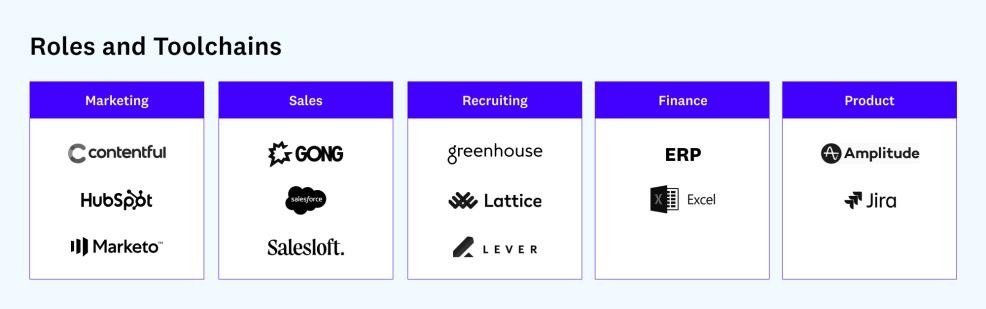
While technical literacy will help you understand these tools and their place in the broader ecosystem, the work doesn't end there. Becoming a true power user requires hours of reading documentation, finding tutorials online, and engaging with the community around whatever tool you care about. For example, Hubspot has a vibrant forum for asking product questions and finding out how other companies are using the tool. But for all of these, technical literacy is the foundation.
In the world of tools, there is one more area where technical literacy can help: integration. The tools you use every day integrate with the rest of your company stack. Lever's job posting might be displayed on your marketing site, where Lever acts as a CMS; Intercom might pull user-level data from your data warehouse. As the integration proceeded, so did the problems. With basic technical knowledge and a little skill, you can go from: "This job posting doesn't show up on the site -- can someone from Engineering help me?" to:
< br>
"I checked and it looks like our most recent Netlify build failed because there was a Contentful entry that was missing a tag. I filed it to fix that, but whoever created it could Can you fix it when you have time?"
The latter doesn't need to know how to code, just some understanding of how a website works and how a CMS works, but This can mean the difference between fixing something immediately and fixing something in a few weeks. There are many more such situations, including:
Debugging mismatches between data in Salesforce and data in the warehouse;
Where not Copy changes to your marketing site if engineering assistance is required;
Send data from Segment to a new customer activation tool.
The more technical knowledge you gain, the more small opportunities like this you'll find between the cracks in your company's tool chain - the more impact you'll have big.
Finally, any discussion of tech literacy needs to consider the so-called "emergence" of low-code and no-code tools. They enable non-engineers to do more than ever before, such as building landing pages, internal tools, or data pipelines. While this is part of a longer discussion, building real stuff in these tools often requires interfacing with something technical -- whether it's an API endpoint or a simple database -- and having technical knowledge often means being self-sufficient with The difference being delayed by engineering resources.
Some Tips for Improving Tech Literacy
Unfortunately, this is the hardest part. One of the main reasons people aren't as technically literate as they'd like to be is because it's really hard to do: there's no bootcamp, no degree, no book, and no one-stop shop for everything you could possibly need. Learning the basics of software is often cobbled together from oddities like blog posts, YouTube videos, coffee shop chats, and slideshows from 2011.
But there is good news! If you work at a startup or tech company, you're in an excellent environment to gain more technical knowledge through good, old-fashioned experience. You're surrounded by real developers, your tools are using real data, and your teammates are stuck in workflows that could be meaningfully improved. As edge cases and bugs arise, you can bring your technical literacy to work and resolve them.
Here are some suggestions to help you start your journey.
Make a plan
Learning "guitar" is difficult, but learning a song with guitar is easy Much easier. Likewise, if you try to learn everything there is to know about software, you'll quickly become overwhelmed. There are still basics that everyone should know -- like how to strum chords -- but the magic is in how you apply it.
Start by looking at your company and your role, and where you think being more technical could give you an edge. Earlier, we identified several areas where technical literacy can boost your performance:
Understand and communicate with developers
Collaborate to become an expert in your toolchain
For each area, startup employees Both managers and leaders should consider how they relate to their own specific functions. If you're a marketer, you'll want to focus on developing a solid understanding of the developer role and delve into specific topics like email deliverability or how data moves between systems. Be specific about what you want to learn. A useful question to ask is: "Where do I get hurt by not being technical?"
Find a developer friend or two
If you work at a startup, you're already surrounded by people who spend their days doing what you want to learn: software. If you do it right, they can be an invaluable resource on your technological literacy journey. If you don't have an engineering team (or if you really don't like them), you might have a friend or two who can fill that role.
You have to come prepared. A structured conversation with questions you have in mind beforehand is a much more efficient use of developer time than rambling curiosity. Try to focus on your weakest areas and do your research ahead of time so you don't push all of the study load onto someone else.
Suppose you are an account executive working for a startup that sells NoSQL databases such as MongoDB. The more you know about how developers handle databases, the more you would be a better seller; but having a developer explain the whole situation to you is a doomed requirement. Instead, you should do your research ahead of time and write down the specific points that confuse you." I was reading SQL and The difference between NoSQL, I don't understand how to query a NoSQL database" is much better than "Can you explain NoSQL to me?"
Of course, if someone Really helped you, buy them a coffee or something!
Google it well
< p>This piece of advice can be found in any article about learning. There aren't many places on the web that provide resources that you can read straight away, other than quickly mastering a specific tool; you need to be motivated. In my experience, explaining technical concepts The best content is in two places:
-YouTube. There's a lot of crap out there, but it can be a goldmine of visual explanations of technical concepts. The most useful videos don't Not always the flashiest or best produced.
- Blogs for specific companies. These are hard to find, but generally speaking, for any single concept, the best content comes from Companies that make money. My favorite examples are Duo Security's post on SAML, and Cloudflare's guide on understanding their companies.
Like anything, you need to perfect your search skills, and develop an intuition for whether a piece of content is worth your time.
Consider basic coding
< /p>
I've said it many times, you don't need to learn how to code to be technical. But it does help! Learn how programming works, what languages are, and things like packages and version control Such a basic model will help you comprehensively:
You will have a specific understanding of the actual work of developers;
You Will be able to write simple scripts and use tools to automate your work;
You will have a personal view of the tools developers use today (React, Redux, etc.);
You don't need to be a full-fledged programmer; think of it as exploratory learning.
If you just want to try it out, there are incredible free Resources. I originally started with Codecademy's Python course. A helpful tip someone gave me was to think of something cool that you want to build or automate - maybe a tip calculator or something that sends emails - and try to focus on learning what you need to Build that specific thing.
Find influencers and experts in your field
Once you have a plan and start working on Look for useful content online, and chances are you'll come across people who are common in your particular field and who are creating something useful. Follow these guys on social media, subscribe to their newsletter, and check their YouTube channel for updates. A few examples:
-Benn Stancil on data strategy and tools for substacks;
-Corey Quinn's newsletter on AWS (and his Funny Twitter);
- Vicki Boykis newsletter about tech and tech culture;
- my tech newsletter, about more tech.
You may not understand everything you read, but the power of communication is powerful and you will be surprised how quickly you improve.
What companies can do to help
We have discussed a lot about what individual employees can do , but leaders of startups and tech companies should also consider tech literacy a pressing issue. If you're an employer, think about how you can help your employees master technology, such as:
Education grants for continuing learning, conferences, books and online courses ;
Corporate events that bridge engineering gaps and focus on supporting non-technical teams;
Dedicated time for employees to learn coding fundamentals and technical fundamentals;
Cooperate with company engineers to help interested employees quickly familiarize themselves with the company's internal infrastructure and contributions.
Give employees resources and time to improve their technical literacy, Will pay dividends for the company in the long run. You'll build a team that understands developers and their toolsets better than your competitors -- a team that's better equipped to handle any hurdles that startups may encounter.
Welcome to join the official BlockBeats community:
Telegram Subscription Group: https://t.me/theblockbeats
Telegram Discussion Group: https://t.me/BlockBeats_App
Official Twitter Account: https://twitter.com/BlockBeatsAsia

 Related Articles