Delphi Digital researcher teaches you how to value NFT
Original author: 0xPrismatic, Delphi Digital researcher
Original compilation: Alex, Deep Tide TechFlow
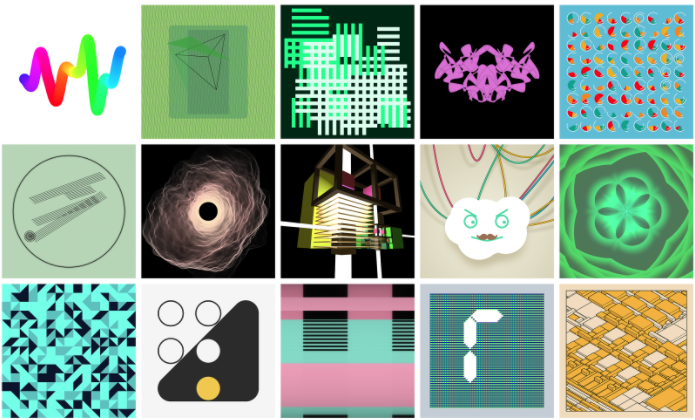
Aggregation of Art Blocks, Source: Sotheby's
2021 marks the rise of NFTs - what a year it has been. In just one year, we've seen an explosion of artistic creativity, technological innovation, and capital inflows into the space.
I'm excited to see the many developers, innovators, and artists experimenting with this technology as a new medium for their creations. Every project that utilizes NFTs in interesting new ways makes me shudder.
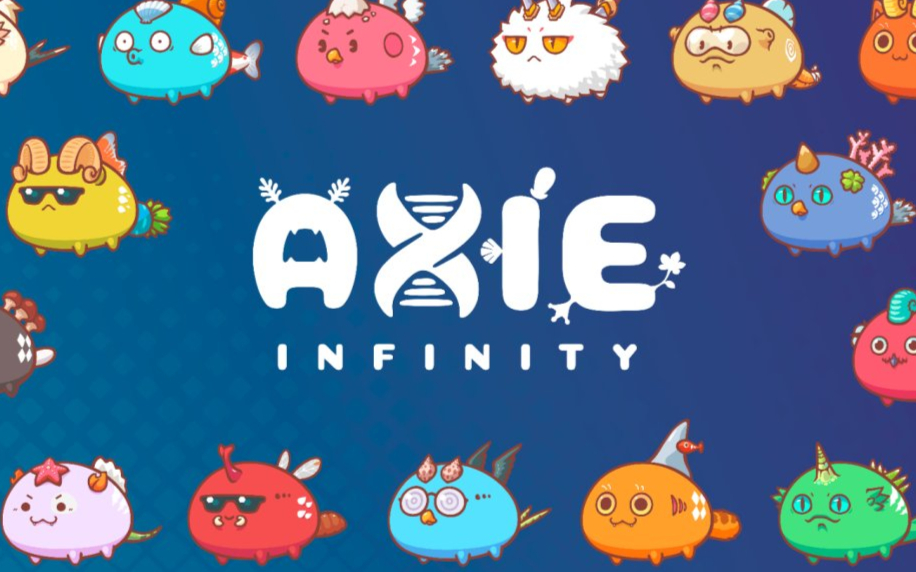
A key factor contributing to this hypergrowth is the financialization of global culture made possible by NFTs. Culture is the embodiment of our everyday life. NFT has a relatively low threshold for ordinary people to participate, unlike DeFi that requires minimum technical and financial knowledge. Buying an axis to play a card battle game similar to "Pokemon" is 100 times more intuitive than buying and depositing USDC into a Curve pool to create a governance token.
More and more mainstream celebrities such as Jay-Z, Snoop Dogg, Stephen Curry, Paris Hilton, Steve Aoki use NFT as their digital identity and ignite This trend is further fueled by the desire of millions of followers to emulate.

Steve Aoki loves his CryptoPunks
NFT mania
In the past few months we have witnessed a lot of speculation, with some NFT prices rising 10 to 100 times and plummeting in a matter of weeks 90%.
The reason for the huge fluctuation of NFT price and the difficulty of valuation is:
1 ) The liquidity of NFT is relatively poor. Transactions that occur at the margin change the floor price very quickly.
2) It is in constant price discovery due to limited price history.
3) Many intrinsic values (such as culture) of NFT are intangible and difficult to quantify.
4) Not using a consistent valuation framework.
5) NFTs are highly narrative driven. (The most important point, I will expand in detail later)
The first NFT I bought was the Non-Fungible Ape in January 2021, which is a Pixel art that compares various characters to "apes". I stumbled across discord when they were doing their first stealth drop, but I had no idea what I was doing. Going through every image on OpenSea, it ignites in me a burning desire to buy and collect apes with the rarest of traits. Now their value is 0: no buyers. This manager taught me a profound lesson.

Donald Trump Non-Fungible Ape, a rare ape worth 0.7E
In hindsight, I should have expected this, because the market is kept entirely on speculation: it has no historical value, anonymous artists who just joined twitter, small community, zero utility, mediocre art. It tries unsuccessfully to create narratives in any of the 5 NFT domains I'll outline shortly.
However, the prices of other NFTs have soared to dizzying heights. A CryptoPunk bought for just $35 in 2017 could be worth as much as $9.5 million today.
Check out Board Ape Yacht Club, Fidenzas, XCOPY, mystic axies and more. What makes them so valuable now, and how should we identify these NFT value opportunities early?

No wonder we are all asking "wen next fidenza"?
Why are NFTs different?
I am fascinated by NFTs because they inherently represent a unique layer of complexity that fungible tokens do not. This layer includes both the intangible (e.g. culture) and the tangible, making it an interesting intellectual exercise.
At the highest level, NFTs exist and share the same base layer, the blockchain infrastructure, as all other crypto applications, with Ethereum being the most commonly used block chain. This includes Lisk and L2 solutions specific to NFT applications, such as Flow and Immutable X.
The next layer—the platform layer—provides financial services for NFTs: think trading platforms, liquidity provision, lending, decentralization, etc. These are platforms because they typically serve multiple different tokens rather than a single token.
Different from fungible tokens, NFT is another layer, One of these individual "applications" is packaged into the token itself. The NFT standard (usually ERC-721) enables tokens to be linked to on-chain or off-chain assets through their metadata, while preserving the provenance, immutability, and network security of the blockchain.

Let me simplify with a Web2 analogy:
(Level 1) The underlying blockchain = Internet + mobile phone.
Example: TCP/IP, iPhone. Widely and publicly available
(Level 2) Application/Infrastructure = Internet Platform.
Example: Apple's App Store
(Level 3) NFT = Personal Mobile App.
Example: Facebook App
The platform is very powerful and And capture great value through its network effects and vast market reach. Good platforms take a lot of time to build, grow, and hit hypergrowth on the adoption curve. A single app usually represents the layer with the highest level of variety, innovation, and creative input—because it's now fairly easy for anyone with an idea to create and launch a (basic) mobile app. The web3 equivalent here is NFT.
To illustrate this further, let's consider Aave (the platform) and CryptoPunks (NFT):
1 The value of AAVE is closely related to the success of the entire Aave application/protocol: the total value locked mainly includes different LP Tokens, generated revenue, and user growth.
1 The value of a CryptoPunk is...how cool it looks, how rare it is and how many people actually want it. Does not depend on any external applications.
A Simple Ontological Framework for NFT
So I started to explore a framework for thinking about NFT :
1) How do you identify NFTs with narratives that might go viral?
2) How do you determine if an NFT is undervalued or overvalued?
The purpose of this is not to quantify the specific fair value of NFT - NFT does not have a discounted cash flow model. Instead, I developed a dynamic framework for NFT project creators and NFT investors to make better decisions.
I took a deep dive into what gives NFTs value and distilled them into 5 main areas. This is different from the typical taxonomy of NFTs we are all familiar with: collectibles, generative art, virtual lands, games, etc. The reason is that there is often a large overlap between these categories. These 5 domains apply to all NFTs, although their relative importance varies from project to project.

NFTs have cultural and aesthetic advantages over their fungible counterparts. From intangible to tangible, these five areas are:
1. Culture (intangible)
1) This is the most interesting part of NFT and the most difficult part to value.
2) Culture is broad and includes the shared experiences, perceptions and beliefs of a society.
3) Cultural elements include but not limited to:
Brand value
Historical Significance
Imitation Desires: We Desire Others' Desires Because We Mimic Theirs
p>
Resilient Value: Am I seen as demonstrating wealth, culture and class?
2. Aesthetics (intangible)
1) Refers to NFT-related media (such as Artwork, music)
2) Do you like it? How many other people, especially fashionistas, like it?
3) Does the ownership indicate that you have a good eye for beauty?
3. Community (tangible-intangible)
1) refers to the collection of NFT Sum of Existing Owners
2) As with most things in Web3, the community is everything.
3) What is the owner's demographics, psychographics, wealth and vision? Are they more likely to be diamond hands or paper hands? Are they loud and rude, or quiet and sophisticated?
4) Measurable metrics: Is the community growing, stagnant, or declining? How many contributors are there?
4. Practical (tangible)
1) Refers to the benefits obtained directly from owning NFT , such as private membership groups, early access to mints, token farming, physical goods.
2) Major components of games and Metaverse NFTs: eg Axies, Sandbox Land, Star Atlas spaceships, Ember sword emblems. These can also generate income when playing money games.
3) NFTfi (NFT + DeFi) is very interesting.
5. Assets (tangible)
1) Refers to NFT in addition to NFT itself A digital or real-world asset that the owner has the right to own.
2) For example: project treasury, other NFT, intellectual property, real estate.
In the upcoming articles, I'll explore each of these 5 areas in more depth with examples.
In short, NFT = Culture + Aesthetics + Community + Assets + Utility
(NFT = Culture + Aesthetics + Community + Assets + Utility,CACAU)
Example:
A generative artist with creative abilities whose gift is to create An algorithm for the great artwork the world needs, should also consider:
How s/he interacts with collectors and builds an active community, not exactly Disappearing "work for my art"
how he/she increases the utility of owning art through membership, early access to new work, etc.
Although aesthetics are the main area here. Aesthetics can be hard to judge, but community and utility are easier to measure.
NOTE
Several factors related to blockchain are not captured in this framework , but may contribute to the narrative and value of NFT:
1. The basic chain of NFT
NFTs on chains other than Ethereum or on L2 Rollup (e.g. Polygon, Solana, Avax, Arbitrum) are heavily discounted in today's market, Although that may not be the case in the future.
2. Persistence of basic data
Arweave > IFPS > Centralized website
3. (Gen Art) On-Chain vs Off-Chain
Completely stored on-chain Artworks in , seem to have an advantage over those stored in off-chain locations. Block space is very expensive, making on-chain storage generally impractical.
For example Autoglyphs as the oldest on-chain generated art project.
4. Derivatives vs. Originals
Successful projects will be cloned and Fork, this is the law of encryption. As we have seen many times, the price of derivatives can rise sharply in the short term due to speculation, but in the long run, the value usually returns to its original level.
Such as Cryptopunks Phunks, Fast Food Punks, Picasso Punks, Bastard Gan Punks...
Summary
Why bother with this? Shouldn't NFTs be simple: buy as long as I like it? Yes, this works too.
I put this framework together to help me better understand and systematically identify factors that can drive NFT value. And avoid FOMO on projects with weak narratives or ad-hoc nature. I hope it works for you too.
I think that for NFTs to become mainstream as a truly investable asset, we need to start thinking and using the same language. A framework for non-crypto natives to understand and demystify cryptographic techniques and concepts.
A method similar to "value investing" is:
1) In the background of NFT Next, what is culture?
2) How do we identify substantive cultural narratives that need attention?
3) Can we assign value to the different components of culture?
4) How does an artist (original artist, photographer, musician, etc.) price his/her work?
5) CryptoPunks vs Bored Apes: A case study.
Original link
Welcome to join the official BlockBeats community:
Telegram Subscription Group: https://t.me/theblockbeats
Telegram Discussion Group: https://t.me/BlockBeats_App
Official Twitter Account: https://twitter.com/BlockBeatsAsia

 Related Articles