CZ's latest interview: Believe that DEX can replace CEX
Original source: CNA Insider
Original compilation: 0x22D, Rhythm BlockBeats
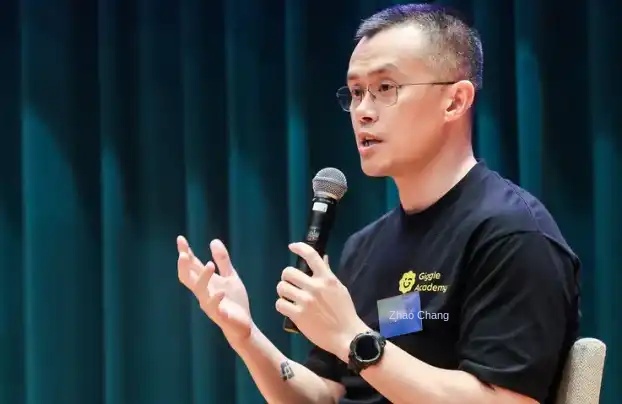
CZ recently visited The In Conversation talk show under CNA accepted an interview with Lin Xueling, executive producer of CNA. In the interview, CZ talked about Binance’s recent negotiations with regulators and the resistance they received, and also talked about some advantages of the cryptocurrency system over the fiat currency system and some prejudices against Crypto. CZ believes that cryptocurrency trading platforms should do their best to provide users with Crypto-related education, and only need to serve those who are willing to accept Crypto. Finally, CZ said that the growth trend of Crypto is obvious and will not stop. In the future, Crypto and Binance will be everywhere.
Rhythm BlockBeats translated the full text of the interview as follows:
Host: You Think acceptance of regulation is incompatible with Crypto's decentralization and anonymity?
CZ: I don't think there is any contradiction, many people are a bit extreme and think either Regulated, or not regulated at all. When you're running a centralized exchange, it makes sense to be regulated because we're dealing with money. One is that being regulated does protect consumers, and with the right regulations, you can still encourage innovation, which allows us to integrate well with the traditional financial system.
Host: It looks like regulators in all the major financial centers of the world are wary of what happened to Binance recently. They keep saying no to you, or you withdraw your application yourself. Why haven't you been able to convince the regulators of the big financial centers that accepting Binance is a good idea?
CZ:First of all, I disagree with what you stated. We have seen many influential countries want to cooperate with Binance. I think some countries realize that Crypto is the future of finance. And they also believe that the tax department is the foundation of all other departments. If you don't have a solid foundation in the financial sector, then your other sectors will not be competitive because you don't have the right way to trade.
So we're seeing quite a few countries, even some countries vying to work with us, vying to attract us to set up headquarters in their countries. I can't name them, but they are all G7 or G20 countries.
We recently got approval from Bahrain, we've got a deal with Dubai, and of course others, but I don't want to pre-announce. In a few weeks, you will see more countries realize that they want to attract this industry.
Moderator: Of course Bahrain and Dubai are great, but what about traditional financial hubs like New York, London, Frankfurt and Singapore? What is preventing you from getting approval in these places?
CZ: For example, although Binance US is licensed in 43 US states, But New York has a special regulation that requires you to go through a three-year financial audit, while Binance US has just been established for two years.
Other places you mentioned, the UK, we previously withdrew the application, but we've reversed that decision and we're working with the regulators in the UK . Singapore is a small market, but it is also a very important market, and we will continue to cooperate with Singapore.
Not every country has fully established regulations for Crypto. Even the existing Crypto-related regulations only pay attention to a small part, that is, the centralized trading platform. They don't focus on DeFi, NFTs, fan tokens and many other things.
In the centralized trading platform, the regulations mainly cover KYC and AML. These are of course important, but if the trading platform is thriving and functioning properly, there are other things like security, wallet management, and how to handle customer disputes, what kind of new framework is there, etc., few regulations talk about it these things. Much of the existing regulations are actually borrowed from banking regulations, as regulators have not had deep exposure to Crypto. So we are working with countries all over the world, we can share with them what we have learned from practice, and let them understand the whole industry.
In practice, bigger countries move slower, and smaller countries actually usually move faster. But now some of the biggest countries in the world are paying attention, and in those countries, you typically see two types. One is very supportive of Crypto, and they understand that the absence of Crypto technology or the Crypto industry will seriously affect their own development. The other has reservations about Crypto. They read reports that are accurate or inaccurate, like things like Bitcoin is still being used by drug lords, and it’s normal to have a different opinion.
I'm not saying that everyone in the world has the best crypto regulations today, the industry is just getting started so we usually spend more time in places that are more forward looking or crypto bullish .
Moderator: Let's talk about the thing you just mentioned, because for people who don't know much about Crypto, this is what they seen often. You just mentioned that Crypto is used by criminals and scammers for Money Laundry. What do you think the regulators can do, or what changes can you guys make to make cryptocurrency useless by criminals, scammers, etc.
CZ: I recently read a copy forwarded to me by an ambassador somewhere report, which is very detailed, mentioning that only 3% of Bitcoin transactions are related to illegal or questionable activities. This ratio is very small, actually lower than the ratio of fiat currencies.
I think many people don't understand this number, but what they can understand is that the news media no longer reports that Bitcoin is only used by criminals and other groups, Because industry reports make it clear that this is not the case.
Crypto has many use cases, and if you miss it, the entire economy could suffer. With Crypto, you can fundraise for your projects globally. If you are a good project, you have a good reputation, you are serious about the project, and people know you, you can easily raise funds for your project, which is called IC0, IE0, ID0, etc. It's much easier than the traditional VC way, but because it's so easy, it also encounters a lot of scammers, but for real entrepreneurs, this is a tool they can use.
There is also NFT, which is another way for artists to monetize their works on a global scale. Apart from the blockchain, there is no such mechanism in any traditional field. If you rely on art galleries or museums, you will not get such high liquidity and returns.
Moderator: Don’t you think crowdfunding through traditional platforms is the same?
CZ: This is different, you can try it. Traditional crowdfunding platforms are usually limited to one country, making it difficult for users from other countries to purchase or participate due to the constraints imposed by the current fiat currency system. Even if people want to support your project, they can't easily give you $200.
Moderator: What is stopping Binance from going global?
CZ: I think the really bad thing is a blanket ban on Crypto, which is bad of. In my view, this will have a long-term negative impact on economic growth in those regions. This is a new technology, although some people use it for illegal activities, but this proportion is quite small, much smaller than the proportion of legal currency used for illegal activities. There are many benefits to embracing this technology, no one can stop technological innovation, there are billions of people in the world, and they will continue to innovate. Embracing innovation is very important to economic development, so any blanket ban is usually bad.
Moderator: So you said that the risks are actually very small, and compared to the benefits, they are overestimated.
CZ: Yes, there are risks in any industry. People still use dollars to buy drugs today, but that doesn't mean dollars are bad; criminals still have bank accounts somewhere, but that doesn't mean banks are bad. I'm sure illegals use the internet, we're not going to shut down the whole internet for that. We have to separate these things, we do need to solve those malicious users and reduce some of the existing problems, but the positive benefits are much greater.
Moderator: Earlier we interviewed an economist who believes that when migrant workers want to transfer money back home, the use of cryptocurrencies A lot of cost is reduced because there are as few interactions as possible and very small transfers can be made.
CZ:Yes, global remittances are a huge industry. Today, the cost of using these services is between 10-20%. If a worker wires $300 back to their hometown to support their family, they are charged $20 to $30 in processing fees. None of these people are very rich, but they are all working hard, and if they want to support their families, then they have to pay 10-20% in fees just to transfer funds. And if you use cryptocurrencies, you need at least a few cents or even less.
Moderator: If I am in a small company and want to reduce payment costs, should I consider using cryptocurrencies?
CZ: Of course. I think the world is much smaller today and we work with everyone in the world, not just with people in our own country. When you talk about cross-border payments, the traditional fiat currency system is very expensive and slow. Cryptocurrencies are instant and very low cost, making you more competitive internationally. Basically, any business that doesn't use cryptocurrencies is putting itself at a disadvantage.
Host: I spoke to someone who invested in cryptocurrencies through Binance and he thought it was a gamble.
CZ: I think we should adopt the view that cryptocurrencies have different users , different users have different purposes. Just like someone who uses U.S. dollars, it may be a stock trader, it may be a currency trader who exchanges U.S. dollars for currencies such as euros, renminbi, etc., or it may just be paid in U.S. dollars.
In any industry, there will always be a small group of speculative traders who are either short-term or long-term traders. Some call their actions bad, others call them investing. It depends what you want to do, some people just pay with bitcoin. In my case, I never trade, I just hold Bitcoin, which I have held since 2014 until now. Whether you call it a bet depends on your definition, but in every industry, different people use this new technology, new asset types for different things.
Moderator: People who invest in securities trading platforms often have more knowledge, and banks are also providing advice and sometimes even checking investment Are they aware of the risks. Do you think cryptocurrency trading platforms should do the same?
CZ:I totally agree. I think the Crypto industry needs more education, we have set up Binance Academy, where there are almost a thousand completely free videos and articles for people to watch and read. We actually put links to those articles in different parts of the site, for example when depositing, you can see articles embedded in the site that remind you of what security risks you should be aware of. Recently, the Portuguese authorities have reposted the contents of Binance Academy on their own website for digital education, of course, with our permission.
At the same time, we are probably the only cryptocurrency exchange with a responsible trading program. If we see users losing money quickly, we block their trades for 48 hours to calm them down. If they still continue and lose money, then we ban them from trading. Before jumping into certain functional areas of Binance, people have to test it out. We ask some very specific investment questions and pick the right answer to get in.
Moderator: If you're going to stop people from trading when they lose too much, they have to choose the right answer to move to some possible Not such a responsible trading platform, is it?
CZ: Yes, that's the way we are, we do our best to educate our users .
Moderator: Why don’t you cooperate with existing securities trading platforms? You have a background in Computer Science and have also worked for the Tokyo Stock Exchange, so you know traditional stock exchanges. So why don't you connect with them and get into the mainstream, wouldn't that also solve a lot of regulatory issues?
CZ: I think working with them is definitely a good idea, but I wouldn't say just Regulatory issues can be resolved by working with them. In most parts of the world today, regulations around cryptocurrencies are not entirely clear. I don't think partnering with Nasdaq will remove regulatory concerns, but we are very willing to work with traditional trading platforms.
Host: Aren’t you afraid that they can eat away at your market?
CZ: No, I think the more players in the Crypto field, the more people who are already in All the better. It's very important for us to grow this industry, this market is still young, so we can scale it up to 1000 or even 10000 times. The more people involved, the more opportunities will emerge within the industry. If you're the only one involved, you're in the wrong industry.
I believe that the decentralized trading platform will replace the centralized trading platform one day, and when that day comes, we can also cooperate with the decentralized trading platform . We can embrace the technology, we embrace everyone that emerges, we embrace technological innovation, we embrace competition, partnerships, we embrace all.
Host: Can we see Binance approved in London, Frankfurt or Singapore in 3-6 months?
CZ: Honestly, 3 to 6 months is a very short period of time, like Just as regulations don't change so quickly, their thinking doesn't change as quickly. In the long run, we aspire to be fully compliant everywhere. While we are not in your country in the short term, in fact, we are not in most countries right now, that doesn't mean we won't be there in the future.
I predict that in the future, 5 years, 10 years, 20 years later, Crypto will be everywhere, and Binance will be everywhere.
Moderator: Indian Prime Minister Modi once said that cryptocurrency has spoiled young people, how do you change this Mentality?
CZ: I don’t think we need to change everyone’s mindset, there are 8 billion people in the world , everyone thinks differently and they are free to do so. I think we just need to serve those who accept Crypto.
In my personal opinion, Crypto is the most impactful technology on our financial and industry economic growth, which is why I spend all my time in this industry middle. I fully believe that the newly raised younger generation will be Crypto native, but if another person does not have this view, then he does not have to spend time in this industry.
The people who are in the position to make the decisions, their views will affect the growth of the industry and the growth of the economy and the lives of others. I really hope that these people will see economic development as the main driver and improve people's lives, thereby further developing the economy of the places they are responsible for.
We are seeing more and more people entering the Crypto space at an astonishing rate, in some places the number of Crypto users has increased by 300- 500%. The industry is growing, but we don't need to let everyone in.
Moderator: Compared with the mainstream, Crypto is still small, although you said it is growing rapidly , but the original volume is not very large.
CZ: This industry is still in its infancy. I think currently globally, the adoption rate of Crypto is around 5%, which is calculated by the number of people who hold cryptocurrency. If you look at the total net worth, the adoption rate of Crypto is only 0.1%. Very few people have invested all of their net worth in Crypto. We also don't need to go straight to 100%, we can go from 5% to 10% to 20% to 80%. And the last 20% may take decades, like my mother, she is not a heavy Crypto user because of her age, and she doesn't even know how to use an iPhone.
Crypto is still in a very early stage, so of course the scale is smaller, which is normal. However, I think the trend is clear, the number of Crypto users is growing, and it will not stop, which is very important to us.
Moderator: Alright CZ, thank you very much for accepting our interview!
Welcome to join the official BlockBeats community:
Telegram Subscription Group: https://t.me/theblockbeats
Telegram Discussion Group: https://t.me/BlockBeats_App
Official Twitter Account: https://twitter.com/BlockBeatsAsia

 Related Articles