The dilemma and way out of chain games, a storm is brewing
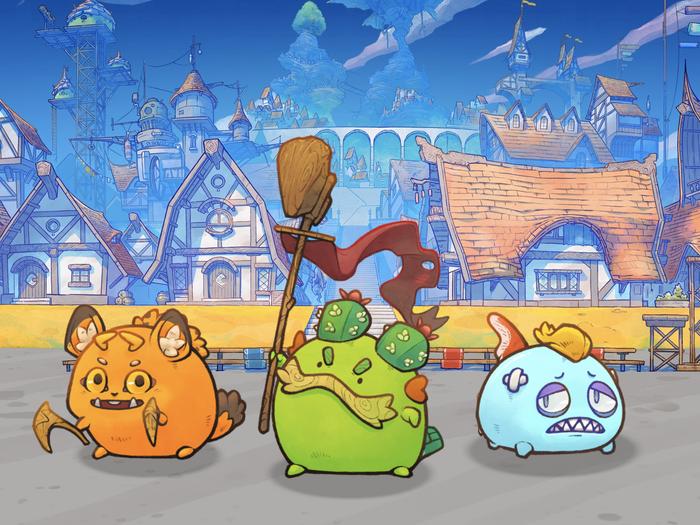
Original title: "Harvard University Blockchain Club: The Dilemma and Way Out of Blockchain Games, A Storm Is Brewing"
< /p>
Original author: Yang Deyuan, Zeng Yueqi, Harvard Blockchain Club
Original compilation: 0xzshanzha, deep tide
In the 1980s , text-based MUD (online dungeon) games dominate. Adventurers love multiplayer real-time RPGs with rich lore, fantasy worlds, compelling mechanics and RNG-based gameplay with P2P elements, which sounds a bit like we're in 2021 The so-called metaverse.
But at the time, a key piece of the puzzle was missing: a vibrant in-game economy powered by blockchain. This has come a long way since Satoshi Nakamoto's white paper.
With the introduction of Ethereum, smart contracts, DeFi and NFT, we have witnessed the emergence of on-chain games such as Ether Bots and Crypto Crabs, and the emergence of Axie Infinity and other money-making The exponential growth of the game, and the emergence of guilds like YGG.
With the development of Layer 1 this year, Layer 1 such as Solana and Wax have become the track for new institutions due to their low transaction costs and high efficiency. VC money is pouring into the industry (say, $100M from FTX and Lightspeed Venture Partners and $200M from Binance and Animoca).
This year also witnessed Dom Hofmann's The Loot Project - "randomly generated and stored adventurer equipment on the chain" - MUD game in Web3.0 Reimagined from the bottom up, the image below shows LOOT's eventual return to the MUD genre.

There's a lot to look forward to.
First of all, blockchain and games complement each other, and blockchain promotes the organic formation of neoclassical game economy. One because games provide blockchain with utility and adoption, and two because chains provide games with security and real asset value. For example, Axie Infinity, a Pokemon-like card game, offers many families affected by the pandemic a way to earn income by selling Axie NFTs or ERC20 tokens such as $SLP via an earn-in-game model Methods.
Many new players and non-players are the same. Due to the motivation from playing games, they systematically learn what is Ethereum, what is DeFi, and what is proof of stake (POS), what is impermanent loss, and other broader blockchain technologies, thus creating a virtuous circle. At present, the total market value of Axie Infinity's governance token AXS exceeds 8 billion US dollars.
On-chain assets are the first real bridge into the metaverse, and projects like Loot and Axie are certainly steps in the right direction. But they're not enough to get the next billion users into the metaverse.
In this article, we will take a canonical approach to explaining that the current gaming industry is one of hype rather than substance, and hereby present to GameFi (District Blockchain game) enthusiasts warn, while emphasizing three specific issues that need to be addressed:
First, there are problems with the "encryption first, game second" model , Second, the current decentralization of GameFi is an illusion, and the third is the issue of user governance rights.
Next, we first briefly introduce the history of GameFi, then present our thoughts and offer potential solutions. The picture below is a diagram of the GameFi involved in this article.

GameFi: How far have we developed now
Few today doubt the powerful mutual complementarity of blockchain and video games. The idea is simple: before blockchain, assets in video games were managed top-down by game studios. They are mutable, replaceable, and out of the user's control as they only exist on the production company's servers.
Games rarely allow asset transactions between players, especially on third-party sites, and those sites that allow player asset transactions are also strictly regulated , only legal use of in-game items is allowed.
Even in games where you can trade, you can't legally own assets, because studios have little incentive to hand over their profits to users. But with the use of blockchain, all assets are on a publicly distributed decentralized ledger and can be easily transferred between parties.
In addition, the tokenization of game assets can promote the development of market economy and strengthen the intrinsic value of props, even outside the specific game ecosystem.
For players, in addition to spending money, there is a new way of making money: earn money by playing games (P2E) mode, players can Earn money using the NFTs they earn in-game through various means such as selling them or earning a profit by taking a stake. And vice versa, NFT gets value from the game.
NFT is a very powerful tool for the game industry. This standardization allows any in-game item (such as a gun, spaceship, elixir, farmland, or even a cute cyber dolphin) to be used across games and different blockchains, even if they are made by different studios maded.
Personal wallets can also replace specific accounts for each company, allowing further interoperability. Although NFTs have not been around for a long time, we can divide them into four different levels.
Level 0: Collectibles
Example: Crypto Punks, Bored Ape Yacht Club, Cool Cats, Doodles
Crypto Punks are prime examples of Level 0 character NFTs. In some ways, we believe Punks captures the growing beta of the Metaverse, owning a Punk means you are an OG in the NFT space, means you are a serious collector with huge reach.
In addition, using Punk as your avatar does allow you to enter some more advanced communities, and may get free airdrops of other NFTs (such as Meebits) . Meanwhile, Bored Ape Yacht Club has too many similar partnerships and collaborations.
Level 1: Basic Interaction
Example: Crypto Kitties, Crypto Crabs, Ether Bots
Punks serve no purpose other than speculation and influence.
Meanwhile, Crypto Kitties offers an additional gamification component: reproduction. Players can trade cats and try to unlock some rare traits, but that's about it. Apart from interacting with smart contracts via Metamask, there is little real gaming here.
In addition, there are turn-based tactical games such as "Crypto Crabs" or "Ether Bots", each of which runs on the blockchain, but These games have disappeared due to Ethereum's high GAS.
Level 2: Exploration
Example: Decentraland, Sandbox
Decentraland and Sandbox represent the evolution of Level 2 gaming: virtual platforms that allow users to create, experience and monetize content and applications.
Lands in Decentraland and Sandbox are permanently owned by players. There is a fixed supply of land that users purchase from a blockchain-based land ledger. Landowners control what is posted to their portion of the land, identified by a set of Cartesian coordinates. Content can range from static 3D scenes to interactive systems such as games. Land is an irreplaceable, transferable, scarce digital asset stored in an Ethereum smart contract.
In the case of Decentraland, players can earn it by spending an ERC-20 token called $MANA. $MANA can also be used to purchase digital goods and services in the virtual world. Players can roam these lands on their PCs and interact with minecraft-like 3D worlds that are eerily reminiscent of VR Chat. Although big players like Travis Scott have appeared in Decentraland, mainstream players have not yet accepted this thing, because the game itself is not attractive except for the casino. More directly, unlike Level 3 games, NFTs in Level 2 games cannot yet be used to generate direct revenue.
Level 3: Complex Gameplay (GameFi)
Example: Axie Infinity, Gods Unchained
Building on the foundation of Level 2, the rapidly developing Level 3 game in early 2021 finally has a shippable game. Users can open the client, enjoy exciting graphics, mechanics, and pay to play games, instead of playing farming mini-games through the browser wallet interface.
Axie Infinity leads the way. Axie users start playing by investing in Axie NFTs and $AXS native tokens. There, they can earn $SLP by playing, as the earned tokens can be exchanged for other crypto assets or fiat currencies.
During the difficult economic times brought on by COVID-19, many users in the Philippines are earning more than they normally would simply by playing Axie Infinity More monthly salary. The picture below is the game screen of Axie.

The problem with Level 3 games like Axie Infinity is that costs are based on token inflation and new players must Offset this inflation to keep the economy in balance. The economy relies on new money, and if the growth rate of new players declines or old players stop reinvesting, the economy will systematically collapse due to hyperinflation of Axies and SLPs, making everyone a potential "rug puller". The play2earn economy of Level 3 depends on the capital that people put in, making a profit only when others buy it: in this case, there is no social surplus.
It is true that many successful businesses survive on unsustainable models that eventually become profitable through economies of scale and increasing returns to scale. Axie has a lot of cash to burn because they have a lot of institutional investors, from a16z to Mark Cuban.
The problem with Axie, however, as we show later in this article, is that as the economy grows, buy-in prices inflate significantly, further damaging the Stablize.
The picture below is Axie's game economy system.

There is a fundamental question with all Level 3 games: if the game is no longer profitable, will people continue to play it? I don't think so, At least not yet.
Current GameFi projects lack the complexity and mechanics to create a truly fun experience. Most players play games purely for profit, as current games with high monetization levels don't have enough gameplay.
As Axie prices continue to appreciate, growth will undoubtedly slow. Currently, to play Axie Infinity, let alone win, players must pay at least $100/Axie for teams of 3 and hundreds (starting on November 8, 2021). For a common meta-level team consisting of a simple beast, aquarium, and bird Axie, they cost upwards of 1 ETH ($4400).
In addition, there is a deflationary cycle. When players leave, they put their assets on the market, reducing the market value of the item. When the market value drops, people are more likely to leave the game, which only further weakens the value of the game item. Momentum works both ways—games crash just as quickly as they take off.
The picture below is the crash process of a game CryptoMines on BSC.

Level 4: Future Pipeline Games
We decided to change Level 4 Games are categorized as exciting future game projects that plan to improve games like Axie Infinity and Gods Unchained in some significant way.
Right now, we're looking at Gala Games' games like Miranda, Star Atlas, Phantom Galaxies, Aurory, Untamed Isles, and Shrapnel.
These games fall into different categories and go in different directions. Some have adopted Unreal Engine 5, while others have opted for a more blocky, cartoonish art style. Some are first person shooters, others are tcg games. Some companies are planning to partner with DeFi projects to build collaborative dApps, while others are working on cross-chain interoperability.
After the background statement above, we want to highlight in this article three core problems with existing games that are critical to making games for the next level Particularly important.
Encryption first, gameplay second
The picture below is Messari’s GameFi map.

The crypto first, game second model is adopted by studios that prioritize cryptography and funding over gameplay, and This is the first of three challenges that current Level 3 games must solve.
It is worth noting that this model does have an advantage: it makes it easier for independent developers like Star Atlas' studio to raise funds, both You can raise funds through NFT before the game is released, you can also pre-sell tokens to investors, or you can raise funds through the old way of selling equity.
This is critical to the development of many Level 4 games, and is also the key to the success of various DeFi projects. However, we believe that it brings a lot of asset risk and speculative behavior, which is not good for the entire ecosystem, which will lead to a decline in game quality and negative user experience.
Excessive hype and previous success stories (such as Axie Infinity), contribute to the inflation of game assets before the game is released. Companies can set initial prices much higher than non-crypto games, which creates a huge barrier to entry.
As an example, Calico Guardian in Star Atlas (which is a game supposed to be released in 2-10 years) sells for at least 25,000 Dollar. Even a mid-sized boat of poor quality will cost at least $1500. That's the developer's list price, and all sales proceeds go straight into their pockets. Titanship, as Discord has been hyping, could bring in a million dollars. The picture below is the official suggested price of the spaceship.

Incredibly high asset prices reduce interest in the game from potential players and overburn the ecosystem. These price points not only exclude potential players, but also force players to spend a lot of money to play a poor game, or if they don't want to spend a lot of money, they are forced to play the role of indentured slaves in the game.
Due to the volatility of crypto assets, players are forced to take incredibly high risks. And this problem is exacerbated by the layering of assets.
In order to encourage players to buy more advanced assets, game companies will greatly increase the power level and corresponding benefits of more expensive non-functional games. This means that the price-to-reward ratio (financially and opportunistically) is much lower for lower-cost projects. 10 low-tier NFT ships for $100 will pay back less than a single NFT ship for $1,000.
For example, Axie Infinity divides the land into 5 categories (Savannah, Forest, Arctic, Mystic and Genesis), forcing individuals to contribute a lot, or exclude them.
A plot of land in Genesis sells for 550 ETH, while a plot of land in the Prairie sells for 3.5 ETH.
However, the tiered land system means that certain buildings can only be built on more expensive land, or on multiple Economies of scale and increasing returns to scale generate more revenue. The highest tier of land usually ensures that the unit cost of producing a product falls as the scale of production increases, while owning multiple lands linked together (buying in bulk) means that labor productivity per unit rises as the scale of production increases.
In other words, the layered nature of the Axie economy not only provides better rewards to those whales who can Retail investors are excluded from game earnings. According to the distribution of AXS game earning rewards, a genesis plot is worth 343 prairie plots, which means its true value should exceed 1130 ETH.
The figure below is the revenue estimate from Axie discord.

Other games like Star Atlas suffer from the same problem: even with a larger number of cheap ships such as Opal Jet and Pearce X4, but the game experience brought by these cheap ships to players is greatly limited (for example, the lack of ability to mine asteroids and combat capabilities).
As an example, if in combat a $28,900 C9 capital class ship can vaporize an Opal Jet with a laser cannon in seconds , so how can an Opal Jet approach the "medium security zone"?
Ultimately, the "encryption first, gaming second" model presents a conundrum: The player is forced to choose to be either a worker or an investor.
Those who are willing to pay huge sums of money are forced to become investors because they have to bear the risk of these expensive assets. Those who are less willing to invest, or simply don’t want to get in the game too much, are forced to become workers on a “scholarship” system—they borrow expensive assets from investors, use them to make money, and at the same time give investors Most of the profits - it's a 21st century serfdom with a rent-seeking guild between them and the game.
So it attracts speculators and big lending syndicates like YGG who are not really gamers, which may be good for the short term price of the token , but ultimately not conducive to the long-term growth of the project.
Mainly because speculators are not actively contributing to the game community, while also taking up a lot of valuable NFT game resources that could have Owned by a more dispersed set of individual players who are able to create better games.
In other words, the model of YGG and other guilds is not necessarily positive for gaming community building, as they encourage the hiring of labor. It's also important to emphasize that this workforce is primarily wage earners from third world countries with little negotiating power over their wages; this is not the "future of gaming" we dream of.
Finally, we would like to point out that despite the class stratification and the need to pay to play in traditional games, the very nature of GameFi and "play2earn ” model exacerbates this problem, and at the same time directly leads to the fact that many games cannot live long and healthy. Unlike traditional Gacha games (games with cheap winning thrills via in-app purchases), GameFi projects tend to crash faster when trying this approach.
One solution is a "gaming first, encryption second" model.
This mode highlights the gaming experience while maintaining the security of encrypted components: having fun and making money are not mutually exclusive, but emphasizing the former is important.
We envision that in the near future, new content from different developers and studios can be added to the game through votes from different nodes. Specifically, what makes a game interesting in the long run is the slow learning of mechanics (through a deep understanding of game logic and mechanics), or the slow progression felt by the player putting in the time, rather than just buying expensive premium assets.
Simply put, games can be designed to reward skill, like League of Legends, or they can be designed to reward hard work (resource acquisition), like Clash of Clans . Some of the most popular games, like Clash Royale, balance these two elements: units can be upgraded to get more rewards, cards are properly tiered based on rarity, and all cards are reset to Same intensity level.
Essentially, the "games first, encryption second" model means that not everyone can make money, only those who can play have the opportunity to Earn money, and how much they can earn is affected by the capital they invest, and of course it depends more on their game skills and game time investment.
Even those who don't have enough money can make money with their unique skills and understanding of the game, rather than being judged by the cheapness of a particular asset forced to become weaker.
It is also reasonable if game studios with player backgrounds are unwilling to allocate most of the pre-sale tokens to private buyers. Because they just want to make more profits for themselves, but this practice may affect the overall economy.
The illusion of decentralization
The second level 3 game must solve The challenge is decentralization.
The sale of in-game assets is by no means a phenomenon unique to GameFi, but the crypto gaming industry bills its game assets as a completely separate and uncontrollable market.
This is deceiving: Because studios have ways of maintaining control over assets, these games are still centralized in most cases, despite many Crypto game leaders market that they are decentralized. For example, Axie, many Axies have been banned, and the picture below shows the banned Axies.

The first and most fundamental question is whether these games should or need to be as decentralized as the game developers claim .
In "centralized games" (such as CSGO on Steam), accounts can easily be banned from transactions. This led to many problems, with assets worth millions of dollars locked in trading bot accounts.
While many may argue that these locked assets drive up the equilibrium price by reducing the total supply, the ban is somewhat justified , and this prevents bots from simply transferring their assets to another account and continuing to attack and violate the terms of service, which is very important for stabilizing the game economy.
However, the decentralized nature of blockchain assets is worth protecting for many reasons. If we assume that decentralization is something we want to maintain and enforce, this raises the question: is the current crypto gaming ecosystem implementing these ideas? How can these games evolve to better create the ultimate decentralization Huayuan Universe?
In the current encrypted game field, although game developers cannot directly prevent asset transactions, because they are independent on the blockchain, But they can drastically reduce the value of assets by banning them from the game. This will remove most of the utility belonging to the asset.
If properly flagged on exchanges and other trading platforms such as the Axie Infinity Marketplace, it could easily replicate the no-trade functionality of centralized games. For example, when Axie Infinity discovered that Chinese studios were paying players to play multiple accounts simultaneously to maximize revenue, they banned all of Axie's accounts and warned the player community on Twitter against further violations.
Of course, the Axies themselves are still tradable, but cannot be used by anyone in-game, making their trade value worthless. Because game companies monopolize the reduction and removal of asset values, these assets are still highly centralized.
Going a little deeper, games like Star Atlas claim to be anonymous developers, which means they're ok with gradually letting themselves in over time Quit, and let other game developers take over their ideas.
They claim in many official forums that over time new developers can replace the development team if the community needs it.
In their white paper, the studio claims that "blockchain technology using the Solana protocol" can provide a "serverless and secure gaming experience", Star NFT tokens acquired and traded in Atlas create a tangible economy that replicates real-world assets and ownership.
As for not using the server, their reason is that if the game does not have a server, then the server failure will not affect the game, thus maintaining the game asset value and user base stability.
However, we believe that due to the speculative prices discussed above, companies are more motivated to start a new game, sell their own tokens to raise funds, and due to crypto Due to the hype and rapid spread of the currency, the cost of acquiring customers is very low.
For example, say the CryptoMines game on BSC, the project claims to have over 230,000 users. When the development team failed to control the FUD (fear, uncertainty and doubt), the project party saw the price of their token drop from $801 to $4 in two weeks, and they proposed a complete game shutdown plan, And promised to launch a new NFT completely independent of the original game, declaring that the NFT of the original game has no effect.
In reality, there are several structural hurdles to overcome in order to solve this problem.
First is the issue of intellectual property rights: while the company itself cannot control the trading and transfer of NFTs, the images and names used in the game are protected rights. We know intellectual property protection is important to stop indie game studios with far more money creating Mirandus 2 or Axie Infinity 2 out of existing assets for convenience and destroying GameFi's user base.
While protecting and developing intellectual property is important to the development of the game, there also needs to be a clear transition plan. Unlike other forms of protection such as patents, trademarks do not have a clear validity period and can be kept forever, so the transfer of ownership requires clear information disclosure.
Our proposal is to allow these companies to own trademarks for a predetermined, public, and flexible period of time, allowing companies to Design and other ways to develop their own intellectual property rights.
The trademark will then be transferred to the game's DAO or DAO-like structure, where the community can vote on the partnership.
These partnerships will be submitted to the DAO and voted accordingly: they require a minimum number of game-native tokens or nft, which will be written by smart contracts Entries are locked during a voting period to align interests and prevent one-off marketing schemes.
Also, there are issues with the servers running the game itself. This can be solved in two ways.
The first method is proposed by Gala games. Gala Games is currently using a node service. They claim that in the future they can "run a decentralized Game Hosting Platform”, a framework that we believe has great potential. New content from different developers and studios can be added to the game through different node votes, which allows us to infer that future servers will no longer depend on a single game.
Or we recommend that game developers start a fund funded directly by themselves until they decide not to support the game anymore, at which point they will advertise the fund, And hand over legal control to the DAO.
This way, if the game is still popular, the community can decide to maintain the server, or migrate to a new server entirely in due course. Generally speaking, that money should come from the company's profitable revenue, as well as new content creators looking to keep the economy growing.
In fact, new content creators can choose to enrich the existing infrastructure by adding new playable content, or they can create a game that includes the same A completely different game for Nfts.
If the new game offers a much better platform than the original game, the DAO can vote to suspend support for the original game and move the funds to the new game, thus obsolete original developer.
In general, we can predict that future blockchain games will be built on different Layer 1 blockchains, such as Ethereum, Solana, Wax, For example, Cosmos, users will be able to switch games easily, and they will be able to carry their assets, such as NFTs of skins, avatars or weapons, to other games or Layer 1 blockchains.
Governance: A Grand Illusion
Majoritarian governance refers to the On-chain voting to decide on proposed protocols or game system changes. This is a huge illusion that needs to be addressed, and it's an issue that's critical to developing Level 3 games.
While gaming requires user feedback and data to design the best product to maximize consumer experience, on-chain mobile governance has historically never been effective Solve the problems any anti-majoritarian rule maker has ever faced.
The figure below shows the distribution of Axie Infinity governance tokens.

First, majoritarian governance is harmful in the long run because individual individuals lack the skills, knowledge, and long-term motivation to maximize The game grows.
Considering that most game development teams have the expertise to design the complex economic structures necessary to balance the game's revenue generation, user feedback and Along with input, we should trust the team to make meaningful decisions.
We believe that a promising project with a long-term vision like Phat Loot Studios' untame Isles will continue to listen to user feedback as they do in character art as designed.
It is important to note here that this can be achieved through data collection and pooling, with a note that reflects NFT holdings that developers can consider , rather than through token.
This also raises another question about exclusion and alienation, as many people already buy through NFT (the purchase behavior of NFT is critical to the operation of the game) And a lot of money is invested in the game. This token-based governance system forces individuals to also purchase such tokens and penalizes those who allocate funds to in-game NFTs.
As far as incentives go, it seems infeasible to give power to change fundamental parts of the game to those with more money, since their motivation is to protect own interests, rather than protecting the balance and health of the entire game. This can lead to changes and votes that are easier to pass based on protecting the higher-level assets they hold, thus imbalances in power and alienates ordinary players.
While there is little governance policy in place in the crypto gaming space due to the lack of any type of governance structure, the consequences of crypto whales can be seen in other instances of governance in the crypto space See.
In April 2021, on PancakeSwap, the largest DeFi platform on Binance Smart Chain, a proposal to change the pool was submitted. This change (which was backed by the developers) was overturned by a user whale who pledged over 94,500 votes using his cake tokens. That made him the largest single voter against the proposal, with a 65% majority. Holding almost twice as many tokens as the entire proposal, this whale single-handedly blocked a vote that the majority hoped would succeed.
This suggests that ceding power to those whose motives may not always align with the collective can be destructive. What happened next was equally worrisome: the Binance dev team made the suggestion over and over again, until the whale finally dropped its objection.
Decentralized finance (DeFi) protocols have always strived for quality and fairness, but many fall short due to their governance voting mechanisms: the decision-making process Moving on-chain sounds like the next blockchain revolution, but its validity is still not legally recognized.
The picture below is the result of the Pancake vote.

There is clearly a question of how to incentivize this, as whales will only allow vote.
Of course, we also have to ask, since whales are the ones who put a lot of money into the game, don't they have the right to do so? After all, they took most of the risks. Even if we try to circumvent the whale problem by building a common alternative of one wallet per ticket instead of one token per ticket, we will face an equally disturbing problem: the Sybil attack problem, where a user can create 500 wallets , using scripts to distort governance or gain airdrops unfairly, undermining democracy.
The image below shows the result of a cheat in the mekaverse lottery.

Additionally, the token-based voting system alienates players and creates a power imbalance between haves and have-nots. Not only does it exclude those who own fewer tokens, but even those who own other assets, such as NFT assets created directly in the game, are forced to maintain a large supply of tokens to prevent policies that are harmful to them .
This is disastrous for NFT asset holders, because they are actually the most affected by the game. In the case of Axie Infinity, it is the land and the Axie player who are most affected by the game change. However, those who vote on game development proposals are all AXS holders.
While in-game lands are proposed to somehow generate AXS Tokens, most AXS Tokens are in the hands of AXS speculators who will no doubt try to assert themselves economic interests. In the end, governance needs to be pushed slowly on a case-by-case basis instead of raising funds after the fact, seriously affecting the progress of the game.
Secondly, there are very few successful implementations of current game-based DAO frameworks. Due to the lack of transparency and the progress of DAO development, hardly any policies were voted on.
There is little material on specific examples or structures of how voting should be done, although games such as axie Infinity and Star Atlas have proposed basic governance and proposal structures, but There haven't been any major decision votes yet, nor any regular votes.
It is worth mentioning that those games that want to be truly decentralized can use some of the ideas mentioned earlier in the DAO voting as the basis for the subsequent voting process.
The figure below is the distribution of Star Atlas governance rights.

Finally, the early distribution of Token hinders the realization of the DAO structure in the current environment.
One, the worst case scenario is that the game development team that planned to do Rug Pull itself (scam and scheme) executes Rug.
Secondly, even if we assume that developers will not do this, due to the need to raise funds and reward employees in the early stage, then many tokens will be Distributed to private owners and employees. Therefore, even if major players are able to acquire most of the valuable tokens in the market, they still lack relative voting power.
Note that this isn't just a problem with a few games, it's a problem with the gamefi universe as a whole. Currently, the average share allocated to team investors and private investors is 20.3% and 13.2%, respectively, and public sale ownership is 9.17% (based on data for 3 games Axie Infinity, Star Atlas and Splinterlands). Games that can be collected from the data, in some extreme cases like star atlas, POLIS (their governance token) public offering tokens only account for 2% of the total POLIS allocation, while private offerings have 22.5%, thus leaving many Issues such as public governance, democracy and land distribution issues.
Even in fairer games such as Axie Infinity, although the amount of public offering and private offering is the same, the team still keeps most of the tokens, which gives them the final decision-making power.
Although many claim that this distribution system may change over time, say through play2earn and staking. But we countered that this strategy also works for private equity firms, who may earn more due to their first-mover position.
In any case, it may be years before the public has the final say on governance policy. At the beginning of the game, when the most important decisions are made, companies and funds will have control without governance tokens. So the solution is to either remove governance as a narrative designed to fundraise, or give power to the people, like Loot, and disappear from it.
Conclusion
Given the playability and economic value of games and NFT , GameFi presents an opportunity to bring the next tens of millions of new users into the cryptocurrency space.
Since mid-2021, we have witnessed the first explosion of crypto games. More than twice as many wallets interact with game NFTs and games than DeFi. YGG (Yield Guild Games) is currently valued at $6 billion as they and other on-chain guilds continue to bring users from emerging economies such as the Philippines into the crypto economy. Sandbox will one day be a bigger company than Roblox, and there will be more sandbox games.
If we can solve the problems of the "encryption first, game second" model one by one, the illusion of decentralization and the problem of governance rights, the gamefi revolution will inevitably occur.
Finally, we'll quote a quote from the Loot Project website:
A storm It is brewing, each of us is bound to be affected by it, can you feel its presence now?
It’s time for us to work hard for this world again. Are you willing to join us to fight together to change your destiny, or choose to stay the same and repeat the past The hardships are getting rewards that can only maintain life?
Welcome to join the official BlockBeats community:
Telegram Subscription Group: https://t.me/theblockbeats
Telegram Discussion Group: https://t.me/BlockBeats_App
Official Twitter Account: https://twitter.com/BlockBeatsAsia

 Related Articles