From the Internet to Web3: The Evolution of Consumer-Grade Crypto Ecosystems and Social Finance

Original Author: Blake
Original Source: LD Capital Research
Abstract
1. The ultimate form of any technological solution that achieves mass adoption is serving consumer-level applications. A good solution transitions from a lab prototype to real-life application, with consumer-level opportunities thriving as new infrastructure matures.
2. Loot-style assets emphasize the interaction between individuals and the overall ecosystem, highlighting value contribution. Play-to-Earn emphasizes the interaction of individuals with the platform and protocol, not necessarily involving an overall value contribution, yet the two are complementary.
3. Social finance is driving a new way of user-to-user interaction and user-to-system interaction. Group behavior is considered social; hence, incentivizing social mechanisms based on user ownership is a key innovative way to build a community ecosystem.
4. Web3 will also signify a paradigm shift for the next-generation internet, characterized by true user ownership, open fairness, immutability, and decentralization, where users play the roles of both co-builders and owners and beneficiaries. This perfectly meets the essential requirements for consumer-level products to most effectively capture the market.
The Revelation of the Internet
To fully understand the development of the crypto ecosystem and social finance, one must first look back at the birth and evolution of the internet:
In the 1950s and 1960s, there were only closed internal networks (like ARPANET) and standalone computers capable of computation. After decades of evolution, the internet expanded from individual abstract information dots and hosts to interconnection between two or more hosts and LANs. The internet underwent an evolution from points to lines and eventually became a fully interconnected two-dimensional information plane.
The crypto ecosystem also follows a similar evolutionary system engineering law. For example, the information protocol stack of Web3 bears a striking resemblance to ancient basic information technology protocol stacks like TCP/IP, with a basic architecture divided into infrastructure layers, middleware, upper-layer protocols, applications, etc. The evolutionary process of the Internet from point-to-point has also pre-staged the evolution of independent public chain ecosystems and upper-layer protocols towards cross-chain and aggregation protocols, including some top institutions proposing consensus protocol standards for the unified development of future public chains.
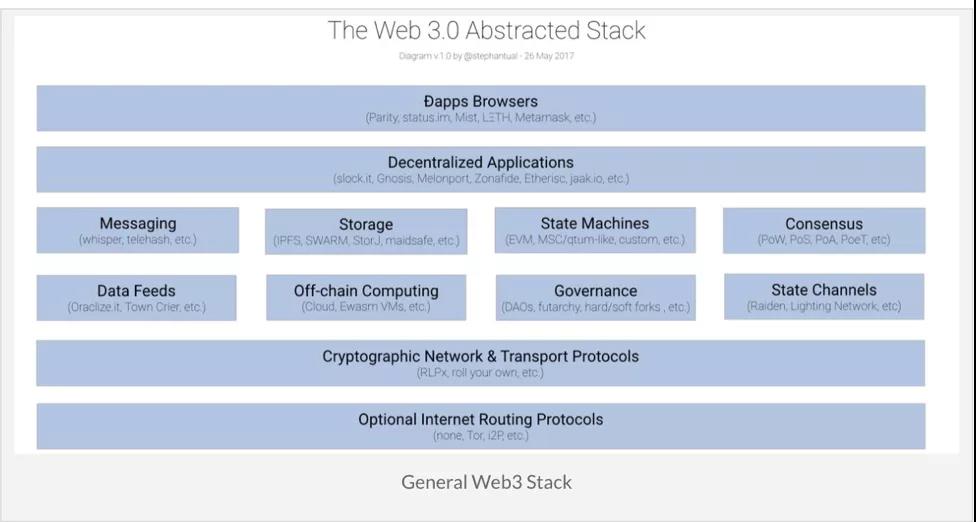
Image Source hackernoon.com/mainframe-communication-layer-for-web3-94df76a6c72a
In the world of Web3, multi-chain DeFi and cross-chain infrastructure have emerged, and it is believed that protocols for cross ETH Layer2 and cross Layer1&Layer2 will soon appear, ultimately forming a General Layer2-level multi-layer (General Multi-Layers) application-level infrastructure.
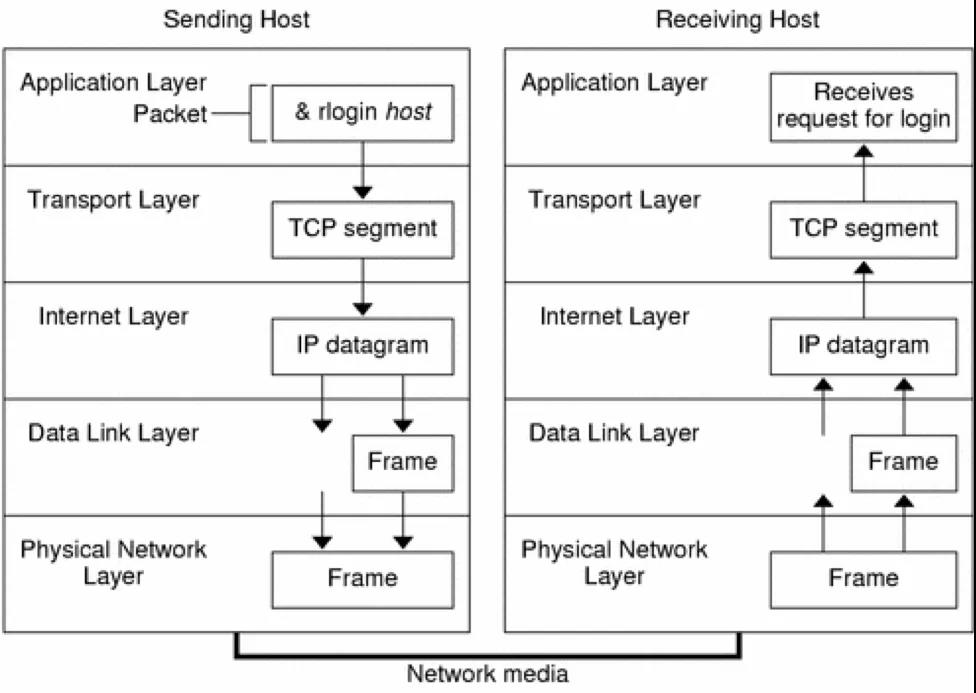
Image Source docs.oracle.com/cd/E19683-01/806-4075/ipov-32/index.html
Emergence of Consumer-Grade Applications
The eventual form of widespread adoption for any technological solution is to serve consumer-grade applications. A good solution will transition from a laboratory prototype to daily life, and consumer-level opportunities will flourish as new infrastructure matures. Drawing from the evolution of computers and the Internet, infrastructure service providers such as Google, Amazon, Netflix, and other companies have shown the public the actual implementation of infrastructure and the performance capable of serving tens of millions to hundreds of millions of users. They educate the public on which industries and daily behaviors technology can impact, and blockchain and cryptographic technology will do the same.
In fact, applications based on blockchain and encryption technology have already infiltrated the daily behavior of native crypto users, even influencing the daily life of the broader internet ecosystem outside the industry. As some Web 3.0 venture capital firms put it: "The blockchain-based internet is leading a new digital life in various corners, but users only start to care about this inspiring infrastructure transformation when it is manifested through the services and applications they most commonly use. It is hard to see things clearly in the dark, but when these products and applications turn on the light, consumers show up." For example, Bravo Browser, Status encrypted social software, Calaxy NFT-based fan platform with ecosystem incentives, Decentralend, and Wilderworld metaverse platforms... These services and applications have started to gradually transition to the regular internet consumer base, and users from these groups are also beginning to feel the direct and indirect benefits of blockchain and encryption technology on their relevant applications.
Cryptocurrency Industry Paradigm Shift
In recent years, there have been several significant events in the cryptocurrency industry that have confirmed that blockchain and encryption technology are gradually breaking through the industry's margins and evolving into a consumer-level development stage.
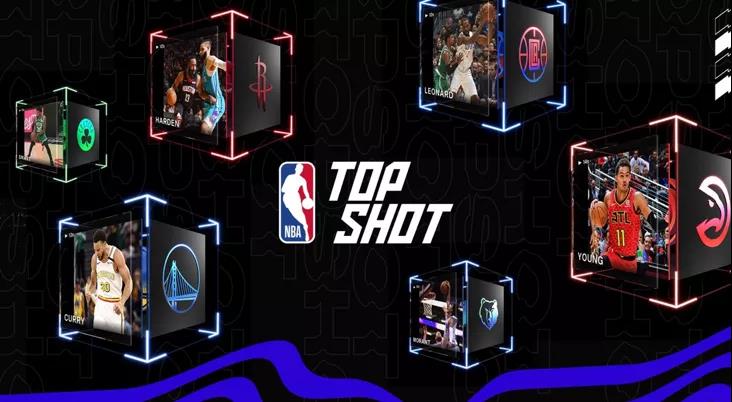
First is the NBATopShot series of NFT blind boxes, which at its peak saw hundreds of thousands of basketball fans online queuing to purchase several thousand NBATopShot NFTs; in the early platform beta stage, due to low registration and purchase thresholds, for example, even the most rare Legendary-level NFT of Lebron James could be easily obtained in a first-level market drop event, and even on the secondary order market, there were NFTs with extremely low prices available for immediate purchase.
Early adopters and a small number of die-hard NBA fans continually collected at low prices. They went through a silent phase, holding the advantage in quantity and series integrity over the large influx of users during the explosive growth period, thus profiting handsomely. As mentioned earlier, a single Legendary NFT of Lebron James was sold for hundreds of thousands of dollars at the highest. Previously, NBATopShot ranked among the top in terms of trading volume and number of holders in the overall NFT trading market.
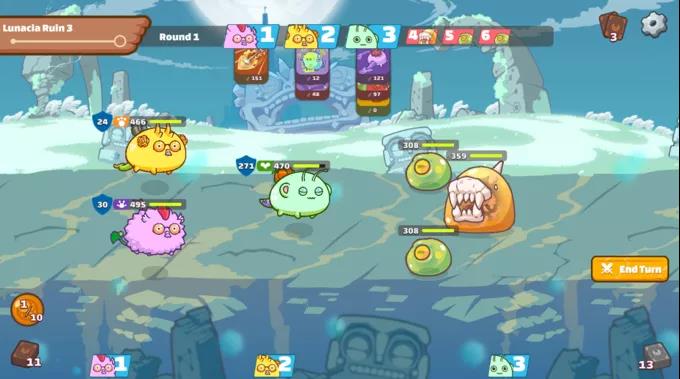
Next, in the GameFi track, the long-standing Axie Infinity, which has been focused on blockchain game development since 2018, even though at that time most industry practitioners considered entertainment on the blockchain to be a false demand. Axie aims to leverage ecosystem incentives combined with gameplay to utilize asset ownership and transferability, allowing players to gain true ownership and equitable incentive distribution.
When players from developing countries in Southeast Asia began to receive returns from participating in games that exceeded the wage they would earn from hard work in real life over the past two years, a large number of low-income individuals flooded into the game ecosystem, triggering explosive growth in Axie Infinity users. Subsequently, due to the maturation of a similar economic model, player-based crowdsourcing platforms and upstream game guilds emerged, such as YGG, also joining the ranks of top projects.
The few examples above only illustrate their efficiency in attracting consumer-level users and breaking through industry boundaries, indicating that these native crypto projects and products can acquire customers on a large scale in a short period of time like internet applications, while being accepted and benefiting from by their users; in fact, there are many more applications with the potential for a consumer-level user base, rising in the early stages within the native crypto ecosystem and gradually demonstrating cases of a similar internet-style user acquisition trend. We list them in a concentrated form based on what we can currently observe:
Community-Driven Stories
Loot NFT, whose IP originated from the community, built a game, avatars, and media around the distributed original IP. It has no team or top-down vision but is entirely community-driven by Loot holders and supporters. Loot, as a bottom-up brand, owes its success to the community that backs it. Communities coming together make a particular product easily recognizable and somehow famous. Similarly, projects like Legend Map are also based on this development model.
Partnership and Community-Driven Platform
The WilderWorld team consists of two celebrity fashion designer brothers known as Frank Wilder and Phoenix Wilder, along with their almost hundred-strong 3D animation design and blockchain engineering team. WilderWorld is positioned as a 5D immersive virtual reality space, with a vision that not only focuses on NFT issuance itself but also aims to build the next decentralized version of a Marvel Studios.
By emphasizing Metaverse + Marketplace + Cryptoartist Guid, WilderWorld brings together the world's top artists to collaborate on storylines, characters, architecture, and more, allowing collaborators, partners, NFT holders, and other true participants to engage in the customization and development of the Metaverse. In WilderWorld's Metaverse, we will find partnered entities such as YGG, Illuvium, BossLogic, Jack Paul, and others.
DAOs Based on Specific Behaviors or Purposes
DAOs built to achieve their respective visions showcase strong social attributes, such as FlamingoDAO, PleasrDAO, and PartyDAO focused on NFT investment; NounsDAO focused on governance; The LAO focused on investment; ConstitutionDAO originally focused on auctioning the Constitution; IndexCoop focused on governing crypto index products, and so forth. Essentially, regardless of their purpose, DAOs represent a form of consensus-based social communities.
Curation Network and Bounty Economy
Yup is a decentralized social network designed for curators, where users rate and categorize Web2 and Web3 decentralized network content to curate collections based on specific themes or patterns. Visitors can then engage in targeted reading and sharing based on these curated collections. Yup establishes an orderly curated and categorized Overlay content network within the existing internet Underlay content network using blockchain technology and ecosystem incentives.
Yup has currently integrated with prominent internet social platforms, NFT marketplaces, and emerging social platforms such as Twitter, SuperRare, and Opensea. Users can easily collect items through a browser plugin similar to Mask and right-click functionality.
By definition, the Hunter Economy leverages a suite of products to grant people the status of hunters and curators, allowing social and financial capital to acquire their favorite personalities, businesses, and ideas in the process. Yup is a Web3-based application within the Hunter Economy. Additionally, products like Oncyber's 3D art gallery and CPLCrypto, which enables copy trading based on investment performance, also exhibit characteristics of the Hunter Economy and social interaction.
Loot Token and Do-to-Earn
The Loot token represents a universal asset category, distinct from Loot NFTs or any other projects named Loot. The concept was initially introduced and outlined in Adams Cochran's Medium article, where he described Loot as "tokens you earn by contributing to a collective goal. They elevate your status, access, reputation, or authority within a community and can be used within that community. Instead of just owning or consuming them, you would want to contribute more to the community over time." The nature of Loot tokens is prevalent in most native crypto ecosystem projects, particularly evident in the broader crypto social context.
Do-to-Earn is a generic concept coined by the author, akin to Play-to-Earn in GameFi, Voting-to-Earn in governance systems, Invest-to-Earn in decentralized investment platforms, Buy-to-Earn on NFT trading platforms (e.g., receiving platform tokens airdrop based on NFT transactions on SuperRare, Pianity, etc.), as well as Trading-to-Earn in swaps and aggregators, which involve trading-related airdrops.
Loot-type assets emphasize more the interaction between individuals and the overall ecosystem, placing a greater focus on value contribution. Meanwhile, Do-to-Earn emphasizes the interaction between individuals and the platform/protocol, not necessarily implying an overall value contribution, yet the two complement each other.
In addition, there are some new trends and areas worth exploring. Due to their intricate narratives and incentive designs, they possess a natural ability to break into the mainstream quickly and attract a consumer-level user base. Social finance is driving a new way of user-to-user interaction and user-to-system interaction. Group behavior is inherently social, and thus, leveraging incentive-driven social mechanisms based on true ownership is an innovative way to build a community ecosystem. We are actively monitoring and participating in this process.
Web3 is also poised to lead the paradigm shift for the next generation of the Internet. Its key features include true user ownership, open fairness, immutability, and decentralization, allowing users to play the roles of co-builders, owners, and beneficiaries. This structure perfectly aligns with the essential requirement for consumer-level products to dominate the market in the most efficient form. With the transfer of ownership, we believe that more novel forms of ecosystem interaction and contribution will emerge. Let's stay tuned for these exciting developments.
Welcome to join the official BlockBeats community:
Telegram Subscription Group: https://t.me/theblockbeats
Telegram Discussion Group: https://t.me/BlockBeats_App
Official Twitter Account: https://twitter.com/BlockBeatsAsia
 Related Articles