Multicoin Capital: Why did we lead Render Network?
Original title: Multicoin Capital: Why do we Lead Render Network?
Original source: Multicoin Capital blog
Hu Tao, Chain Catcher
Over the past year, Fortnite has pushed the boundaries of massively synchronized online virtual worlds with concerts. In hindsight, these concerts will be seen as the first mainstream forerunners of a fully fledged metasomes (hats off to the SIMS and Second Life for trying this out before the world was ready).
But the Fortnite concert had many problems. Some of the most significant disadvantages include:
-- The experience is completely controlled by one entity, Epic Games, the creator of Fortnite
- The number of people who can interact in a space is capped at around 150, so the vast majority of the audience is engaged in different versions of the shared experience
- The IP of the event itself and any derived output are also owned by Epic
I'm not saying this to pick on Epic. In fact, I applaud Epic for initiating these efforts. Epic CEO Tim Sweeney has spoken in the past about the need to build the metasurverse, repeatedly stressing that it should not be controlled by corporations, but should be credible and neutral.
Mediating these virtual worlds by centralizing the parties essentially goes against the spirit of the open meta-universe. Walled gardens create platform lock-in, mediation costs, and most importantly, make it harder for assets and experiences to interoperate in the following ways: composable cryptoprimitives. Each of these limits the creation, participation, and monetization of the new, ambitious media we expect in the meta-universe.
In order to truly scale the metasverse to billions of people, we still lack some critical technological infrastructure. At the very least, we need:
1. Scalable blockchains optimized for DeFi and maintained composability (e.g. Solana)
2. Scalable common data storage for data-centric (as opposed to finance-centric) applications (e.g. Ceramic and Textile Threads)
The ability to perform large trust minimization computations on common datasets and user data streams such as Fluence
4. Massive off-chain computations Render trillions of digital objects with high fidelity (e.g. Render Network)
Permanent file store for storing digital representations of assets (e.g. Arweave)
6, real-time index + query system, can be on demand to retrieve data and files
7. Powerful AR and VR modes.
Blockchain and other Web3 systems are the foundation of the meta-universe. These are questions we have thought about for a long time and have written about on many occasionsThe Web3 stackIn the article. The stack is maturing and becoming more and more capable of supporting the meta-cosmic experience.
Today, I am pleased to announce that Multicoin Capital has led Render Network's $30 million funding round to address the fourth issue listed above. Our friends at Alameda Ventures, Sfermion, and The Solana Foundation also participated in The round, as did angel investors Vinny Lingham and Bill Lee.
Render trillions of objects
Creating 3D or holographic digital media is computationally intensive. Most digital art created today, including most 3D NFT, requires hours of dedicated GPU time. These resources are needed for rendering, programming in the raw scene files to simulate light passing through surfaces, textures, and materials to produce realistic images. The computational requirements for rendering are important and are growing exponentially as resolution and frame rate standards improve to create high-fidelity virtual worlds.
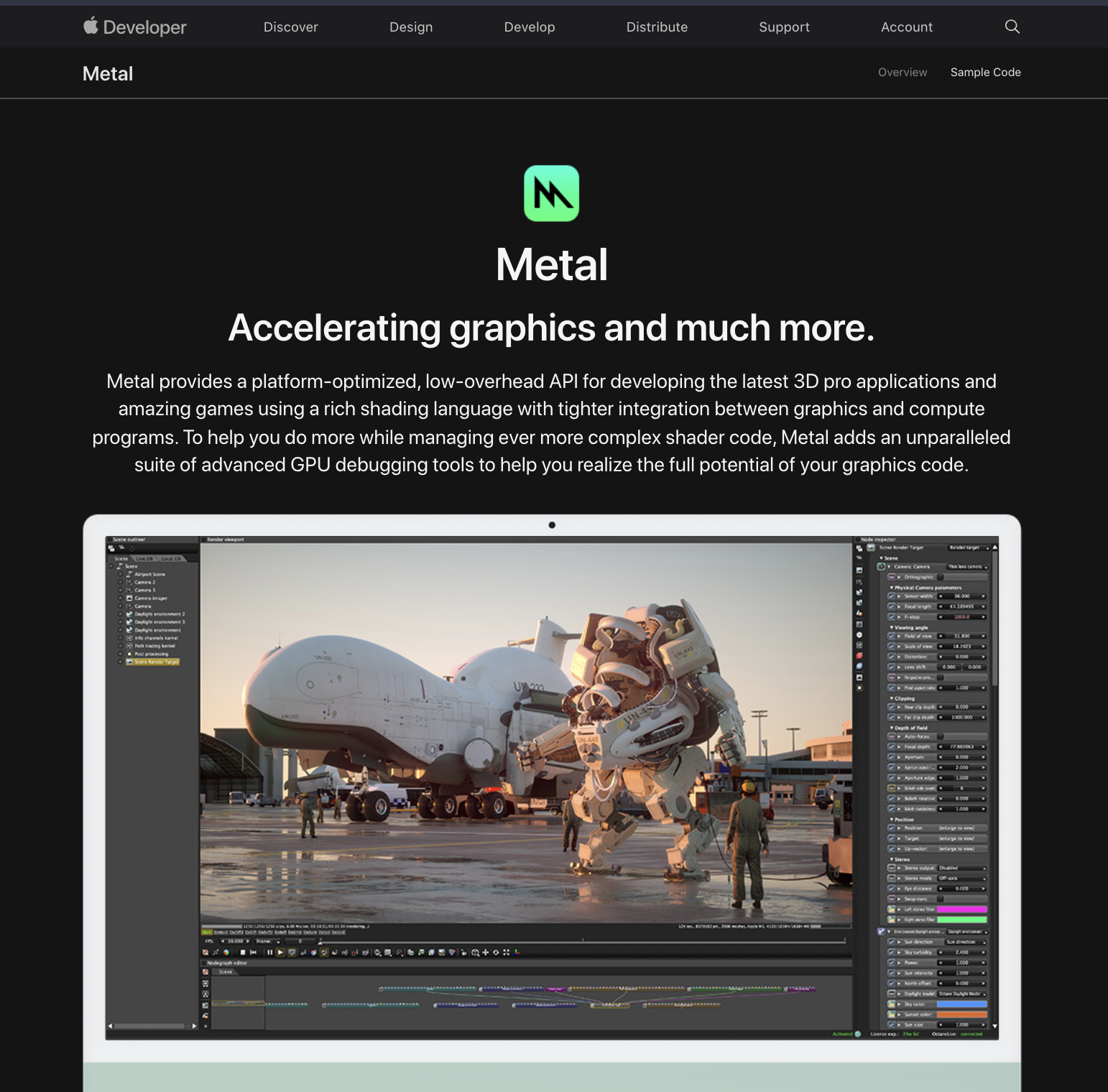
OTOY has been at the forefront of rendering software for more than a decade. Their flagship app, Octane, is the first GPU-accelerated, unbiased, physically correct renderer and is widely considered the best in its class. All major movie studios, including Disney, use Octane for VFX, as do tens of thousands of digital artists, including Beeple, Pak and FVCKRENDER. The title sequence of Westworld, the music video Lil Nas X made for Montero, and the Collection of the Frieze Viewing Room in Los Angeles are all rendered in Octane. Apple has Octane above the fold on Metal's home page.
More than a decade ago, OTOY's founder and CEO Jules Urbach laid out a vision for the metasverse when she founded the company in 2008. Over the past 13 years, OTOY has built content creation tools and rendering engines capable of creating trillions of objects that will make up virtual reality.
Content creation tools and rendering engines alone are not enough to build a meta-universe. The metasomes will require astronomical amounts of computing power: orders of magnitude more than all the data centers in the world put together.
The only way to get that much computing power is to tap into the hundreds of millions of potential Gpus owned by consumers around the world. Render Network launched in 2017 to take advantage of this potential supply. Render Network allows the distribution and processing of complex GPU-based rendering jobs over large distributed peer-to-peer networks. This enables creators to compute at an unprecedented scale and price, and provides stronger privacy guarantees than any existing cloud provider.
Over the past few years, we have been investing in infinitely scalable Web3 primitives, most notably Arweave and LivePeer. Each of these primitives focuses on a very specific functional task. Arweave provides permanent storage. LivePeer decentralized the video transcoding process.
Render Network is optimized to run bounded (non-open), highly parallel tasks that do not require synchronous Network connections. The most common workloads that meet these criteria are digital rendering and training models for machine learning.
Today, Render Network supports major digital content creation tools, including Cinema4D, 3DS Max, Unreal Engine, and Unity. In the near future, it will support render engines such as Arnold and Redshift in addition to Octane. The ultimate goal of the network is to support arbitrary workloads that conform to network ORBX scenario data standards and seamlessly connect with any number of signaling and marketplace platforms to facilitate the creation and maintenance of rich, immersive digital content.
Each addition of data and bandwidth product improvements, license extensions, and order matching enhancements increases Render Network's potential market. In Apple's October 2021 keynote, Render Network produced the Gene Roddenberry Star Trek archive, Beeple's Daily Life, and Star Trek scenes (29:19-29: 38) physically accurate rendering that is much faster and more cost effective than using existing cloud providers. Render Network is online and is supporting some of the largest and most highly configured rendering efforts in the world.
Render Network It also stores hashes of all assets that the system uses to build the source rendering for the job to be completed. This raw data, combined with permanent storage infrastructure such as Arweave, has the potential to revolutionise our collective understanding of the origins and ownership of digital objects.
Billions of dollars in arbitrage opportunities
It is well known that renting gpus from any major cloud provider (AWS, GCP, Azure, etc.) is expensive and generally impossible to do in large quantities.
Capitalism requires cloud providers to respond to market demands. However, they didn't. What's going on here?
Cloud providers are not at fault. Instead, the problem is hardware: NVIDIA won't allow their flagship consumer graphics cards (such as the 2080 or 3080) to be deployed with cloud providers. Instead, they sell Tesla-branded or Quadro-branded workstation cards that cost up to 10 times more for only 20-25 per cent more computing power.
Thus Render Network took advantage of a multi-billion dollar arbitrage opportunity. By unlocking hundreds of millions of potential consumer Gpus, Render Network can significantly reduce the cost of GPU-based computing, increase the total number of renders, and reduce the time it takes to complete a Render job.
Looking to the future
Render Network launched in 2017, but few cryptocurrency investors have heard of it. I didn't know that until a few months ago. Render Network has been in closed beta for the past few years. The Octane and Render Network communities have been optimizing the system for years to ensure the best experience for creators.
At Solana's Breakpoint conference in early November, the Render team announced that they were moving RNDR tokens and major parts of the Render network to the Solana blockchain. This migration will take place during 2022 and will open up a number of amazing opportunities as third-party developers build higher-level applications using Render Network.
The original link
Welcome to join the official BlockBeats community:
Telegram Subscription Group: https://t.me/theblockbeats
Telegram Discussion Group: https://t.me/BlockBeats_App
Official Twitter Account: https://twitter.com/BlockBeatsAsia
 Related Articles