SBF, CZ, Armstrong and Hayes: Who will be the "winner"?
THE MOST POWERFUL PEOPLE IN CRYPTO
The Economist
Tarzan, ChainCatcher
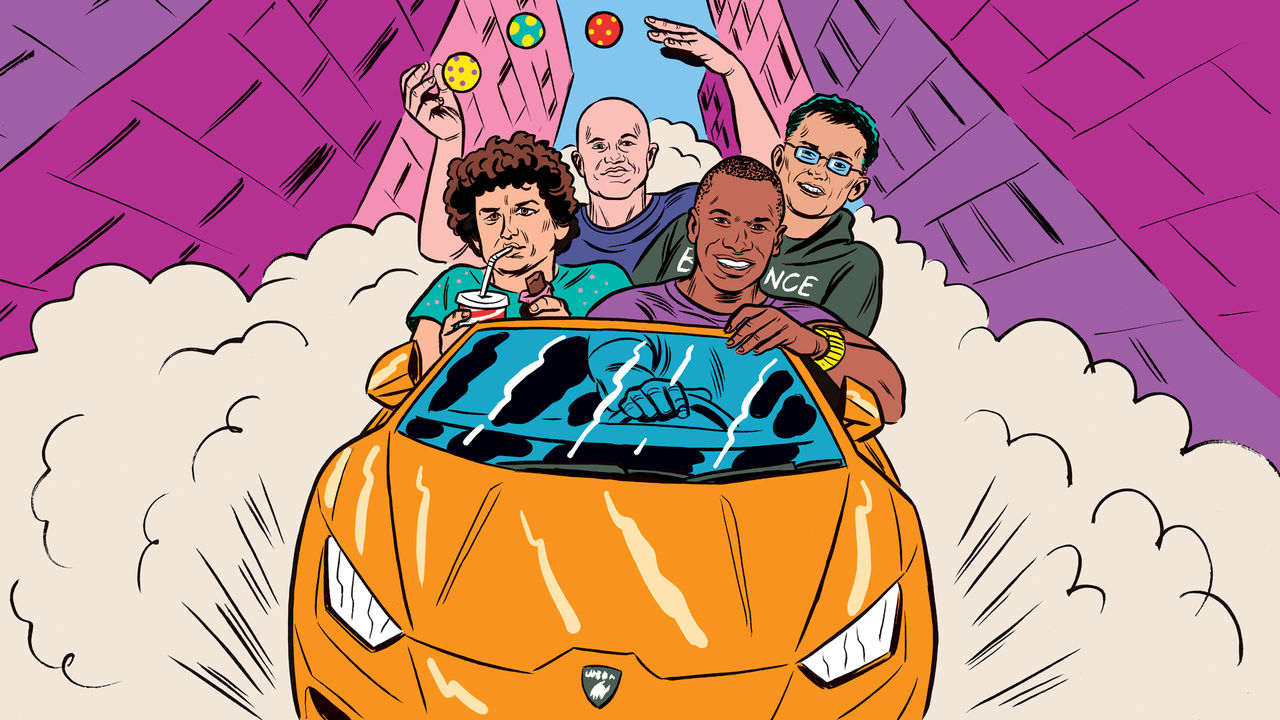
The Hong Kong offices of FTX, a cryptocurrency trading platform, are a mix of high finance and teenagers. It's 7.30pm, and employees in shorts and T-shirts are still working overtime, shuttling between desks with six screens each. Wine, boxes and all sorts of rubbish were lying around, guitars and badminton rackets. Takeaways tempt the hungry; Traders and developers face off on wooden chessboards. In the trenches Sam Bankman-Fried, the founder of FTX, plays the role of club king or Uncle Sam. When the price of Bitcoin skyrocketed, they played poker in a cluttered conference room.
Two years old, FTX is now one of the most powerful companies in the crypto field. In October, FTX raised $420m from a number of star investors, including BlackRock, the world's largest custodianship of assets, and Sequoia, the venture capital giant. Sequoia valued FTX at $25 billion, up from $18 billion, three months after its last funding round.
After signing a series of sponsorship deals worth hundreds of millions of dollars this year, its name has graced the Miami Heat arena and EBUA, as well as appearing in Super Bowl commercials. In addition, FTX will soon take on the Mercedes F1 team. It is stealing market share from rivals and is now the fourth-largest trading platform. Sam Bankman-Fried, known in the industry as SBF, has an estimated net worth of more than $22 billion. And he's only 29 years old.
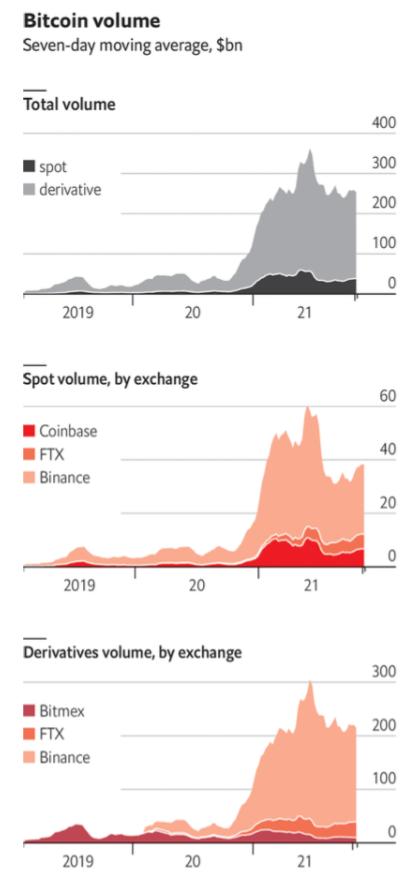
Since the beginning of 2020, the crypto universe's total market cap has increased 12-fold to $2.3 trillion (as of mid-December 2021), and promising Youth SBF is one of four major contributors to this epic race. He has tarnished zhao Changpeng (44, the oldest of the four), the boss of Binance, the largest cryptocurrency trading platform. Three years ago, Zhao Changpeng, who goes by the alias CZ, replaced Arthur Hayes, co-founder of BitMex.
Brian Armstrong, chief executive of Coinbase, the only publicly traded and regulated trading platform in the United States, is reserved and unsmiling. He hopes that being a long-term player and the most "aboveboard" trading platform will attract cautious investors who trade on unregulated offshore platforms.
All four have amassed billions of dollars in wealth and enormous influence in just a few years. In traditional finance, where everyday borrowing, spending and saving takes place, powerful voices are held in the hands of intermediaries such as bankers, payment companies and asset custodians. But these days, private money is mostly used for speculation, making the exchange bosses who provide the tools and venues for speculators the Kings of the world in order to do away with powerful middlemen.
They first see regulation as not a threat, but when local regulators start doing something, most jump from the region to the next comfort zone. Inevitably, some outsiders doubt their sincerity; Others attribute their success to timing rather than entrepreneurial vision.
The faithful marvel at their skill at navigating wild, volatile markets, though some wonder how much longer they can hold out. Very little is known about their personal lives, beliefs and ambitions.
Through interviews with the three founders and insiders, The Economist learned what it takes to be the most powerful man in crypto, and what they might leave behind when they leave. Hayes, who is awaiting trial in the United States on anti-money laundering charges, declined to be interviewed, but some of his acquaintances were interviewed. He also denies any wrongdoing.
Their parents were middle-class, highly educated, mostly well-born and did well in school. SBF, the son of a Stanford law professor, said he was "very strong" in math. CZ's father is a geophysics teacher and CZ ranked in the top 10 in Canada's national math competition. Armstrong's mother, a Californian, holds a PhD in bioinformatics. Hayes' parents worked for GENERAL Motors in Buffalo and Detroit, but he preferred chemistry and economics and attended a private school on a scholarship.
The square root of success
Early on, they showed signs of restless entrepreneurship. Armstrong taught himself how to code while in high school and created an e-commerce platform for trading used computers, selling about 50 of them. He's not the only one who thinks college life is unrealistic. "I actually struggled with math and physics because they were so theoretical," CZ said. As a second-generation immigrant, CZ had always wanted to learn how to achieve "financial freedom."
This freedom to be driven by money dates back to CZ's code-knocking days at a trading technology company. Hayes and SBF got their start on Wall Street. Armstrong's joining Airbnb was a lottery win, and the company is now valued at $115 billion. Like all the other employees, he got shares in the company. Dan Romero, one of Coinbase's first employees, said Armstrong's early departure from Airbnb shows his faith in cryptocurrencies.
For Armstrong, the entrepreneurial trigger was a trip to Argentina after he graduated from college. There, reckless money-printing fuelled hyperinflation. For Hayes, he was fired from his job at a bank, then read about bitcoin on the financial blog Zerohedge and became fascinated by its inherent scarcity. As an advocate of the gold standard, he was immediately intrigued by bitcoin, which, like gold, can appreciate in value in limited supply. CZ also realized that Bitcoin "is to finance what the Internet is to information." For SBF, it just saw an opportunity for "good enough business."
The lofty aspirations of the founders have yet to be realized: While bitcoin's price has taken off, from $700 in 2016 to $50,000 in mid-December, it has rarely been used as a payment tool. But they firmly believe that over time it will promote "economic freedom", provide an alternative to mismanaged "fiat" money, promote financial inclusion, reduce the cost of cross-border payments and enable start-ups to raise capital anywhere. CZ predicts that 80% of people will accept cryptocurrency payments within five to 10 years. Two years ago, he "felt rude" when someone asked if he could buy a bottle of wine with cryptocurrency. But not anymore.
Given their professed creed, it seems odd that the founders are not running payments companies, at least to sceptics, giant digital casinos. At the time, Bitcoin was priced at a high premium in China, so Hayes would start his crypto career by selling bitcoin he bought overseas for cash in China and crossing the border with bags of bills.
BitMex, which he co-founded in 2014, is a pioneer of crypto "derivatives", contracts that allow investors to bet on the future price performance of digital assets. The 100-fold leverage it offers means a $10,000 account at BitMax can be turned into a $1 million contract account.
FTX and Binance have since pushed the leverage ceiling higher. Regulators in The United States barred trading platforms from offering such risky derivatives to non-professional investors, but even then users could use other ways to change their IP addresses and get around the restrictions. Today, the volume of trading in derivatives far exceeds the volume of actual cryptocurrency trading.
The founders did not see this as contradictory. When Armstrong launched Coinbase, he believed that building a trusted trading platform would help make the then-marginal product easier and safer to use. Coinbase does not offer derivatives products but has applied for licenses to do so. Nine years later, his intentions remain the same. CZ says his vision is not "low enough to just make money and not high enough to save the world" : it's about giving people more choice.

Everyone works hard, whether for personal ends or profits. Armstrong is a self-described "late sleeper," working from 10 a.m. to midnight. CZ, who works from home, teleconferences with his deputies six days a week. The beanbag at the desk is SBF's bed and breaks for four to five hours a day between scheduled day and night meetings. He doesn't have breakfast or dinner in his body clock. He knows what restaurants are open for takeout. On the day he spoke to The Economist, his last meeting was at 5am.
No time for dice
Intelligence, opportunist idealism and good health seem to be key ingredients for success in cryptocurrency. Yet the four founders are markedly different in three areas that could determine not only who gets richer, but who ultimately shapes and dominates the industry's future.
In terms of management style. People close to SBF describe him as detail-oriented and able to multitask, whether it's a trading platform issue or some off-the-books project (including Solana). He also said he would basically do it himself. CZ, by contrast, jokes that he is a "terrible manager" who prefers to delegate. Binance dominates the crypto futures market, but CZ has little involvement in its management. Binance acquired Trust, a crypto wallet, in 2018. When The Economist spoke to him, he said he had not spoken to the current head of Trust for six months.
In keeping with his image as a "three good student," Armstrong fell somewhere between the two in terms of dedication and led the way in terms of transparency and humility. He asked his executives to nominate six potential successors each so his company could "stand the test of time". He encouraged employees to complain, though his promise of a $20 (cryptocurrency) reward for providing the "truest, most negative" feedback seemed petty.
Hayes is the most likely of the four to become a "star executive." He is very charming, all sinewy, and good at presenting himself in various shows. "Hayes is acting like James Bond is running the company," said Rich Rosenblum, co-founder and president of cryptocurrency trading platform GSR. He is also very much a self-styled visionary, penning a fortnightly essay on the present and future of digital finance.
Hayes' high - quality lifestyle is undoubtedly the most 007 - like aspect. In 2018, he drove a bright orange Lamborghini to a crypto trade show and later sent a mass message to his Twitter followers, "Did you notice my ride today?" He skied in Hokkaido, played squash in a Hong Kong amateur league, practiced yoga daily and, most recently, kite-surfing. He wore a tight T-shirt and a luxury watch. His favourite wine, however, is the "little intervention" wine, a far cry from Bond's favourite "shake, don't stir" martini.
In 2018, he outfitted BitMEX's flagship office in Hong Kong with a giant aquarium filled with sharks that made him feel more like a Bond villain. His aversion to discretion stands in stark contrast to the bland temperament of his fellow founders, none of whom had cars, prestige assets or predatory fish. SBF shares an apartment with a friend who used to work. CZ only lives in one room in the rental apartment. But he does like to splurge on gadgets. Hayes has six iphones on his desk.
Mr Hayes's flamboyance may help explain why American regulators have been unkind to him. The third difference between him and the bosses of other crypto platforms is his attitude towards the authorities, which is the biggest reason why he has angered them. In 2020, US regulators accused Hayes and his two BitMEX co-founders of failing to run proper anti-money laundering controls on the platform. His prosecution has angered cryptocurrency enthusiasts. Hayes, they say, is paying the price for being an early mover before the rules are written.
But many outsiders believe he painted a bull 's-eye on his back. In 2016, he said BitMex's strategic focus was on "decadent gamblers". At the time, the company was targeting potential customers in the US, boasting that "signing up takes less than 30 seconds". When asked why BitMex was legally registered in the Seychelles Islands in Africa in 2019, he pointed out that it was more expensive to bribe US regulators and that the islands were "the price of coconuts". Supporters dismiss such taunts as the posturing of a visionary entrepreneur. The FBI apparently didn't like the joke, and a year later its New York director warned that Hayes and his fellow soldiers "will soon learn that tropical fruit will not pay the price of their alleged crimes."
Armstrong's business model, by contrast, is predicated on being the most trusted, compliant trading platform. From the beginning, he said, he thought there would be "a lot of scrutiny" once cryptocurrencies got big. Of his first 10 employees, he hired a lawyer and a compliance officer and even "put on a suit" to meet with regulators.
Watching freewheeling competitors do "can be painful at times," he said. His intuition was confirmed. In recent months, regulators around the world have been tightening the noose as their interest in cryptocurrencies has exploded. China has declared all virtual currency trading illegal, and the SEC is seeking new powers to regulate what its chairman calls the "wild West" of cryptocurrencies.
Mr Armstrong now says he wants to be a "positive example" for regulators, suggesting he will have an influence in the rule-making process. This is not something other founders' offshore trading platforms can easily do. For his part, SBF admits that the local crackdown could soon have a real impact on FTX: "If Hong Kong goes the way of Mainland China, FTX may have to relocate most of its staff, probably in" a few years' time "."
final
The uncertain outlook has founders pondering many questions, not least what impact a tighter regulatory crackdown or a prolonged Bitcoin slump might have on their fortunes. Statistically, their wealth is huge, but Armstrong is the only one with liquid assets (he sold $292 million worth of Coinbase shares during his stock market debut in April 2021). CZ's assets are held entirely in cryptocurrency, with only a few thousand dollars in cash for short-term consumption. SBF's wealth consists mainly of shares in his private company. Hayes allegedly withdrew $140 million from BitMex with his co-founder, according to early investors who sued the company in 2019. (The lawsuit was settled out of court in December 2020.)
Equally difficult to predict is what their quartet might leave behind. Once they're gone, whether one or more of them became a global financial icon (like Jamie Dimon of jpmorgan Chase), a lifestyle changer (like Steve Jobs, who brought smartphones to everyone), Or even the reinvention of rocket science (like Elon Musk or Jeff Bezos)?
Armstrong, an admirer of Musk's, is his closest spiritual counterpart. He says he is putting most of his capital toward "moonshot projects" or "philanthropy." Sources say he's interested in "longevity" and biology, and, like tesla's boss, likes to learn what he doesn't know by seeking out experts who do. He recently met the founders of WhatsApp to learn how they "build a global product".
CZ, meanwhile, has no grand plans to squander his fortune in space or spend it on anything else: "I don't need anything more than $100 million." He plans to donate the rest to medical research and charity. SBF might do something similar. As a vegetarian, he values causes such as curing tropical diseases, promoting epidemic prevention and improving animal welfare.
However, the cryptocurrency race is far from over. Like Depo's high-end players, the four founders have so far kept their most important cards in their pockets, making big bets only when the rewards seem worth the risk. But to gamble with all their chips on the other side of the crypto boom, they will need more than innate intelligence and discipline. For it is not skill that often wins a whole poker game, but persistent luck.
The original link
Welcome to join the official BlockBeats community:
Telegram Subscription Group: https://t.me/theblockbeats
Telegram Discussion Group: https://t.me/BlockBeats_App
Official Twitter Account: https://twitter.com/BlockBeatsAsia

 Related Articles