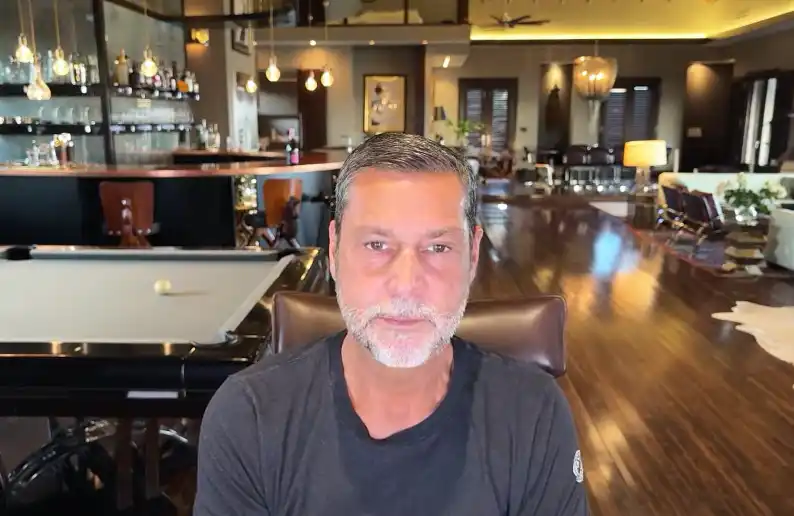
Web3/Crypto is the second half of the Internet
原文标题:《「硅谷预言家」马克·安德森: 这是三个非常有前途的科技领域 》
Source: Wall Street
Authors: Zhu Xueying, Wang Mei
Marc Andreessen, the founder of Netscape and Opsware, an early SaaS company, is known as the "Silicon Valley prophet" for his industry savvy, He also co-founded Andreessen Horowitz (A16Z), a top US venture capital firm.
With his extensive industry experience, Andreessen has unique insights into the evolution and disruption of new technologies and the creation of business opportunities.
In his latest interview, Andreessen analyzed technology trends like artificial intelligence, cryptocurrencies, and Web3, with a focus on why established companies struggle to compete with digital startups.
Anderson specifically points out that we are now in the "search phase" and have identified three tech peaks that we can climb -- A -- AI, B -- Biotech and C -- crypto and Web3 -- and sees A lot of great talent coming to these three areas. Become the core driving force of industry development.
Anderson contrasted traditional companies with digital start-ups, saying that many traditional 500 companies are still reluctant to position themselves as tech companies and that true technologists are not given top priority. And start-ups, led by technologists, are keeping up with the advances. So how do you do digital transformation? Find the smartest technologists in your company and make them the CEO, Anderson says.
In cryptocurrencies and Web3, andreessen sees fundamental technological changes that could take 25-30 years.
Anderson also mentioned that the Internet is a trusted network, it is an environment without permission, which released the creation of huge potential, but if you want to do business, the company, but can't rely on a non trusted network environment, Internet native technology can't provide with the real world as trustworthy economic mechanism.
And blockchain /Web3/Crypto is the second half of the Internet. It creates layers of trust on untrusted networks, and when you put trust at the top, you can pull all the economic activity online that you can't put online.
At the same time, Anderson points out that people take the idea that the best technology doesn't always win too seriously, which many companies and Mbas take to mean: "We don't really need to be good at technology. We can be successful through marketing." While car companies run countless TV ads, Tesla doesn't spend a dime on advertising.
On venture capital, Anderson says there are two kinds of failures in venture capital. One is commission error, where you invest in, or work for, a failing company. Then there's the missed mistake, which is not investing in Google or not working for Facebook in 2005. The longer you stay in the industry, the more you realize that the second kind of failure is very, very serious.
And being in Silicon Valley, Andreessen feels, is not just Silicon Valley anymore. Much of the industry, including many big tech companies, is resistant to new ideas.
The interview was moderated by Tracy Francis, McKinsey Senior Partner, and Rick Tetzeli, editorial Director of the Quarterly.
The full text of the interview is as follows:
Rick Tetzeli: It seems like a confusing time in terms of technology. Fifteen years after its debut, the iPhone defined an era, but it is unclear what will happen next. Do you think we're in transition? If so, what should companies do in such uncertain times?
Mark Andreessen:The framework we use was defined by my collaborator Chris Dixon a while ago. Here's how we think about it: At any given time in the tech industry, there are two main models.
One is what we call the search model. You're wandering around unfamiliar territory and you're looking for new hills to climb. You're looking for new technologies that will work and capture people's imaginations. People will be interested and new markets will be opened up.
The second is mountain climbing, which basically happens when you take advantage of a new opportunity or market. As you climb up the hill, you improve products and spread them to the mass market.
Of course, every market has an "S-curve" that it adopts, but it can take a long time to reach its peak and then experience long periods of stability. Smartphones are leveling off, but they are still adding hundreds of millions of units and billions of users each year. At any given time, there are two types of companies.
It is crucial to take the "now" as a starting point and recall where we were during the global financial crisis of 2007, 2008 and 2009 or so. It was a very strange time: it felt like everything was going to fall apart, financial crisis, low consumption, capital falling back. There were fears of a repeat of 2000 and the media dubbed it "bubble 2.0".
But it turns out that we were in the middle of a new set of hills being discovered. Smart phones, mobile broadband; Residential broadband rates are breaking through; Web 2.0 and social networking exploded in popularity, with Facebook and Twitter breaking through; SAAS is also taking off.
Five or six new hills were discovered and industry companies began to climb them. It was a very magical time in the making of what would become prosperity.
Tracy Francis: So you think new hills are forming?
Mark Andreessen:Yes, they are forming. Some hills have been discovered in the last 15 years and people are still climbing them, but we're also in search mode.
We think we've found three promising new hills, listed by the initials ABC.
Biotech is B, including genomics and now the mRNA revolution, as well as the industrial revolution combining biology and engineering, which is a mountain to climb.
Crypto and Web3 are C, which is all about distributed consensus, building trusted networks over the Internet, and the total disruption that follows.
So why are we confident that these are the hills to climb? If you look at their share prices on any given day, there is less enthusiasm for these new technologies than there was six months ago.
But the core of what we do is track the flow of talent. What we can be sure of is that the world's smartest people, smartest college graduates, and smartest industry professionals are flocking to these three fields, with lots of high-end engineers, scientists, senior executives, and founders. It's not exactly predictable in our world, but it's the kind of prediction you can get.
Rick Tetzeli: Around 1998 and 1999, a lot of very smart people were involved in web technology, and a lot of it ended up going nowhere.
Mark Andreessen:That's an interesting point you made -- you're absolutely right! But I want to add a nuance. Maybe we need the famous 2x2 matrix here.
I would divide the "smart people" into two groups.
We mostly go after engineers. Engineers, by their nature, work in any given field, writing software or building gizmos. Even when many people are disillusioned with technology, engineers continue to work. Because they're engineers. That's what they do.
And a smart engineer will do well in any job, not necessarily a commercial success, but certainly an improvement.
This is important. Because when a lot of new technologies come out, critics say all kinds of things about them: This new technology has all these problems! It cannot successfully solve all problems!
A classic example is the original laptop computer. The original laptop was the size of a briefcase, weighed 40 pounds and had a four-inch screen.
As the New York Times noted in an early review, it's basically a niche product, and who would want to carry a 40-pound brick home?
"I can't imagine an average user carrying [a laptop] with them while fishing," they wrote. But they didn't expect laptops to be shrunk to what they are today.
Now we're just seeing this pattern again, and it's happening in cryptocurrencies, blockchain, Web3. People have a lot of complaints about it, performance, speed, etc. - the site is dedicated to listing all the mistakes. The engineers took these ideas seriously, identified them as problems that needed to be addressed, and they went to work.
In addition, the other group of people that we focus on are really good entrepreneurs. Entrepreneurs respond to trends just like everyone else. And when really good entrepreneurs and really good engineers work together, they start companies, they build products, and they focus on improving their work, so that's predictable.
I think you mentioned another class of smart people in your question, which is the Harvard MBA, and they are a typical example.
These up-and-coming, elite, business gurus, they're all super talented, really know how to take spreadsheets apart and rebuild them, really know how to brand them. These people are mature and well-rounded, they move forward in the best way possible with 100 percent enthusiasm, and they jump at what they see as the biggest opportunity.
However, they can also be influenced by trends and trends. As you may recall, back in the 1990s there were two industry categories: B2C and B2B. B2C refers to enterprises facing consumers directly, while B2B refers to exchanges between enterprises. In the 2000 & have spent When the dotcom bubble burst in 2000, the terms were still there, but they were redefined: B2C became consulting again, and B2B became banking.
After the harvard mbas left for a while, at least after the new hills of smartphones, social networking, Web2.0, cloud computing were discovered, they returned to the tech industry. This is why techies have predictive power, but Mbas do not.
Tracy Francis: You've said many times in the past that incumbents are at a disadvantage compared to digital startups. Do you still believe that?
Mark Andreessen:There are two parts to the answer: one is what happens normally, and the other is what happens when markets fall.
Super-smart engineers know what to build, but there are only so many of them. These are the people who choose to work for companies that are highly valued; They choose companies where they think the leadership really understands what they want to do and knows how to build a company with a first-class technology development culture; They go to companies that treat them right and value, listen to, and respect them; They want to go to a company where people are like them and they can make breakthroughs together.
The problem for the Fortune 500 today is the same as it was 20 years ago: in many large companies, the true technologists are not the primary employees, and they are not given priority.
Just look at the company's organizational chart. Companies have long placed their technical staff in their IT departments. IT departments are notoriously isolated. About 20 years ago, big companies began to realize that maybe tech people shouldn't be in the IT department, so they created digital departments, usually headed by digital vp.
The good news is that these programmers are now in charge of digital departments and are being taken seriously. But the problem is, it's still just one department, one unit.
Let me give you an example: At Tesla, engineers who work on self-driving cars are very important in the company. Musk talks about them all the time, talks to them all the time, and they're basically in leadership positions at the company.
But in traditional car companies, these people don't get the same treatment. They probably should, but they still don't. They're still in the closet. Leaders who have run companies for 40 years are still in charge.
That's the pattern. Tesla is run by technologists who already have the whole idea and understand how self-driving electric cars work. The leaders of the big car companies are business-trained people, not technical experts per se.
The second part of the answer has to do with what happens when markets fall. When tech stocks took a hit, many big companies would say, "Thank god we don't have to take these things seriously," but that changed dramatically after 2000.
The reason amazon took off is because all the traditional retailers said after 2000, "Thank goodness we don't have to worry about e-commerce," and they left the business. Borders, a traditional book retailer, famously outsourced their online business to Amazon, which in retrospect may not have been the best idea.
That happened again with this stock drop, so Netflix (NFLX) went from falling 70%, to 75%, to 80%. Until then, the talk about Netflix was all about how it was going to be this new, permanent Hollywood force, maybe even a monopoly.
Now the stories are all saying, "The Netflix model is broken and will never be the same." And the big traditional media outlets say, "Thank goodness, these streaming companies won't be" something important "after all."
Traditional Fortune 500 companies don't see themselves as tech companies first and foremost, and big companies often enter and exit technology with that in mind. Over time, this will take its toll on them. There is still a palpable sense of relief when companies think they don't have to keep up with technology. This shows that no matter what they say, they are still not a tech company in the first place.
Rick Tetzeli: when it comes to Web3 and cryptocurrencies, many people find these technical terms particularly arcane, and a lot of skeptics want cryptocurrencies to disappear. So where do cryptocurrencies and Web3 fit into the future of business? What can you say to convince skeptics and change their business model?
Mark Andreessen:Certain situations with cryptocurrencies and Web3 have triggered reactions that go well beyond "I wish we hadn't done this." I prefer to describe it as fear and disgust. Some of their cases have provoked extremely negative reactions.
Mr. Buffett, who just held his annual meeting in Omaha, offered a very broad rebuke of the entire technology category. Buffett is a genius investor and a great guy, and he always says he's a guy who doesn't understand technology, but he feels he has to denounce something about the technology.
Even in the tech industry, a lot of established tech companies say, "This stuff is stupid, it's fake." This is far more than the initial negative reviews of the Internet, or indeed of any other technology.
This view is heartfelt, and I think there are two possible explanations.
One possibility is that they are right, and you always have to admit that the critics may be right. The future of the economy may be See's Candies, not blockchain.
But maybe cryptocurrency makes people nervous because it involves money and it will affect the root. And people get emotional when they think, "This is a new form of money," or "this is a new theory of money," or even "this is a new form of technology that involves money." It is perhaps the most obvious observation in the world that money makes people emotional.
And as contrarian investors, that reaction excites us all. We see criticism as an incredible gift to our founders and our company.
If everyone else excludes something, and if we are right about it, entrepreneurs who pay attention have a magical opportunity.
I think this is a fundamental technological change, a new architecture for building a new generation of computing systems. We are already convinced that Web3/ blockchain/cryptocurrency is the foundation of this.
This is a big mountain. It is as fundamental as the architectural shift from mainframes to PCS, from PCS to the web, from the web to mobile devices, or from traditional software to artificial intelligence. This is a fundamental shift, and it will take 25 to 30 years to build it.
Rick Tetzeli: I still don't see how you're going to convince a really smart skeptic in a traditional company that this is going to be a change. Can you convince him that this is a new architecture for "building all kinds of software"? Is that what it's all about?
Mark Andreessen:This is about the second half of the Internet, and we didn't know what to do with the second half when we were building the first half. In the first half, the whole idea was: The Internet is an untrusted network, right? As an untrusted network, it is a permissionless environment where anyone can connect to it, anyone can create a website, and anyone can surf freely.
This unleashes huge creative potential. There were computer networks before the Internet existed, but they were highly controlled by individual companies. Companies such as AOL dominate consumer communications networks. Business communication networks are provided by IBM or others. The Internet was the first untrusted, open, unprivileged network on which anyone could create. This releases all the excitement.
But there's also the second part of the Internet, which is that you can't rely on an untrusted network environment. If you want to do business, you have to build trust, right? You want to send money to someone, you want to sign a contract with someone, you want to get together and form a company, you need to have a source of assets and ownership transactions. But the Internet doesn't have that, and Internet native technology can't do that.
The most concrete example is the absence of Internet currency. You go to all these sites, and if you want to buy something, you still have to enter your credit card number and three-digit password, and they still run through The Visa host and may refuse you for strange reasons and charge you. You still can't make micropayments. Why are advertisements all over the Internet? Because there are still no micropayments for content.
Blockchain /Web3/Crypto is the second half of the Internet. It creates layers of trust on untrusted networks, and when you put trust at the top, you can pull all the other economic activity online that you can't pull online. This is a big deal.
As for the other part of your question: how do you persuade people? I've become convinced that the answer is: you don't. Or at least I don't need to. At this point, I don't think I've convinced anyone of anything in my life. I don't think anyone wants to be convinced. People are as opinionated as their own children. If you tell them they are wrong, they will feel strongly threatened.
I think there are basically two periods when you can get new ideas into people's heads. The best time is when they're young, before the world convinces them that something new is "not a good idea." That's why many new technology movements appeal to young people, just like art, culture, and even social movements. Kids are ambitious, they have nothing to lose, and they are open to new ideas.
Maybe I'm going in the wrong direction. Maybe I have better options. Maybe I'm in the wrong company, and I need to jump ship and try something new." There are a lot of cases now where people make these changes in the middle of their career. What we've seen in Silicon Valley is that people who were Web 2 entrepreneurs, in the last few years, have decided to become Web 3 entrepreneurs.
The point is that people need to be prepared. Which brings us back to big companies. I've been doing conferences for big companies where I give full presentations on cryptocurrencies, blockchain and Web3. But I saw everyone in the room look more and more skeptical, and they were all calibrating with each other. Do they feel like fools when they get excited about something that everyone else thinks is stupid?
I think by now more big companies will be more open to these new ideas. But there's something in their culture, something in the structure of these companies. They're still not where I think they are.
Tracy Francis: Marc, what do you think of these big companies? If you were to tell them how to digitally transform, what would you tell them?
Mark Andreessen:Find the smartest technologists in your company and make them the CEO.
I've had thousands of these conversations with companies, ceos, boards. They're not tech experts. I do my job. I love talking to people about these things. I walk them through the basics.
I can always tell if there's a real technologist in the room. Real technologists don't sit at a desk, they sit against a wall. They're never in the main group, they just sit there and nod. They're thinking, "Finally, someone is coming out and saying this to these people. Maybe they'll finally understand."
But the thing is, it's like an orchestra director teaching me how to conduct a symphony. I'd say, "Yeah, you wave the stick, and then, I guess the musician plays." But it's too late. I can't do it. That's why big companies end up setting up a digital department, and why they only have a technologist on their team.
But, crucially, they're not dealing with companies like that. Netflix isn't like that, or Amazon or Google isn't like that. That's not true of Tesla. Tech companies are run by technicians, right? They are run by people who know how to do it.
Rick Tetzeli: So, can incumbents still compete?
Mark Andreessen:Do you remember that article I wrote 11 years ago, "Why Software is Eating the World"? The point I'm making is that software eats an industry in three stages. The first step is to turn existing products into software products. Then the companies that make those products become software companies; Then comes the final showdown, and the best software company wins.
Here's the idea that people take too seriously: the best technology doesn't always win. Business schools are full of case studies: Betamax versus VHS, Qwerty versus Dvorak, Microsoft DOS versus Apple Macintosh, and so on. Example after example shows that having the best technology doesn't always win. Sometimes this is true, but a lot of companies and Mbas take it to mean: "We don't really need to be good at technology. We can still win. We can be successful through marketing."
The car company ran countless television advertisements. But Tesla has yet to launch its first TV AD. Tesla doesn't spend a dime on advertising. Why is that? Because it has very good technology in its cars, it has practical, really good products.
So maybe the best product doesn't always win. But really good tech companies make really good products. To compete with them, you have to be in the game. You need the best engineers in the world. You have to have a world-leading technology culture to attract them. You need people who really know what they're talking about to make the right decisions. So at some point, yes, you need to put the technical experts in charge. But they won't. They are no closer to doing so than they were 20 years ago. We're in some kind of crazy cycle where they keep doing the same thing and expecting different results.
Tracy Francis: Marc, let's switch gears and tell us a little bit about the venture capital firm Andreessen Horowitz you set up. In the past, you've said that jpmorgan chase is sort of a role model. Talk to us about what you are trying to accomplish as a leader in your own organization.
Mark Andreessen:We often tell a famous story about J.P. Morgan. J.P. Morgan, the big, rather gruff guy, was one of Thomas Edison's investors. His house was the first in the United States to be fitted with incandescent lights. They also put the bulb in his Library in New York, which contains all the priceless manuscripts and artifacts he collected from around the world. Then the house was set on fire, almost destroying the study.
But for all his glory, JP hired Edison to redo the lighting. The second time, he got bulbs that didn't heat and didn't set the house on fire.
When people ask, "Who invented the light bulb? The answer, of course, is "Thomas Edison and his engineers." But who helped it become something that was widely adopted? Who helped people understand its importance? Who helped Edison build a company that could scale up and truly bring this invention to the world? J.P. Morgan. I think he was a venture capitalist in the second industrial revolution 100, 120 years ago.
Historically, it seems, someone had to play that role. Someone had to instill credibility in the founder before everyone knew who he was. Someone had to lend them money before the idea was obvious. Someone has to help them get out into the world. Someone has to help them recruit and build a team before anyone else knows who they are.
Ben [Horowitz] and I live in a world created by these very special people who make these products and build these companies and make these things happen. Now that we're at scale -- we have about 300 active portfolio companies -- we're able to work with a lot of the best founders in this way and get a lot of the best new ideas. Our goal is to be nodes in a network, the best place for ideas, people, money and business to come together.
Rick Tetzeli: Is it harder to scale a startup now than it was when you worked with Netscape in the mid - '90s?
Mark Andreessen:Easier, I should say, because more people are open to the idea of starting a business. When I first started working, it was strange to work for a young company because it could be something unreliable. People used to worry about occupational risk, right? "If it doesn't work out, can you come back to IBM?"
Every now and then I get a call that we have a company that wants to hire high-end engineers, like a Carnegie Mellon graduate with a PhD in artificial intelligence. I heard his parents were worried. So I spoke to them on the phone. He got offers from Microsoft Research, he got offers from McKinsey and Goldman Sachs, all these blue-chip companies, but when he told his parents he wanted to work for Whiz Bang in Cupertino, California, they said, "He's giving up his life, right?"
But what I can tell them is that the level of occupational risk is not the same anymore. If their son or daughter doesn't work out at Whiz Bang, 800 other start-ups within walking distance will pay to hire someone with that skill.
It's a lot easier to look at it that way. But success as a start-up is as difficult as ever, because the same laws are still at work. You already know why the world should change, but the world doesn't want to. People are too busy to listen to another startup pitch. People are happy with their jobs and don't want to leave for your startup. People are happy with the technology they use and don't want to buy your new product.
Each time, it's still an uphill battle to turn an idea from a lab into something that really matters to the world. The process doesn't seem to get any easier. Maybe it shouldn't. But the barriers to entry are already high.
Rick Tetzeli: One of the things that has always attracted me to Silicon Valley is its openness to new ideas. Is Silicon Valley still as open to new ideas as it was when you arrived, now that there are so many big, established companies?
Mark Andreessen:Silicon Valley is bigger and more mature than it used to be. Today's big companies are much bigger and more numerous. Technology is key to more industries, so Silicon Valley is getting bigger and bigger. Of course, silicon Valley is no longer just Silicon Valley. Because of the COVID-19 experience, we finally have the ability to expand beyond any single geographic area. People around the world are part of Silicon Valley, its way of thinking and its networks, not its geography. It's bigger than ever. With that comes the fact that large parts of the industry, including many big tech companies, are pretty resistant to new ideas.
Of course, every criticism I make of big companies and other industries is also a criticism of our own. It's the same dynamic, the same pattern of human behavior. When companies become big and successful, they tend to fail. They don't want to rock the boat. They want to keep everything running. So, yes, there is resistance.
Tracy Francis: How do you keep that from creeping into Andreessen Horowitz?
Mark Andreessen:I've learned that there are two kinds of failures in venture capital. One is a miscommission, where you invest in, or work for, a failing company. Then there's the missed mistake, which is not investing in Google or not working for Facebook in 2005.
The longer you stay in the business, the more you realize that the second kind of failure is very, very serious. You had it. It was in your hand, and you could have done it, but you didn't do it. You're not open enough; You find a way to talk yourself out of it; You listened to your parents.
It's interesting. Many times, the criticisms of a company you focus on are valid, but the truth is they don't matter. If you want to find a problem with a company, you can find the problem. But if it has enough good parts, the bad parts won't matter. Our motto is: Invest in strength, not absence of weakness.
Many people are smart and harsh enough to talk themselves out of really good ideas. Including us. These mistakes are really annoying. If a mistake is made on a commission and the company disappears, you will never hear from it again. But when you make a mistake, you're sure to hear about the company's success in reaching new heights over the next three decades. That's scary, right?
The fact is, reality is trying to instill in us the idea that you need to stop being so skeptical and cynical and be open to new things. Because you might miss the next big thing. You go through a couple of those misses and they really train you and eventually you say, "OK, I have to open up." I think it makes the environment more conducive to innovation than other places.
** This article represents the views of the original author only and does not constitute any investment opinion or recommendation.
The original link
Welcome to join the official BlockBeats community:
Telegram Subscription Group: https://t.me/theblockbeats
Telegram Discussion Group: https://t.me/BlockBeats_App
Official Twitter Account: https://twitter.com/BlockBeatsAsia
 Related Articles