Multicoin Co-founder: Why hedge Funds are better for long-term investment?
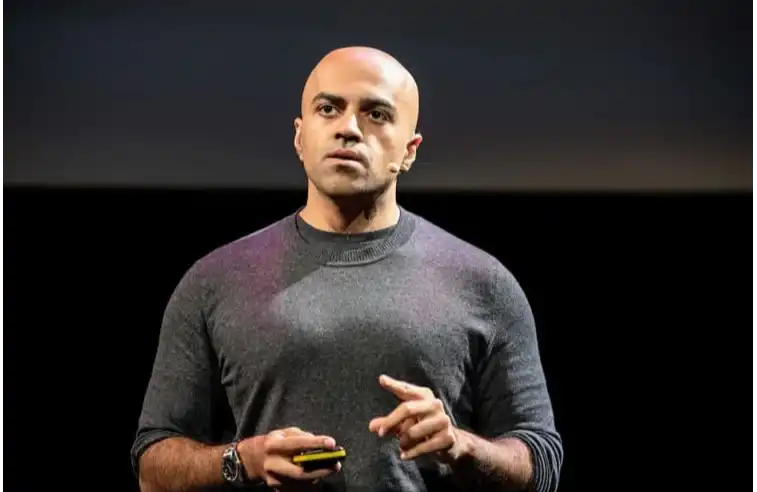
Kyle Samani, co-founder, Multicoin Capital
Eternal, 0x137, BlockBeats
This article is from Li Jin, co-founder of Variant Fund, on a personal social media platform, and translated by BlockBeats as follows:
Let's talk about entrepreneurs and Limited Partners (LP). I have an unconventional view: hedge funds are better long-term investments than venture capital funds. I can say this because I have run venture capital funds and hedge funds for 3-4 years each.
Hedge funds tend to have a negative connotation in the eyes of the mass media and the general public, while for the LP community, Hedge funds are no longer as hot as they were 10 to 20 years ago due to poor returns, high fees and efficient market effects.
At present, venture capital is still very popular in the general social sense, and it is also very popular in the LP community. The LP community prefers Venture Capital to hedge funds because:
A) VENTURE capital funds pay dividends only when they cash in their earnings
B) better tax avoidance than hedge funds
C) The profit method cannot be duplicated (investors pay for early access)
In the following paragraphs, I'll argue why reason A is numerically wrong and why hedge funds are the best place to invest for the long term.
Venture Funds are typically closed-end Funds of about 10 years that have limited buy-back terms and cannot take short positions and use derivatives.
Cryptocurrencies are different from traditional financial assets because they are much more liquid than stocks and can change hands faster. Such stronger liquidity and related income structure is the reason why Reason A was rejected.
The return structure in vc funds is based on cost, not a risk-reward ratio (risk/reward) at current prices. It's a bad motivator.
Let's assume that a VC fund has the following:
I) The fund returns at least 100%
Ii) The 3 per cent positions have increased 50-fold and are now 150 per cent of the fund's original total size
Iii) The General Partners believe the fund has room to grow 10-100 times over the next five years
Iv) Limited Partners will sell more than 50% of their own shares upon acquisition
My investment lesson: Doing nothing (not trading) is very difficult to do, but it is the optimal investment strategy. To be successful, you have to trade little or no, re-underwrite every quarter and then not sell.
VF's revenue structure ignores this necessity. The VC fund will not pay GP to continue to re-underwrite in the open market, knowing that LP is unwilling to re-underwrite, GP will make in-kind distributions and give up earnings that are exempt from high taxes.
This is further complicated by the fact that GP is raising new vc funds every one to three years. There is a strong interest in realising returns (even if they are suboptimal). Because the realization of earnings can promote reinvestment to improve the chances of success and make the next fund bigger.
In reality, we see similar situations happening from time to time. I've heard many VCS say, "We have to get some liquidity and it will give our fund a" multiples "return, but there's no theoretical basis for that argument, and no way to explain the upside of doing so. In effect, such people are early sellers of cash.
All this is in stark contrast to hedge funds. In a hedge fund, a GP can make illiquid investments through a side pocket account. Side pocket accounts can last forever because the fund has no definite life (it is open-ended).
But most importantly, hedge fund GP's receive dividends for a specific period (usually a year), which means they have an incentive to hold on to a position and reunderwrite it even if it outperforms the market.
You could argue that the underlying problem is that "liquidity" in venture capital is a bug, not a feature. I agree. But in the new crypto world, capital formation, asset valuation and liquidity are changing.
The traditional vc fund model does not take into account changes in the underlying capital market structure, and as a result, it provides sub-optimal incentives for GP. What does this mean for entrepreneurs?
I) Just because the VC fund has a life span of more than 10 years, they have every incentive to liquidate their fund shares in year 2-3. (or transfer to them LP they will sell)
Ii) The more flexible the fund structure, the better
Iii) Truly "long-term" trusteeship funds are the best structure (extremely rare, but becoming more common, YURI Milner comes to mind)
The original link
Welcome to join the official BlockBeats community:
Telegram Subscription Group: https://t.me/theblockbeats
Telegram Discussion Group: https://t.me/BlockBeats_App
Official Twitter Account: https://twitter.com/BlockBeatsAsia

 Related Articles