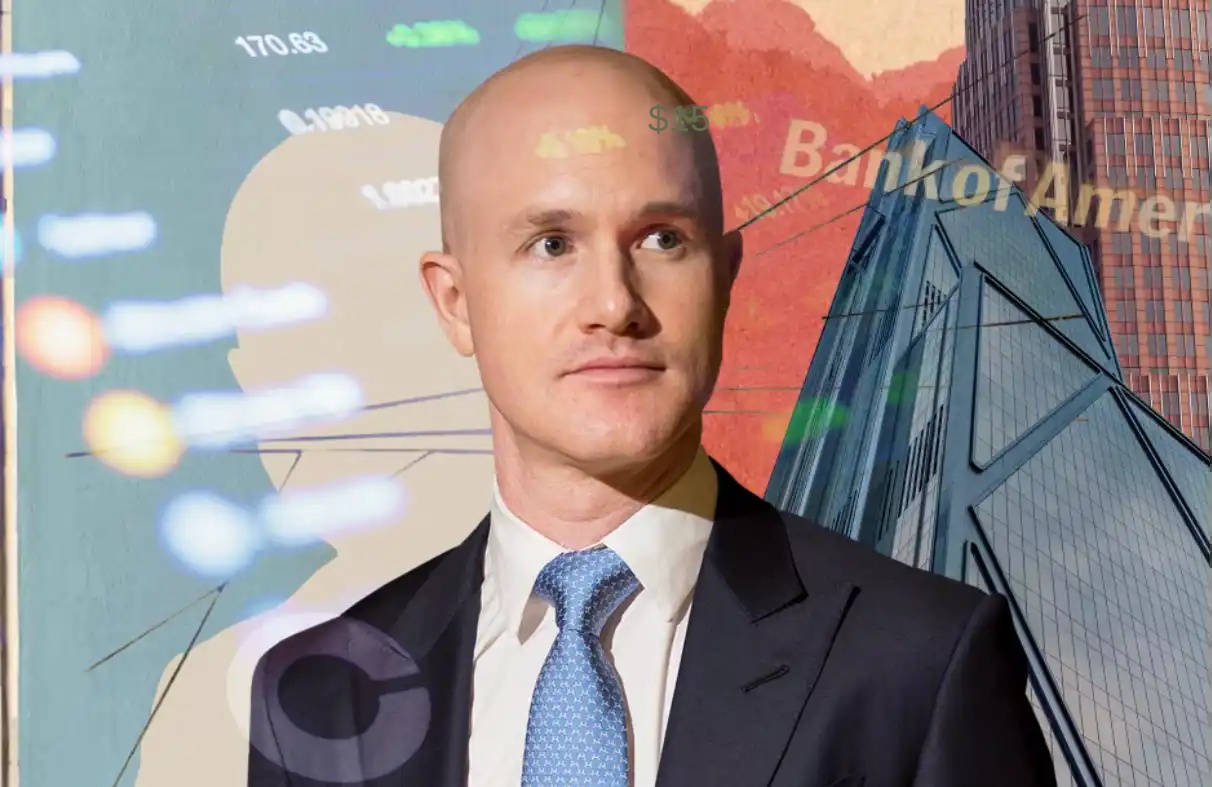
Coinbase founder: I'm looking forward to the next decade of Crypto
原文标题:《91 - Brian Armstrong and The Future of Coinbase》
原文作者:Ryan Sean Adams&David Hoffman
Kxp, BlockBeats
U.S. -listed cryptocurrency trading platform Coinbase is a major player in the industry. As the first compliant platform to register on NASDAQ, Coinbase has given silicon Valley investors incredible returns and helped the industry attract a lot of outside traffic.
A few days ago, Coinbase founder Brian Armstrong was a guest on Bankless's podcast for nearly two hours, covering a wide range of topics. From its inception, to Coinbase's values, to the latest NFT platform, and his views on the future of the industry, Brian has provided his views and answers. BlockBeats has compiled the podcast below to help readers.
Coinbase's founding and values
The host:Let's welcome our guest, Brian Armstrong. He is the CEO and co-founder of Coinbase.
Brian Armstrong:Thank you for inviting me. I'm one of your listeners and I'm very impressed with your podcast.
The host:Thank you. I also love Coinbase and have been using it for a while. I bought my first Bitcoin on Coinbase, and Coinbase really made me feel safe, relaxed, and helped me overcome a lot of obstacles. So I want to thank you for Coinbase, which is a great product.
Brian Armstrong:Thank you. It's my honor to help more people enter the Crypto field and improve it. But that's just the beginning. Our next challenge is how to get people to actually use Crypto and all these new ways to do it, and make them easy to do.
The host:I'd like to start with you by recalling that I remember Coinbase starting in 2012, so I'd like to talk to you about 2013. My friend Dan tweeted a picture of you at the Coinbase booth, about nine years ago, and I wanted to ask you to talk about your journey back then.
Brian Armstrong:There were only three of us at first -- me, Fred Ehrsam and Olaf Carlson-Wee. We were the only three people in the company, and we wanted to make something that customers wanted. When I first read Bitcoin whitepaper, I thought it was a good idea. It's a global decentralized agreement that delivers not just information, but value. As someone who studied economics and computer science, I really think this technology is cool, but how do we get it to actually work?
So my first thought was, why not do a Bitcoin hosted wallet? I worked on the idea and raised some seed money. But we only had two employees and no users, so I posted a link on Reddit to get people to sign up.
However, while people sign up, they don't actually use the product. So I had to call a few people who had signed up and ask them why they didn't use it. They said they did think it was a good product, but they didn't have Bitcoin to put in. Then I thought, what if we put a buy button in the software, and we went through a bit of a process to make it happen. From that point on, Coinbase really took off.
The host:I'm also curious about why you started Coinbase and the values you instilled in the company. Olaf and Fred both moved on to investing, and you stayed with Coinbase. So I guess my question is, why did you start Coinbase in the first place? And what made you stay?
Brian Armstrong:I think part of it is that I've always been passionate about the idea of economic freedom. On the other hand, I've always felt that I was born a little too late to start a big Internet company. By the time I graduated, companies like Google, Amazon, and Paypal had already grown. But I had always wanted to build my own Internet company, so when I saw the Bitcoin white paper, I thought this was the next Internet.
I've always wanted to be an entrepreneur. When I was in high school, I even wanted to start a company that would impact the world. So when you ask me why I'm still at Coinbase, I'd say that while it's not always fun, it's mostly fun. I love learning new things, and as the CEO of a company, I always need to step out of my comfort zone and take on some new challenges. I also like to use technology to create, AND I want to use technology to make the world better, which is also one of my aspirations in life. I really want a billion people to access the entire open financial system through our products in the future.
The host:I'm curious, which is more important to you, money, technology or values?
Brian Armstrong:I do care about technology and I do want to make money, but what really interests me about Crypto is values. In 2009, I spent a year in Buenos Aires, where I saw firsthand what a country with a history of severe inflation can become. Inflation is very insidious because it erodes the wealth of the poor.
There are high costs and delays in moving money between countries. In my view, this is an unnecessary drag on the world economic system. At the same time, this is why I like Crypto, because I think it is the future of the financial system. I think in 20 years it will be a significant component of global GDP and bring more freedom.
The host:How did you instill your values into Coinbase? What are Coinbase's values? Is it different from your values?
Brian Armstrong:In my opinion, a founder's values can be reflected in the company he or she builds. We used to distinguish between our values and our culture, and now I've combined the two and called them culture. We want to be the most trusted brand in the field and make efforts in cyber security. I want companies to get rid of bureaucracy so that people can get a lot of quality work done quickly and communicate effectively with each other.
At the same time, I want the company to be innovative all the time, and I don't want my company to become complacent and complacent, because technology is moving forward all the time, there are always new things. So I've been devoting 10 percent of my resources to innovation and the rest to building existing infrastructure.
The host:What does Coinbase want to be when it grows up in 5, 10 years? A bank or a tech company? I see that you are now building an NFT platform, but banks will certainly never develop such a platform. So my question is, what is Coinbase's ultimate goal?
Brian Armstrong:I think Coinbase can be both a bank and a technology company in the future, but for the longer term, we need to be a Crypto company. I think Crypto is an evolved version of a tech company.
So I'd rather be a tech company than a financial services company, but I'd rather be a Crypto company than a tech company. Because in my opinion, all good tech companies end up being Crypto companies.
The host:So in your view, Coinbase is a third model beyond banks and financial companies, an evolutionary upgrade from both, is that right?
Brian Armstrong:Yes, it's not there yet, but it's certainly a vision for our future, and IN the meantime, I'd like to add to Coinbase's decentralization process. Now our core business is the regulated financial services business, which is our main source of revenue.
In order to further expand in the Crypto field, we must build a bridge between finance 1.0 and finance 2.0, so that money can continue to flow into the Crypto economy. But it also means we have to work with regulators and traditional banks, but I don't want Coinbase to be a bank per se, we want to be more decentralized and integrated into the Crypto economy.
Coinbase positioning
The host:I'd like to talk about Coinbase's product vision. Can you tell us a little bit about Coinbase's product, the road map, and the general thrust of Coinbase's upcoming products and the vision behind them?
Brian Armstrong:The company currently has three customer groups: retail investors, corporate institutions and developers. For the first group of people, our goal is to become their preferred Crypto platform; For the second group, we also want to be their preferred platform, but different from the first group, we also need to be a qualified custodian platform and prime broker, because most of these institutions and enterprises are conducting OTC transactions and have certain security audit requirements. For the third group, the developer group, we are building multiple services on Coinbase cloud for them to use.
I think in the future, most startups will use Crypto to some extent, and many large enterprises like commercial banks are already experimenting with how to combine Crypto with their products, which they can do on Coinbase cloud. At the same time, we are also expanding our business globally to promote the globalization of the platform.
The host:I'd like to hear Coinbase's thoughts on DeFi. Is it friend or foe in your opinion?
Brian Armstrong:I've always thought of DeFi as a partner, and it's become more important in recent years as more and more customers start using DeFi, so we want to make it easier for our customers. Coinbase has a hosting program on which we want to deploy DeFi services. In addition, we developed Coinbase Wallet, a self-hosted app that has grown roughly threefold in the past year. Therefore, it is also an alternative that people can access the entire DeFi world with this wallet.
The self-hosted wallet is more like a software business, as we never take any customer funds or execute any transactions. Because we have Coinbase hosting and self-hosting in DeFi, which is an important part of our main strategy.
The host:I heard that your loan product was taken off the market recently due to the relevant policy of SEC. What kind of product is it and where does its main revenue come from?
Brian Armstrong:It was a centralized product, and we ultimately didn't release it because the SEC told us that if we ever put it online they would Sue us. I really want the SEC to come up with clearer policies and rules about what we can and can't do, and to enforce those policies fairly and impartially, and hopefully they will do that in the future.
The host:We'll talk about regulation later, but I want to talk about DeFi first. You said Coinbase considers DeFi to be a friend, which reminds me of the term CZ mentioned, CeDeFi, which stands for centralized DeFi. The financial company created this thing, which is a fork of Ethereum called the Financial Chain, which combines various centralized DeFi. What I want to know is, what do you think about this area? For example, what's Coinbase going to do next are you going to build your own smart contract platform, or are you going to adopt a specific smart contract platform? Would you choose openness? Are you going to pick the most open, credible, neutral, decentralized technology? What are your considerations and plans for this?
Brian Armstrong:Good question. I haven't heard of the term CeDeFi, but it certainly exists for a reason. I had some conversations with CZ about BNB, and I think their efforts in scaling up are really impressive, as scaling up is an important part of blockchain development. But on the other hand I think decentralization is also very important, because most of BNB is now controlled by one company. I think as a developer, it's risky to base your app on a company that has too much control.
By the way, in 2018 or so, some engineer came to me and said, we should build the Coinbase chain. But my reaction to this is, on the one hand, if we do build our own chain, our market value will definitely be greatly increased, even to 50 billion; On the other hand, I'm glad we didn't build our own chain, because I didn't like the idea of that.
Now, I'm thinking, can we build a more decentralized chain that's really out of our control? But I also wonder, what other chains we can do, does the world really need another chain? So what we did instead was we created a team of in-house engineers, which we called the Protocol team, which is still under construction. Their job is basically to scale up the blockchain, not our blockchain, but any existing blockchain. You could say, well, if we made our own chain, we could basically have another $50 billion market cap. But AGAIN, I'm not in it for the money, so I don't want to be part of any centralization of the chain.
The host:It seems like the team is going to launch a series of public goods in places like Bitcoin and Ethereum and the ecosystem, but at this point, the monetization mechanism is not clear. Do you see this as an effort by the team to open source public goods?
Brian Armstrong:Well, as the platform grows to a certain size, it opens up its OWN SSL and some of the underlying protocols. The company has been profiting from this for a long time, and it is giving something back. Scaling up these blockchains is critical to Crypto's growth and making it accessible to 100 million or even a billion future users. With Layer2, we can scale the blockchain several times, which is a good thing for the Crypto.
The host:I'm curious if Coinbase has any official market positioning. I know the Coinbase platform supports multiple blockchains, and I'm sure you support open source and decentralized chains, so do you care which one will do better?
Brian Armstrong:Yes, our company does deploy on multiple chains, and I personally don't want to get involved in the rat race of Crypto. What I'd like to see is that everyone can be friendly and cooperate with each other, rather than pursuing their own interests, which is not good for Crypto's long-term development.
What I really care about is that most Crypto platforms can be decentralized, developer-friendly, and scalable, because those are the platforms that really drive the industry. But at the same time, while Coinbase is a big player in Crypto, I don't think we can dominate the market, and developers are smart enough to know which platforms to build on.
The host:Sometimes I think people forget that developers themselves are players in the economy, and like you said, in this free economy, if a developer chooses a platform, it means he trusts it enough to build a business on it. This is a good thing for both a platform and an ecosystem.
Brian Armstrong:It reminds me of the early days of the Internet, when developers didn't want to build their applications on proprietary systems because they were likely to get stolen. For example, in the early days of the Internet, Microsoft actually tried to create its own proprietary Internet, called the Microsoft Network.
However, developers are reluctant to develop on it, because they think that if my application development situation is good, Microsoft will possess oneself of it, so they prefer to build on the open Internet application, although at that time the open Internet that some problems still exist, but they still tend to open the Internet rather than proprietary nature of the Internet. Yet history is now repeating itself.
The host:Bankless really hopes that Coinbase will one day beat all traditional banks as the place to put your money. I hope one day I can deposit a check into Coinbase. I don't know if that's Coinbase's vision, but it's our vision for Coinbase. So, can you give us some reassurance that Coinbase will beat all the banks in the future, rather than being beaten by them?
Brian Armstrong:I think it's a very interesting trend, because if you look at the history of the Internet, it started out very fragmented, and then there were a lot of new stars that brought the whole thing along. When they get big enough, they start to merge and consolidate, eventually forming monopolies.
Once monopoly formation, these strong company began to deteriorate, at that time the Internet will start metabolism, a wave of emerging enterprises competition would take them down again, back to the problem of, now I see some people really is already in use Coinbase account rather than a bank account to the custody of property, but I think that was the real answer your question, More and more Crypto will become self-hosted, and I think that's the future in the long run.
The host:But who would put their assets in Coinbase if they were in self-custody? Wouldn't that be against Coinbase's interests? I'm glad you brought that up, but I'm curious, isn't that also a way of telling your users that they don't need Coinbase anymore?
Brian Armstrong:In the short and even medium term, it does harm to our interests, but in the long run, it is certainly in our long-term interests. This is because the company needs to continue to develop and forge ahead, in order to better serve our customers. If a company does not provide better service to your customers, and does not consider the long-term interests of customers, then the company will eventually die.
The host:Let's talk about the future of Coinbase and Facebook. I'm curious what you think of Facebook's announcement to shift the entire company to the metasverse? Would Coinbase consider joining the construction of a new Crypto revolution, the metadverse? What do you think this means for Coinbase's strategy?
Brian Armstrong:I think it's very impressive that Zuckerberg did this. Facebook is the only company that has done anything significant in Crypto right now, and I give him credit for doing so. I think people may have an image of Facebook as the big brother in the industry, as not being able to protect the privacy of its users, and even as being able to sway elections. So Facebook has actually accumulated a lot of hatred over the years, so going into the metasverse was a smart move for them to rebrand themselves and get rid of the hatred they've accumulated over the years.
At the same time, I also think this is a great move, because the future of computers must belong to VR and AR. We have experienced the continuous evolution from mainframes to desktops to laptops to mobile devices, and the future will definitely transition to VR and AR. It's worth mentioning that Apple and Google completely missed the opportunity to move toward AR and VR, which is strange because we always felt they were moving in that direction.
I want Coinbase to be a place where people store digital goods and currencies, so we need to make it easy for people to connect their Coinbase accounts to any version of the metasverse. I don't think we're going to build anything like a game or a UI, but we do want people to be able to hold their assets or put them in Coinbase accounts for hosting.
About the NFT
The host:I'd like to discuss NFT next, but before I do, I have one more idea that I'd like to hear from you. In Crypto, Zuckerberg has moved into the metasemes, and you think it's an attempt at co-selection, and what Crypto is doing is basically centralizing and controlling, becoming a real-time monitoring device. I see it a little differently, and it seems to me that zuckerberg has no choice but to build a meta-universe on top of those protocols due to the credible neutrality of the underlying protocols, just as Facebook was forced to build on top of TCPIP and all open Internet protocols. Therefore, I personally think this move will be a bull market for Crypto. So are you bullish or bearish? Or do you think he'll be forced to build on Crypto, whether he likes it or not?
Brian Armstrong:In my opinion, Facebook's efforts in the metasverse are a good thing for Crypto as a whole. And I agree with you about open protocols, they're going to have to build on open Internet protocols in order for more people to use the meta-universe. Make people's digital products interoperable across the world. I want other companies to participate in the construction of the metasurverse, and the Crypto community can do it.
The host:What I think will really accelerate Coinbase's growth is your new NFT platform. So we'd like to know more about that. The platform attracted about 2 million people to sign up in just a few days, and that number is certainly much higher now, so let us know if you can. In addition, I am also curious about when the platform will be launched. Will it be an open system or a closed system? Can people withdraw their NFT? Where will the images be stored?
Brian Armstrong:I think there were 3.5 million registrations in the first three days, but I don't know exactly what the number is because it just keeps going up. People can connect their self-hosted wallets to Coinbase, and you can use Metamask or Coinbase to store NFT. So our overall goal is, we want to make everything about Crypto trusted and easy to use. The growth of NFT has also brought a lot of participants who don't know Crypto well enough, so we want to provide them with more social features so that the next hundred million users can join the NFT world.
The host:I see a lot of social media elements in the simulation of this NFT platform, so is this a social platform as well?
Brian Armstrong:I think people really like to add some social attributes to the platform. So if there's a version like Instagram where you can see people's profiles, you can click to follow, and you can even get an achievement trophy for it. Not only that, I have a lot of features in mind, I also want to be able to post rewards, commission people to make NFT or create memes. There's a lot more interesting things we can do in there, but I've just mentioned a few examples.
The host:I want to talk a little bit about the main trends in Crypto, because I think that's how NFT feels to us. Obviously you've become the best in Crypto, because I see you just became the official Crypto platform for the NBA and WNBA. Can you tell us more about it, for example, why we are working together? What benefits will this partnership bring?
Brian Armstrong:I don't think Coinbase has really done traditional marketing for a long time. Frankly, I don't know much about marketing. But sometimes our board members ask me when I'm going to start working on marketing, and I've never really focused on that. But now that we're a public company, we need to spend some time on marketing. So we hired a CHIEF marketing officer and explored a lot of areas. By the way, the upcoming Super Bowl will be full of Crypto ads. Crypto is going mainstream. So we're going to do more and more marketing.
About the regulatory
The host:I want to talk a little bit about regulation, and every time people in Crypto talk about regulation they always say, well, Crypto is going to happen, so why should you worry about regulation? My answer to that is, I'm not worried that the U.S. regulatory system is holding Crypto back. What I'm really worried about is that it's holding the country back. As a citizen, I don't want my country to fall behind. Can you tell us a little bit about the regulatory situation in the United States from your point of view, are you worried about it right now? Is there adverse regulation being promulgated, or is there a lack of clarity in regulatory enforcement?
Brian Armstrong:I think you're right, harmful regulation isn't hurting Crypto, it's hurting the whole United States. As an American citizen, I want to see America not only remain a financial center, but also at the forefront of innovation, which is what makes this country strong.
As for the current state of regulation, I would say that it seems like the whole world is connecting with each other, but that's not really the case. There is always a gap in understanding. Half my job is to go to Washington and talk to traditional Finance 1.0 people and help them understand Crypto and understand the concerns that they have. And then I spend the other half of my time with people who are at the forefront of Crypto, learning from them what's at the forefront of Crypto, so that we can build a better future together and accelerate that process. At the same time, Crypto needs to keep innovating so that we can keep building more good things. I am very optimistic that the whole Crypto will continue to accelerate the construction, and freedom is ahead.
The host:That sounds interesting. As you said, you spent half your time as a bridge between Finance 1.0 and Finance 2.0, and I have to say, Crypto is in great need of that now. I believe that when Crypto is really strong, our group will form a force with capital and lobbying ability, but we still need some industry leaders as our representatives to bridge the gap in our understanding, such as A16z and Coinbase. You all have what it takes to get this done for us. Do you agree? We now have a framework for cryptographic digital countries that gives holders a fair chance to compete, is that what you're trying to do with the regulatory framework? Do you intend to continue to serve the regulatory authorities and Crypto natives in this framework?
Brian Armstrong:Of course, if we want the industry to grow by the next ten or a hundredfold in the future, to continue to reach more users, to reach the next billion people who can benefit from this technology, we have to continue to do things like scale up. But one of the biggest problems we have now is how do we explain this to the current institutional regulators and the people who work in traditional banking and everyone involved?
Crypto is definitely the trend of development. Although there are still some risks, it is definitely more beneficial than harmful for the whole world. As long as we explain to them patiently, I believe they will give us full understanding and support. Coinbase has worked very hard on this. We hired our chief policy officer, who used to work for Goldman Sachs, to focus on this area. We have built a large team of policy-related people who are working hard in their areas.
A16z is doing a fantastic job and I salute them. They have built up a large policy team to write legal review documents for judges to read. Coinbase is also working with a group of companies called the Crypto Innovation Council, which is essentially an outreach group and think tank that can reach out to lawmakers and policy makers around the world on policy issues. People in so many countries around the world are starting to think about this.
They just don't have all the information. So we can help people on the margins understand the cutting edge. Some people just hate Crypto, whether they're on the left or the right, and some of them just really hate Crypto and won't change their mind. Others are on the fence, and we have a chance to impress them. And then there are the supporters and advocates of Crypto, and we have to get on well with them.
The host:Earlier, you said that the SEC was after your loan product, sent you that letter, and warned you that the SEC was going to Sue you if you released the loan product. Ryan and I are very supportive of Coinbase's fight with the SEC for a number of reasons. One is that we don't want the SEC to bully us. However, as an industry, the Crypto field is still too fragmented to form a complete system. So if the SEC goes after Coinbase, it could go after someone else, and Coinbase is in the firing line just because it's at the forefront of the industry. But we also want to see someone take on that responsibility, and even though, as you mentioned, the odds of us winning this battle right now are 50:50, which is not very high, I don't think it would be much better if a bigger company emerged than Coinbase. So does Coinbase want to take on that responsibility? Are you willing to continue the fight?
Brian Armstrong:Yes, I don't think we want that responsibility, but we do have that responsibility. I agree with you. I don't think I would be surprised if we did have litigation with the SEC in the next year or two. By the way, this isn't the end of Crypto yet, is it?
If they don't want to put forward everyone can obey the rules of the clear, or if we just fundamentally disagree they haven't made any clear rules, any real clear rules like what I see, so in the end we dispute will be passed on to the court for a ruling, and to be solved by law enforcement.
I don't think it's in the best interest of the country if the SEC goes its own way. But if it does not change its regulatory policies, we will Sue. I've been talking to the CEO of the New York Stock Exchange about this, and they've sued the SEC multiple times. So, in many cases, the regulators are generally good, they're just trying to do what they think is right to protect people, and I really respect what they're doing.
But there are also times when they are just trying to grab territory, or they are not interpreting the actual law fairly and impartially, and in those cases we have to go to the courts. So I'm not opposed to doing it when necessary.
The host:The first decade of Crypto was all about birth, but now we're in the middle of a new decade, and it's the 2020s, so I'd like to hear your suggestions and thoughts on this decade.
Brian Armstrong:I think if the first decade of Crypto was about being born, people were going to engage in speculation and trading with each other. In my opinion, the next decade is going to be about how people use Crypto, and I'm looking forward to this decade even more, and I've seen the growth of THINGS like NFT, DeFi, metasexes, voting, decentralized identities, social media, Bitcloud, and so on. That means people are already using Crypto. I believe Crypto will grow stronger as more and more people use it.
The host:I've seen a phenomenon in the industry where people are coming into crypto and building a lot of new things that are making these people very rich. But then they get complacent and stop trying, and someone else takes their place. But I've noticed that you seem to be unfazed, you've been the best in your field, you've been in it since 2013, so in the next 10 years, would you consider retiring?
Brian Armstrong:Thank you for saying so, but I'm not thinking about retiring just yet. My biggest fear is that as I get older, I'll start to lose touch with something new. So I would devote 10% of the company's resources to innovation, for example, as long as one of the team members thought a project was feasible, we would invest in it, and of course we would reject some half-baked proposals. But in general, we try to explore new things and keep innovating, or the next generation of startups will disrupt us.
That's all for today. It's been a wonderful talk and I'm sure we've all benefited a lot. Thank you.
The original link
Welcome to join the official BlockBeats community:
Telegram Subscription Group: https://t.me/theblockbeats
Telegram Discussion Group: https://t.me/BlockBeats_App
Official Twitter Account: https://twitter.com/BlockBeatsAsia
 Related Articles